

Professional Guitar Setup Service | MusicStreet Huntingdon
Professional Guitar Setup Service — Expert In‑House Care at MusicStreet, Huntingdon
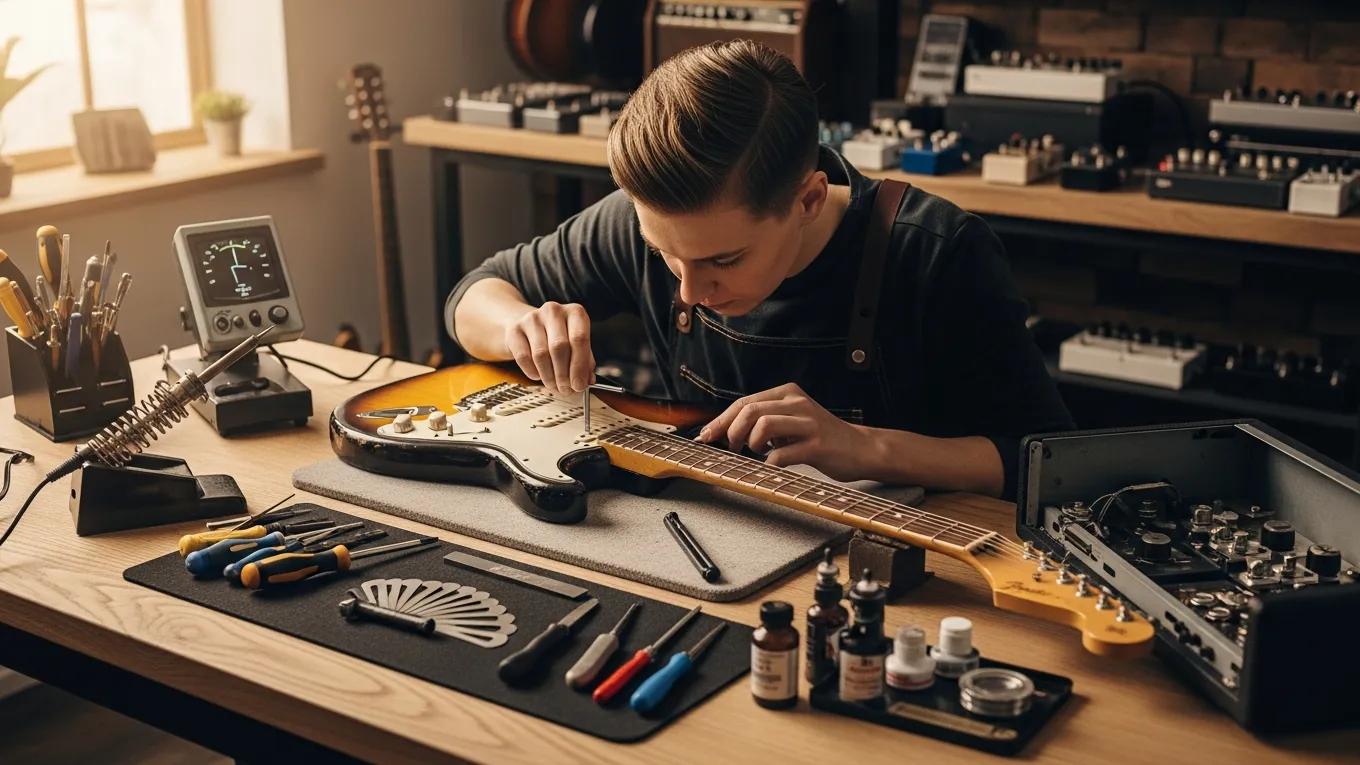
A proper guitar setup makes a real difference to how your instrument feels and sounds. It’s a sequence of precise adjustments that improve playability, tuning stability and tone—whether you’re just starting out or gigging every week. At MusicStreet in Huntingdon we specialise in hands‑on, in‑house setups, giving each guitar the careful attention it needs. Common problems we see—poor intonation, high action, unwanted neck relief—get in the way of playing; our professional setups are designed to fix those issues and get your guitar performing reliably. Below we explain what a professional setup includes, typical costs, and simple ways to care for your guitar between visits.
What a Professional Guitar Setup Includes at MusicStreet
A MusicStreet setup covers a full suite of adjustments aimed at getting the best tone and feel from your instrument. These combined tweaks are essential to improve playability and keep your guitar stable and responsive. We tailor each setup to the guitar and the player so the results are practical and musical.
Key Setup Components: Intonation, Action, and Neck Adjustment
The three core elements of any setup are intonation, action and neck relief. Intonation makes sure notes stay in tune up and down the neck. Action is the string height over the frets—set it right and the guitar is comfortable without buzzing. Neck adjustment, done via the truss rod, establishes the correct relief so strings vibrate freely. Together, these adjustments determine how the guitar feels under your hands and how accurately it plays.
How Our Experienced Technicians Ensure Optimal Guitar Performance
Our technicians assess each instrument on its own merits, factoring in the player’s style and string choices. Using precision tools and proven techniques, they make careful, incremental changes to deliver a personalised setup. That attention to detail improves tone, fret response and tuning stability so the instrument behaves consistently in rehearsal and on stage.
Our 10-Point Guitar Setup Process
- Initial Assessment — We begin with a thorough appraisal of the guitar’s current condition to identify issues and set a baseline. The technician plays the guitar unplugged to listen for buzzing, dead frets or tuning instability, and electric guitars are tested plugged in to check electronics and tonal balance. Baseline measurements—neck relief, string action and intonation—are recorded before any work starts. We also carry out a visual inspection for finish cracks, loose internal bracing or worn frets that may affect playability or need future attention.
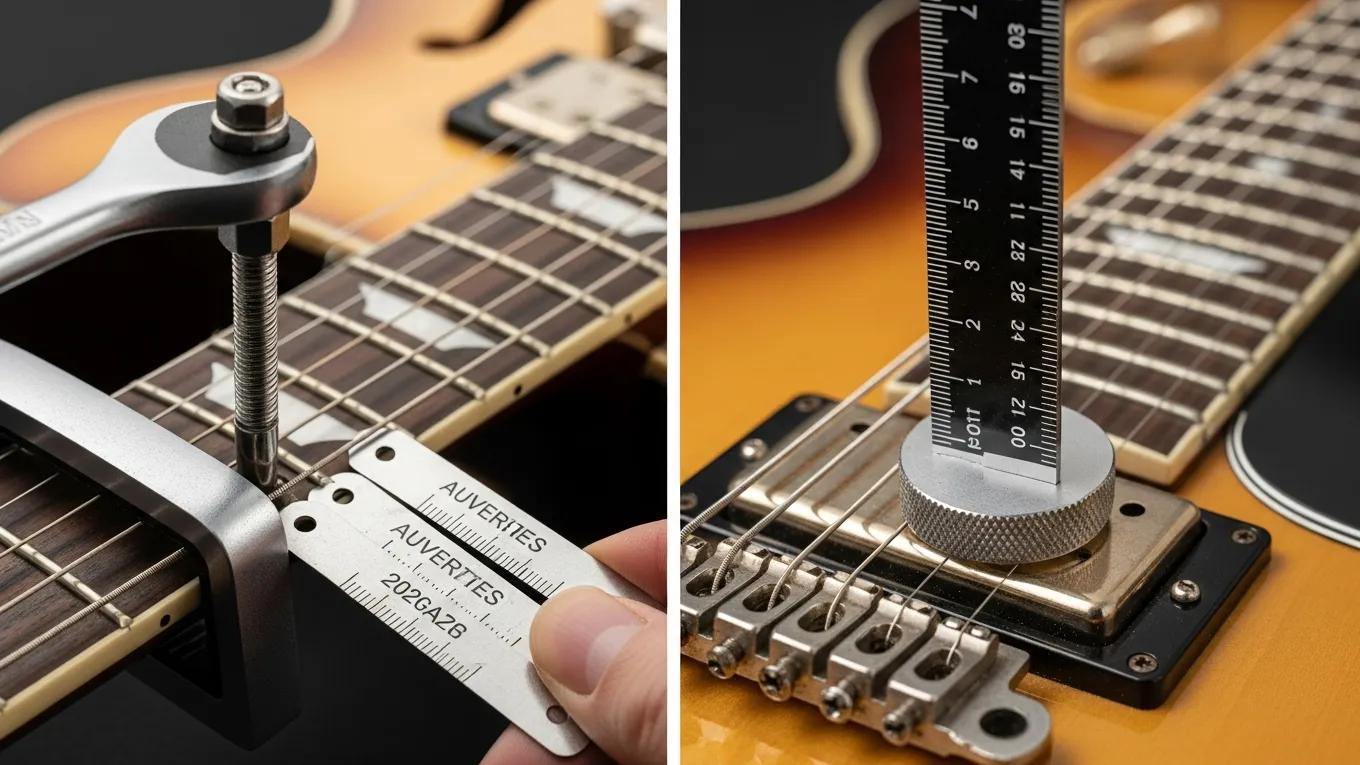
- Neck Relief & Truss Rod Adjustment — Neck relief is checked and adjusted via the truss rod using a feeler gauge at the 7th or 8th fret with the 1st and 14th frets fretted together for a consistent reference. Our typical target relief for most electric guitars is 0.3–0.5 millimetres (≈0.012–0.020 inches), while acoustics often sit between 0.3–0.6 millimetres depending on string gauge and playing style. Adjustments are made in small quarter‑turns and the neck is allowed to settle before re‑measuring to ensure a stable result.
- Nut Slot Inspection & Filing — We inspect and, if needed, file nut slots to match the string gauge in use. Nut slot depth is checked with feeler gauges and matched files; ideal electric nut slot clearance leaves roughly 0.3 millimetres above the first fret to avoid buzzing while allowing proper vibration. We favour bone nuts over plastic for better sustain and tuning stability and carry pre‑cut and blank bone nuts for replacement or upgrade where required.
- Action Adjustment at the Bridge/Saddle — String height is set at the bridge or saddle for comfortable playability. Action is measured at the 12th fret using precision gauges. Our starting electric targets are 2.0 millimetres on the bass (low E) side and 1.5 millimetres on the treble (high E) side, measured from the top of the 12th fret to the bottom of the string; acoustic targets are typically around 2.5 millimetres bass and 2.0 millimetres treble, adjusted to the player’s preference. Saddle height is altered by sanding acoustic saddles or turning individual saddle screws on electrics for precise results.
- Intonation Calibration — Intonation is set so the guitar plays in tune across the neck. We use accurate strobe tuners such as the Peterson StroboPlus HD or TC Electronic PolyTune 3 (precision to within 0.1 cents) to compare open string pitch with the fretted 12th fret. If the fretted note is sharp we move the saddle back; if flat we move it forward. Each string is checked and adjusted until intonation is consistent across the neck.
- Pickup Height Setting — On electrics we set pickup height to balance output and tone. Height is measured from the pole piece to the string when fretted at the last fret. Our starting points are roughly 2.0 millimetres treble / 2.5 millimetres bass for single‑coils and about 2.5 millimetres treble / 3.0 millimetres bass for humbuckers. Proper spacing gives stable tuning and the best tonal response without excessive magnetic pull.
- Fret Inspection & Level Check — Frets are examined with a straight edge and fret rocker to find high or uneven spots. Small high spots can be spot‑levelled and smoothed; larger unevenness requires a full fret level, crown and polish, which we quote separately. We document fret condition in the written setup report so you can decide on any further fretwork.
- Electronics & Hardware Check — We test electronics and hardware: potentiometers are checked for noise and cleaned if necessary, output jacks are inspected for reliability and selector switches tested. Tuning machine screws are tightened and hardware checked for stability. String trees and nut slots are lubricated with graphite or specialist lubricants like Big Bends Nut Sauce to reduce friction and help tuning stability.
- String Change & Final Stretch — A fresh set of strings is fitted as part of the setup and included in the price. Strings are hand‑stretched along the neck to speed up settling and improve tuning stability. After stretching we re‑tune and re‑check intonation to confirm the instrument is performing correctly with the new strings.
- Playability Sign‑Off by a Working Musician — Before any guitar leaves the workshop a working musician plays it to assess chords across the neck, barre comfort at the 5th and 7th frets, and tuning through full bends. We provide a written setup report showing before and after measurements for neck relief, action and intonation so you have a clear record of the work carried out.
How Much Does a Guitar Setup Cost in Huntingdon?
Knowing setup costs helps you plan maintenance. At MusicStreet we offer fair, transparent pricing so you get dependable value for the care your guitar needs.
Understanding Acoustic and Electric Guitar Setup Pricing
Prices depend on the instrument type. A basic acoustic setup typically starts at £50, and electric guitar setups also start at £50. More involved setups can rise to around £75 depending on the work required.
What Influences Setup Costs: Repairs, Brand, and Complexity
Several factors affect price: the guitar’s brand, any extra repair work needed, and the complexity of the adjustments. Premium instruments may need specialist parts or extra care, and repairs beyond a standard setup add to the cost. We always discuss costs and agree any additional charges before proceeding.
Which Guitar Brands Does MusicStreet Service?
We work on a wide range of guitar brands and styles. Our technicians are experienced with instrument‑specific nuances, so your guitar gets the right adjustments for its design and construction.
Setup Nuances for Martin, Taylor, PRS, Gibson, and Fender Guitars
Different makers often need different approaches: Martins may require particular saddle work, Fenders sometimes need careful pickup height tweaks, and other marques have their own setup quirks. Our team understands these differences and adapts the setup to suit each brand’s construction and voicing.
Why Choose MusicStreet for Your Brand‑Specific Guitar Setup?
Choosing MusicStreet means your guitar is handled by technicians who know both the instruments and how they’re used. We combine practical experience with attention to detail and a commitment to clear communication, so you leave confident your guitar is set up correctly.
How Can You Maintain Your Guitar Between Professional Setups?

Regular, simple care keeps a guitar playing well between professional visits. Small habits reduce the chance of problems and extend the time between setups.
Essential Guitar Care Tips from MusicStreet Experts
- Regular Cleaning: Wipe strings, fingerboard and body after each session to remove sweat and oils that dull finishes and corrode strings.
- Proper Storage: Keep your guitar in a case or on a stable stand to protect it from knocks and sudden environmental changes.
- Humidity Control: Store the instrument in a stable humidity environment—extreme changes can warp necks and affect glue joints.
When to Schedule Repairs and Setup Services for Best Results
Book a setup when you notice tuning instability, fret buzz, high action or a drop in tone quality. Seasonal changes, long storage or a change in string gauge are also good reasons to bring your guitar in. Regular maintenance prevents small issues from becoming costly repairs.
Why Local Expertise Matters: The MusicStreet Workshop in Huntingdon, Cambridgeshire
MusicStreet operates from a physical workshop and showroom at 10 Chequers Court, Huntingdon, Cambridgeshire, PE29 3LJ — we’re not just a mail‑order service. All setup work is carried out in‑house by staff who are working musicians, so every instrument is handled by people who understand real playing conditions. The UK’s seasonal humidity shifts, particularly here in Cambridgeshire, affect necks and wood stability; our local experience means we set instruments with those conditions in mind, not generic online advice.
We serve customers across Cambridgeshire — including Cambridge, Peterborough, St Ives, St Neots and Ely — and we also accept postal setups from around the UK. Our workshop doubles as a full‑service guitar destination: you can browse over 500 instruments, trade in guitars and collect your freshly set‑up instrument in one visit. For enquiries or to book, call 01480 431222 or email [email protected]. We recommend checking our website or calling ahead to confirm current opening hours.
Guitar Setup FAQs
How much does a guitar setup cost in the UK?
Across the UK, professional setups typically range from about £50 to £150 depending on instrument type and the work involved. At MusicStreet in Huntingdon our standard setup price starts from £75 for electric, acoustic and bass guitars. This includes our full 10‑point inspection and adjustment process, a new set of strings and a written setup report. More complex instruments — for example 12‑string guitars or those needing a fret level — are priced accordingly. All charges are transparent and agreed before work begins.
How often should I get my guitar set up?
We generally recommend at least one setup per year, and ideally two—at the start of autumn and spring—because UK seasonal humidity changes can alter neck relief. Players who switch string gauges, use alternate tunings regularly, or gig frequently may need setups more often. Regular setups keep the guitar playing well and protect its value.
How do I know if my guitar needs a setup?
Common signs your guitar needs a setup include fret buzz on particular frets or across the neck, strings that feel unusually high or hard to press, tuning that won’t hold through bends, and intonation that sounds fine open but out of tune when fretted. If your guitar has been moved, stored for a while or you’ve changed string gauge, a setup is a good idea before regular playing resumes.
Can I send my guitar by post for a setup?
Yes — we accept postal setups from across the UK. Please contact us first on 01480 431222 or at [email protected] so we can advise on secure packaging. Guitars should be shipped in a hard case with strings slackened to reduce neck tension during transit. We’ll confirm the setup spec, agree the price and return your guitar by insured courier when the work is complete. Postal setups receive the same 10‑point process as in‑store instruments.
Do you set up guitars bought elsewhere?
Absolutely. We set up guitars from any brand, retailer or country of origin—no purchase from us is required. Whether it’s a vintage Fender, a new Gibson from another dealer or a budget instrument that hasn’t played well, we’ll assess it honestly and carry out the work needed to make it play better.
What is the difference between a setup and a repair?
A setup is routine optimisation—adjusting neck relief, action, intonation, pickup height and lubricating hardware to improve playability. A repair fixes physical damage or malfunction, such as a cracked nut, broken tuner, faulty electronics or damaged frets. Often a guitar needs both; if we identify repair work during a setup we’ll flag it and provide a separate quote so you can choose how to proceed. step by step guide
