


Master Your Guitar Maintenance

Complete Guitar Maintenance Guide — Keep Your Instrument Playing and Looking Its Best
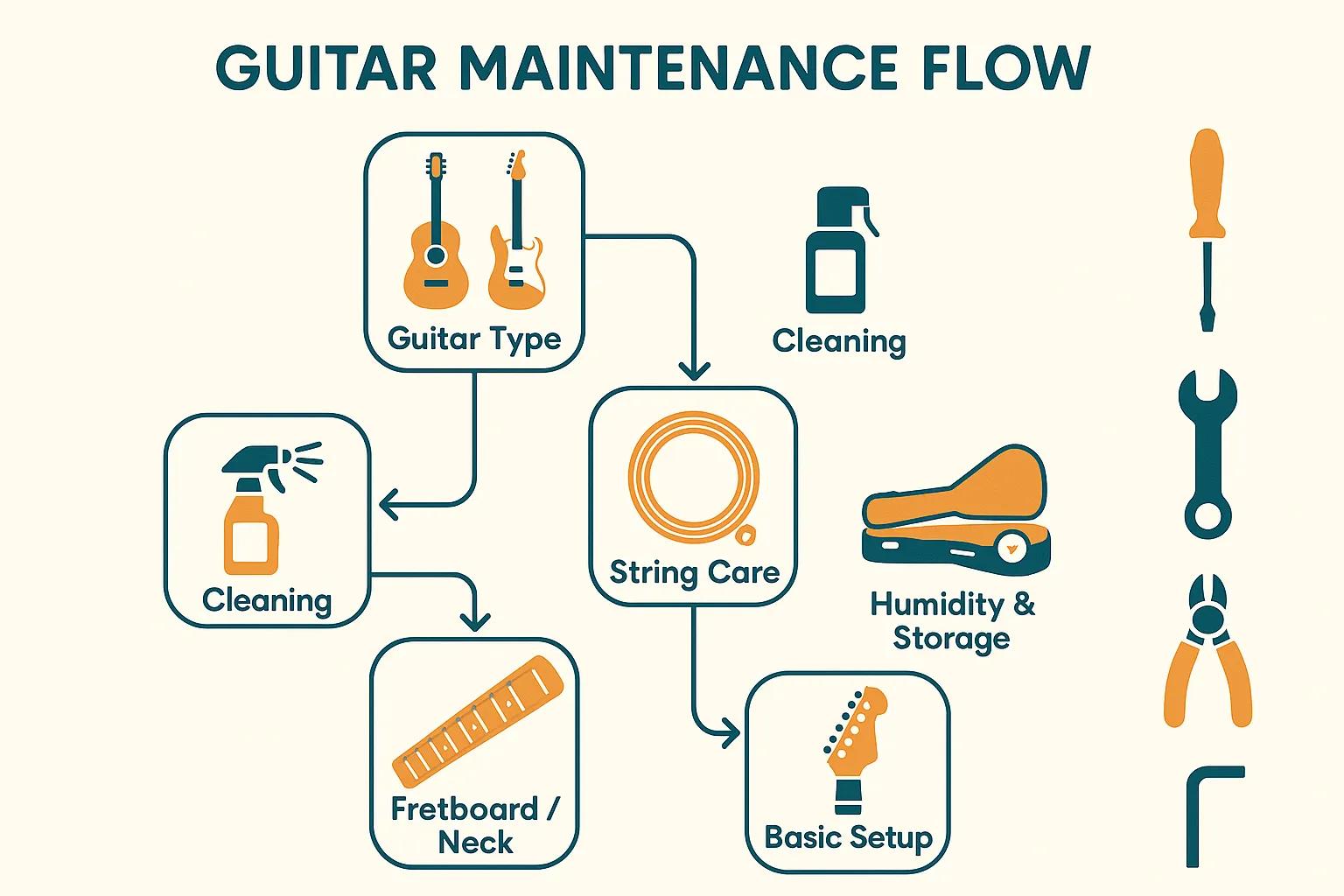
Looking after your guitar is the single best investment you can make in its tone, feel and lifespan. This practical guide walks you through the essentials — cleaning, string care, humidity management and simple setup — so you can keep your instrument in top shape. Skip routine maintenance and you risk dull sound, tricky playability and costly repairs. Follow the tips here and your guitar will reward you for years of great playing.
Thorough, regular care is key to avoiding many common problems and ensuring the instrument’s long-term health.
That point is backed up by specialist research on preservative conservation and the ways routine maintenance slows or prevents damage to musical instruments.
Preserving Musical Instruments: Cleaning, Maintenance & Damage Prevention
Instruments that form part of our cultural heritage are unique and deserve careful, consistent conservation. Preservative conservation covers any action that prevents or reduces damage. Major issues for instrument materials include biological decay from bacteria, fungi and insects; chemical changes such as oxidation and hydrolysis; thermal and light-related deterioration; and damage caused by fluctuating humidity like cracks and corrosion. Regular cleaning and maintenance significantly slow these deterioration processes.
Preservative conservation of musical instruments, V Bucur, 2016
Preserving Musical Instruments: Cleaning, Maintenance & Damage Prevention
Preservative conservation describes measures that prevent damage or reduce its likelihood. Conservative preservation typically follows three stages: reveal, investigate and preserve. The growing variety of materials used in instrument construction increases the risk of damage, with common degradations including biological attacks (bacteria, fungi, insects), chemical reactions (oxidation, hydrolysis), thermal/photo damage from light exposure, and humidity-driven issues like cracking and corrosion. Cleaning and routine maintenance are effective ways to reduce the rate of deterioration.
Preservative conservation of musical instruments, V Bucur, 2016
Below we’ll cover how often to clean your guitar, the right products to use, string care, fretboard and neck maintenance, humidity control and simple home setup procedures.
How Often Should You Clean and Maintain Your Guitar?
Keeping a regular maintenance rhythm is the best way to preserve tone and playability. How often you clean depends on the guitar type and how much you play.
What Are the Recommended Cleaning Frequencies for Different Guitar Types?
Different guitars need different attention. Acoustic guitars, which are exposed to more open-air dust and moisture, benefit from a light clean every few weeks or whenever you change strings. Electric guitars can usually wait a few weeks to a month between cleans, depending on usage. Your playing style, local environment and string choice will all affect how often you should clean.
How Does Regular Maintenance Extend Your Guitar's Lifespan?
Routine care keeps your guitar sounding and feeling better for longer — preventing small issues from becoming expensive repairs. While precise lifespan gains are hard to quantify, experienced luthiers agree that instruments that are cared for last far longer. Spending a little time on cleaning and basic upkeep is often the most cost-effective way to protect your investment.
Further studies reinforce how knowledge of materials and sensible care techniques contribute to an instrument’s long-term quality and cultural value.
The wider effects of environmental change on cultural heritage — including instruments — are also an important area of study.
Preserving Musical Instruments from Environmental Degradation
This research highlights the need to adapt preservation practices to climate impacts, especially for cultural items tied to musical activity like instruments and archived sheet music. Many heritage items are vulnerable to environmental deterioration and climate change; understanding these risks requires a holistic approach that protects buildings and the instruments kept inside them.
Preserving Cultural Heritage from the Impacts of Climate Change.
The Case of Musical Instruments and Scores, AM Reyes Gallegos, 2017
Musical Instrument Conservation: Durability & Repair Techniques
Scientific methods help us understand the materials and interactions that determine an instrument’s longevity and appearance. Combining material analysis with traditional and modern repair techniques supports durability and preserves musical and cultural value for future generations.
Chemical Analysis and Conservation of Materials in Indian Musical Instruments., 2025
What Are the Best Guitar Cleaning Products and How Do You Use Them?
Picking the right cleaners matters — the wrong product can strip finishes or dry out wood. Choose products made for guitars and follow the instructions.
Which Cleaning Solutions Are Safe for Guitar Fretboards and Necks?
Use cleaners and polishes that are specifically formulated for instruments. Avoid harsh solvents and alcohol-based solutions on wooden necks and unfinished fretboards. Brands such as MusicNomad and Dunlop make reliable, safe cleaners that remove grime without harming wood or finish. (Note: MusicStreet is not a widely recognised brand for guitar cleaning products.)
How to Choose Eco-Friendly and Effective Guitar Cleaning Products?
Eco-conscious cleaners are more common now and can be gentle on both your guitar and the planet. Look for biodegradable formulas and products free from aggressive chemicals. Many established brands offer options that balance performance with environmental responsibility, making it easier to care for your instrument sustainably.
How Do You Properly Replace and Care for Guitar Strings?
Strings have a big impact on tone and playability, so regular attention here pays off.
What Is the Step-by-Step Process to Restring a Guitar Correctly?
Restringing is straightforward if you follow a tidy process:
- Remove the old strings carefully to protect the bridge and tuners.
- Take the opportunity to clean the fretboard while the strings are off.
- Fit the new strings, seating them correctly in the bridge and nut.
- Wind each string neatly onto its tuning peg, keeping coils tidy and secure.
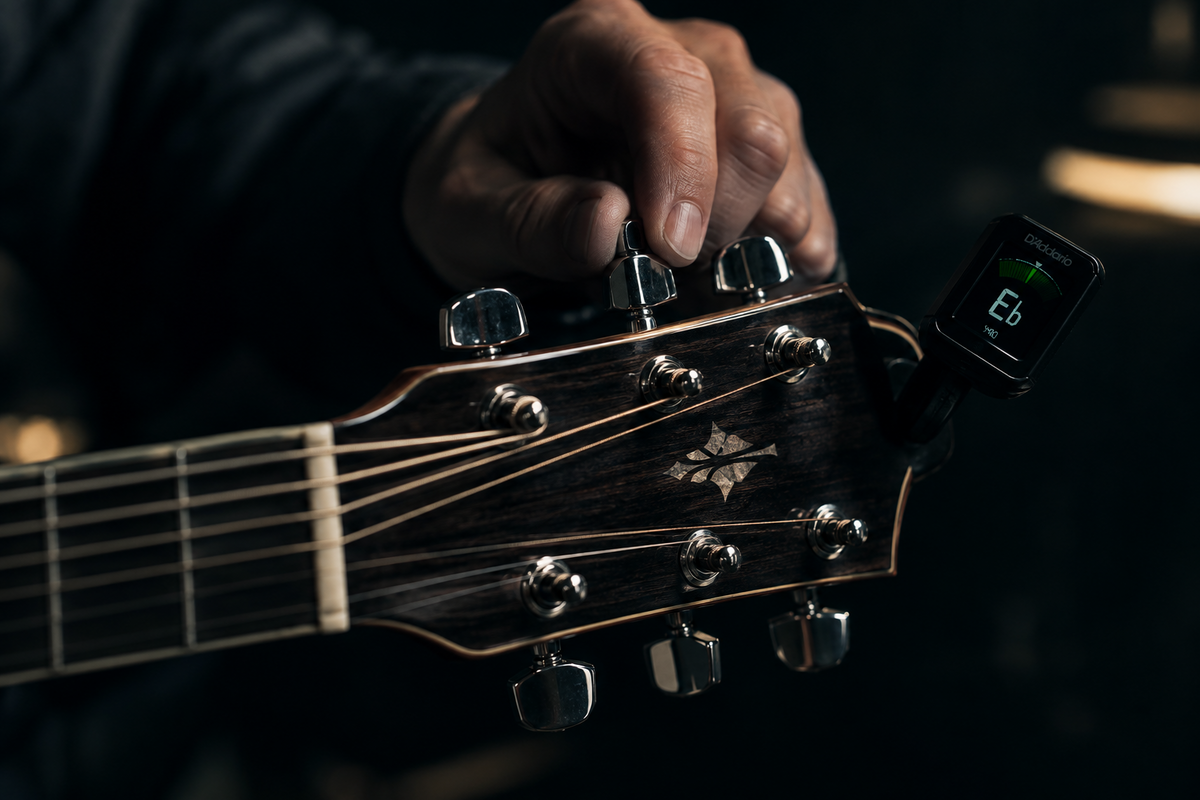
- Tune up and gently stretch the strings to help them settle, then retune as needed.
How to Select the Right Guitar Strings for Your Instrument?
String choice depends on instrument and style. Consider gauge, material and whether you need nylon or steel. Lighter gauges are easier to fret and bend; heavier gauges offer more volume and sustain. Try a few options to find the balance of feel and tone that suits you.
How Should You Maintain Your Guitar’s Fretboard and Neck?
The fretboard and neck determine playability — keep them clean, conditioned and properly adjusted.
What Are the Best Practices for Fretboard Cleaning and Conditioning?
Clean your fretboard each time you change strings. Use a product made for fretboards and apply conditioning oils (like lemon oil or specialised conditioners) sparingly and only on unfinished woods such as rosewood or ebony. Proper, occasional conditioning prevents the wood from drying out without over-saturating it.
How to Inspect and Care for the Guitar Neck to Prevent Damage?
Check the neck regularly for twists, warps or uneven relief. If the neck needs correction, make small truss rod adjustments and recheck playability — over-tightening can cause more harm than it cures. When in doubt, consult a technician for major adjustments.
What Are the Best Humidity Control and Storage Solutions for Guitars?
Humidity is one of the biggest environmental factors affecting wooden instruments — controlling it keeps your guitar stable and sounding its best.
How Does Humidity Affect Guitar Condition and Sound Quality?
High humidity can swell wood, causing warps and buzzing; low humidity dries wood and can lead to cracking and tone loss. Aim to keep relative humidity around 45–55% for most guitars to minimise movement and stress.
Some climates — tropical regions in particular — present extra preservation challenges and may increase the risk of fungal or biological damage without proper care.
Mitigating Musical Instrument Degradation: Humidity & Preservation
This study explores how environmental conditions and fungal infestations accelerate decay in traditional Nigerian instruments, naming fungi such as Aspergillus niger, Penicillium chrysogenum, Fusarium oxysporum and Cladosporium cladosporioides. Instruments studied include wooden drums, slit drums, hide-covered membranophones and gourd rattles. Tropical climates with high humidity, warm temperatures and seasonal rainfall create ideal conditions for fungal growth. Traditional methods—like applying neem oil or shea butter and keeping instruments in smoke-treated elevated storage—can be effective and sustainable, thanks to natural bioactive compounds that inhibit fungal activity.
Evaluation of preservation approaches in mitigating the degradation of traditional musical instruments in Nigeria, OE Otamere
The link between humidity and a guitar’s acoustic properties has been examined in depth by researchers and instrument makers alike.
Guitar Tone: The Impact of Humidity on Musical Instruments
This chapter investigates how relative humidity influences guitar tone, aiming to quantify the effect and clarify the physical mechanisms involved.
The effect of humidity and moisture content on the tone of musical instruments, 2014
What Storage Tips Help Protect Your Guitar from Environmental Damage?
Store guitars in a sturdy hard case when not in use and avoid direct sunlight or heat sources. Use a hygrometer to monitor humidity where you keep your instrument, and consider a case humidifier or dehumidifier as needed to maintain stable conditions.
How Can You Perform Basic Guitar Setup and Adjustments at Home?
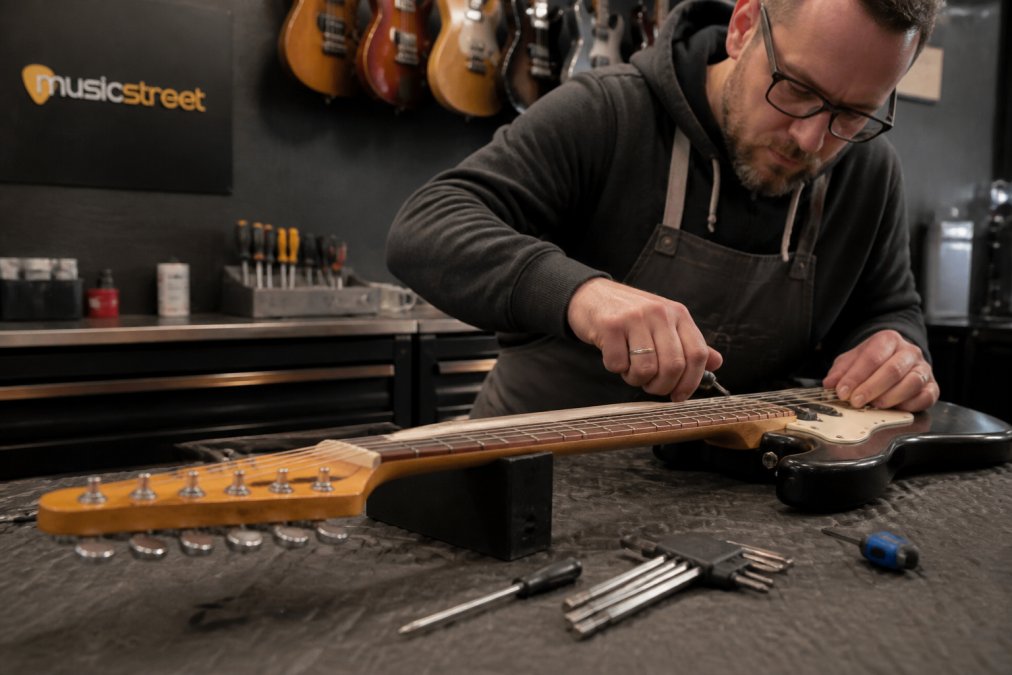
Simple setups can make a big difference to how a guitar feels and sounds — many adjustments you can do yourself with care and the right tools.
What Tools Are Needed for Simple Guitar Setup and Maintenance?
For basic setups keep these tools handy:
- String winder
- Tuner
- Capo
- Allen wrenches for truss rod tweaks
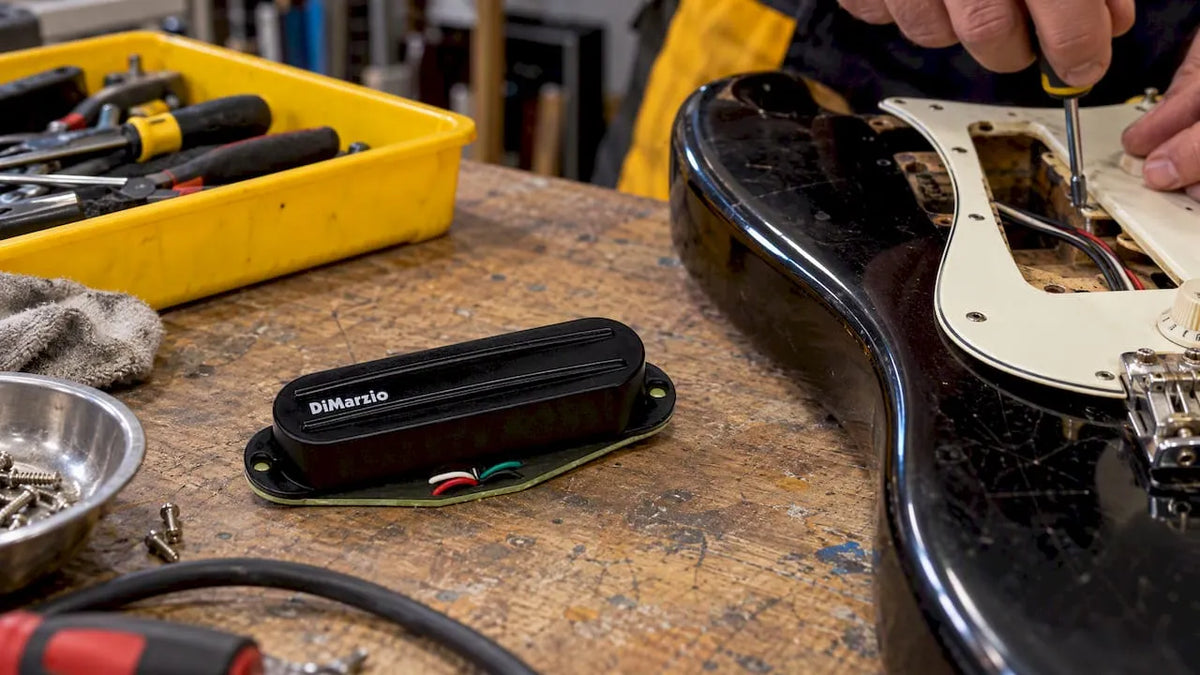
- Screwdrivers for bridge and pickup adjustments
How to Adjust Action, Intonation, and Truss Rod for Optimal Playability?
Action and intonation adjustments set string height and tuning accuracy across the neck. Measure string height at the 12th fret with a ruler or feeler gauge and adjust the bridge saddles. Make only small changes to the truss rod and check neck relief frequently to avoid over-correction.
| Cleaning Product | Safe for Fretboards | Eco-Friendly |
|---|---|---|
| MusicNomad Fretboard Cleaner | Yes | Yes |
| Guitar Polish | Yes | No |
| Natural Oil Conditioner | Yes | Yes |
This quick reference lists some trusted cleaning options and their suitability for fretboards and the environment.
Guitar care is ongoing but straightforward. Follow these routines and your instrument will stay reliable, playable and sounding its best for years of enjoyment.







Share:
How to Select Rare Guitars for Collectors and Musicians
How to Pack a Guitar Safely for Travel or Gig