


Every british guitarist knows how a single accessory can make or break a performance. Over 80 percent of experienced musicians believe that the right guitar tools dramatically improve both sound quality and playing confidence. Whether you are playing in London’s lively music scene or jamming at home, using the best essentials keeps your instrument in peak condition and your skills sharp. Discover practical tips and expert insights that help you choose gear trusted by top british players.
Table of Contents
- Guitar Tuner: Ensure Perfect Pitch Every Time
- Capo: Change Key Instantly With Ease
- String Winder and Cutter: Fast Restringing Simplified
- Quality Guitar Strap: Play Comfortably and Securely
- Hard Case or Gig Bag: Safeguard Your Guitar On the Go
- Instrument Care Kit: Maintain Longevity and Tone
- Spare Strings: Be Ready for Quick Replacements
Quick Summary
| Takeaway | Explanation |
|---|---|
| 1. Use a Reliable Guitar Tuner | Ensures accurate pitch and consistent sound quality, essential for all guitarists. |
| 2. Invest in a Quality Capo | Enables easy key changes and maintains familiar chords, especially useful for vocalists. |
| 3. Get a String Winder and Cutter | Simplifies the restringing process, saving time and ensuring precision with minimal hand fatigue. |
| 4. Select the Right Guitar Strap | Enhances comfort and support, crucial for playing, especially during long performances. |
| 5. Maintain an Instrument Care Kit | Protects the guitar’s appearance and sound quality, extending its life and ensuring optimal performance. |
1. Guitar Tuner: Ensure Perfect Pitch Every Time
A guitar tuner is not just an accessory it is your sonic compass for musical precision. Whether you are a budding guitarist or a seasoned performer, maintaining accurate pitch is fundamental to creating beautiful music.
In the world of guitar playing, pitch perfection starts with a reliable tuner. Professional tuners from MusicRadar demonstrate how critical these devices are for achieving consistent sound quality. Modern guitar tuners come in multiple formats digital clip-on devices, pedal tuners, and smartphone applications each offering unique advantages for different playing scenarios.
Digital clip-on tuners attach directly to your guitar headstock and use vibration sensing technology to provide instantaneous pitch readings. These compact devices work brilliantly in noisy environments and provide quick tuning adjustments. Pedal tuners integrate seamlessly with professional pedalboards and offer precise visual feedback during live performances.
When selecting a tuner, consider factors like accuracy, battery life, display readability, and compatibility with your specific instrument. Chromatic tuners offer the most flexibility by supporting multiple instrument types and alternate tunings.
Pro tip: Always keep spare batteries or a portable charger for your tuner to avoid unexpected performance interruptions during crucial musical moments.
2. Capo: Change Key Instantly With Ease
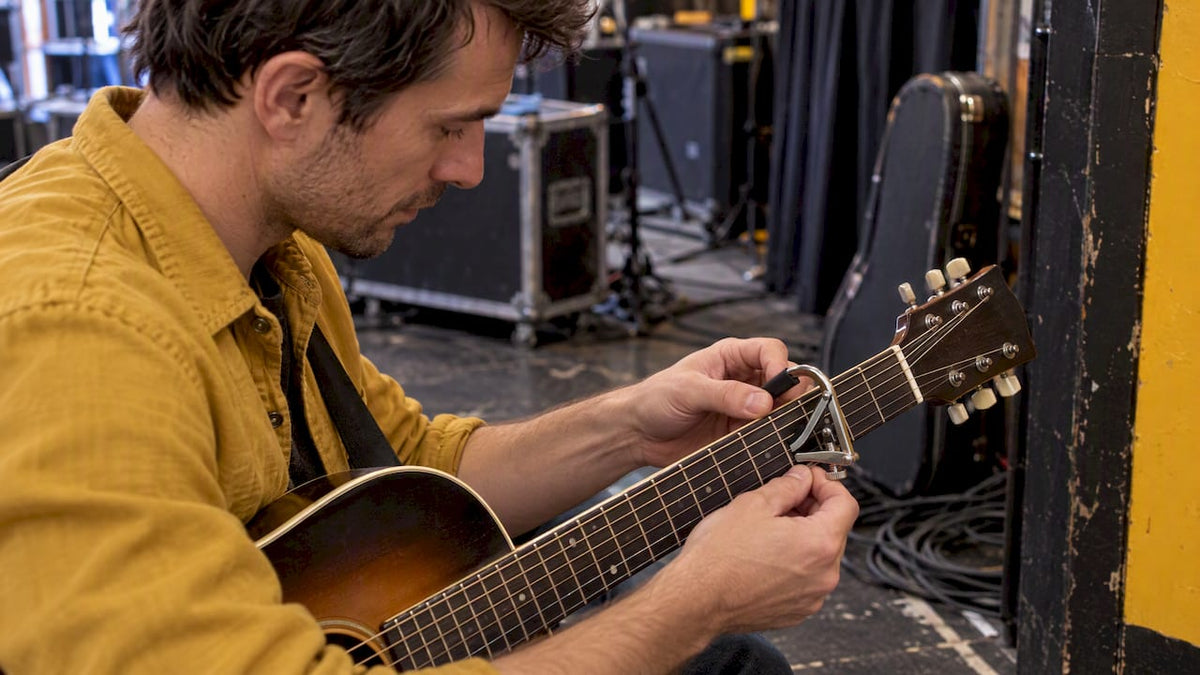
A capo is a small yet powerful device that transforms your guitar playing capabilities by allowing instant key changes without complex chord modifications. It is essentially a clamp that presses down all strings across a selected fret, enabling musicians to shift musical keys effortlessly.
Guitar experts at London Guitar Academy highlight how capos are essential for adapting your guitar’s pitch and achieving unique tonal qualities. By simply moving the capo up and down the fretboard, guitarists can modify their instrument’s key while maintaining familiar chord shapes and fingerings.
The versatility of a capo becomes particularly useful when accompanying vocalists or adapting songs to suit different vocal ranges. Acoustic and folk musicians especially appreciate this tool for its ability to transpose music without requiring advanced technical skills. Some genres like folk, country, and singer songwriter styles rely heavily on capo techniques to create rich harmonic variations.
When selecting a capo, consider factors such as tension mechanism spring loaded versus screw tightened weight and material compatibility with your guitar neck. Silicone padded capos provide smoother string pressure and reduce potential neck damage compared to older metal designs.
Pro tip: Always position your capo directly behind the fret to ensure clean sound and prevent intonation issues that can arise from improper placement.
3. String Winder and Cutter: Fast Restringing Simplified
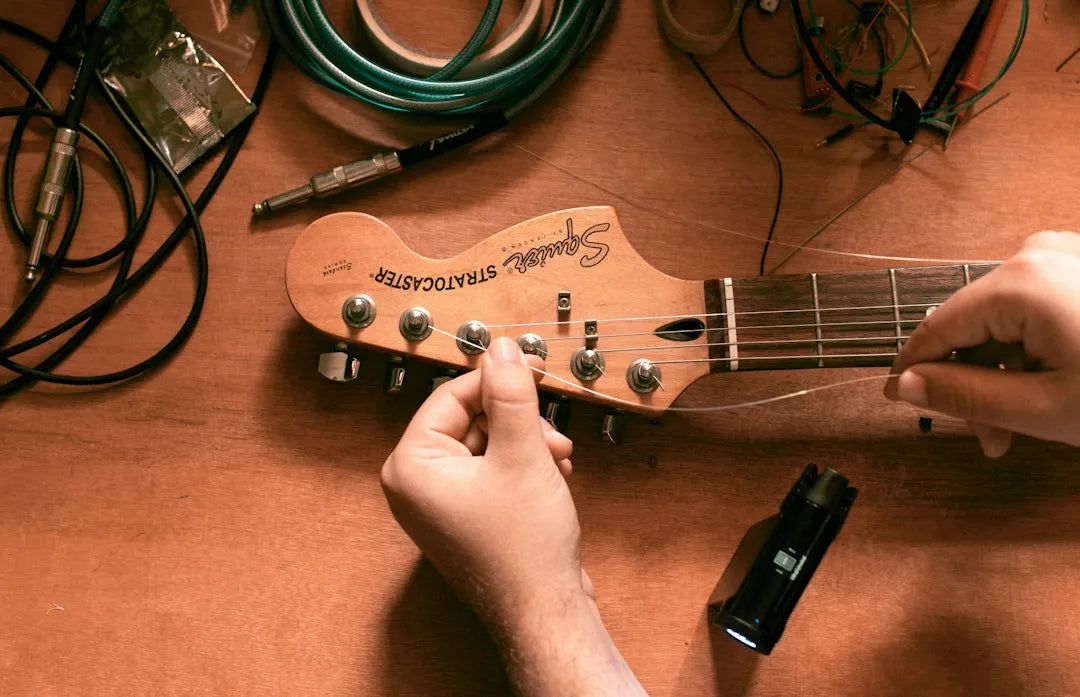
A string winder and cutter are indispensable tools that transform the often tedious task of guitar string replacement into a swift and precise process. These compact devices enable guitarists to change strings quickly, efficiently, and with professional precision.
Guitarists can simplify their restringing process by investing in a quality string winder and cutter. The string winder dramatically reduces the time spent turning tuning pegs, eliminating hand fatigue and making string changes a breeze. Most winders feature a comfortable ergonomic design that fits perfectly around tuning machines, allowing rapid rotation.
The integrated string cutter is equally crucial, providing a clean and precise cut that prevents fraying and potential injury from sharp string ends. Professional musicians understand that a clean cut ensures smooth string installation and reduces the risk of sharp wire edges that could damage your instrument or cause accidental cuts.
When selecting a string winder and cutter, look for models with comfortable grips, durable construction, and compatibility with various guitar types. Some advanced models include additional features like built in wire cutters or string stretchers, offering multiple functionalities in a single tool.
Pro tip: Always wind strings uniformly and avoid overlapping to prevent potential tuning instability and ensure optimal string performance.
4. Quality Guitar Strap: Play Comfortably and Securely
A quality guitar strap is more than a simple accessory it is an essential tool that impacts your playing comfort, performance stability, and overall musical experience. The right strap transforms how you interact with your instrument, providing support and freedom of movement during performances.
Guitar strap adjustment techniques are crucial for maintaining proper instrument positioning and preventing physical strain. Different materials like leather, nylon, and woven fabric offer varying levels of comfort, durability, and aesthetic appeal. Leather straps provide classic elegance and long term resilience, while padded straps distribute weight more evenly to reduce shoulder fatigue.
Consider your playing style and instrument weight when selecting a strap. Electric guitar players might prefer lightweight nylon straps, whereas acoustic musicians might opt for wider leather designs that offer better weight distribution. Width matters substantially some straps range from narrow 2 inch designs to broader 3 inch models that provide enhanced comfort for heavier instruments.
Ergonomic features like adjustable lengths, swivel hooks, and shock absorbing padding can significantly improve playing comfort. Musicians who perform standing up will appreciate straps with robust metal attachments that securely connect to guitar strap buttons without risk of unexpected disconnection.
Pro tip: Always test a guitar strap for comfort and adjust its length so that your instrument sits at a natural playing height, preventing unnecessary strain on your back and shoulders.
5. Hard Case or Gig Bag: Safeguard Your Guitar On the Go
Every musician requires a reliable method to protect their cherished instrument during transportation. A quality hard case or gig bag acts as your guitar’s primary defence against potential damage from impacts, temperature changes, and environmental challenges.
Understanding guitar case protection options helps musicians make informed decisions about instrument safety. Hard cases offer maximum protection with rigid exterior shells typically constructed from robust materials like fibreglass or tough plastics. These cases provide superior defence against physical impacts and extreme temperature variations.
Gig bags represent a lighter alternative, ideal for musicians who prioritise portability and convenience. Padded nylon or polyester designs offer reasonable protection for short trips and casual transportation. Some advanced gig bags feature additional cushioning, water resistant exteriors, and multiple storage compartments for accessories.
When selecting between hard cases and gig bags, consider your specific playing circumstances. Professional touring musicians might prefer hard cases, while acoustic performers travelling short distances could opt for high quality padded gig bags. Key factors include weight, padding thickness, exterior material, and internal foam contouring that prevents instrument movement.
Pro tip: Always store your guitar case in a climate controlled environment and avoid leaving it in vehicles where temperature fluctuations can potentially damage your instrument.
6. Instrument Care Kit: Maintain Longevity and Tone
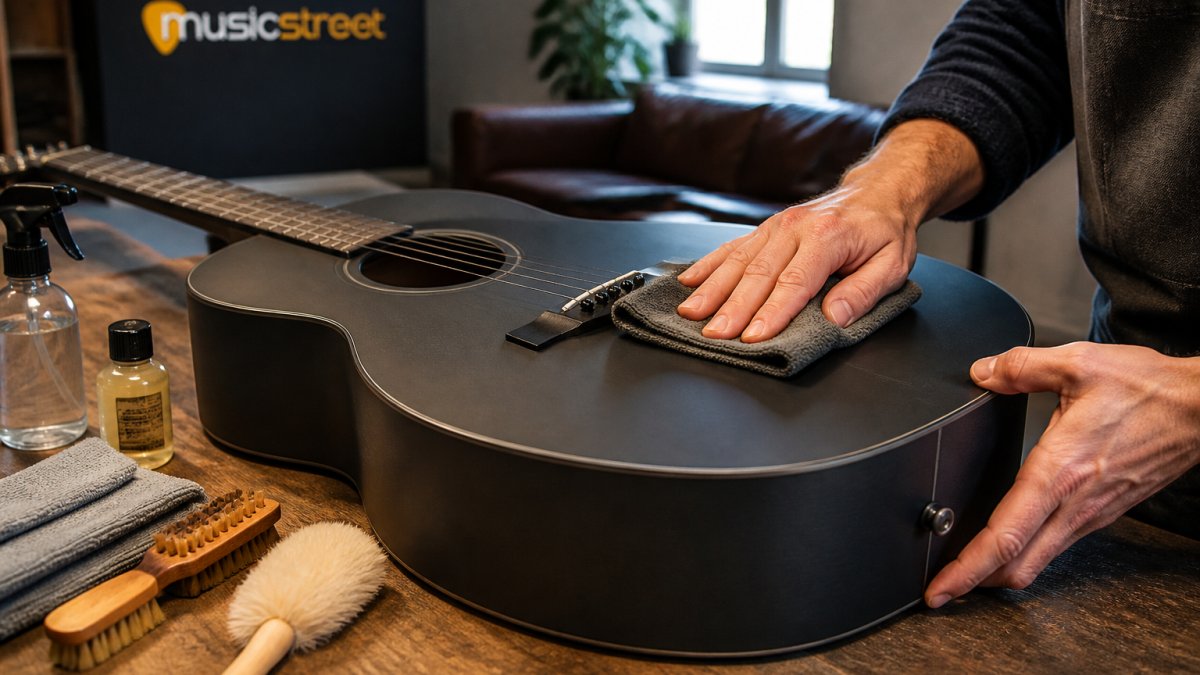
A comprehensive guitar care kit is the unsung hero of musical instrument maintenance, serving as a critical toolkit for preserving your guitar’s sound quality, appearance, and structural integrity. Proper care extends far beyond occasional cleaning and directly impacts your instrument’s performance and resale value.
Maintaining your guitar’s pristine condition requires a strategic approach and the right set of specialised tools. A well equipped care kit typically includes microfibre cloths, specialised cleaning solutions, fretboard conditioning oils, string cleaner, polish, and soft brushes designed specifically for different guitar components.
Each component of your care kit serves a unique purpose. Microfibre cloths remove dust and fingerprints without scratching delicate finishes. Fretboard oils prevent wood from drying and cracking, particularly for instruments made from porous woods like rosewood or ebony. String cleaners remove corrosive skin oils and dirt that can degrade string quality and tone, extending string life and maintaining sound clarity.
Routine maintenance prevents costly repairs and preserves your instrument’s tonal characteristics. Different guitar materials wood, metal, and electronic components require specific cleaning techniques and products. Avoid universal cleaning solutions that might damage your guitar’s unique finish or components.
Pro tip: Store your care kit in a cool, dry place and replace cleaning materials regularly to prevent potential contamination or degradation of your guitar’s surfaces.
7. Spare Strings: Be Ready for Quick Replacements
Every serious musician understands that guitar strings are consumable items that require regular replacement to maintain optimal sound quality and performance. Keeping a set of spare strings in your gig bag or practice space ensures you are always prepared for unexpected breakages or performance requirements.
Selecting the right guitar strings involves understanding multiple factors including material composition, gauge, and playing style. Different string types nickel wound, phosphor bronze, stainless steel offer unique tonal characteristics and durability. Acoustic and electric guitars have distinct string requirements, with acoustic strings typically focusing on warm resonance while electric strings prioritise clarity and sustain.
String gauge affects both playability and tone. Lighter gauge strings provide easier fretting and bend flexibility, ideal for beginners and blues players. Heavier gauges deliver fuller sound and increased sustain, preferred by rock and jazz musicians. Experienced guitarists often carry multiple gauge sets to adapt to different performance contexts.
Environmental factors like humidity, temperature, and frequency of playing impact string longevity. Storing spare strings in a cool, dry place and keeping them sealed prevents oxidation and maintains their quality. Professional musicians typically change strings every few weeks or before critical performances to ensure consistent sound.
Pro tip: Purchase strings in sealed packaging and store them flat in their original packaging to prevent potential warping or environmental damage.
Below is a comprehensive table summarising the key tools and accessories for guitarists discussed in the article.
| Accessory | Description | Key Considerations |
|---|---|---|
| Guitar Tuner | Provides accurate pitch essential for sound quality. Comes in digital clip-on, pedal, and smartphone formats. | Accuracy, battery life, readability, compatibility. |
| Capo | Transforms playing by allowing key changes without complex chords. | Positioning behind fret, mechanism type, material compatibility. |
| String Winder and Cutter | Simplifies restringing with faster winding and precise cutting. | Comfortable grip, durability, additional features. |
| Guitar Strap | Offers comfort and stability by affecting instrument positioning. | Material, width, ergonomic features. |
| Hard Case or Gig Bag | Protects guitar during transport. Hard cases provide maximum protection; gig bags offer portability. | Weight, padding, material, internal contouring. |
| Instrument Care Kit | Maintains guitar longevity and tone with cleaners and conditioners. | Cleaning technique specifics, storage conditions. |
| Spare Strings | Essential for quick replacements to maintain sound quality and performance. | Material composition, gauge, storage conditions. |
Equip Yourself with Essential Guitar Tools from MusicStreet Today
Mastering your guitar relies on more than just skill it requires the right tools to ensure perfect tuning, quick string changes, and comfortable playing. This article highlights challenges guitarists face such as maintaining accurate pitch, adapting key changes with a capo, and protecting instruments on the go. At MusicStreet, we understand these vital needs and offer a carefully curated range of premium guitar accessories designed to enhance every musician’s experience.

Browse our selection of quality guitar tuners, capos, straps, hard cases, and care kits to safeguard your instrument and elevate your sound. With expert setup, personalised support, and free UK delivery on qualifying orders, there has never been a better time to invest in gear that empowers your music journey. Visit MusicStreet and discover how the right tools can transform your playing. Start exploring now to be ready for every performance and rehearsal with confidence.
Frequently Asked Questions
What are the essential guitar tools every musician should own?
To ensure optimal guitar performance, musicians should have essential tools like a guitar tuner, capo, string winder and cutter, quality guitar strap, hard case or gig bag, instrument care kit, and spare strings. Begin by investing in the most crucial items based on your playing style and needs.
How does a guitar tuner improve my playing?
A guitar tuner ensures your guitar is always in perfect pitch, enhancing your overall sound quality. Use a tuner regularly, particularly before performances or practice sessions, to maintain consistent tuning.
What should I look for when selecting a capo?
When choosing a capo, consider its tension mechanism, weight, and material compatibility with your guitar neck. Ensure the capo fits securely to avoid any tuning issues during play.
Why is an instrument care kit important for my guitar?
An instrument care kit helps maintain your guitar’s appearance and sound quality, preventing damage over time. Regularly clean and condition your instrument using the tools in the kit to extend its lifespan.
How can a string winder and cutter make string changes easier?
A string winder and cutter significantly reduce the time and effort needed to restring your guitar, helping avoid hand fatigue. Use one to change strings quickly and efficiently, ensuring you have clean cuts that prevent string fraying.
How often should I replace my guitar strings?
The frequency of string replacement depends on your playing habits; however, it is advisable to change them every few weeks or before important performances. Keep spare strings handy to ensure you can quickly replace broken strings without losing momentum.





Share:
Guitar Case vs Gig Bag – Choosing for Life on the Road
Guitar Strap Materials: Impact on Comfort and Playability