


Every british guitarist knows the right guitar strap can make the difference between an inspired performance and lasting shoulder pain. With over 65 percent of guitarists reporting discomfort after long sessions, the material you choose matters far more than most realize. The right strap supports your creativity and comfort, whether you value leather’s classic look, nylon’s modern feel, or unique alternatives. Discover how strap materials shape your playing and find the best fit for every british musician’s needs.
Table of Contents
- Defining Guitar Strap Materials And Their Purpose
- Types Of Materials: Leather, Nylon, And Alternatives
- Material Features: Durability, Maintenance, And Feel
- How Strap Materials Influence Comfort And Use
- Comparing Material Choices: Common Mistakes To Avoid
Key Takeaways
| Point | Details |
|---|---|
| Material Selection Matters | The choice of material influences comfort, durability, and playing experience; consider leather, nylon, and cotton based on personal needs. |
| Weight Distribution is Crucial | A well-designed strap should distribute weight evenly, reducing fatigue during performances. |
| Maintenance Protocols Vary | Different materials require varying maintenance; leather needs conditioning, while synthetic options are generally low-maintenance. |
| Common Mistakes to Avoid | Musicians often overlook weight compatibility and prioritise aesthetics over functionality, leading to discomfort and performance issues. |
Defining Guitar Strap Materials and Their Purpose
A guitar strap serves a fundamental purpose beyond mere accessory status: it secures your instrument while enabling comfortable standing performance. The choice of material dramatically influences comfort, durability, and overall playing experience.
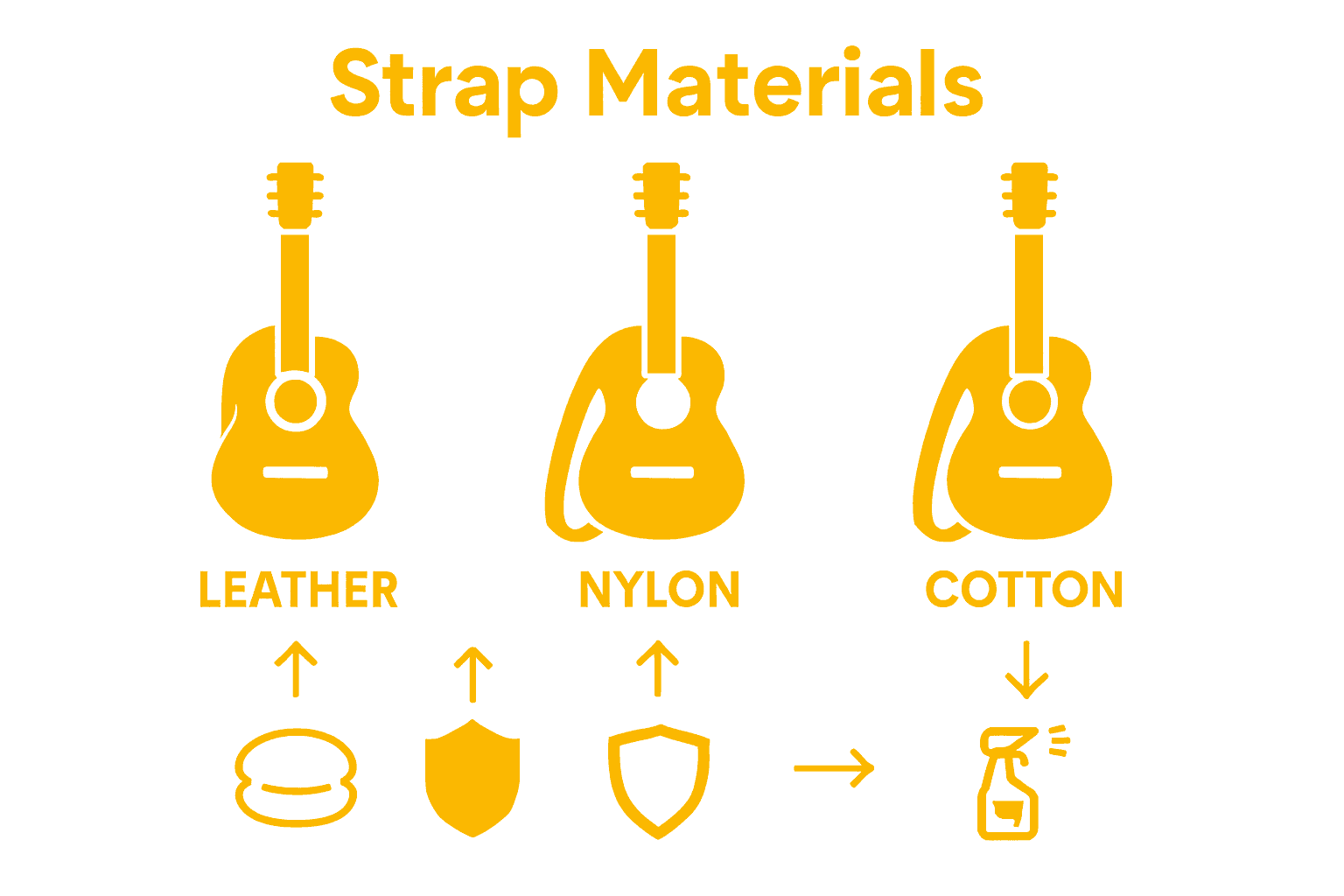
Guitar straps are engineered with diverse materials, each bringing unique characteristics to the musician’s experience. Leather, traditionally considered premium, offers exceptional durability and develops a personalised patina over time. Cotton straps provide lightweight breathability, while nylon materials deliver robust strength with minimal weight. Synthetic options like polyester and polypropylene have gained popularity for their weather resistance and consistent performance.
The primary functional requirements of a guitar strap transcend aesthetic considerations. A well-designed strap distributes instrument weight evenly across the player’s shoulder, reducing fatigue during extended performances. Musicians must consider factors like width, padding, and material flexibility when selecting their ideal strap. Some straps incorporate ergonomic features like cushioned sections or adjustable lengths to accommodate different body types and playing styles.
Pro Tip: Test multiple strap materials before committing to one. Each musician’s body and playing technique differs, so personal comfort should always be your primary consideration when selecting a guitar strap.
Pro Tip: Always check strap attachments and buckles for secure fitting before performing to prevent unexpected instrument drops during live performances.
Types of Materials: Leather, Nylon, and Alternatives
Guitar straps encompass a diverse range of materials, each offering unique performance characteristics and aesthetic qualities. Guitar musicians can select from multiple material options that significantly impact playing comfort and instrument support.
Leather remains the quintessential premium material for guitar straps, prized for its exceptional durability and elegant appearance. Full-grain leather straps develop a rich patina over time, adapting to the player’s body and providing superior comfort through natural flexibility. Genuine leather straps typically feature robust construction, featuring thick, carefully treated materials that distribute instrument weight effectively across the shoulder.
Nylon represents a modern alternative, offering lightweight performance and remarkable versatility. These synthetic straps excel in durability, resisting moisture and temperature variations better than traditional materials. Nylon straps often incorporate innovative designs with padded sections, quick-release buckles, and adjustable lengths to accommodate different playing styles and body types. Synthetic materials like polyester and polypropylene complement nylon, providing musicians with budget-friendly options that maintain consistent performance.

Additional alternative materials expand a guitarist’s choices beyond traditional leather and nylon. Cotton straps deliver breathable comfort, while neoprene provides exceptional shock absorption and moisture-wicking properties. Some experimental musicians explore unconventional materials like recycled seat belts, woven textiles, and custom-designed fabrics to personalise their instrument’s aesthetic and functional profile.
Pro Tip: Always assess strap material against your specific playing environment and personal comfort requirements. A professional-grade leather strap might feel extraordinary for studio recordings, while a lightweight nylon strap could be ideal for energetic live performances.
Pro Tip: Invest time in trying multiple strap materials, understanding that your ideal choice depends on your unique playing technique, body structure, and musical genre.
Material Features: Durability, Maintenance, and Feel
Guitar strap materials exhibit distinctive performance characteristics that directly influence a musician’s playing experience. Understanding the nuanced attributes of different materials helps guitarists make informed selections that balance comfort, longevity, and aesthetic preferences.
Durability represents a critical consideration when evaluating guitar strap materials. Leather straps stand out as the most resilient option, developing a rich character with age and withstanding years of consistent use. Full-grain leather develops a protective patina, becoming more supple and comfortable over time while maintaining structural integrity. Synthetic materials like nylon and polyester offer impressive durability with lower maintenance requirements, resisting moisture and temperature fluctuations more effectively than natural fibres.
Maintenance protocols vary significantly across different strap materials. Leather straps demand periodic conditioning to prevent cracking and maintain flexibility, requiring specialised leather treatments and careful storage away from direct sunlight. Nylon and synthetic straps offer remarkable low-maintenance performance, easily cleaned with mild soap and water, and resistant to environmental degradation. Cotton straps sit in a middle ground, offering moderate durability but requiring more frequent replacement compared to leather or synthetic alternatives.
The tactile feel of a guitar strap profoundly impacts a musician’s comfort and playing experience. Leather straps provide a luxurious, smooth texture that moulds to the player’s body, distributing instrument weight evenly and reducing shoulder fatigue. Nylon straps offer a lightweight, flexible feel with enhanced grip properties, particularly beneficial for energetic performers. Neoprene and padded synthetic materials introduce additional comfort layers, incorporating shock-absorption technologies that minimise physical strain during extended playing sessions.
Here’s a concise comparison of common guitar strap materials and their performance features:
| Material | Comfort Level | Durability | Maintenance Needs |
|---|---|---|---|
| Leather | High, moulds to body | Excellent, gets better with age | Requires conditioning, avoid sun |
| Nylon | Good, lightweight | Very good, resists weather | Easy, clean with soap and water |
| Cotton | Breathable, soft | Moderate, wears faster | Washable, needs replacement often |
| Neoprene | Padded, shock absorb | Good, resists moisture | Low, wipe clean when needed |
| Polyester | Consistent, flexible | Good, weather-resistant | Minimal, quick drying |
Pro Tip: Rotate between multiple straps to extend their lifespan and prevent uneven wear. Different materials perform optimally in varied performance environments.
Pro Tip: Conduct periodic inspections of your guitar strap’s attachment points and overall condition to prevent unexpected instrument drops during performances.
How Strap Materials Influence Comfort and Use
The selection of guitar strap material profoundly impacts a musician’s physical comfort and overall playing experience. Different guitar strap designs significantly affect performance by distributing instrument weight, managing moisture, and adapting to various playing styles and body types.
Weight Distribution emerges as a critical factor in strap material performance. Leather straps naturally conform to the player’s body, creating a balanced weight transfer that minimises shoulder strain during extended performances. Synthetic materials like nylon and neoprene introduce engineered padding technologies, incorporating shock-absorption features that further reduce physical stress. Padded sections strategically placed along the strap can dramatically alter a musician’s comfort level, transforming potentially fatiguing playing sessions into more sustainable experiences.
Material flexibility plays an equally important role in playing comfort. Rigid materials restrict movement and create tension, while more adaptive fabrics allow natural body mechanics during performance. Leather’s inherent ability to soften and mould to individual body contours makes it an exceptional choice for musicians seeking personalised comfort. Conversely, lightweight synthetic materials provide consistent performance across diverse playing conditions, offering musicians predictable support without the extended break-in period required by traditional leather straps.
Physiological considerations extend beyond mere physical comfort. The psychological impact of a well-chosen guitar strap cannot be understated. A strap that feels comfortable and instils confidence can enhance a musician’s stage presence, reduce performance anxiety, and allow greater creative expression. Musicians with different body types, playing genres, and performance styles will experience materially different outcomes based on their strap selection, making personalised choice crucial.
Pro Tip: Experiment with multiple strap materials during practice sessions to understand how different fabrics interact with your unique playing style and body mechanics.
Pro Tip: Consider your primary performance environment when selecting a strap material, as temperature, humidity, and physical demands vary across different musical settings.
Comparing Material Choices: Common Mistakes to Avoid
Musicians frequently overlook critical considerations when selecting guitar strap materials, potentially compromising their playing comfort and instrument performance. Understanding common pitfalls can help guitarists make more informed decisions about their equipment.
Instrument Weight Compatibility represents a fundamental mistake many musicians make. Selecting a strap without considering the specific weight and balance of the guitar can lead to significant physical strain. Lightweight nylon straps might suffice for compact electric guitars but prove inadequate for heavier instruments like full-bodied acoustic guitars or bass guitars. Heavyweight instruments require robust materials with superior load-bearing capabilities, such as thick leather or reinforced synthetic straps with additional padding and support mechanisms.
Another prevalent error involves prioritising aesthetic appeal over functional performance. Musicians often choose straps based on visual design without evaluating critical material properties like flexibility, moisture resistance, and weight distribution. A visually appealing strap might look impressive on stage but could compromise playing comfort and potentially cause long-term physical discomfort. Professional musicians understand that performance characteristics must always supersede superficial design considerations.
Environmental adaptation represents a nuanced challenge in strap material selection. Different performance environments demand specific material characteristics. Performers in humid recording studios require moisture-wicking materials, while outdoor musicians need straps resistant to temperature fluctuations and ultraviolet degradation. Cotton straps might feel comfortable in controlled indoor settings but quickly become unsuitable in variable external conditions. Synthetic materials like nylon and polyester often provide more consistent performance across diverse environmental scenarios.
To help avoid common strap selection pitfalls, review this summary of typical mistakes and solutions:
| Mistake | Potential Issue | How to Avoid |
|---|---|---|
| Ignoring instrument weight | Discomfort or shoulder strain | Match strap strength to guitar |
| Choosing by looks only | Poor comfort or fit | Prioritise material properties |
| Not considering environment | Strap degrades or feels uncomfortable | Select weather-appropriate material |
| Skipping regular inspection | Risk of attachment failure | Check strap and fittings often |
Pro Tip: Always test a guitar strap for at least 30 minutes during a practice session to evaluate genuine comfort and functionality before committing to a purchase.
Pro Tip: Inspect your guitar strap’s attachment points and material condition regularly, replacing it proactively before potential equipment failure occurs during a performance.
Discover the Perfect Guitar Strap Material for Your Comfort and Style
Choosing the right guitar strap material is essential to avoid discomfort and enhance your playing experience. Whether you struggle with shoulder fatigue from heavy instruments or need a strap that adapts to your unique body shape and performance environment, understanding the differences between leather, nylon, and other materials can make all the difference. At MusicStreet, we understand these challenges and help you find straps that combine durability, comfort, and style to match your individual needs.

Explore MusicStreet’s extensive selection of guitar straps and accessories crafted to optimise weight distribution and reduce fatigue. Benefit from expert advice, personalised service, and the ability to try products in our Huntingdon store. Make your next performance effortless and enjoyable by visiting MusicStreet today. Act now to experience premium quality straps, secure fittings, and the perfect balance for your guitar comfort. Let us help you find your ideal strap and elevate your playability with confidence.
Frequently Asked Questions
What are the main types of materials used for guitar straps?
The main types of materials used for guitar straps include leather, nylon, cotton, neoprene, and synthetic options like polyester and polypropylene, each offering varying levels of durability, comfort, and aesthetic appeal.
How does the choice of guitar strap material affect comfort during performances?
The choice of guitar strap material significantly impacts comfort by influencing weight distribution and flexibility. Leather straps conform to the body, while padded nylon or neoprene options can absorb shock, reducing physical strain during prolonged playing.
What maintenance do different guitar strap materials require?
Leather straps require periodic conditioning to prevent cracking, while nylon and synthetic straps are low-maintenance and can be cleaned easily with soap and water. Cotton straps may need frequent replacement due to moderate durability.
What should musicians consider when selecting a guitar strap?
Musicians should consider factors such as their instrument’s weight, the strap’s material properties (like flexibility and moisture resistance), and their personal comfort preferences. Testing multiple materials before making a choice is advisable.






Share:
7 Essential Guitar Tools Every Musician Should Own
Impulse Response Explained: Essential for Guitarists