


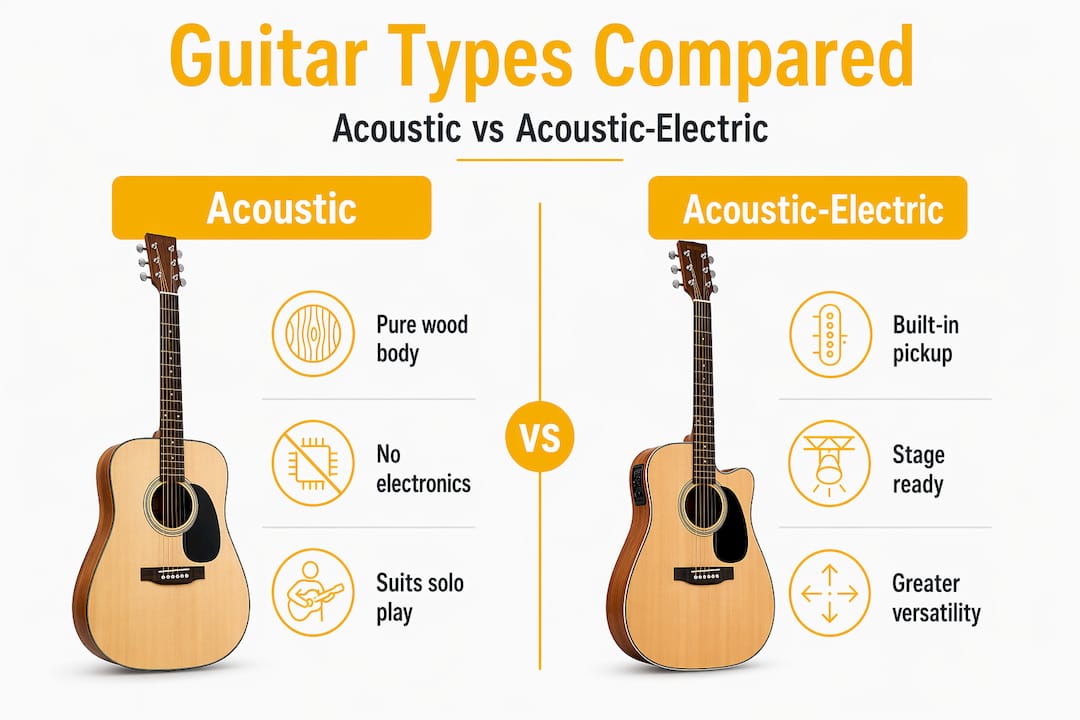
- An acoustic-electric guitar functions like a regular acoustic but includes a pickup system for amplification, offering stage flexibility. The type of pickup—piezo, magnetic, transducer, or hybrid—significantly shapes the amplified tone and feedback resistance. Choosing between the two depends on your playing environment and performance needs rather than instrument quality.
Most guitarists assume an acoustic-electric is simply an acoustic with a socket fitted to the side. Plug it in, and it sounds exactly like it does in your living room, only louder. That assumption leads to real frustration at gigs, in studios, and in music shops across the country. The truth is that the acoustic electric guitar vs acoustic conversation goes much deeper than a single output jack. Understanding the differences in sound production, pickup systems, and practical use will save you money and stop you from buying the wrong instrument for your needs.
Table of Contents
- Key takeaways
- Acoustic electric guitar vs acoustic: how sound is produced
- Pickup types and how they shape your tone
- Choosing between acoustic and acoustic-electric
- What amplified tone actually sounds like
- My honest take on choosing between the two
- Find your ideal guitar at Musicstreet
- FAQ
Key takeaways
| Point | Details |
|---|---|
| Sound production differs fundamentally | Acoustic guitars rely purely on body resonance; acoustic-electrics add electronics to enable amplification. |
| Pickup type shapes amplified tone | Under-saddle piezos, soundhole pickups, and hybrid systems each produce noticeably different amplified sounds. |
| Unplugged performance is comparable | Both guitar types can sound similar unplugged, but only the acoustic-electric gives you live stage flexibility. |
| Setup knowledge matters | Getting great amplified tone from an acoustic-electric requires correct gain staging and EQ adjustment. |
| Choice depends on use, not quality | Neither guitar is objectively better. Your playing context and goals should drive the decision. |
Acoustic electric guitar vs acoustic: how sound is produced
The acoustic guitar is a self-contained instrument. You strum a string, it vibrates, and that vibration travels through the bridge and saddle into the hollow wooden body, which resonates and projects sound through the soundhole. No cables, no power source, no additional gear. Just wood, strings, and physics. That simplicity is genuinely part of its appeal, and for a huge range of playing situations, it is all you will ever need.
An acoustic-electric guitar shares exactly the same fundamental construction. The hollow body is still doing the acoustic work. The critical difference is that a pickup system, along with a preamp and often an onboard EQ, has been built into the body. Acoustic-electrics require amplification once plugged in, but they still function as entirely normal acoustic guitars when the cable stays in the bag.
This distinction matters more than most buyers realise. Consider these practical differences:
- An acoustic guitar is ready to play anywhere without any additional gear whatsoever.
- An acoustic-electric gives you the same unplugged experience but adds the option of connecting to an amplifier, PA system, or audio interface.
- The acoustic body still generates all the natural resonance in both cases. Electronics do not replace that.
- Weight and body shape remain largely the same across comparable models.
The portability argument slightly favours the pure acoustic. There is genuinely nothing to carry beyond the guitar itself. However, the acoustic-electric is not significantly heavier or bulkier, and for anyone who plays in public spaces, the amplification option is far too practical to dismiss.
Pickup types and how they shape your tone
This is where acoustic electric guitar vs acoustic comparisons get genuinely technical, and where a lot of buyers get caught out. The pickup system inside an acoustic-electric is not a neutral microphone. Each type shapes tone in distinct ways, and understanding those differences will stop you being surprised at your first gig.
| Pickup type | Tone character | Feedback resistance | Best suited for |
|---|---|---|---|
| Under-saddle piezo | Bright, clear, articulate | Excellent | Live performance, loud stages |
| Soundhole magnetic | Warm, electric-like character | Moderate | Smaller venues, folk, blues |
| Soundboard transducer | Natural, body resonance captured | Low | Recording, quieter settings |
| Internal microphone | Most natural acoustic sound | Poor | Studio or controlled environments |
| Hybrid (blended) | Balanced, natural with definition | Good | Versatile players, live and studio |
Under-saddle piezo pickups are the most common choice in production acoustic-electrics. They sit beneath the saddle and detect string vibration at that contact point, producing a bright, clear amplified sound. Their feedback resistance makes them the practical choice for most live situations. The downside is the notorious “piezo quack,” a harsh, plasticky attack that appears when gain or EQ is poorly set. Importantly, this is usually a setup issue rather than a fundamental flaw in the pickup itself.
Soundhole magnetic pickups sit in the soundhole and work similarly to electric guitar pickups. They read string movement magnetically, which gives them a warmer, more electric-influenced tone. Soundhole pickups tend to be feedback-prone at higher volumes, so they suit smaller, quieter venues better than festival stages.
Soundboard transducers and internal microphones prioritise capturing the natural resonance of the guitar body. They produce the most acoustically authentic amplified sound but sacrifice practical feedback resistance. Players seeking the most natural amplified tone often combine a pickup with a microphone in a dual-source system, blending directness with genuine acoustic air and complexity.
Hybrid systems blend two of these approaches, typically a piezo with a microphone or transducer, to get the best of both worlds. Hybrids balance natural acoustic character with practical feedback resistance, making them popular with working musicians who need consistency across different venues.
Pro Tip: When you first plug an acoustic-electric into a PA or amp, start with your preamp volume and gain at zero and bring them up slowly. Cutting the high-mid frequencies slightly at around 2kHz on your EQ before adding gain is one of the fastest ways to tame harsh piezo tone.
For a deeper dive into how these systems function, the Musicstreet guide on acoustic pickup types explains each option with practical context.
Choosing between acoustic and acoustic-electric
The decision between acoustic or acoustic electric guitar is not about which is the superior instrument. It is about matching the instrument to your situation. Ask yourself honestly where and how you play, and the right choice becomes obvious.
Choose a pure acoustic if:
- You play primarily at home, in small groups, or in unplugged settings where amplification is not needed.
- You want the lowest possible gear requirement and maximum portability.
- Budget is a priority. Acoustic-electrics cost more, and that price difference often buys you better tonewoods or build quality in a pure acoustic at the same price point.
- You are focused on developing technique without relying on volume as a crutch.
Choose an acoustic-electric if:
- You perform live in venues where natural acoustic volume is not enough, from open mic nights to full band situations.
- You want to record without needing to set up a separate microphone, particularly useful for home recording.
- You play in environments where volume needs to be controlled or redirected through a sound system.
- You want a single guitar that covers both intimate home playing and public performance.
The genre you play matters too. Singer-songwriters gigging regularly, folk musicians playing clubs, and fingerstyle performers at weddings or corporate events all benefit enormously from the stage volume and recording flexibility that an acoustic-electric provides. A guitarist who plays solely at home for personal enjoyment does not need the added expense.
For beginners specifically, there is a common instinct to buy the most versatile option immediately. That is not always the wisest move. If you have not yet established where and how you like to play, a quality pure acoustic gives you room to develop. The acoustic vs acoustic electric guitar for beginner guide at Musicstreet covers this decision with practical examples.
Pro Tip: If you are buying your first acoustic-electric, try it unplugged in the shop first. The pickup system is only as good as the guitar underneath it. A poor-sounding acoustic body will not improve when amplified.
What amplified tone actually sounds like
Many players expect an acoustic-electric to sound like a perfect reproduction of the unplugged guitar once connected to an amp or PA. This is one of the most persistent misconceptions in the electric vs acoustic guitars conversation.

Unplugged, both guitar types share similar tonal warmth, body resonance, and dynamic response. The hollow body does that work regardless of whether there is a pickup inside. Plugged in, however, the character shifts depending on the pickup system. Under-saddle piezos emphasise the attack and brightness of each note, which can sound thin or harsh without thoughtful EQ. Proper gain staging and EQ tame harsh piezo characteristics effectively, but this requires a basic understanding of your preamp or amplifier controls.
The amplifier or PA you connect to also shapes the result significantly. Electric guitar amps colour the signal with their own tonal character, which is generally counterproductive for acoustic tone. Acoustic amps or keyboard amps with flatter frequency response preserve the natural acoustic character far better.
A few things worth understanding clearly:
- An amplified acoustic-electric does not sound like an electric guitar. The body resonance, harmonic complexity, and string response remain distinctly acoustic.
- The pickup captures a version of the acoustic sound, not a perfect replica of it. Think of it as a translation rather than a copy.
- On-board EQ controls (if your guitar has them) are your first tool for shaping tone. Use them before reaching for the amp controls.
- Blended pickup and microphone approaches improve natural tone reproduction significantly but add setup complexity that casual players may not want to manage.
My honest take on choosing between the two
I have spent years handling both pure acoustics and acoustic-electrics, and the one thing I keep coming back to is this: the choice is rarely about better or worse. It is about honesty regarding how and where you actually play.
I have seen beginners purchase acoustic-electrics with impressive onboard preamp systems, only to spend three years playing unplugged at home without ever connecting to an amplifier. That is not a disaster, but it does mean they paid for features that sat dormant. On the other side, I have seen gigging musicians try to get by with a pure acoustic on a loud stage and end up frustrated by the limitations.
The amplification side of acoustic-electrics is frequently underestimated in terms of the learning curve involved. Getting a genuinely good amplified tone takes some patience with EQ settings and gain staging. Most of the time, what sounds disappointing through a PA is not a bad guitar. It is poor setup. Once you understand how your pickup system responds to gain and EQ adjustments, the results improve dramatically.
My recommendation for anyone genuinely torn: be specific about your next six months of playing. If there is a gig on the horizon, buy the acoustic-electric. If there is not, invest that extra budget into a better-quality pure acoustic and master the instrument first. A great-sounding unplugged guitar will always be more satisfying than a mediocre acoustic-electric that never gets plugged in.
— Musicstreet
Find your ideal guitar at Musicstreet
Whether you have landed firmly on one side of the acoustic or acoustic electric guitar decision, or you are still weighing up the options, exploring the right instruments with expert guidance makes an enormous difference.

At Musicstreet, you will find a hand-picked selection of premium acoustic and acoustic-electric guitars from respected brands, available online and at the physical store in Huntingdon, Cambridgeshire. Every instrument is professionally set up before it reaches you, and the team is genuinely knowledgeable about matching players with guitars that suit their style, budget, and ambitions. Whether you are buying your first guitar or adding something special to your collection, free UK delivery is available on qualifying orders, and in-store tryouts are always welcomed. Browse the full range and get the right guitar for where you are in your playing journey.
FAQ
What is the main difference between acoustic and acoustic-electric guitars?
An acoustic guitar produces sound purely through its hollow wooden body, while an acoustic-electric guitar includes a built-in pickup and preamp that allows it to be connected to an amplifier or PA system. Both function as acoustic instruments when unplugged.
Does an acoustic-electric sound different to a pure acoustic when plugged in?
Yes. The pickup system shapes the amplified tone differently from the natural unplugged sound, often emphasising brightness and attack. Under-saddle piezos in particular can sound harsh without proper EQ and gain adjustment.
Which is better for a beginner, acoustic or acoustic-electric?
The best choice depends on intended use. A pure acoustic suits beginners playing at home who want simplicity and lower cost. An acoustic-electric suits those who plan to perform live or record without a microphone from early on. The first acoustic guitar buying guide at Musicstreet covers this in detail.
Can I use any amplifier with an acoustic-electric guitar?
You can, but results vary. Electric guitar amplifiers colour the signal in ways that can make acoustic tone sound unnatural. An acoustic-specific amplifier or a keyboard amp with a flat frequency response will reproduce the acoustic character far more faithfully.
What is piezo quack and how do I fix it?
Piezo quack is a harsh, brittle attack sound that occurs when an under-saddle piezo pickup is overloaded by poor gain staging. Reducing input gain and cutting the upper-mid frequencies on your preamp or EQ generally resolves it without changing the pickup.






Share:
Different types of guitar strings: a complete guide
Best Gretsch Guitars 2025: The Ultimate Buyer's Guide