


- Most issues with acoustic guitars in shops stem from improper setup rather than the instrument itself.
- A reputable shop offers expert setup services, ensuring comfort, proper intonation, and tuning stability.
Walking into an acoustic guitar shop and picking up an instrument that feels stiff, buzzes on every chord, or simply sounds flat is more common than most players realise. The problem usually has nothing to do with the guitar itself. It has everything to do with setup, and whether the shop behind it knows what they are doing. This guide cuts through the noise so you can visit any acoustic guitar shop in the UK with the knowledge to spot a well-prepared instrument, ask the right questions, and walk away with a guitar that genuinely plays and sounds the way it should.
Table of Contents
- What to expect when visiting an acoustic guitar shop
- Key factors to check in acoustic guitars before buying
- Understanding guitar setups and their impact on playability and sound
- Comparing common acoustic guitar models and features in UK shops
- How to get the most from your acoustic guitar shop visit
- Why the right acoustic guitar shop makes all the difference
- Find your perfect acoustic guitar at MusicStreet
- Frequently asked questions
Key Takeaways
| Point | Details |
|---|---|
| Visit knowledgeable shops | Choose shops with expert staff and setup technicians for personalised guidance and service. |
| Check guitar setup | Verify intonation, action height, and tuning stability to ensure comfortable playability. |
| Understand setup importance | Regular setups account for climate effects and keep your guitar playing smoothly and sounding great. |
| String gauge matters | Changing string gauge changes playability and often requires a professional setup. |
| Build trusted relationships | Developing a rapport with your shop’s guitar technician ensures lasting support and guitar health. |
What to expect when visiting an acoustic guitar shop
A quality acoustic guitar shop is not just a room full of instruments on hooks. It is a place where the staff can tell you why a particular guitar suits your playing style, not just sell you the one with the nicest finish. In the UK, you will find shops stocking everything from starter acoustics under £100 to premium hand-built instruments north of £2,000. The range is wide, and that is precisely why guidance matters.
What separates a genuinely useful local guitar shop from a warehouse-style retailer is the presence of expert setup services. Expert guitar technicians ensure the guitar plays comfortably and stays in tune despite environmental changes. That last part is particularly relevant in the UK, where seasonal humidity swings from dry winter heating to damp autumn air put real stress on acoustic guitar bodies and necks.
When you walk in, look for these signs that the shop takes setup seriously:
- Staff who ask about your playing level and style before recommending anything
- A clearly visible workshop or repair area where setups are performed
- Guitars on display that have been recently checked for action height and intonation
- Willingness to demonstrate the difference a professional setup makes
- Transparency about whether floor models have been adjusted or are straight out of the box
Understanding guitar setup indicators before you visit puts you in a far stronger position to evaluate what you are being shown.
Key factors to check in acoustic guitars before buying
Most buyers strum an open G chord, nod approvingly at the sound, and move towards the counter. Do not be that buyer. A guitar can sound pleasant on an open chord whilst hiding serious playability problems that will frustrate you within a week of ownership. Here is what to test before committing.
-
Intonation. Play an open string, then fret the same string at the 12th fret. The notes should match in pitch, just an octave apart. If they do not, the guitar is out of intonation. Intonation issues between open and 12th fret notes are among the most common setup problems and are correctable, but you want to know before buying. You can learn more about how to set guitar intonation accurately if you want to understand what a tech actually adjusts.
-
Action height. This is the distance between the strings and the fretboard. Too high and you will find barre chords exhausting and upper-fret notes sharp in pitch. Too low and you will get buzzing. Neither extreme is acceptable on a shop-ready guitar.
-
Fret buzz. Play individual notes and simple chords across the full neck. Any buzzing, particularly in the first five frets, suggests high frets, low action, or a neck that needs attention.
-
Nut and fret edges. Run your thumb along the edge of the neck. Sharp fret ends that catch your hand are a sign the guitar has not been properly finished or conditioned, often because it has been sitting in a dry environment.
-
Tuning stability. Tune the guitar, play it for five minutes, then check with a tuner. A guitar that drifts significantly has either a nut problem, poor-quality tuners, or both.
-
Recent setup history. Especially relevant for pre-owned instruments or guitars where string gauge explained differences may have gone unaddressed. Ask directly: when was this last set up, and what gauge strings are fitted?
Pro Tip: Bring a clip-on tuner to any guitar shop visit. It costs nothing to carry and lets you objectively check tuning stability and basic intonation without relying on your ear alone.
Understanding guitar setups and their impact on playability and sound
A guitar setup is not a single adjustment. It is a sequence of calibrations that work together to make the instrument feel and sound correct for a specific player. Understanding each component helps you have a much more informed conversation with the shop’s technician.
The main elements of a professional acoustic guitar setup include:
- Truss rod adjustment: Controls the curvature of the neck. Too much bow or backbow throws the action out across the entire fretboard.
- Nut slot height: The nut slots determine how high the strings sit in the first few frets. Slots cut too deep cause buzzing; too shallow makes open chords unnecessarily hard to press.
- Saddle height: Adjusting the saddle affects the overall action in the upper register. Shaving the saddle is one of the most common improvements made to factory guitars.
- Intonation: On acoustic guitars, this is typically addressed by reshaping or repositioning the saddle.
- String gauge compatibility: A guitar set up for light gauge strings will need re-adjusting if you switch to medium gauge. The tension difference is significant.
“A great guitar setup does not just make the instrument easier to play. It makes you want to play it more.”
Wood in acoustic guitars reacts to environmental conditions, causing neck warping that affects string action and tuning. In the UK, this is a year-round concern. Central heating in winter drives humidity down sharply, causing necks to straighten or backbow. A humid British summer does the opposite. Regular setups, typically once or twice a year, are the practical response. Following acoustic guitar maintenance steps between visits also helps significantly.
Pro Tip: Some higher-end shops and luthiers use PLEK machines, computer-controlled systems that measure and mill frets to extraordinary precision. If a shop offers PLEK services, it is a strong signal they take instrument quality seriously.

Comparing common acoustic guitar models and features in UK shops
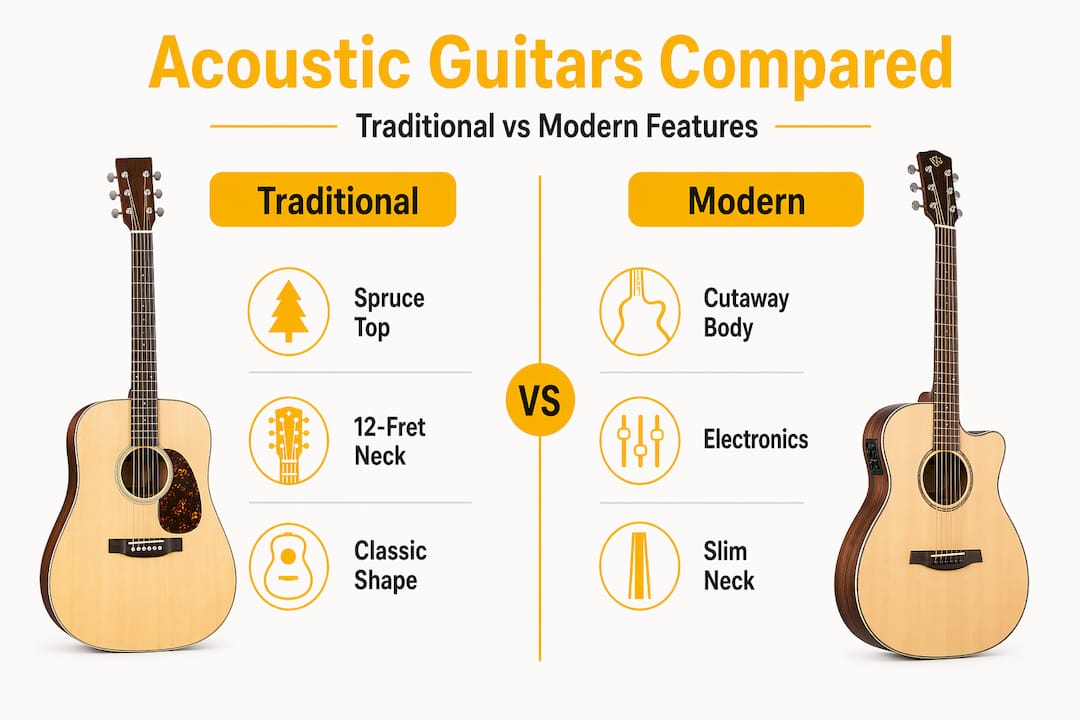
When you are ready to buy acoustic guitars, understanding what separates one model from another saves considerable time and reduces the risk of buyer’s regret. The UK market carries everything from traditional mahogany-topped folk guitars to modern performance instruments with onboard electronics.
| Feature | Traditional acoustic | Modern acoustic |
|---|---|---|
| Tonewood top | Spruce or cedar, fixed spec | Often sitka spruce with optional upgrades |
| Neck adjustment | Truss rod only | Truss rod plus adjustable neck angle on some models |
| Electronics | None or basic | High-quality undersaddle or hybrid pickup systems |
| Bracing | Traditional X-brace | Modified X-brace or scalloped for improved resonance |
| String gauge factory fit | Light or medium | Light, with easy swap options |
| Price range | £150 to £800 typical | £600 to £2,500+ |
Taylor’s Next Generation 324ce is a useful example of where modern acoustic design has arrived. The guitar is praised for balanced sound and features like the Action Control Neck for fast string height adjustments, plus an improved pickup system for versatile plugged-in tone. It illustrates how acoustic guitar design has moved well beyond simply choosing a pretty tonewood.
Key things to look for when comparing models:
- Tonewoods: Mahogany backs and sides produce a warm, focused sound suited to folk and fingerpicking. Rosewood delivers broader dynamics and a fuller low end. Walnut sits somewhere in between and is increasingly popular.
- Bracing: Scalloped X-bracing allows the top to vibrate more freely, giving older designs a livelier, more responsive feel.
- String gauge compatibility: Understanding why string gauge matters helps you pick a guitar already configured close to your preferred gauge, reducing the need for an immediate setup change.
Test at least three or four different models before deciding. Your ideal acoustic often surprises you.
How to get the most from your acoustic guitar shop visit
Preparation transforms a passive browse into a genuinely productive experience. Knowing what to ask and what to listen for means you leave with the right guitar rather than simply the most expensive one you could afford.
Before and during your visit, keep these points in mind:
- Request an intonation demonstration. Ask the staff to show you the 12th fret test on any guitar you are seriously considering. A confident shop has nothing to hide here.
- Ask about setup history. Especially important for used guitars and acoustic guitar sales items that may have been sitting on a floor for months.
- Test across the full neck. Do not just strum open chords. Play barre chords at the 5th and 7th frets, single notes at the 12th, and check for any buzzing or dead spots.
- Clarify string gauge. Know what is on the guitar and whether it matches your preference. A change in gauge means a change in tension and therefore a setup adjustment.
- Discuss acoustic guitar maintenance tips with the staff. A good shop will happily talk you through humidifier use, string change frequency, and storage recommendations.
- Bring your own pick. You play better with familiar equipment, and you will get a truer sense of the guitar’s feel.
Using a setup symptom checklist as a practical diagnostic script during your visit helps you avoid the frustration of post-purchase issues that could have been spotted in the shop.
Pro Tip: If you are torn between two guitars, ask the shop to set both up identically and then compare them again. The difference in character between two well-set guitars tells you far more than comparing one fresh guitar against one that has been neglected.
Why the right acoustic guitar shop makes all the difference
Most players think of buying a guitar as a transaction. You hand over money, you take home an instrument. That is the least interesting and least useful way to think about it.
The shop you buy from is, effectively, the beginning of a long-term relationship with your instrument. A trusted guitar technician is invaluable and difficult to replace, and building a relationship through your shop ensures ongoing guitar health across years of playing. That relationship pays dividends every time the seasons change, every time you experiment with a different string gauge, every time the guitar takes a knock on a gig or a rehearsal.
A skilled tech also catches things you cannot see. A slightly raised fret. A hairline crack developing near the nut. A saddle that has shifted fractionally. These are invisible to the untrained eye but entirely obvious to someone who has spent years working on instruments. Understanding why guitar maintenance matters shifts your perspective from “I bought a guitar” to “I am investing in an instrument I intend to play well for years.”
The best acoustic guitar stores are not the ones with the most floor space or the largest catalogue. They are the ones where someone who actually plays and cares about guitars helps you find the right instrument, sets it up correctly before it leaves the shop, and is still there six months later when you have questions.
Personalised service is not a luxury. For serious players, it is a necessity.
Find your perfect acoustic guitar at MusicStreet
At MusicStreet, finding the right acoustic guitar is not a guessing game. Our premium guitar shop in Huntingdon, Cambridgeshire carries a carefully chosen selection of new and pre-loved acoustic guitars from respected brands, each inspected and set up by expert technicians before it reaches your hands.

Whether you are buying your first acoustic or upgrading to a performance instrument, our team offers the personalised guidance that turns a good purchase into the right one. We support you after the sale too, with ongoing setup services, acoustic guitar strings, and maintenance advice that keeps your guitar performing at its best through every UK season. Contact us or visit in store to explore the collection and speak directly with someone who genuinely knows guitars.
Frequently asked questions
When should I get my acoustic guitar set up after purchase?
You should consider a setup within a year of purchase, when you change string gauge, or as soon as you notice issues like buzzing or tuning instability.
How can I check if an acoustic guitar has correct intonation?
Compare the pitch of an open string with the same string fretted at the 12th fret. They should match in pitch precisely, as intonation mismatch at this point is a clear sign a setup is needed.
What makes a good acoustic guitar shop in the UK?
A good shop offers a wide selection, expert setup services, personalised advice, and a reliable technician for ongoing guitar care beyond the initial purchase.
Why is string gauge important when buying an acoustic guitar?
String gauge directly affects tone and playability, and changing string gauge almost always requires a professional setup to keep the guitar comfortable and sounding correct.
How does the UK climate affect acoustic guitars?
Seasonal humidity and temperature shifts cause wood to warp or swell, which impacts tuning stability and action height, making regular setup maintenance particularly important for UK players.








Share:
What is a semi-hollow guitar? A musician's guide
Guitar storage tips to protect your instrument