


An electric acoustic guitar has a built-in pickup and preamp, allowing amplification without changing its natural sound.
The main difference lies in electronics, as the acoustic produces sound through resonance, while electronics shape only the amplified tone.
An electric acoustic guitar is defined as an acoustic guitar fitted with a built-in pickup and preamp system, allowing it to be amplified without changing its fundamental acoustic character. A pure acoustic guitar, by contrast, relies entirely on natural resonance to project sound. Understanding the difference between acoustic and electric acoustic guitar types is the single most important step before spending money on your first or next instrument. The choice affects your budget, your setup, and how you play live or at home. This guide covers sound production, playability, cost, and recording so you can make a confident decision.
What is the difference between acoustic and electric acoustic guitars?
The core distinction is electronics. A pure acoustic guitar produces sound through string vibration transmitted to a wooden soundboard, which resonates air inside the hollow body. Acoustic guitars amplify string energy naturally, with the soundboard acting like a speaker cone. No battery, no cable, no external power required.
An electric acoustic guitar, also called an electro-acoustic guitar in the industry, adds a pickup system beneath the saddle. Piezoelectric pickups convert string vibrations into electrical signals, which an onboard preamp then processes and sends to an amplifier or PA system. That preamp typically includes tone controls and a tuner built into the guitar’s side.
The critical point that many beginners miss: an electric acoustic sounds identical to a pure acoustic when unplugged. The pickup does not alter the natural tone. Wood choice, body shape, and bracing do all the acoustic tone shaping. The electronics only matter the moment you plug in.
How do acoustic and electric acoustic guitars produce sound?
Sound production starts at the strings, but the body does the real work. Both guitar types share the same fundamental physics. The differences emerge in construction details and, for electric acoustics, the added electronic layer.
The acoustic engine: wood, body, and bracing
The soundboard, typically spruce or cedar, is the most influential component in acoustic guitar sound quality. Stiffer, lighter woods like Sitka spruce project clearly and respond quickly. Warmer woods like mahogany back and sides add midrange depth. Bracing patterns, the internal wooden struts glued beneath the soundboard, control how the top flexes and which frequencies it emphasises.
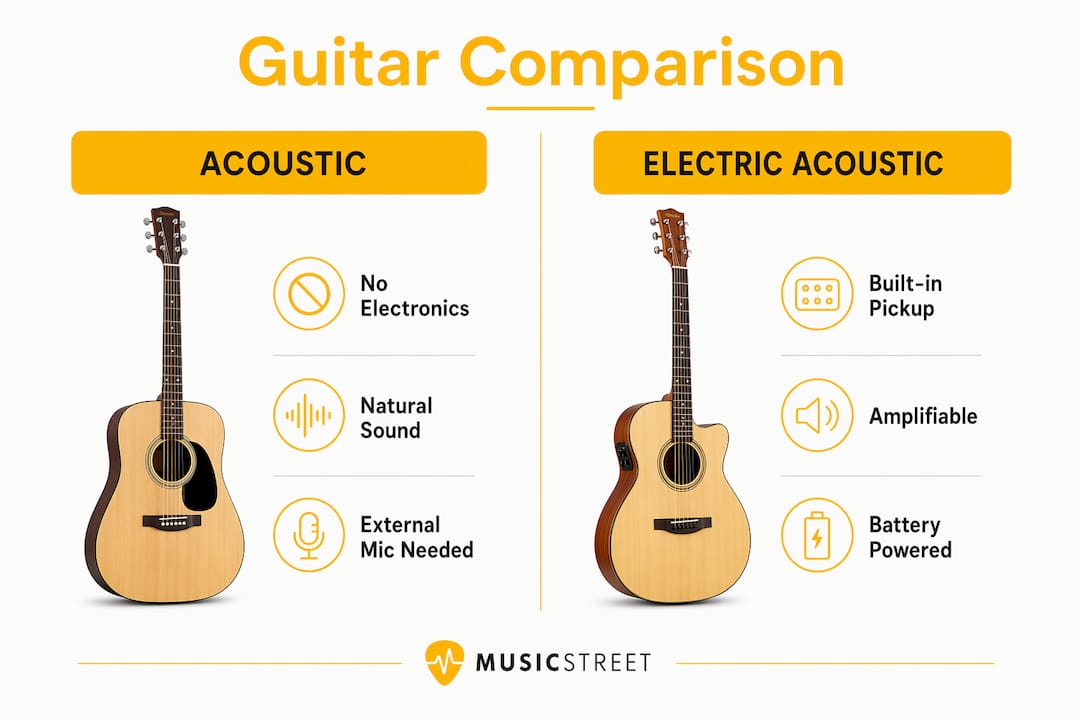
Body shape matters too. A dreadnought produces a full, loud sound suited to strumming. A concert or auditorium body shape favours fingerpicking with a more balanced frequency response. Neither type, acoustic or electric acoustic, escapes these physical rules. The electronics in an electro-acoustic sit on top of the acoustic foundation, not beneath it.
Key construction factors that shape tone in both guitar types:
- Soundboard material: Solid spruce tops resonate more freely than laminate, producing richer overtones as the wood ages.
- Back and sides: Rosewood adds brightness and sustain. Mahogany gives warmth and punch. Maple produces a clear, articulate tone.
- Body depth and width: Deeper bodies move more air and produce more bass. Shallower bodies feel easier to hold and project a more balanced sound.
- Bracing pattern: Scalloped X-bracing allows the top to vibrate more freely, increasing volume and tonal complexity.
- String gauge and action: Action on acoustic guitars is generally higher and string gauge heavier than on electric guitars, building finger strength but reducing initial comfort for beginners.
The electric acoustic addition: piezo pickups and preamps
Piezoelectric pickups sit beneath the saddle and generate a voltage when compressed by string vibration. That signal travels to an onboard preamp, usually powered by a 9V battery, which boosts and shapes the signal before it reaches an amplifier. Most preamps include bass, mid, and treble controls, plus a built-in chromatic tuner. This system adds weight and complexity but gives players direct control over their amplified tone at the guitar itself.

Playability, amplification, and when each type makes sense
Choosing between the two types comes down to where and how you play. A pure acoustic is immediate and portable. An electric acoustic is versatile but requires more management.
-
Playing at home or in small rooms. A pure acoustic is the simpler choice. No cables, no batteries, no amp needed. You pick it up and play. For beginners practising scales and chords, this simplicity removes friction and keeps focus on technique.
-
Performing live at open mics or gigs. An electric acoustic is the practical choice. Plugging directly into a PA system or acoustic amplifier gives the sound engineer a clean signal to work with. Using an external microphone on a pure acoustic in a live setting introduces feedback risk and limits your movement on stage.
-
Recording at home. This is where beginners frequently misunderstand the electric acoustic’s role. You do not need an electric acoustic to record. A pure acoustic recorded with a decent condenser microphone often sounds better than a piezo pickup plugged directly into an audio interface.
-
Travelling or busking. A pure acoustic wins on simplicity. No battery to die mid-performance, no cable to trip over. An electric acoustic can still be used unplugged in these situations, but the added weight and cost offer no benefit without amplification.
-
Teaching or group settings. Either type works. If the teacher needs to be heard over a group, an electric acoustic connected to a small amp solves the problem cleanly.
Pro Tip: Always unplug your electric acoustic when you finish playing. The preamp draws power from the 9V battery even when the volume is turned down. Leaving it plugged in overnight will drain the battery by morning.
Choosing acoustic or electric acoustic ultimately depends on one question: do you need amplification regularly? If the answer is no, a pure acoustic delivers better value at the same price point.
Cost comparison: what does the electronics premium buy you?
Price is where the difference between the two types becomes most concrete. Electric acoustics typically cost £50–£200 more than equivalent pure acoustic models. That premium pays for the integrated control panel, the piezo pickup, and the preamp circuit. It does not pay for better wood or superior craftsmanship.
| Feature | Pure acoustic | Electric acoustic |
|---|---|---|
| Amplification | External mic required | Built-in pickup and preamp |
| Battery | None required | 9V battery, 80–120 hours of use |
| Typical price premium | Baseline | £50–£200 more |
| Unplugged tone | Full natural resonance | Identical to pure acoustic |
| Best for | Home practice, recording with mic | Live performance, direct recording |
For beginners with a fixed budget, solid wood and craftsmanship yield better acoustic sound quality than spending the same money on electronics. A guitar with a solid spruce top at entry level will sound noticeably better than a laminate-top electric acoustic at the same price. If you do not need to plug in, spend the premium on the instrument itself.
Pro Tip: If you are buying your first guitar and have no immediate plans to perform live, choose the best solid-top pure acoustic your budget allows. You can always add an aftermarket pickup later if your needs change.
How to record and amplify each type for the best sound
Recording and live amplification reveal the sharpest practical contrast between the two guitar types.
Recording a pure acoustic guitar
A condenser microphone placed 20–30 centimetres from the 12th fret captures the most natural acoustic guitar sound. Microphone recording captures more natural acoustic tone than direct input from entry-level piezo pickups. Professionals consistently favour this approach in controlled studio environments. The room matters too. A treated space with minimal reverb gives the microphone a clean signal to work with.
Recording and amplifying an electric acoustic
Direct input from an electric acoustic is fast and consistent. You plug into an audio interface or PA system and get an immediate, noise-free signal. The trade-off is tonal character. Piezo pickups produce a compressed, slightly bright tone that sounds different from a mic-captured acoustic. This “piezo quack” is a recognised characteristic of the technology, not a fault. Many players use onboard EQ controls to soften it, cutting the high-mid frequencies slightly.
Key points for getting the best sound from each type:
- For pure acoustics in a home studio: Use a large-diaphragm condenser microphone and record in the quietest room available. Soft furnishings reduce unwanted reflections. A home recording guide covers microphone placement in detail.
- For electric acoustics live: Check the battery before every performance. A 9V battery lasts 80–120 hours of plugged-in use. Carry a spare in your gig bag.
- For electric acoustics in the studio: Blend the direct signal with a microphone for a fuller, more natural result. Many producers use this hybrid approach to combine the consistency of direct input with the warmth of a mic.
- For both types live: Position yourself away from monitor speakers to reduce feedback risk, particularly when using a microphone on a pure acoustic.
Key takeaways
The single most important factor when choosing between an acoustic and an electric acoustic guitar is whether you need to amplify your playing regularly.
| Point | Details |
|---|---|
| Core difference | An electric acoustic adds a piezo pickup and preamp. The acoustic tone unplugged is identical to a pure acoustic. |
| Sound production | Both types rely on wood, body shape, and bracing for acoustic tone. Electronics only affect the amplified signal. |
| Cost premium | Electric acoustics cost £50–£200 more. That money buys electronics, not better wood or build quality. |
| Battery management | The 9V preamp battery lasts 80–120 hours plugged in. Always unplug after playing to avoid drainage. |
| Recording choice | A condenser microphone on a pure acoustic generally produces a more natural recording than a piezo pickup direct input. |
What I have learned from years of watching players choose the wrong guitar
The most common mistake I see is beginners buying an electric acoustic because it sounds more advanced or more versatile. Versatility only has value if you use it. If you are practising at home and not performing live, the electronics in an electric acoustic sit dormant. You have paid a premium for a feature you are not using, and in many cases you have compromised on wood quality to stay within budget.
The players who benefit most from an electric acoustic are those who gig regularly, even casually at open mic nights. Plugging directly into a PA system removes the complexity of microphone placement and gives the sound engineer a reliable signal. That convenience is genuinely worth the price difference for a gigging player.
Battery management is the detail most novices overlook entirely. I have seen players turn up to performances with a dead preamp because they left the guitar plugged into a cable in a stand overnight. The fix is simple: unplug the cable from the guitar the moment you stop playing. Make it a habit from day one.
On recording, my honest recommendation is to start with a microphone regardless of which guitar type you own. The piezo direct signal is useful for demos and quick ideas, but a microphone captures the instrument as it actually sounds in the room. That is the sound worth preserving.
— Music
Find your ideal guitar at Musicstreet
Musicstreet stocks a carefully selected range of acoustic and electric acoustic guitars across all budgets, from solid-top entry-level instruments to professional-grade electro-acoustics built for the stage.

Whether you are buying your first guitar or upgrading to something that can handle live performance, the team at Musicstreet offers genuine expert guidance rather than a generic sales pitch. Every instrument is professionally inspected before it reaches you, and post-sale support is part of the service. Browse the full acoustic guitar range online or visit the store in Huntingdon, Cambridgeshire to try instruments in person before you commit.
FAQ
What is the main difference between acoustic and electric acoustic guitars?
An electric acoustic guitar is a standard acoustic guitar fitted with a built-in piezo pickup and preamp, allowing it to be connected to an amplifier or PA system. A pure acoustic guitar produces sound entirely through natural resonance with no electronics involved.
Does an electric acoustic sound different when unplugged?
No. An electric acoustic sounds identical to a pure acoustic when unplugged because the pickup does not affect the natural tone. Wood, body construction, and bracing determine the acoustic sound in both types.
Do I need an electric acoustic guitar to record?
No. A condenser microphone placed near the soundhole or 12th fret of a pure acoustic generally produces a more natural recording than a piezo pickup plugged directly into an audio interface. An electric acoustic is most useful for live performance, not home recording.
How long does the battery last in an electric acoustic guitar?
The built-in 9V battery typically lasts 80–120 hours of plugged-in use. Always unplug the guitar cable when you finish playing, as the preamp drains the battery even when the volume is turned down.
Should a beginner buy an acoustic or electric acoustic guitar?
A beginner who does not need to perform live should buy the best pure acoustic their budget allows, prioritising a solid wood top over electronics. If regular live performance is planned from the start, an electric acoustic is worth the additional cost.







Share:
Best guitar shop guide: what to look for in 2026
Can you use any amp head with any speaker cabinet?