

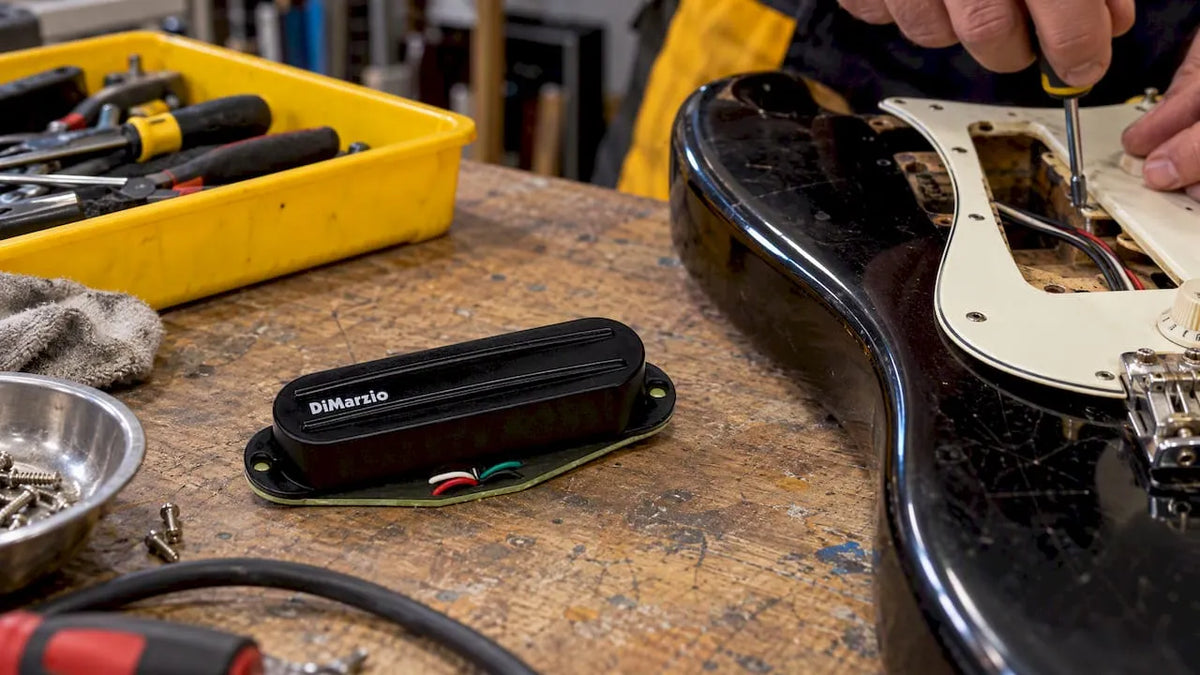
Humbuckers sound thicker, warmer and push out more output, cancelling mains hum that plagues their rivals. Single coils answer with a brighter, more articulate snap and lower output, but they pick up that hum far more easily. Everything else, construction, wiring, how each behaves with your amp and pedals, flows from that one trade-off.
Table of Contents
- Tonal differences in practice: frequency focus, dynamics and distortion
- Construction and electrical differences that drive tone and noise behaviour
- How pickups react with amps, pedals and in a band mix
- Coil-splitting, swapping and wiring tips you can use right away
- How to choose a pickup for your playing: a short decision checklist
- MusicStreet’s hands-on experience and services
- What most buying advice gets wrong about pickups
- Relevant products and services at MusicStreet
- Sources
- FAQ
Tonal differences in practice: frequency focus, dynamics and distortion
Single coils push the top end forward. You get sparkle, string definition and a sound that stays clear even when several instruments are playing at once. Humbuckers roll off some of that top end and fatten the midrange, which is why they feel warmer and denser under your fingers.
Output matters just as much as tone colour. A humbucker’s two coils generate more signal, so it drives an amp into breakup sooner and sustains notes longer. A single coil asks the amp to work harder for the same grit, which is partly why clean Fender-style tones stay glassy even at higher volumes.
In a full band mix, these differences become practical rather than academic:
- Single coils tend to cut through a dense mix because their frequency peak sits where vocals and cymbals are not competing as hard.
- Humbuckers fill space rather than cutting through it, which suits rhythm parts that need to feel solid under a mix.
- Higher output from a humbucker can mean less headroom before an amp starts to colour the sound, useful for drive, limiting for clean work.
- A single coil’s lower output keeps a clean amp channel honest for longer before it starts to grit up.
Think of a Telecaster’s bridge pickup twang against a Les Paul’s bridge humbucker growl: same amp, same volume, completely different attitude.
Construction and electrical differences that drive tone and noise behaviour
The tonal gap starts with wire and magnets. A single coil pickup is exactly what it says: one coil of wire wound around magnetic pole pieces. A humbucker uses two coils wired with opposite magnetic polarity, so any hum picked up by one coil is cancelled by the other.
- Single coil: one coil, prone to 50/60Hz mains hum, generally brighter and more open sounding.
- Humbucker: two coils in opposite polarity, hum-cancelling, generally warmer with higher output.
- Alnico magnets tend to give a softer attack and rounder low end, while ceramic magnets push a harder, more aggressive top end.
- Pot and capacitor values shift tone noticeably when you swap pickup types, which matters the moment you start modifying a guitar.
That hum cancelling comes from phase: the two coils are wound and wired so the signal from the strings adds together while stray electromagnetic noise from the coils cancels out. It is a neat piece of electrical engineering that single coils, by definition, cannot replicate on their own.
How pickups react with amps, pedals and in a band mix
On a clean amp channel, single coils stay articulate and chiming, which is why they dominate funk, country and indie jangle. Push a single coil into overdrive and it can turn harsh or thin, especially with ceramic magnets and a bright amp.
Humbuckers behave differently under gain. Their higher output and rounder frequency response mean drive pedals and amp overdrive sound thicker rather than brittle, which is why rock and metal players lean on them so heavily. Fuzz pedals in particular tend to respond better to a humbucker’s stronger signal, since many vintage fuzz circuits were designed around that output level.
- Blues and country players often favour single coils for note separation and twang.
- Rock and metal players lean on humbuckers for sustain, warmth and quiet operation under high gain.
- Indie and jangle-pop guitarists usually want the brightness single coils provide, even accepting the extra hum.
- Recording engineers sometimes favour humbuckers simply because they need less noise gating on a quiet track.
On stage, hum from single coils becomes more noticeable near dimmer switches and certain lighting rigs, so some players switch to the humbucker-loaded position for noisy venues. If you are recording direct, running either pickup type through a DI box can help keep the signal clean before it hits a desk or interface.
Coil-splitting, swapping and wiring tips you can use right away
Coil-splitting (sometimes called coil-tapping, though the two aren’t quite identical) lets a humbucker run as a single coil, by disconnecting one of its coils, usually through a push-pull pot or mini switch. The result is a brighter, lower-output tone that mimics a single coil, though rarely identically.
- Decide what you are chasing: split for occasional brightness, or a dedicated single coil for a consistently thinner tone.
- Check your pots: 250k pots generally suit single coils while 500k pots suit humbuckers, and swapping values changes perceived brightness, a point confirmed in forum discussions on coil-splitting and pot selection.
- Choose series wiring to keep the humbucker’s full output, or parallel wiring for a lighter, airier split tone.
- If the split sounds thin or weak compared with the full humbucker, a stacked pot or small resistor can balance the volume between modes.
Capacitor choice also plays a role in roll-off. Many players commonly use caps around 0.022µF on humbuckers, though plenty experiment with other values for different articulation, as discussed in capacitor forums.
Pro Tip: If a pickup swap leaves your tone muddy, check your pot value before blaming the pickup, mismatched pots are the most common cause of disappointing splits.
How to choose a pickup for your playing: a short decision checklist
Start with your main tone goal rather than the pickup’s reputation. A few questions make the decision far quicker:
- Do you want clarity and single-note definition, or thickness and sustain for chords and leads?
- What does your amp and pedal chain already emphasise: brightness, grit, or low-end weight?
- How much background hum can you tolerate, especially under stage lighting or in a home studio?
- Does the bridge or neck position matter more for your playing, since the two often carry different pickup types even on the same guitar?
If you want versatility rather than a single answer, hybrid layouts such as HSH or HSS combine both pickup types in one instrument, and coil-splitting adds a second voice to a single humbucker. Before committing to a swap, ask a tech about pot values, capacitor choice and whether your current wiring cavity suits the new pickup’s fitting.
MusicStreet’s hands-on experience and services
Every guitar that comes through MusicStreet gets inspected and set up before it reaches a customer, which means pickup height, pole alignment and wiring are already checked rather than guessed at. Some stores offer tryouts that let you compare a single coil and a humbucker through the same amp before deciding.
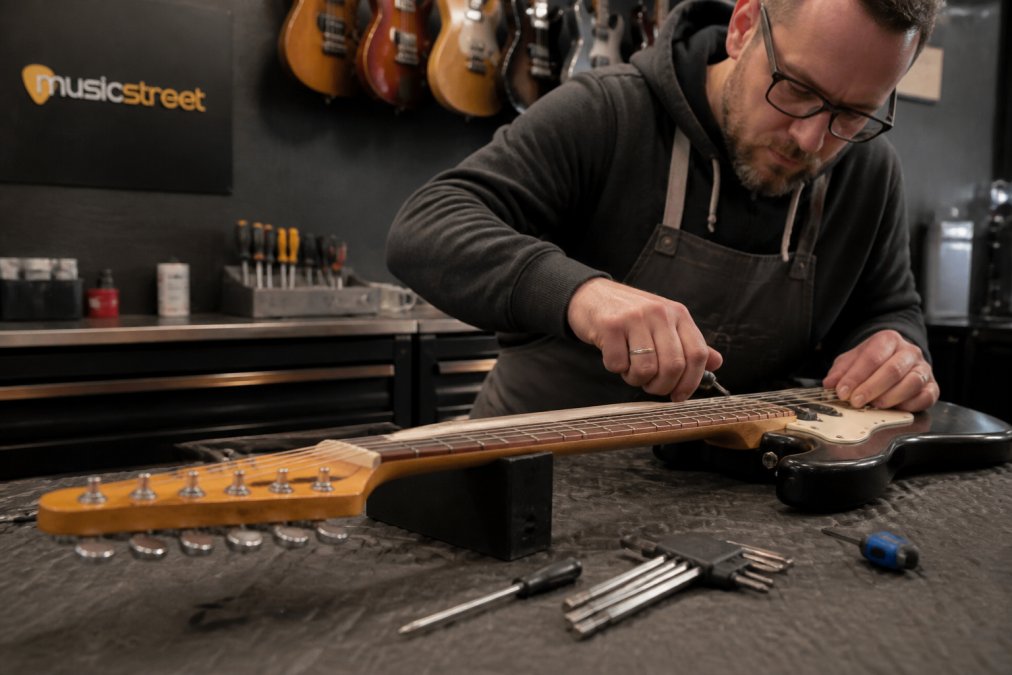
When customers swap pickups, we talk through pot values, capacitor choice and fitting so the result matches what they actually wanted to hear, not just what the spec sheet promised. Booking a setup or fitting can help ensure a pickup sounds the way it is supposed to.

What most buying advice gets wrong about pickups
Most guides treat humbuckers and single coils as a simple brightness-versus-warmth choice, and that undersells how much pot values, capacitors and amp pairing shape the final sound. Two guitars with identical pickups can sound noticeably different once wiring and pot choice are factored in, yet that detail rarely gets mentioned until something sounds wrong after a swap.

The bigger misconception is that genre dictates pickup choice absolutely. Humbuckers associated with rock and metal are a convention, not a rule. Kurt Cobain’s early guitars leaned on humbucker-loaded setups, and he regularly modified instruments to add humbuckers in bridge positions, a detail Guitar World’s gear guide covers in some depth, despite grunge’s reputation as a genre built on raw, unpolished tone rather than humbucker warmth specifically.
What should come first is matching output and noise tolerance to your actual playing environment, not the pickup type a genre is supposedly known for. A coil-split humbucker or an HSS configuration often solves more problems than committing to one camp outright.
— Music
Relevant products and services at MusicStreet
If you already know which direction you are heading, a few pickups cover the common needs well:
- The Dimarzio The Cruiser Neck Pickup suits players chasing a cleaner, single-coil-style neck tone with reduced hum.
- The Dimarzio The Cruiser Bridge Pickup pairs naturally with the neck version for a consistent voice across positions.
- The Seymour Duncan SJBJ-1B JB Jnr Strat gives a Strat-shaped humbucker with hum cancelling built in, useful if you want single-coil looks with humbucker quiet.

Beyond the pickups themselves, our setups, servicing and repairs cover fitting and wiring, and our restring service is worth booking alongside any pickup swap. Browse our electric guitars in-store or online, or get in touch to book a fitting.
Sources
- Kurt Cobain’s guitars, amps & pedals: the definitive guide | Guitar World
- Humbucker Coil Splitting - Caps and Pots Selection - Basschat
- Which Capacitor? | Bare Knuckle Pickups forum
FAQ
Did Kurt Cobain prefer single coils or humbuckers?
Cobain favoured humbucker-loaded guitars for much of his career and often modified instruments to add humbuckers, particularly in the bridge position, according to Guitar World’s gear guide. He also used guitars fitted with P-90 pickups, which sit between single coils and humbuckers in output and noise behaviour.
What are the disadvantages of humbuckers?
Humbuckers can sound less articulate on dense chords and lose some of the top-end sparkle single coils provide. Their higher output also reduces headroom on a clean amp channel, which can make subtle dynamics harder to control.
Can you put a single coil in a humbucker slot?
Yes, with the right mounting ring or adapter plate, since the routed cavity is usually larger than a single coil needs. Pot values often need adjusting afterwards, as humbucker-routed guitars typically ship with 500k pots that can make a single coil sound brighter than expected.
Why do single coils sound better for certain styles?
Single coils give stronger note separation and a brighter top end, which suits funk, country and clean indie tones where clarity matters more than thickness. They are not objectively better, just better matched to styles that rely on articulation over sustain and warmth.





Share:
Detune to E flat: Tune Down a Half Step and When to Book a Setup