


Building a custom electric guitar goes far beyond assembling parts. For ambitious creators in Huntingdon, Cambridgeshire, every wood grain, hardware choice, and wire connection shapes both sound and skill. The physical properties of tonewoods directly affect your instrument’s resonance, making materials selection a true craft. This guide highlights the hands-on strategies and essential knowledge that transform your dream guitar plans into a refined, reliable instrument you’ll be proud to play.
Table of Contents
- Step 1: Define Your Dream Guitar Specifications
- Step 2: Source and Prepare Quality Components
- Step 3: Assemble and Securely Fit Guitar Hardware
- Step 4: Wire Electronics and Ensure Proper Connectivity
- Step 5: Test Playability and Perform Quality Checks
Quick Summary
| Key Insight | Explanation |
|---|---|
| 1. Define your ideal guitar | Clearly outline the specifications based on your playing style to ensure the guitar fits your needs. |
| 2. Source quality tonewoods | Choose appropriate woods for your guitar body to enhance sound quality and resonance. |
| 3. Assemble with precision | Measure twice and drill accurately to prevent misalignment and ensure proper fitting of components. |
| 4. Wire electronics methodically | Understand and follow wiring diagrams to create clean connections and avoid noise issues. |
| 5. Conduct thorough testing | Verify playability and sound quality through extensive playing and adjustments before finalisation. |
Step 1: Define your dream guitar specifications
Before you commit to building or purchasing a custom guitar, you need to establish exactly what you want. This isn’t about overthinking it, but rather clarity. Spend time considering what your ideal instrument looks and feels like, and what it needs to do for you.
Start by identifying your playing style and the genres you care about most. Are you drawn to blues, rock, metal, jazz, or something else entirely? Your chosen style directly influences everything from body shape to pickup configuration. A metal player’s dream guitar looks vastly different from a jazz player’s, and that’s perfectly fine. Your guitar should match how you actually play, not some generic template.
Next, think about the physical characteristics that matter to you. Consider body weight and how it balances when you stand. Neck thickness is crucial—some players prefer thicker necks for stability, whilst others want slim necks for speed and comfort. Body style affects accessibility too. A Stratocaster cutaway gives you easier access to higher frets compared to a Les Paul style body. There are practical comfort considerations here that directly impact your playing experience.
Pickup selection deserves serious attention, and what makes the ultimate guitar includes choosing the right ones for your tone goals. Are you after warm, vintage sounds, or do you need high output for heavy genres? Single coils, humbuckers, or filtered variations—each delivers distinctly different character. Your electronics choice—bridge type, tuning machines, wiring configuration—all affect playability and tone.
Write down your specifications as you think through them. Include body wood preferences, hardware finish, colour schemes, and tonal targets. This becomes your blueprint moving forward, ensuring your final instrument matches your vision rather than becoming something unexpected.
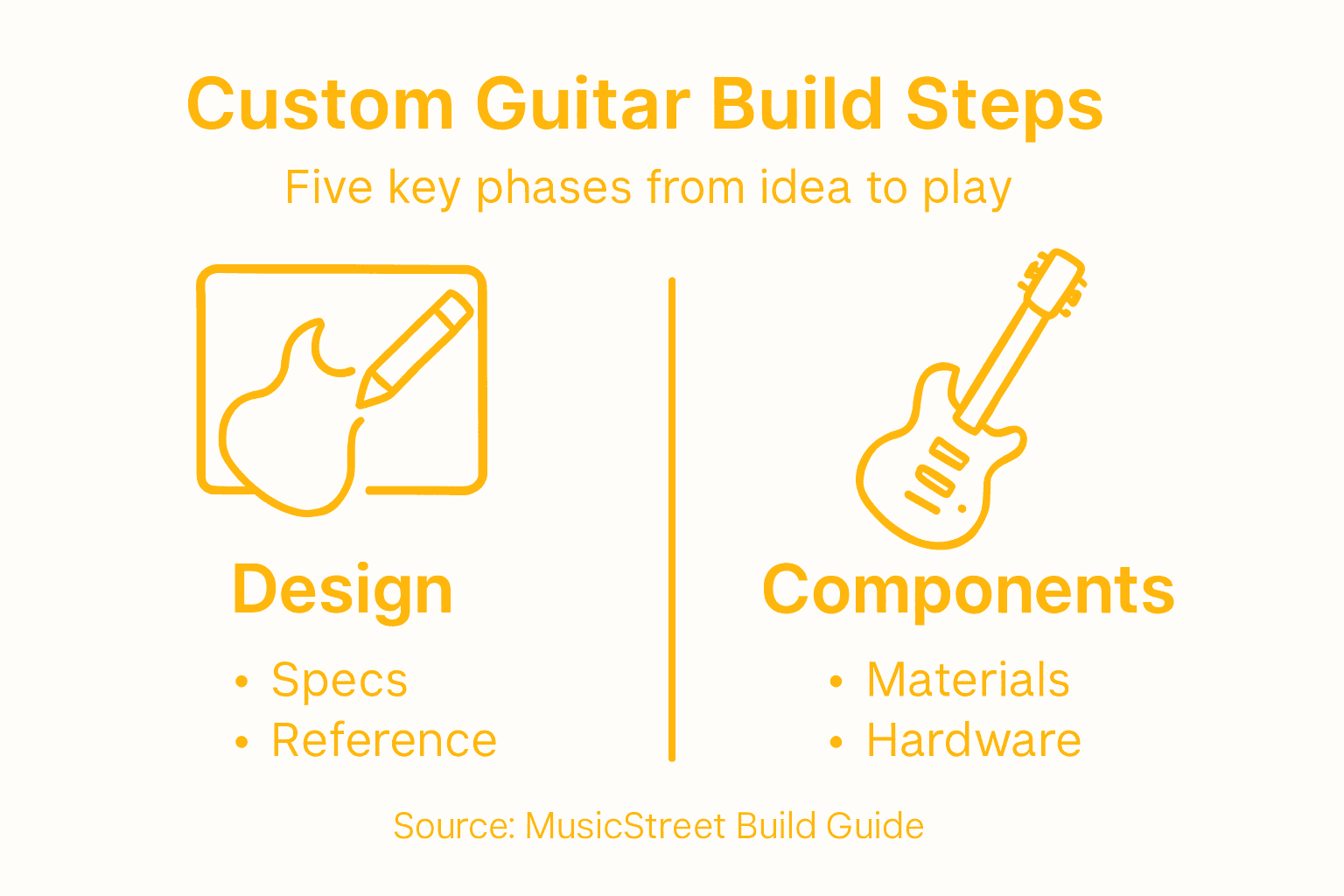
Pro tip: Take reference photos of guitars you love and study them alongside playing videos of those instruments to understand how aesthetics connect with the actual sounds you want to achieve.
Step 2: Source and prepare quality components
You’ve defined what you want. Now comes the practical work of finding the right materials and getting them ready for assembly. Quality components form the foundation of any instrument worth playing, and sourcing them thoughtfully makes all the difference.
Start with tonewoods, the materials that directly affect your guitar’s sound and resonance. The physical properties of tonewoods determine how the instrument vibrates and sustains notes. Research suppliers who specialise in guitar woods and understand the differences between species. Spruce, mahogany, maple, and rosewood all behave distinctly. Don’t just buy the cheapest option available. Ask suppliers about wood origin, moisture content, and how long the material has been seasoned. Properly dried wood prevents warping and structural problems later.

Here is a comparison of common guitar body woods and their impact on tone:
| Wood Type | Tonal Characteristics | Typical Use Cases |
|---|---|---|
| Mahogany | Warm, rich midrange | Classic rock, jazz |
| Maple | Bright, enhanced clarity | Metal, fusion |
| Rosewood | Dark, smooth sustain | Fingerstyle, blues |
| Ash | Snappy, pronounced highs | Funk, indie |
| Alder | Balanced, versatile | Pop, rock |
Hardware components require equal attention. Your bridge, tuning machines, pickups, and electronics dramatically affect playability and tone. Source components from reputable manufacturers who understand guitar specifications. Match your hardware choices to your specifications from step one. If you want vintage character, vintage style tuners and bridges make sense. If you’re building something modern, contemporary hardware suits better.
Inspect everything before it arrives at your workspace. Check wood for cracks, warping, or discolouration. Test electronics to confirm they function. Verify that hardware dimensions match your design. Damaged materials waste time and money when you discover problems mid build. Many builders establish relationships with trusted suppliers who stand behind their products.
Prepare your workspace to receive these materials. Wood needs to acclimate to your workshop environment for at least a week. Store components in dry conditions away from temperature fluctuations. Organise everything so you can find pieces when you need them during assembly.
Professional advice: Connect with established guitar building suppliers in the UK who can guide you on material selection and provide documentation about wood species and hardware specifications specific to your project.
Step 3: Assemble and securely fit guitar hardware
This is where your guitar transforms from a collection of parts into a functioning instrument. Hardware assembly requires precision, patience, and the right approach to drilling and fitting components securely without damage.
Start by reviewing your hardware placement plan. Measure twice, mark once. Use a pencil to mark exact hole positions on your body and neck before drilling anything. Taking time here prevents costly mistakes. Centre alignment matters enormously, especially for bridge saddles and tuning machines. Misaligned hardware creates tuning stability issues and playability problems that become nightmarish to fix later.
Drill holes with appropriate drill bits sized exactly for your hardware. Use backer boards underneath to prevent splintering through the exit side. Work slowly and let the drill do the work rather than forcing it. Proper drilling techniques prevent finish damage and ensure hardware sits flush against the body. If your body has a finish already, apply painters tape around drilling areas to protect the surface.
When mounting your bridge and tuning machines, start fasteners by hand before tightening fully. This prevents cross threading and allows you to confirm everything aligns properly. Tighten gradually in a balanced pattern rather than fully securing one screw before moving to the next. Electronics wiring comes next, requiring careful attention to solder joints and component placement. Poor soldering causes noise, intermittent connections, and frustrating buzzing during playback.
Check everything moves freely before final assembly. Tuning machines should rotate smoothly. Bridge components should sit level. Pickups should sit at consistent heights. Any binding or misalignment signals a problem needing correction before you proceed.
Pro tip: Invest in a quality drill press or use a drill guide jig to maintain perfectly perpendicular holes, which is absolutely crucial for hardware fitting properly and your guitar functioning reliably long term.
Step 4: Wire electronics and ensure proper connectivity
Electronics wiring is where your guitar’s sound comes to life. Proper connections determine tone quality, noise levels, and overall reliability. This step requires attention to detail, but it’s absolutely manageable if you approach it methodically.
Begin by understanding your wiring diagram. Whether you’re running a simple two-pickup setup or something more complex, know exactly where each wire connects before touching a soldering iron. Guitar wiring resources provide comprehensive diagrams covering everything from basic configurations to advanced switching systems. Print your chosen diagram and keep it visible throughout the process.
Start with cavity shielding. Line your electronics cavity with copper tape to reduce electromagnetic interference and unwanted noise. Ensure the shielding makes good contact with your ground wire. This single step dramatically improves signal clarity. Now prepare your potentiometers, switches, and jacks. Use push-type connectors where possible to simplify assembly and reduce soldering requirements. These connectors provide reliable connections without the complexity of traditional soldered joints.
Solder connections carefully, using quality solder and a temperature-controlled iron. Heat both the wire and the component simultaneously for about three seconds, then apply solder. Listen for a crackling sound as the solder flows, indicating proper heat. Cold solder joints fail unexpectedly, so take your time. Keep your workspace organised and label wires as you go to avoid confusion during final assembly.
Before installing anything permanently, test your electronics outside the guitar. Plug in your lead, play through an amplifier, and confirm all pickups function, switches work correctly, and you hear no unwanted noise. Catching problems now beats discovering them after final assembly. Check for intermittent crackling by moving wires and connections gently while testing.
Pro tip: Shield your electronics cavities thoroughly and maintain clear separation between signal wires and power grounds to minimise hum and noise that can degrade your tone quality significantly.
Step 5: Test playability and perform quality checks
Your guitar is nearly complete. Now comes the moment of truth. Testing reveals whether your build meets your expectations and identifies any adjustments needed before you consider it finished.
Start by tuning your guitar to pitch and letting it settle for a few minutes. Fresh strings stretch, so retune once more. Now play across all frets on every string, listening carefully for buzzing or dead spots. Buzzing typically indicates a fret sitting lower than its neighbours or strings sitting too close to the fretboard. Play full chords to assess overall tone and resonance. Does the guitar ring out clearly, or does it sound muffled? Does sustain feel adequate?
Check your intonation systematically. Play test evaluations should include tuning the open string, then checking the harmonic at the 12th fret against the fretted note at that same location. They should match perfectly. If fretted notes play sharp or flat, your bridge saddle position needs adjustment. This is normal and expected on new builds.
Evaluate string action by eye and feel. Strings should sit at a comfortable height that prevents buzzing whilst remaining playable. Look down the neck from the headstock end, checking for any visible warping or twist. The neck should have a slight forward curve, not be perfectly straight or excessively bowed. Minor truss rod adjustments can correct neck relief if needed.
Play the guitar for extended periods, testing different techniques and styles. Notice how it responds to bending, vibrato, and palm muting. Comfort matters enormously, especially how the body balances when standing and how the neck feels in your hand during extended play sessions.
This table summarises quality checks vital before finalising your build:
| Checkpoint | What to Look For | Importance to Playability |
|---|---|---|
| Fret buzz assessment | No buzzing on any fret | Ensures clean sound |
| Neck relief | Slight curvature, not twisted | Comfortable action, tuning |
| Intonation accuracy | Harmonically matched notes | Correct pitch up the neck |
| Electronic noise check | No hum or crackle through amp | Reliable performance |
Pro tip: Document every measurement and adjustment you make during testing so you have a complete record of your build specifications and can replicate successful settings if future maintenance becomes necessary.
Bring Your Custom Guitar Vision to Life with MusicStreet
Building the perfect guitar involves meticulous planning and quality components as detailed in the Custom Guitar Build Guide. Whether you need expert advice on tonewoods, premium hardware, or want to explore expertly setup instruments that match your dream specifications, MusicStreet is here to support every stage of your journey. We understand the challenges of sourcing reliable parts and achieving flawless assembly so you can focus on creating music that truly resonates.

Discover an exclusive selection of high-quality new and pre-owned guitars at MusicStreet’s online store renowned for professional inspection and personalised service. Take advantage of free UK delivery and benefit from expert setup tailored to your style. Begin perfecting your sound today by visiting MusicStreet and explore detailed guides and accessories designed to complement your custom guitar aspirations.
Frequently Asked Questions
What should I consider when defining my dream guitar specifications?
When defining your dream guitar specifications, focus on your playing style, physical characteristics, and tonal goals. Identify the genres you play, such as blues or metal, and think about body shape, neck thickness, and pickup types that cater to your needs.
How can I source quality components for my custom guitar build?
To source quality components, start by researching reputable suppliers of tonewoods and hardware. Ensure you understand the properties of different wood types and select components that match the specifications you outlined, checking for quality and condition before making a purchase.
What is the correct method for assembling guitar hardware?
To assemble guitar hardware, measure precisely, mark positions on your guitar body, and drill carefully to avoid splintering. Fasten components by hand initially, ensuring they are well-aligned before tightening, which prevents cross-threading and damage during assembly.
How do I wire the electronics in my custom guitar?
Begin by understanding your wiring diagram, then systematically solder your components to ensure secure connections. Test the electronics outside the guitar to confirm everything functions properly before final installation, which helps catch any issues early.
What steps should I take to test the playability of my finished guitar?
To test playability, tune your guitar and play across all frets to check for buzzing or dead spots. Evaluate intonation, string action, and the overall response to various techniques, making necessary adjustments for comfort and sound quality.
How can I document my custom guitar build process?
Document your custom guitar build process by recording every measurement and adjustment you make during assembly and testing. Keeping a detailed log will aid in future maintenance and help replicate successful settings as needed.


Share:
Role of Guitar Finish: Impact on Tone and Durability
Guitar History Unplugged: Stories Behind Iconic Instruments