

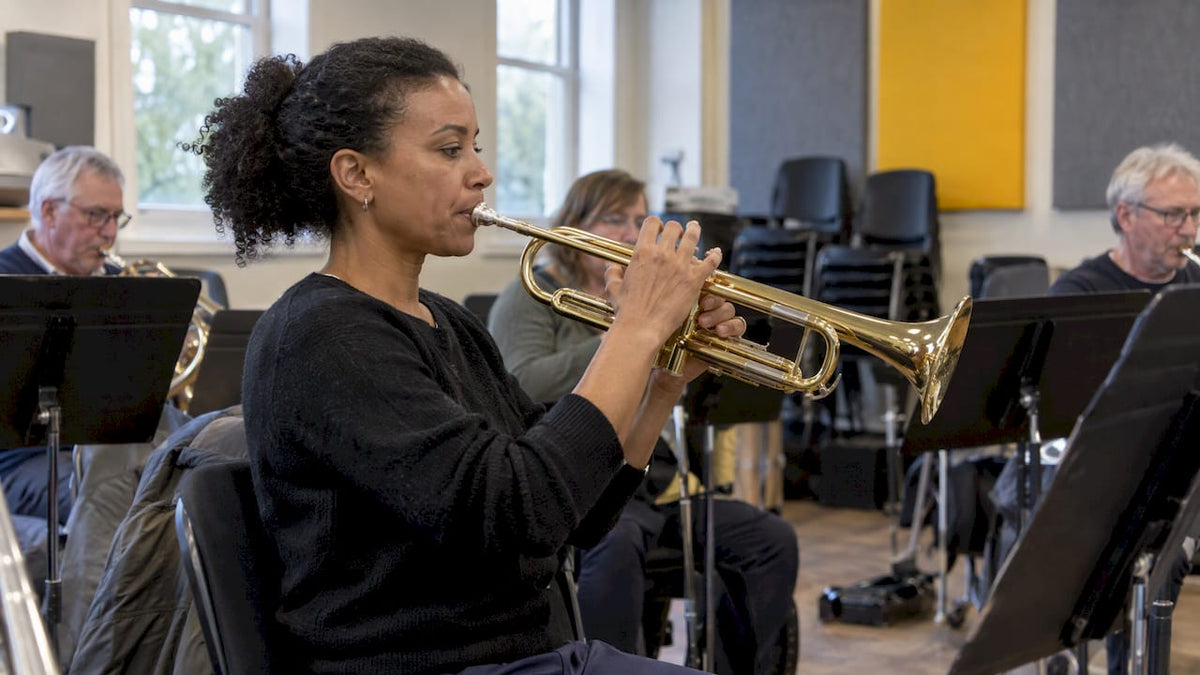
Embouchure (pronounced “om-boo-shoor”) is the way you shape your mouth, lips, tongue and jaw around the mouthpiece of a wind or brass instrument to make a note. A peer-reviewed 2016 review of brass embouchure defines it as adjusting the amount, pressure and direction of airflow through the mouth and lips, using the tongue, teeth, jaw, cheeks and lips. A good one is firm where it needs to be, relaxed everywhere else, and it gives you a steady tone without strain.
Guitars have no mouthpiece, so a guitarist has no embouchure in the strict sense. But the idea behind it, a small, efficient, tension-free set of movements that decide your sound, is exactly what guitarists chase with their hands. This guide explains embouchure for trumpet, flute, clarinet and saxophone, then shows what a guitarist, or a parent buying for a child who plays both, can take from it.
Table of Contents
- What embouchure actually does
- The basic brass embouchure
- Flute embouchure
- Clarinet and saxophone: similar, not the same
- Building a steady embouchure as a beginner
- What guitarists can borrow from embouchure
- Choosing a guitar that suits your hands
- Your next step
- Our view: efficiency is the real skill
- FAQ
- Sources
What embouchure actually does
On a brass instrument the sound begins in your lips. Energised air passes through shaped lips and sets them vibrating, which players call a buzz. The mouthpiece focuses that vibration and passes it into the instrument, which resonates and amplifies it. Your embouchure shapes the opening between the lips and controls how they vibrate.

On a flute the air is split across the edge of the blow hole, and on a clarinet or saxophone a reed vibrates against the mouthpiece. The job of the embouchure changes with each, but the principle holds: it steers the air.
Pitch and tone
Tone-production teaching in the Brass Techniques and Pedagogy text explains that firmer lips and a smaller oral cavity tend towards a higher pitch and brighter tone. Relaxed lips and a more open cavity tend towards a lower pitch and darker tone. Airflow, lip firmness and the shape inside the mouth work together. Embouchure is not simply a matter of squeezing harder.
That last point is the most common beginner mistake. Pressing the mouthpiece into the lips feels like effort, so it feels like progress. It usually costs you tone, range and stamina.
The basic brass embouchure
For trumpet, trombone and the rest of the family, the same brass pedagogy text describes a setup with firm but relaxed lips, a soft centre, firm corners, a relaxed jaw and free airflow. It cautions against clenching. The firm corners guide pitch and tone, while the soft centre lets the lips vibrate freely.
A simple way to find it:
- Breathe like a yawn. Take a relaxed, low breath, then let the lips close only until they touch. Do not press them together.
- Hum a buzzy “hmm”. Keep the jaw relaxed and feel the lips vibrate gently, as in the exercises in that same chapter.
- Buzz without the instrument. Blow air through the lips so they vibrate evenly. Both lips should share the work.
- Add the mouthpiece. Place it so it rests on the lips without crushing them, then repeat the buzz.
The goal for a first lesson is a full, steady sound with good air support. Refining tone comes after that, a point also made in first-lesson guidance for winds and brass.
Why brass players buzz
Buzzing is not a party trick. The vibrating lips are the sound source, so practising the buzz on its own, or on the mouthpiece, trains the part of the system you control directly. Many teachers use it as a daily warm-up because there is no instrument to hide behind.
Flute embouchure
Flute players often call the shape the “band face”. It is more relaxed than a clarinet or saxophone setup. A woodwind doubling resource from Bluffton University describes the corners as slightly down rather than pulled back, with a rounded opening formed by the air.
For placement, a UK schools flute guide advises centring the blow hole on the lower lip with about one third of the hole covered. It also suggests practising breathing without holding the flute, standing straight with relaxed shoulders.
A good first exercise from the same guide is the paper strip. Blow an even stream of air so a strip of paper stays against a wall. It trains breath, embouchure and steady airflow together, and you need nothing but paper.

Clarinet and saxophone: similar, not the same
A common question is whether saxophone embouchure is easier than clarinet. Neither is simply easier, but they feel different. According to the same Bluffton woodwind resource, the players it consulted tended to use a thinner lower lip for B flat clarinet than for alto saxophone. They also described the clarinet as asking for a firmer grip and faster air.
In both cases the seal around the mouthpiece must not leak, yet it must stay loose enough for the reed to vibrate. A woodwind teaching article by Bret Pimentel notes that too much tightness can restrict response and tone. It also describes the clarinet mouthpiece sitting closer to vertical and the saxophone’s closer to horizontal, with a higher, “E”-like voicing inside the mouth for clarinet and a lower one for saxophone.
| Instrument | Sound source | Lips and corners | Common beginner error |
|---|---|---|---|
| Trumpet and brass | Vibrating lips | Firm corners, soft centre | Pressing the mouthpiece too hard |
| Flute | Air across the blow hole | Relaxed, corners slightly down | Pulling the corners back |
| Clarinet | Reed on mouthpiece | Firmer grip, thinner lower lip | Biting |
| Saxophone | Reed on mouthpiece | Looser, lower voicing | Leaking air at the seal |
Building a steady embouchure as a beginner
Consistency beats intensity. Short, frequent sessions let the small muscles around the mouth build up without fatigue. A few habits help on every instrument:
- Start with posture. An upright, relaxed body lets air move freely. Tension in the shoulders and neck travels straight to the mouth.
- Prioritise air. Support the sound with breath before worrying about how it sounds.
- Stop when the sound fades. A tired embouchure teaches bad habits. Rest, then return.
- Keep the jaw loose. Clenching is the opposite of what the setups above describe.
The research on what goes wrong in a faulty embouchure is thin. The 2016 review itself says peer-reviewed information on the fundamentals of dysfunctional embouchure is scarce and sometimes contradictory. Persistent pain or a sudden loss of range is a reason to see your doctor or a qualified teacher rather than to push on.
What guitarists can borrow from embouchure
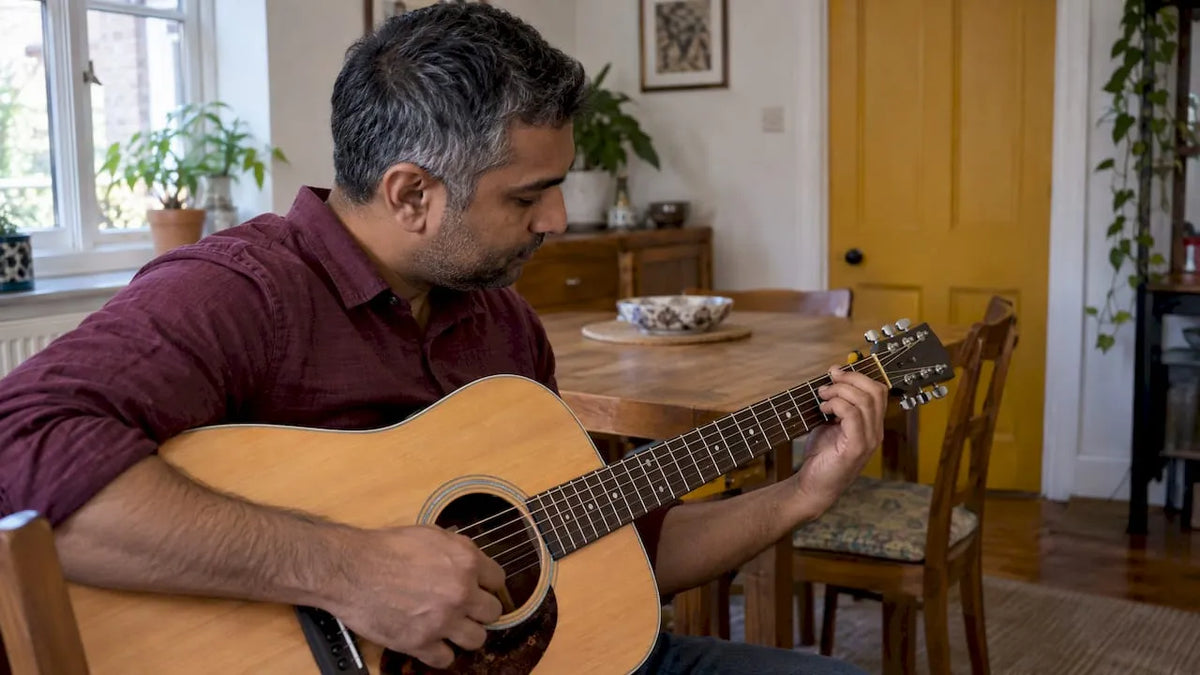
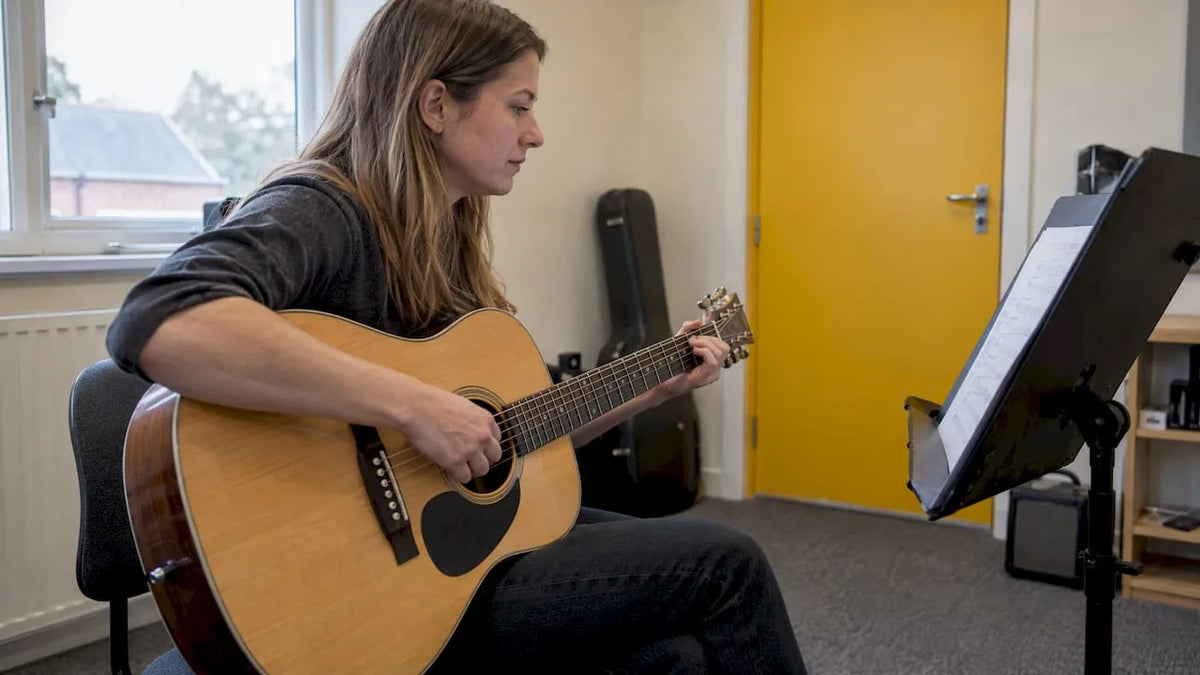
Here is the connection for our readers. A guitarist’s equivalent of the embouchure is the combination of fretting-hand pressure, picking-hand angle and posture. The lessons carry over directly:
- Firm but relaxed. Brass players are told to be firm at the corners and soft in the centre. A fretting hand needs just enough pressure to make the note ring, and no more.
- Air before tone, rhythm before speed. Wind teachers want a full, steady sound before refinement. The same ordering suits beginner guitar practice.
- Warm up first. Buzzing is a warm-up for the lips. Our warm-up exercises to prepare your hands do the same job for fingers, and a daily practice routine keeps short sessions regular.
- Remove the obstacles. A wind player fights a badly seated mouthpiece or leaking pad. A guitarist fights high action, which makes the strings hard to press, or old strings that will not hold their tone. These are fixable with a proper setup.
Why setup matters more than you think
When notes buzz or the hand aches after ten minutes, beginners often assume the problem is their technique. Sometimes it is the instrument. If the strings sit too far from the fretboard, you squeeze harder, and squeezing harder is the guitar version of mashing the mouthpiece into your lips.
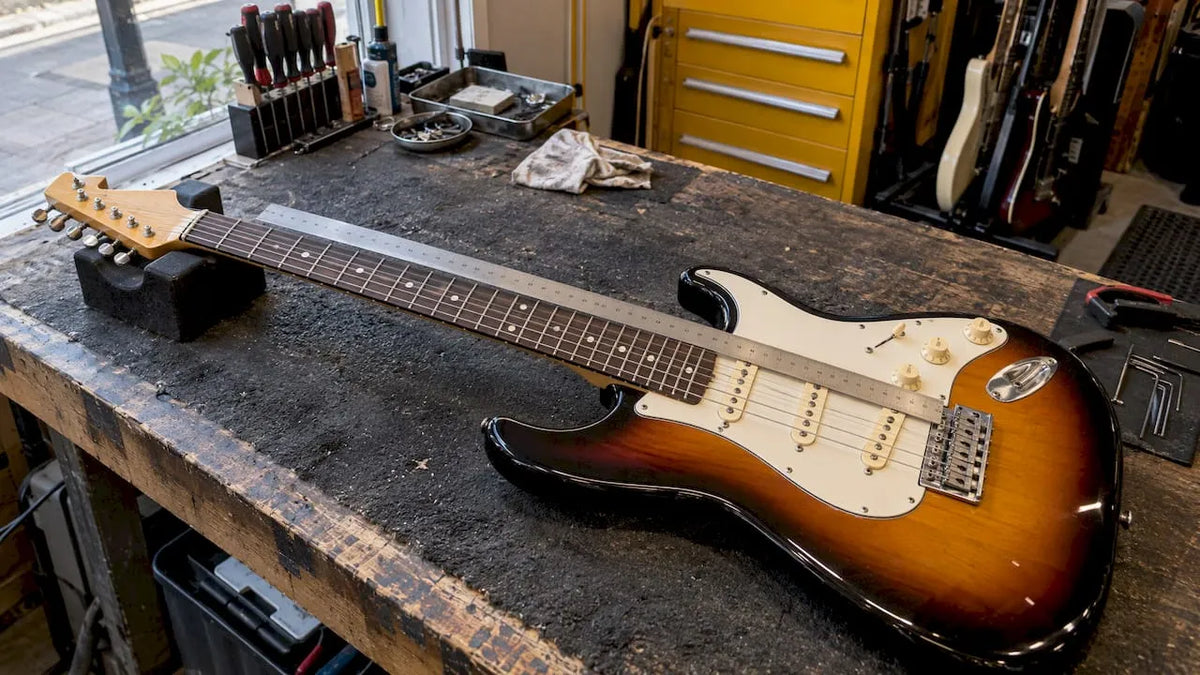
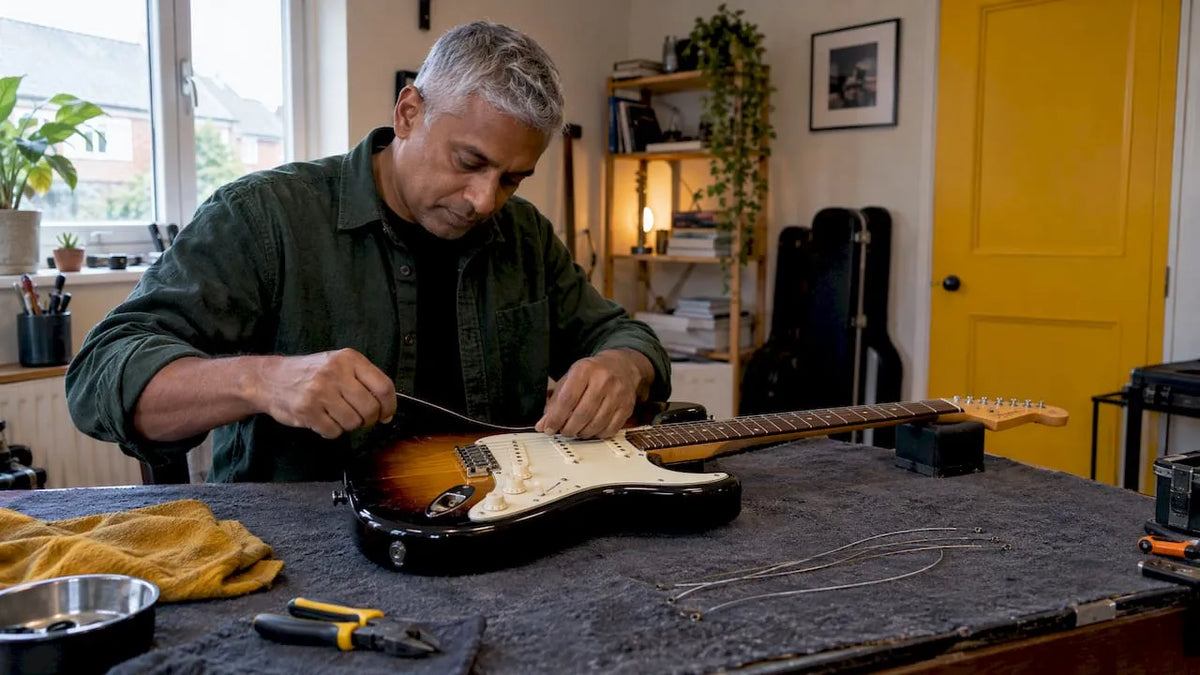
That is why every instrument we sell is inspected and set up by our team before it leaves us. For a guitar you already own, we offer setups, servicing and repairs, plus an in-store restring service, so the instrument asks as little effort of you as possible.
Choosing a guitar that suits your hands
If you play a wind or brass instrument and are adding guitar, or you teach both, feel matters more than specification. Scale length, neck shape and string gauge all change how much pressure a note takes. Trying instruments in person is the quickest way to find a comfortable one, and our shop in Huntingdon, Cambridgeshire, lets you do exactly that.
For a first instrument, these are good places to begin:
- A Yamaha FGX5 acoustic for a straightforward electro-acoustic.
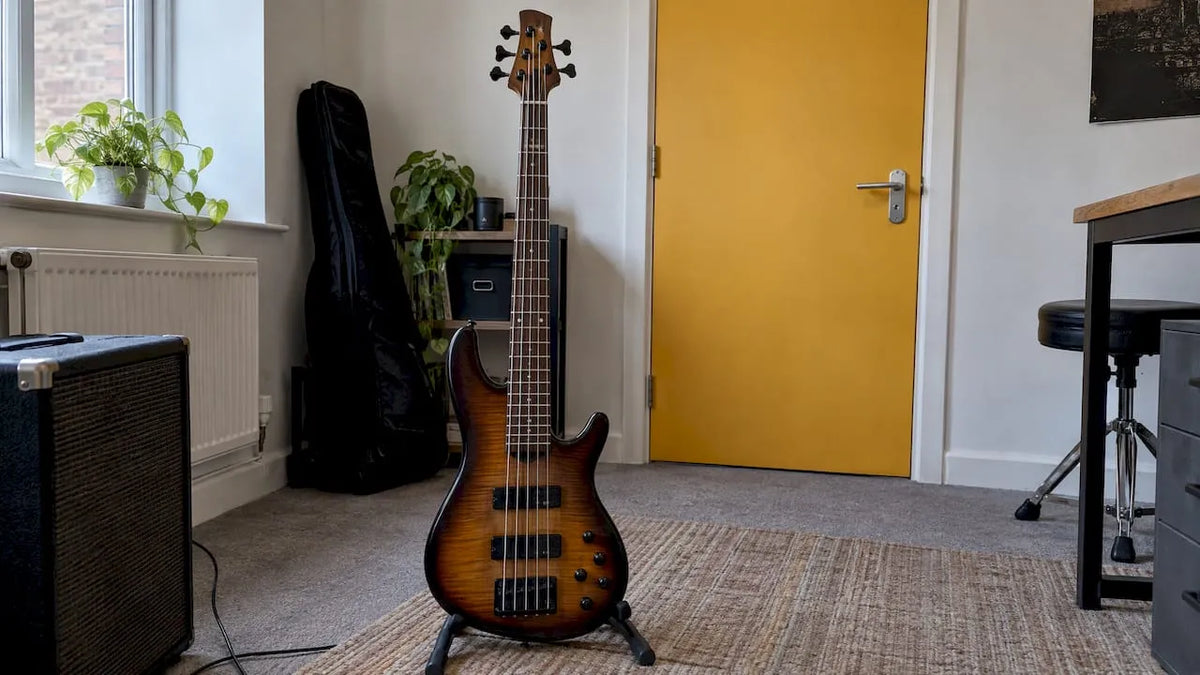
- A bass such as the Ibanez GSR200 if low-end is what pulls you in.
- The wider electric guitar range if you want to compare necks side by side, including new and pre-owned.
A gig bag or case protects the setup you have paid for, so see our cases and gig bags as well.
Your next step
If you are a guitarist, the takeaway from embouchure is to look for the tension you do not need. Our team inspects and sets up every instrument we sell, and we back that with after-sale support and insurance-backed warranties. Free UK delivery applies on orders above a minimum amount. You can browse online, or come to the shop in Huntingdon to try guitars in person and book a setup.

Start on the Musicstreet home page for setups, servicing and repairs, or go straight to strings and the in-store restring service if fresh strings are all your guitar needs.
Our view: efficiency is the real skill
Embouchure is a good lesson for any musician, whatever they play. The best wind and brass players are not the ones who work hardest at the mouthpiece. They are the ones who have removed everything unnecessary, so the sound comes through with minimal effort.
We think about guitars in the same way. A guitar that has been inspected and set up properly lets a beginner build technique without fighting the instrument, and lets an experienced player concentrate on phrasing rather than pressure. That is why we check every guitar before it goes out, and why we stay available afterwards for repairs and advice.
If you are learning, keep sessions short, keep your hands loose and let the instrument do its share. If you want a second pair of eyes on how your guitar feels, bring it in.
Music
FAQ
What is the proper embouchure technique?
There is no single shape, because it depends on the instrument. For brass, aim for firm corners, a soft centre, a relaxed jaw and free airflow. For flute, keep the lips relaxed with the corners slightly down. For reed instruments, form a seal that does not leak but still lets the reed vibrate.
Why do brass players buzz their lips?
Because the vibrating lips make the initial sound. The mouthpiece focuses that vibration and the instrument amplifies it. Practising the buzz trains the lips to vibrate evenly and with a steady airflow.
Is saxophone embouchure easier than clarinet?
Many players find the saxophone looser and the clarinet firmer, with a thinner lower lip and faster air on clarinet. Both need a leak-free seal that stays loose enough for the reed to vibrate. Ease is personal, so a teacher can help you decide.
Do guitarists have an embouchure?
Not literally, as there is no mouthpiece. The closest equivalent is the balance of fretting pressure, picking-hand position and posture. The same advice applies: be firm only where you need to, and stay relaxed everywhere else.
Sources
- Fundamentals of Embouchure in Brass Players: Towards a Definition and Clinical Assessment
- Tone Production Fundamentals on the Mouthpiece, Brass Techniques and Pedagogy
- Getting Started with Posture, Breathing, and Embouchure, Brass Techniques and Pedagogy
- The First Lesson, Pedagogy for Winds and Brass
- Woodwind Doubling Resource Project: Embouchure Formation
- How to teach flute technique: Embouchure and breathing
- Clarinet/saxophone doubling and “loose” and “tight” embouchures

Share:
5-String Bass Guitar Strings: Gauges, Tuning and How to Choose