


Choosing the right guitar neck shape can feel baffling when every option promises comfort yet delivers a different playing experience. For players across Huntingdon and Cambridgeshire, understanding the differences between C, U, V, and D shapes is more than a matter of style. These profiles directly impact how easily you grip, move, and play for long stretches. Discover how the distinctive contours and dimensions of guitar necks shape your journey, guiding you towards maximum ergonomic comfort and improved technique.
Table of Contents
- What Are Guitar Neck Shapes?
- Core Profiles: C, U, V, and D Explained
- Fretboard Radius and Neck Dimensions Impact
- Choosing the Right Shape for Your Hands
- Common Mistakes When Selecting Neck Shapes
Key Takeaways
| Point | Details |
|---|---|
| Understanding Neck Shapes | Guitar neck shapes significantly influence a player’s comfort, technique, and overall experience. Different shapes cater to various hand sizes and playing styles. |
| Testing is Essential | Always physically test multiple neck shapes to determine which is most comfortable for your individual hand structure. Hands-on evaluation is critical for finding the right fit. |
| Personalized Selection | The ideal neck shape varies between individuals, influenced by hand size, playing style, and comfort level. Each musician’s preference is unique. |
| Avoid Common Pitfalls | Musicians should avoid selecting neck shapes based solely on aesthetics or brand reputation, focusing instead on playability and personal ergonomics. |
What Are Guitar Neck Shapes?
Guitar neck shapes are fundamental design characteristics that dramatically influence a player’s comfort and performance. Guitar neck contours represent the unique profile and curvature of the back of the guitar neck, which directly impacts how musicians grip and interact with their instrument.
The primary neck shapes typically encountered include:
- C Shape: A comfortable, rounded profile that suits most hand sizes
- U Shape: A thicker, more substantial neck popular with players who prefer substantial grip
- V Shape: An angular design offering distinct feel and vintage aesthetic
- D Shape: A flatter profile providing enhanced stability during playing
Each neck shape offers unique ergonomic properties that cater to different playing styles and hand anatomies. The width, depth, and curvature determine how comfortably a guitarist can navigate the fretboard, execute chord progressions, and maintain playing stamina.
Musicians with smaller hands might prefer slimmer C shape necks, while those with larger hands often gravitate towards fuller U shape designs. The neck shape’s importance extends beyond mere comfort - it significantly influences technical execution, chord voicing, and overall playing experience.
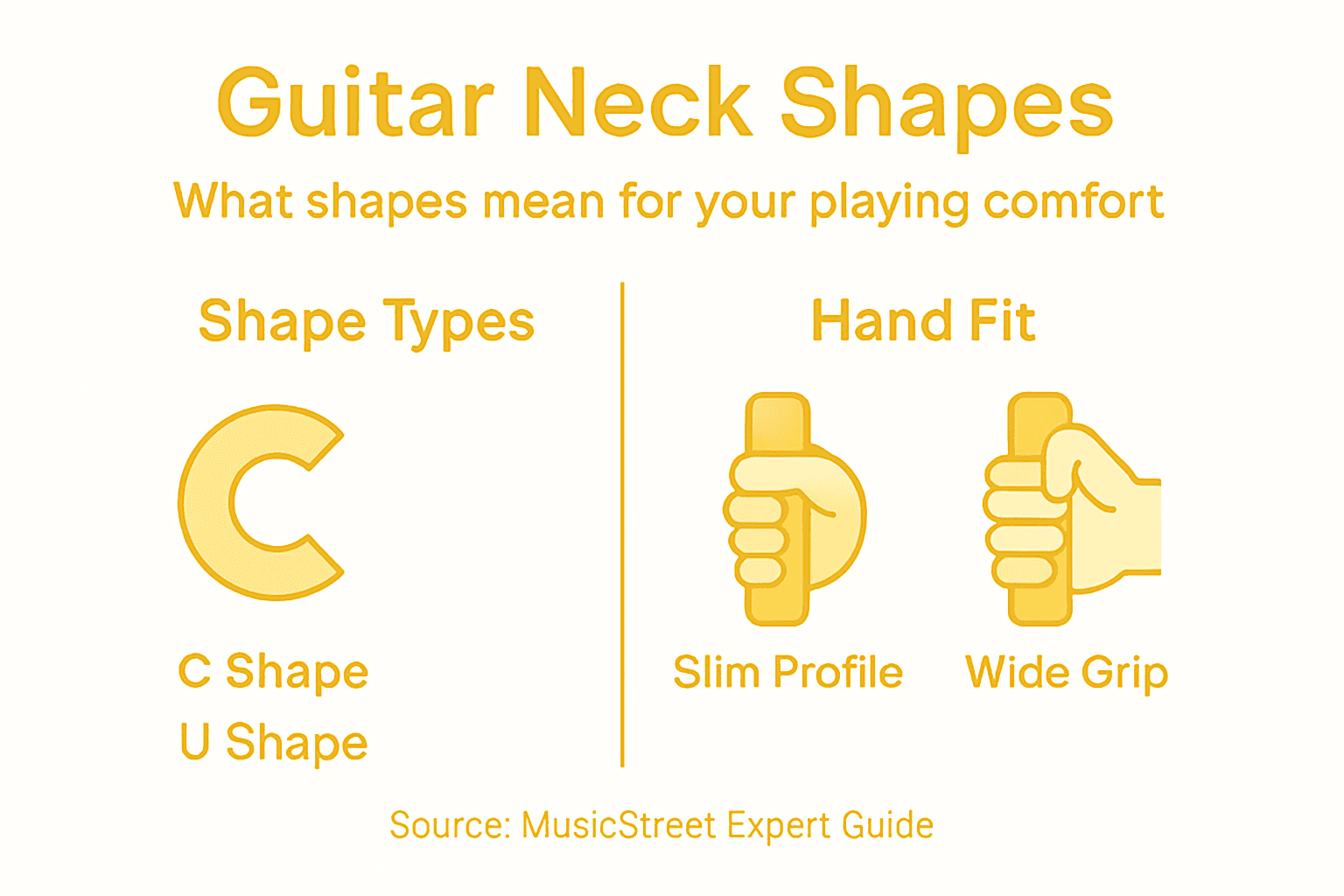
To help you quickly assess different guitar neck shapes, here is a comparison of their ergonomic strengths and ideal player profiles:
| Neck Shape | Comfort Focus | Best Suited For |
|---|---|---|
| C Shape | Balanced, all-round comfort | Most hand sizes, versatile styles |
| U Shape | Maximum grip and support | Larger hands, strong grip need |
| V Shape | Precision thumb placement | Thumb-over players, vintage feel |
| D Shape | Fast access, stable base | Lead players, technical genres |
Pro tip: When selecting a guitar, always physically test multiple neck shapes to understand which feels most natural and comfortable for your individual hand structure and playing technique.
Core Profiles: C, U, V, and D Explained
Guitar neck profiles represent intricate design variations that profoundly impact player comfort and performance. Fender neck profiles demonstrate how subtle curvature differences can dramatically alter playing experience.
The core neck profile characteristics include:
- C Shape: Oval and universally comfortable design
- D Shape: Broader shoulders ideal for lead guitar techniques
- U Shape: Thick “baseball bat” style profile
- V Shape: Distinctive angular shape supporting thumb-over techniques
Each profile offers unique ergonomic advantages tailored to specific playing styles. The C shape remains most versatile, accommodating diverse hand sizes and musical genres. Professional guitarists often select their preferred profile based on personal hand anatomy, playing technique, and musical preferences.
Musicians with larger hands typically gravitate towards U-shaped necks, which provide substantial grip and support. Conversely, players focusing on fast lead techniques might prefer D-shaped profiles that enable quick thumb positioning and enhanced fretboard mobility.
Neck profile selection is deeply personal - what feels comfortable for one musician might feel awkward for another.
Pro tip: Always test multiple neck profiles physically before purchasing, as personal comfort trumps theoretical recommendations.
Fretboard Radius and Neck Dimensions Impact
Understanding the intricacies of fretboard radius and neck dimensions is crucial for musicians seeking optimal playing comfort and technical performance. These subtle design elements profoundly influence how guitarists interact with their instrument.
Fretboard radius characteristics include:
- Curved Radius: Better for chord playing and grip comfort
- Flatter Radius: Facilitates lower string action and smoother bending
- Compound Radius: Combines different curvatures along the neck
The curvature of a fretboard directly impacts playing technique and comfort. A more pronounced curve (smaller radius) provides excellent support for rhythm guitarists who frequently play chords, while flatter radii enable lead guitarists to execute complex techniques like string bending with greater ease.
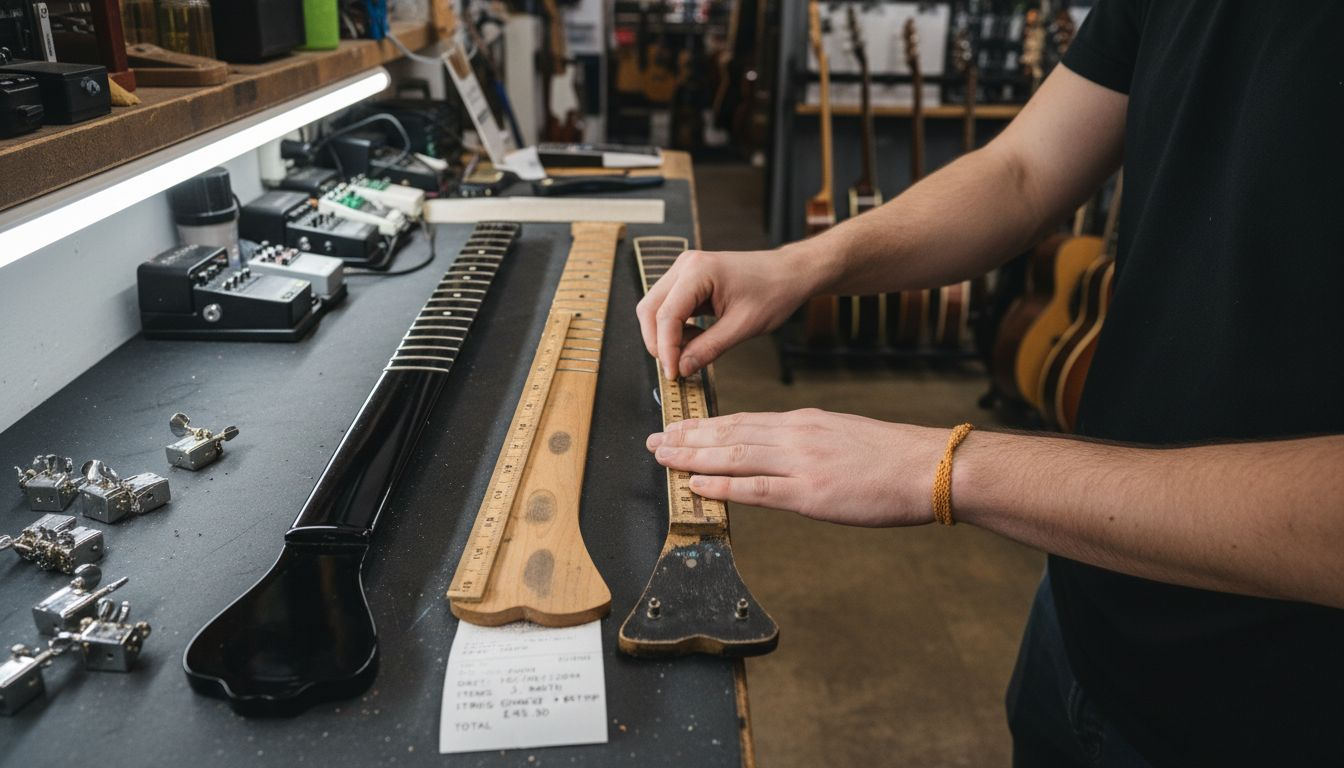
Neck dimensions play an equally critical role in instrument playability. Neck width determines hand positioning, with narrower necks suiting players with smaller hands and broader necks providing more space between strings. Neck thickness affects grip comfort and playing endurance, with thinner necks allowing faster movement and thicker necks offering more substantial support.
Here is a summary of how fretboard radius and neck dimensions influence playing experience:
| Design Aspect | Influence on Playability |
|---|---|
| Curved Radius | Eases chords and grip comfort |
| Flatter Radius | Enables smooth string bending |
| Narrow Width | Aids smaller hands, compact chords |
| Thicker Neck | Increases grip support and stamina |
The perfect neck configuration is a highly personal choice that varies between individual musicians.
Pro tip: Visit a guitar shop and physically test multiple neck profiles to understand which dimensions feel most comfortable for your unique playing style.
Choosing the Right Shape for Your Hands
Selecting the ideal guitar neck shape is a nuanced process that requires understanding individual hand characteristics and playing preferences. Hand size, playing style, and comfort are critical factors in finding the perfect neck profile.
Consider these key selection criteria:
- Hand Size: Determines neck width and thickness preferences
- Playing Style: Influences neck shape selection
- Comfort Level: Most important factor in neck profile choice
- Technique Requirements: Different shapes support varied techniques
Smaller hands typically benefit from slimmer, more rounded neck profiles like modern C-shapes, which provide comfortable grip and facilitate easier chord transitions. Conversely, musicians with larger hands often find U-shaped necks more accommodating, offering substantial support and space for broader finger placement.
Musical genre and playing technique further refine neck shape selection. Rock and blues guitarists might prefer slightly chunkier profiles that provide robust grip during aggressive playing, while classical and jazz musicians often lean towards smoother, more ergonomic designs that allow intricate finger movements.
Your ideal neck shape is as unique as your musical fingerprint - there’s no universal perfect solution.
Pro tip: Always test multiple neck profiles physically, paying close attention to how your hand naturally rests and moves across the fretboard.
Common Mistakes When Selecting Neck Shapes
Musicians often fall into predictable traps when selecting guitar neck shapes, frequently overlooking critical ergonomic considerations. Common selection mistakes can lead to long-term playing discomfort and potential physical strain.
Key mistakes guitarists commonly make include:
- Aesthetic Prioritisation: Choosing necks based on looks rather than playability
- Brand Worship: Selecting profiles solely due to manufacturer reputation
- Ignoring Hand Anatomy: Neglecting personal hand size and shape
- Limited Testing: Failing to physically test multiple neck profiles
One significant error is assuming a single neck shape works universally. Professional musicians understand that neck comfort varies dramatically between individuals. What feels perfect for a blues guitarist might create significant tension for a classical player, making hands-on evaluation absolutely crucial.
Physical ergonomics play a massive role in neck selection. Inexperienced players frequently overlook subtle design elements like neck radius and asymmetrical profiles, which can dramatically impact playing technique and long-term comfort. Compound neck designs, which subtly change curvature along the fretboard, represent advanced engineering that many musicians completely misunderstand.
Your hands are your most valuable musical instrument - treat them with respect by choosing carefully.
Pro tip: Spend at least 15-20 minutes physically playing guitars with different neck shapes before making a purchasing decision.
Find Your Perfect Guitar Neck Shape at MusicStreet
Understanding guitar neck shapes is essential to ensure comfort and improve your playing technique. Whether you struggle with neck thickness, fretboard radius or a suitable profile like C, U, V or D shape, these factors affect how naturally your hand moves across the fretboard. At MusicStreet, we appreciate that every guitarist’s hands and style are unique so we offer expert advice alongside an extensive selection of electric, acoustic and bass guitars designed for all preferences.

Explore our curated collection at MusicStreet to test different neck shapes and profiles that suit your hand size and playing style. With options for in-store tryouts in Huntingdon and expert setup services, you can confidently select a guitar that feels right from the very first chord. Don’t compromise comfort for style - act now to elevate your playing experience and find your ideal neck shape with professional support at MusicStreet.
Learn more about finding the right fit through our expert buying guides and discover guitars that perfectly match your needs.
Frequently Asked Questions
What are the main types of guitar neck shapes?
The main types of guitar neck shapes include C Shape, U Shape, V Shape, and D Shape. Each shape offers different ergonomic features catering to various hand sizes and playing styles.
How does neck shape affect playability?
Neck shape influences how comfortably a guitarist can grip the instrument, navigate the fretboard, and execute technical techniques. Choosing the right shape is crucial for comfort and performance, impacting long-term playing endurance.
Which neck shape is ideal for smaller hands?
Musicians with smaller hands generally prefer the C Shape neck, which is slimmer and more rounded, providing better comfort and facilitating chord transitions.
What mistakes should I avoid when selecting a guitar neck shape?
Common mistakes include prioritising aesthetics over playability, ignoring personal hand anatomy, selecting based solely on brand reputation, and failing to physically test multiple neck profiles before making a decision.







Share:
Find Your Sound: Local Guitar Shops Near Me Today
7 Beginner Guitarist Essentials for a Strong Start