


Finding the right amp for expressive playing in busy British venues can feel overwhelming. Many guitarists want the familiar warmth of classic tube tone without the constant maintenance and fragility that all-valve amps bring. A hybrid guitar amp offers a clever blend of tube preamp warmth and solid-state reliability, making it a popular choice for those who crave dynamic sound but need dependable performance from Brighton to Manchester. This guide explains how hybrids work and why they might be the perfect upgrade to suit your style and gigging demands.
Table of Contents
- What Makes A Hybrid Guitar Amp?
- Valve Versus Solid-State: Key Distinctions
- Sound Characteristics And Typical Features
- Real-World Benefits For British Musicians
- Comparing Costs, Longevity And Alternatives
Key Takeaways
| Point | Details |
|---|---|
| Hybrid Amplifiers Blend Strengths | They combine the warm tones of tube preamps with the reliability of solid-state power amps, making them ideal for gigging musicians. |
| Versatile Tonal Options | Different tube selections in the preamp allow for various tonal flavours, maintaining flexibility for modern players. |
| Lower Maintenance Requirements | Hybrid amps reduce the hassle of regular retubing, appealing to musicians needing consistent performance without extensive upkeep. |
| Balanced Cost Efficiency | They offer a middle-ground solution in terms of price and maintenance, making them accessible for budget-conscious players seeking quality sound. |
What Makes a Hybrid Guitar Amp?
A hybrid guitar amp combines the best of two worlds by pairing a tube preamp with solid-state power amplification. This design approach emerged from a practical need: tube preamps deliver that warm, responsive tone guitarists crave, whilst solid-state power stages offer reliability, efficiency, and durability that touring musicians desperately need. The result is an amp that sounds significantly more organic than pure solid-state rigs, yet avoids the maintenance headaches and fragility associated with fully tube-powered amplifiers. Hybrid amplifiers integrate tube technology in the preamp section with solid-state power amplification, effectively creating a unique sound signature that balances musicality with practical amplifier reliability.
Here’s where the magic happens. The tube preamp stage is where your guitar’s signal gets shaped, coloured, and given character. Those vacuum tubes compress your signal naturally, respond dynamically to how hard you pick, and add harmonic overtones that feel musical and alive. Then, instead of pushing that signal through more tubes to power your speakers (which would require constant retubing and careful biasing), the solid-state power amp takes over. It amplifies cleanly, efficiently, and without the complications. The solid-state stage handles high power output without breaking a sweat, meaning you get substantial volume and headroom without the associated weight and cost of an all-tube power section. This practical arrangement makes hybrids especially attractive for gigging musicians who need reliability on stage and don’t want to risk their tone suffering from tube failure mid-set.
The versatility of a hybrid design appeals directly to modern players who want flexibility without compromise. You’re not locked into one sonic character. Different tube selections in the preamp offer various tonal flavours, from British crunch to American warmth, whilst the solid-state power amp remains consistent and responsive. This means you get tonal personality from the tubes where it matters most—in your overdriven and distorted sounds—combined with the stability and efficiency that keeps your rig running night after night. Some players worry that hybrids lack the full character of pure tube amps, but most working musicians would argue that a hybrid provides the 80 percent of that character at a fraction of the hassle and cost.
Pro tip: When trying hybrid amps, pay attention to the specific tube types used in the preamp section, as different manufacturers use different configurations that significantly affect your core tone before the solid-state power stage even comes into play.
Valve Versus Solid-State: Key Distinctions
Understanding the difference between valve and solid-state amplifiers comes down to how each one processes your guitar signal at a fundamental level. Valve amps use vacuum tubes to amplify signals, creating warm, rich sound with natural harmonic distortion and soft clipping that produces musical overdrive. When you push a valve amp hard, it responds to your playing dynamics in ways that feel organic and expressive. The tubes compress your signal gently, adding layers of harmonic colour that many guitarists describe as “alive” or “responsive.” Conversely, solid-state amps use transistors to amplify your signal, delivering clean, consistent, and precise tones with exceptional reliability. They maintain tight control over distortion, producing high-gain clarity without the natural compression tubes provide. This fundamental difference shapes everything from how your guitar sounds to how often you’ll need to maintain your amp.
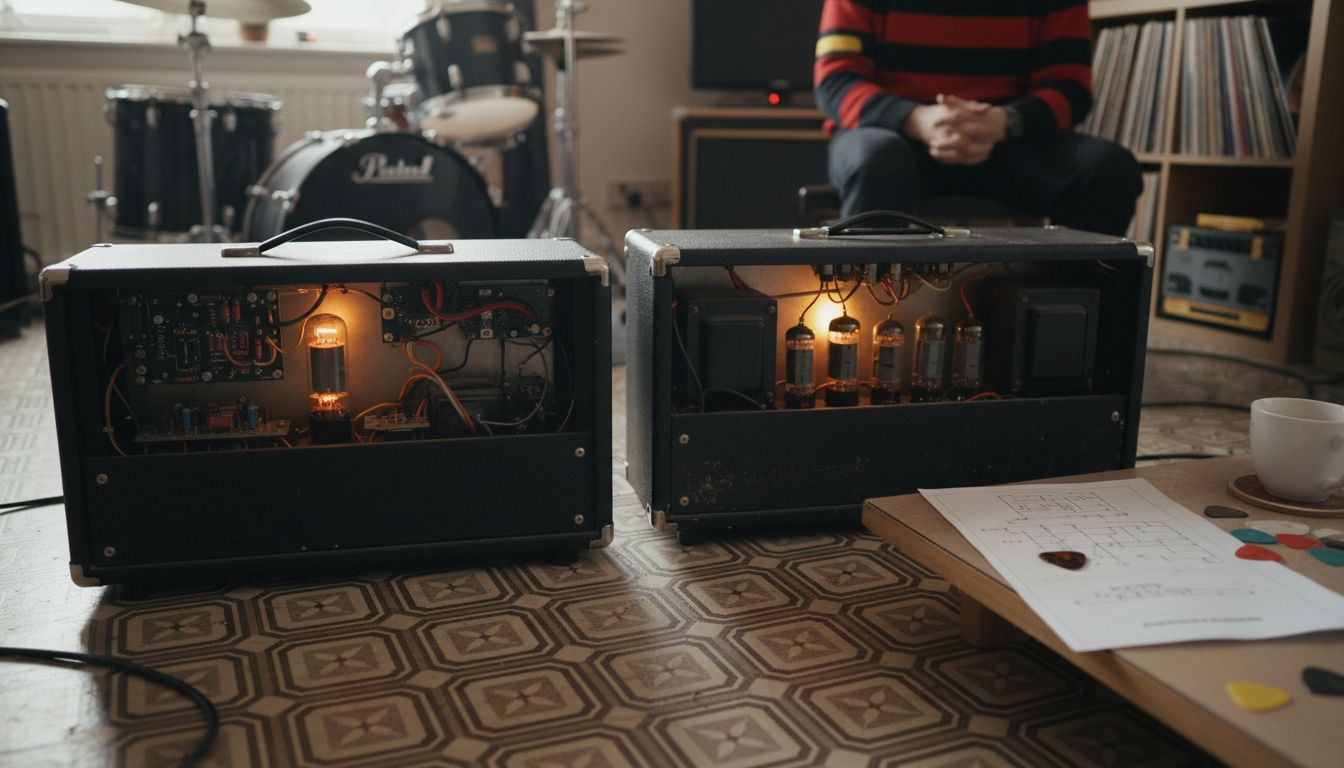
The practical implications of choosing between these technologies run deeper than tone alone. Valve amps require maintenance and are fragile, demanding regular retubing, biasing adjustments, and careful handling during transport. They generate more heat, consume more power, and cost significantly more to operate over time. However, blues and classic rock players swear by them because that natural compression and dynamic response simply cannot be replicated digitally. Solid-state amps, by contrast, offer durability, low maintenance, affordability, and efficient power use. You can throw a solid-state amp in a van, gig night after night, and it will perform consistently without fussing over tube wear or voltage fluctuations. Metal and progressive rock players favour solid-state because the tight bass response and clear tone cut through dense mixes without degrading at high volumes.
The sonic character differences matter most when you’re actually playing. Valve amps excel at delivering dynamic, expressive sound that responds sensitively to a player’s touch, making them ideal for genres where nuance and feel are paramount. Solid-state amps provide the precision and headroom needed for high-gain, technically demanding styles. Your choice depends entirely on what you’re trying to achieve sonically and how much time you want to spend maintaining your gear. A touring musician might favour solid-state for reliability, whilst a studio player recording blues might choose valves for that unmistakable warmth. Understanding these distinctions helps you make an informed decision about which amplifier type truly serves your playing style and lifestyle.
Pro tip: If you’re torn between the two technologies, try both at higher volumes where their differences become most apparent; valve amps often shine at moderate to loud levels where their natural compression and harmonic bloom truly emerge.
Sound Characteristics and Typical Features
The sonic signature of a hybrid amp comes directly from how its two components work together. Sound originates from the tube preamp, which adds natural compression and distortion for warmth and character. This is where your guitar’s personality gets amplified and coloured. The solid-state power amp then takes that warm, characterful signal and amplifies it efficiently with unwavering reliability. The result sits somewhere between the full-bodied warmth of an all-tube rig and the clinical precision of pure solid-state. What makes this combination compelling is that hybrid amplifiers offer fundamental tube distortion and solid-state high-frequency response, meaning your overdrive and distortion tones retain that musical, organic quality whilst maintaining clarity even at higher volumes. This balance makes hybrids remarkably adaptable, suitable for various musical environments from intimate venues to large stages.
Typical hybrid amps feature straightforward control layouts that reflect their dual-nature design. Most models include tone and gain controls affecting the preamp tubes, allowing you to shape how much drive and character your amp imparts on your signal. These controls work exactly like they would on a traditional tube amp because that’s where the magic happens. You’ll also find master volume controls for overall output, and many hybrids include presence controls or mid-range adjustments to fine-tune the power amp’s response. Some higher-end models incorporate switching options that let you toggle between different gain stages or even different tube types, offering surprising versatility from a single unit. The interface feels familiar to anyone who has played through conventional amps, which makes hybrids immediately approachable without a steep learning curve.
What distinguishes a hybrid’s sound in practice is its versatility without compromise. You get vintage tube warmth for your clean tones and pushed overdrives, but you avoid the brittleness that can plague solid-state amps at higher gain settings. The solid-state power amp ensures your signal remains tight and controlled, preventing the mushiness that sometimes affects full tube power stages running at lower volumes. This makes hybrids particularly favoured by guitarists in metal and other genres requiring both aggression and clarity. The combination also means your tone remains consistent whether you’re playing quietly in a rehearsal space or cranking through a packed venue. Some players argue hybrids lack the full warmth of all-tube amps, but most working musicians appreciate the reliability and tonal balance they provide without the constant maintenance demands.
Pro tip: Spend time adjusting your hybrid’s gain and tone controls with the amp at volume; the true character of the tube preamp only fully emerges when the power stage is actually working, revealing how the two components interact.
Real-World Benefits for British Musicians
For British musicians juggling regular gigs, rehearsals, and the occasional tour, hybrid amps solve problems that pure tube rigs simply cannot. The practical advantage is immediate: you get tube warmth and character without the constant maintenance burden. No more worrying about biasing your power tubes before each session or replacing expensive valve sets every few months. This matters enormously when you’re playing three nights a week in venues across the Midlands or South Coast. Hybrid amps offer tube warmth with the reliability and efficiency of solid-state design, which directly addresses the reality of modern gigging. Your amp travels reliably in a van, handles temperature fluctuations in cold UK rehearsal spaces, and performs consistently whether you’re playing a small pub or a larger venue. The reduced maintenance means less downtime and more time actually playing music instead of troubleshooting equipment.
The weight and portability factor deserves special attention for UK musicians. Hybrid amps tend to weigh significantly less than equivalent all-tube rigs because the solid-state power stage eliminates the need for heavy output transformers and additional valve cooling systems. If you’re loading gear into a van at 11pm after a gig, or carrying equipment up narrow staircases into London studios, this difference genuinely matters. You’re not sacrificing tone or volume when you downsize the physical footprint. This practical efficiency lets you focus on what actually matters: your playing and your sound. The enhanced stability of hybrid design means your tone remains consistent across different venues and environmental conditions, eliminating surprises when you arrive at a new room with different acoustics or ambient temperature.
The tonal versatility also directly serves the diverse musical landscape across Britain. Whether you’re playing indie rock in Manchester, blues in London, or progressive metal in Birmingham, a hybrid amp adapts to your style without forcing compromises. You get the tube responsiveness that matters for your leads and overdriven tones, whilst the solid-state power stage keeps everything tight and controlled through whatever gain levels you’re throwing at it. For touring musicians specifically, the combination of reliability and adaptability transforms how you approach your rig. You can commit to a single amp rather than hauling multiple backups, knowing it will perform night after night without the fragility concerns of full tube amplification. British musicians working in competitive, demanding environments simply need gear that works reliably and sounds professional every single time.
Below is a concise summary of hybrid amp advantages in a practical context:
| Real-World Advantage | Impact for UK Musicians | Example Scenario |
|---|---|---|
| Reduced maintenance | Less time troubleshooting gear | Fewer gig disruptions |
| Lower overall weight | Easier transport up stairs | Late-night venue load-outs |
| Consistent stage performance | Reliable sound in varying venues | Gigs across different UK cities |
| Tonal versatility | Adapts to multiple genres | Indie, blues, or metal gigs |
Pro tip: Before committing to a hybrid amp purchase, visit a retailer where you can play it at genuine gigging volume; the practical benefits and tonal character become most apparent when the amp is working at the levels you’ll actually use during performances.
Comparing Costs, Longevity and Alternatives
When you start pricing amplifiers, the financial picture becomes clearer. Tube amps tend to be more expensive to buy initially, and that upfront cost is only the beginning. You’ll face ongoing expenses replacing vacuum tubes every few years, which adds up quickly when quality tubes cost between £30 and £150 each depending on the type. Tube amps are also heavier and less energy efficient, meaning higher electricity bills if you’re practising regularly. Solid-state amps cost significantly less initially and require minimal maintenance, offering longer durability and reliability without the constant financial drain. However, solid-state sacrifices some of that tonal warmth many guitarists crave. Hybrid amps sit squarely in the middle ground with moderate maintenance needs and cost, blending tube characteristics with solid-state practicality. You’re not replacing preamp tubes every season like you would in a full tube amp, but you still get genuine tube tone where it matters most. This middle-ground approach appeals to musicians with a realistic budget who refuse to compromise entirely on sound.
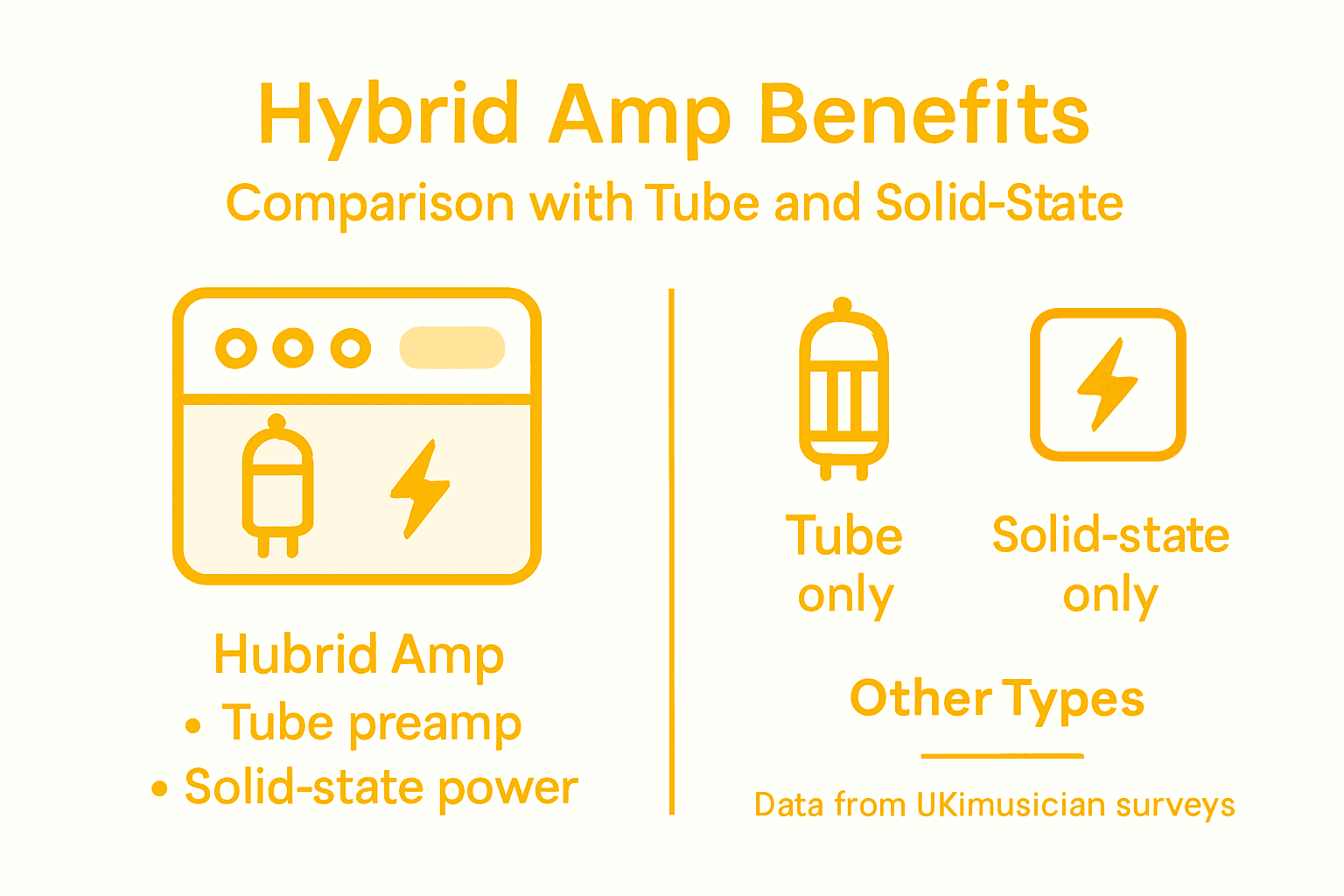
Longevity tells an important story when you calculate total cost of ownership. Tube amplifiers require periodic replacement of vacuum tubes which have limited lifespan, imposing ongoing maintenance costs that accumulate over years of playing. A tube preamp might last 5 to 10 years before tubes degrade noticeably, depending on usage patterns and tube quality. Solid-state amps feature greater durability with fewer component failures and minimal upkeep, often lasting 15 to 20 years with just basic care. Hybrids reduce tube wear significantly by limiting tubes to preamp stages only, extending tube life considerably and reducing maintenance frequency to perhaps once every 8 to 12 years. This means you get years of reliable performance before facing any real servicing costs. For a musician buying gear in their twenties or thirties with plans to play for decades, the hybrid approach offers sensible economics.
Your decision ultimately depends on three factors: budget, desired tone, and willingness to perform routine maintenance versus prioritising long-term reliability. If you’re willing to spend extra money upfront and don’t mind retubing regularly for the sake of pure tube tone, an all-tube amp rewards that commitment with unmatched sonic character. If you want maximum reliability with zero hassle, solid-state delivers that promise efficiently. If you want tube tone without the financial burden and maintenance headaches, hybrid amps deliver exceptional value. Consider also that investing in quality gear through trusted retailers means better support and service options when maintenance does become necessary, which ultimately protects your investment over time.
Here’s a side-by-side comparison of amplifier types for quick reference:
| Amplifier Type | Typical Maintenance Needs | Weight & Portability | Core Tonal Strength |
|---|---|---|---|
| Valve (Tube) | Frequent retubing, bias checks | Heaviest, least portable | Warmth, dynamic response |
| Solid-State | Minimal, mostly dusting | Lightweight, highly portable | Clean, consistent tone |
| Hybrid | Occasional preamp retube | Lighter than tube amps | Tubelike warmth with reliability |
Pro tip: Calculate your total cost of ownership over five years by factoring in tube replacement costs and electricity usage; this realistic comparison often reveals that hybrids provide superior value compared to pure tube alternatives.
Discover the Perfect Hybrid Amp to Elevate Your Tone and Reliability
Navigating the choice between tube warmth and solid-state reliability can be challenging for any guitarist. If you seek the best of both worlds with hybrid guitar amps offering expressive tube preamps combined with rugged and consistent solid-state power stages, MusicStreet is here to guide you. Experience gear designed for modern players who demand tonal versatility, lower maintenance, and dependable performance night after night.

Explore our carefully selected collection of electric guitars and quality amps at MusicStreet and benefit from expert advice and professional setup to fully unlock your hybrid amp’s potential. Act now to secure your tone without compromise and enjoy free UK delivery on orders over a certain amount. Visit MusicStreet today and take your playing to the next level with gear tailored to your sound and lifestyle.
Frequently Asked Questions
What is a hybrid guitar amp?
A hybrid guitar amp combines a tube preamp with solid-state power amplification, allowing for the warm, responsive tone of tubes along with the reliability and efficiency of solid-state technology.
How do hybrid amps differ from purely tube or solid-state amps?
Hybrid amps incorporate the character and warmth of tubes in the preamp section while using solid-state components for power amplification, resulting in a versatile tone without the maintenance issues associated with full-tube amps.
What are the advantages of using a hybrid amp for live performances?
Hybrid amps offer tube-like warmth and character while being lighter and more reliable than all-tube models, making them ideal for gigging musicians who need consistency and durability on stage.
How does the sound quality of a hybrid amp compare to a full tube amp?
While some players feel that hybrid amps may lack the full warmth of all-tube systems, they still provide around 80% of that character, balancing tonal richness with the practical benefits of hybrid design.
Recommended
- Can a modelling or profiling amp really replace a valve guitar amp? | MusicStreet
- Why Guitarists Are Using Amp Modellers Today – MusicStreet
- Guitar Amplifier Types Explained: Find Your Sound – MusicStreet
- 7 Must-Know Examples of Guitar Amps for Every Guitarist – MusicStreet
- The history of the electric guitar









Share:
Top Famous Electric Guitarists Who Shaped Rock History
Best Acoustic Guitars to Elevate Your Playing