


The top 5 acoustic guitar brands in 2026 are C.F. Martin, Taylor, Yamaha, Gibson, and boutique makers such as Collings and Lowden. Each brand occupies a distinct position in the market, defined by tonal character, construction quality, and the type of player it serves best. Choosing between them is not about prestige. It is about matching the instrument’s voice to your playing style, your budget, and the music you actually make. This guide breaks down what each brand does well, who it suits, and what you should listen for before you buy.
1. What are the top 5 acoustic guitar brands in 2026?
The top acoustic guitar companies recognised across the industry in 2026 are C.F. Martin, Taylor, Yamaha, Gibson, and boutique makers like Collings and Lowden. That list reflects a clear market structure. Yamaha dominates the entry-level segment, Taylor and Martin serve professional players, and boutique makers cater to specialists who want something beyond factory production. Gibson sits firmly in the mid-to-high tier, with a tonal identity that is immediately recognisable. Understanding where each brand sits in that structure is the first step to making a confident buying decision.
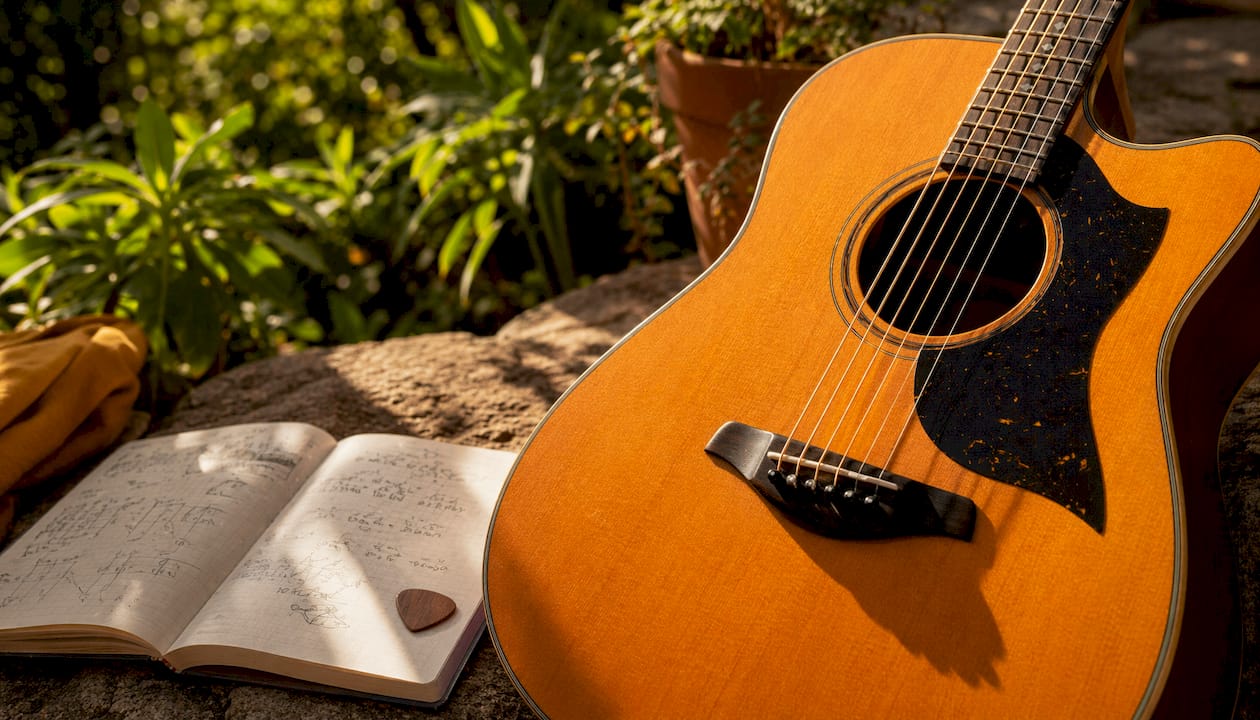
2. Martin: the gold standard for traditional tone
Martin’s tonal signature is built on deep bass resonance and a warmth that no other mass-produced brand has consistently replicated. Folk musicians, singer-songwriters, and fingerpickers have gravitated towards Martin for generations. The reason is simple: the low end is full without being muddy, and the midrange sits back just enough to let vocals breathe.
Martin’s construction centres on solid tonewoods, with Sitka spruce tops and mahogany or rosewood backs and sides appearing across most of their catalogue. Solid tops vibrate more freely than laminate alternatives, and that translates directly into richer projection and better tonal development over time. A Martin genuinely sounds better the more you play it.
Key reasons players choose Martin:
- Deep, resonant bass response suited to fingerpicking and open tunings
- Solid top construction across most price points
- A tonal legacy spanning nearly two centuries
- Preferred by folk, country, and traditional acoustic players
- Strong resale value compared to most production guitars
For a detailed look at how Martin’s models differ from one another, Musicstreet’s Martin model comparison guide is worth reading before you commit to a specific series.
Pro Tip: When auditioning a Martin, play a simple fingerpicked pattern in open G or open D tuning. That is where the bass resonance becomes most obvious, and you will immediately know whether the tonal character suits your style.
3. Taylor: built for modern players and live performance
Taylor’s reputation rests on consistent factory setups and a bright, articulate tone that cuts through a live mix. Where Martin leans into warmth and tradition, Taylor leans into clarity and playability. The neck profiles are slimmer, the action comes out of the factory at a player-friendly height, and the electronics integration on Taylor’s electro-acoustic models is among the best available.
Modern players benefit from Taylor’s ergonomic design in a way that is immediately noticeable. Gigging musicians who move between acoustic and plugged-in sets find Taylor particularly well suited to their needs. The bright tonal character also works well for strumming-heavy styles where note definition matters more than low-end warmth.
Pros of choosing Taylor:
- Slim, comfortable neck profiles that reduce fatigue on long sets
- Bright, articulate tone that projects clearly in live settings
- Reliable factory setup straight out of the box
- Excellent electronics integration for gigging musicians
- Wide model range from entry-level to professional
Cons to consider:
- The bright tone can feel thin to players accustomed to warmer sounds
- Premium models carry a significant price premium over comparable Martin guitars
- Less tonal character at the very low end compared to dreadnought-style alternatives
Pro Tip: If you plan to play live regularly, ask to test the onboard electronics through a DI before you buy. Taylor’s Expression System pickups are excellent, but every room sounds different, and knowing how the guitar behaves plugged in matters as much as its acoustic voice.
4. Yamaha: the best value acoustic guitars for beginners
Yamaha leads the entry-level acoustic market on reliability and consistency. The Yamaha FG800 is a widely cited example of what a budget guitar can achieve: a solid Sitka spruce top, good projection, and tuning stability that holds up under regular playing. For players starting out, that combination is more important than any premium feature.
Budget matters in the UK market. Beginners should expect to spend £180–£220 for a solid top acoustic guitar. Below that price point, most guitars use laminate construction, which limits tonal development and projection. Yamaha consistently delivers solid tops within that budget range, which is why it remains the most recommended brand for first-time buyers.
Steps for choosing a Yamaha as your first guitar:
- Set a realistic budget of at least £180 to access solid top construction.
- Check that the guitar has a solid Sitka spruce or cedar top, not a laminate.
- Play a few notes on the 12th fret and check that the action is not uncomfortably high.
- Ask about a professional setup if the action feels stiff. A guitar setup costing £20–£30 can transform a budget instrument into something genuinely playable.
- Consider an electro-acoustic model if you plan to perform. The Yamaha FGC-TA TransAcoustic is a strong example of Yamaha’s value at a higher price point.
Pro Tip: Do not overlook Yamaha’s mid-range models. The FGX5 and TransAcoustic series offer features that rival guitars costing significantly more, particularly for players who want built-in reverb and chorus effects without carrying extra equipment.
5. Gibson: warmth and mid-range punch for blues and rock
Gibson delivers warmth and mid-range punch that suits blues and rock players more naturally than any other major brand. The tonal character is thick and expressive, with a midrange that responds to pick attack in a way that feels almost vocal. Blues players in particular find that Gibson acoustics translate the dynamics of their playing with unusual sensitivity.
Gibson’s construction leans on mahogany bodies and spruce tops, a combination that produces a focused, warm sound with less high-end sparkle than Taylor and less low-end depth than Martin. That midrange emphasis is not a compromise. For the right player, it is exactly what the music demands.
Reasons players choose Gibson for blues and rock:
- Thick, warm midrange that responds expressively to dynamics
- Vintage aesthetic and tonal character that suits period-correct playing styles
- Strong sustain that benefits chord-heavy playing
- Preferred by blues, rock, and Americana musicians
- Recognisable tonal identity that sits well in band mixes
Gibson’s acoustic range includes the J-45 and the J-200, both of which have appeared on recordings across decades of popular music. That heritage is not just marketing. It reflects a genuinely distinct tonal voice that players return to because nothing else sounds quite like it.
6. Boutique makers: Collings and Lowden for professional-grade quality
Boutique makers like Collings and Lowden occupy a different category entirely. These are hand-crafted instruments built in small numbers, using select tonewoods chosen for their acoustic properties rather than their visual appeal. The result is a guitar with a voice that feels alive in a way that mass-produced instruments rarely achieve.
Boutique guitars differ from production guitars in several concrete ways:
- Craftsmanship: Each instrument is built by a small team or a single luthier, with individual attention at every stage.
- Tonewoods: Builders like Collings and Lowden select tonewoods for acoustic performance, often using aged or rare species unavailable to larger manufacturers.
- Voicing: Each guitar is voiced individually, meaning the bracing is adjusted to suit the specific top’s stiffness and resonance.
- Unique character: No two boutique guitars sound identical, even from the same model line.
- Longevity: The quality of materials and construction means these instruments often improve significantly over decades of playing.
The typical buyer for a boutique acoustic is a professional player or a serious amateur who has already owned several production guitars and knows exactly what tonal qualities they are seeking. These are not starter instruments. They are the guitars that players save for, wait for, and keep for life.
| Feature category | Production guitars | Boutique guitars |
|---|---|---|
| Construction method | Factory production line | Hand-built by individual luthiers |
| Tonewood selection | Standardised species and grades | Hand-selected for acoustic performance |
| Voicing | Consistent across a model run | Individually adjusted per instrument |
| Price range | £200–£3,000+ | £3,000–£10,000+ |
| Availability | Widely stocked | Limited runs, often with waiting lists |
Hardware quality is one area where boutique makers consistently outperform production guitars. Tuning machines from makers like Gotoh and Grover appear on higher-end production models too, but boutique builders specify hardware with the same care they apply to tonewoods. Reliable tuners reduce maintenance distractions and keep you focused on playing rather than retuning between songs.
Key takeaways
The best acoustic guitar brand is the one whose tonal character, playability, and price point align with your musical style and practical needs.
| Point | Details |
|---|---|
| Martin suits traditionalists | Deep bass resonance and solid top construction make Martin ideal for folk and fingerpicking styles. |
| Taylor excels for live performance | Consistent factory setups and bright tone give Taylor an edge for gigging musicians. |
| Yamaha leads on value | Solid top construction under £220 makes Yamaha the most reliable choice for beginners in the UK. |
| Gibson serves blues and rock | Warm midrange and expressive dynamics make Gibson the natural choice for blues and rock players. |
| Boutique guitars reward experienced players | Collings and Lowden offer hand-crafted quality and individual voicing for professionals who know what they want. |
What I have learned from years of matching players to guitars
No single brand is universally best. That sounds obvious, but players consistently underestimate how much tonal preference varies between individuals. I have seen experienced musicians pick up a Yamaha and prefer it to a Martin costing four times as much. The guitar that fits your hands and suits your music is the right guitar, regardless of the badge on the headstock.
The most overlooked factor in any guitar purchase is the professional setup. Action height at the 12th fret should sit at approximately 2.0 mm for most steel-string acoustics. A guitar with high action feels hard to play and discourages practice, particularly for beginners. A setup costing £20–£30 can correct that problem on almost any instrument. I would always recommend budgeting for a setup alongside the guitar itself.
Brand matters less than choosing a guitar that suits your musical style and physical comfort. The most reliable acoustic guitars are the ones that get played regularly, and that only happens when the instrument feels right in your hands. Many professional players own multiple guitars: a Martin for practice and writing, a Taylor for live work, and perhaps a boutique instrument for recording. That is not indulgence. It is a practical response to the fact that different guitars serve different purposes.
My honest advice is to play before you buy whenever possible. Listen for the tonal qualities that match your style, check the hardware, and factor in the cost of a setup. Those three things will serve you better than any brand loyalty.
— Music
Musicstreet’s acoustic guitar range and setup services
Musicstreet stocks a curated selection of acoustic guitars across all price points, from entry-level instruments to professional-grade models, both new and pre-owned.
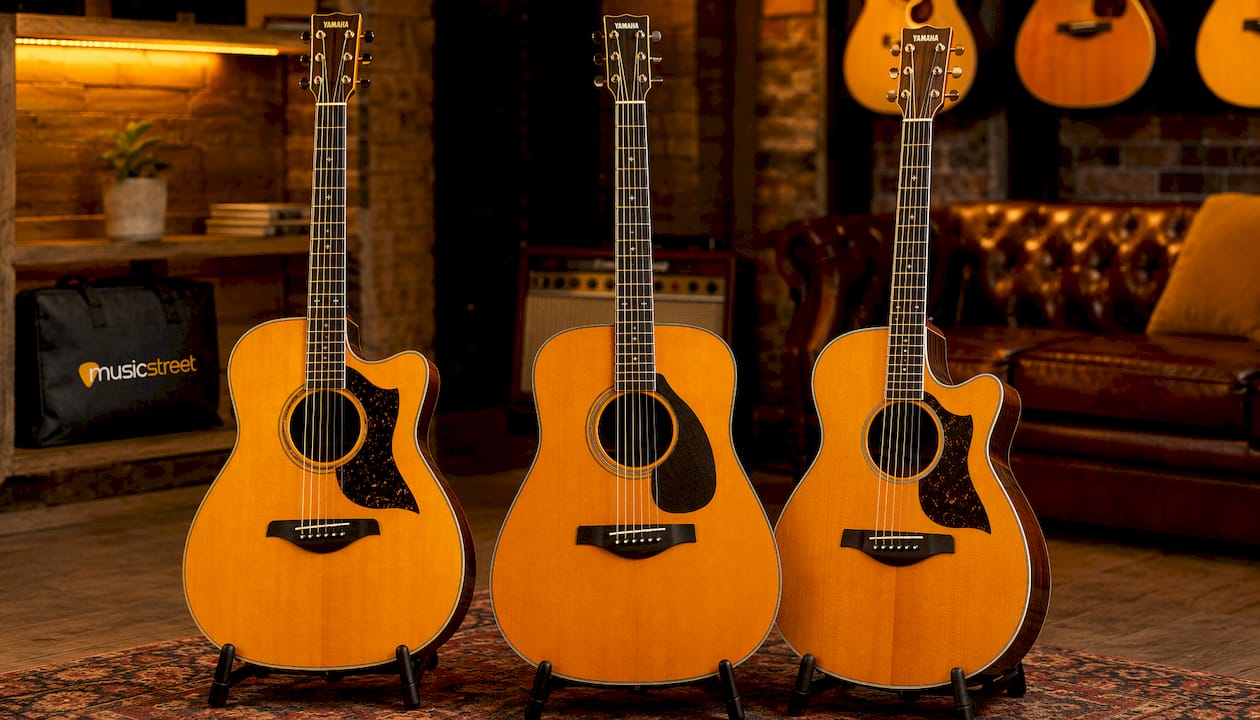
Whether you are looking for your first solid-top acoustic or a higher-end electro-acoustic for live work, the team at Musicstreet’s Huntingdon store can help you find the right fit. The Yamaha FGX5 acoustic guitar is one example of a mid-range model that punches well above its price. Musicstreet also offers professional setup services to get any guitar playing at its best from day one. For a broader look at what is available across brands and budgets, the best acoustic guitars UK guide on the Musicstreet site is a practical starting point.
FAQ
Which acoustic guitar brand is best for beginners?
Yamaha is the most reliable choice for beginners in the UK, offering solid top construction at prices from around £180. The FG series in particular delivers tuning stability and good projection at an entry-level price.
Is Martin or Taylor better for live performance?
Taylor is generally better suited to live performance. Taylor’s factory setups and electronics integration give gigging musicians a consistent, plug-in-ready experience that Martin’s more traditional builds do not prioritise.
What is the best type of acoustic guitar for blues?
Gibson acoustics are the preferred choice for blues players, delivering the warm midrange and expressive dynamics the genre demands. The J-45 in particular has appeared on blues and Americana recordings for decades.
Do boutique guitars justify the higher price?
For professional players who know their tonal preferences, boutique guitars from makers like Collings and Lowden offer hand-crafted quality and individual voicing that production guitars cannot match. For most players, a well-set-up production guitar serves equally well.
How much does a professional guitar setup cost in the UK?
A professional setup typically costs £20–£30 in the UK and adjusts action height, intonation, and nut slots. It is one of the most cost-effective improvements you can make to any acoustic guitar.





Share:
Guitar string names explained: your complete guide
Acoustic vs electric guitar: what's the real difference?