
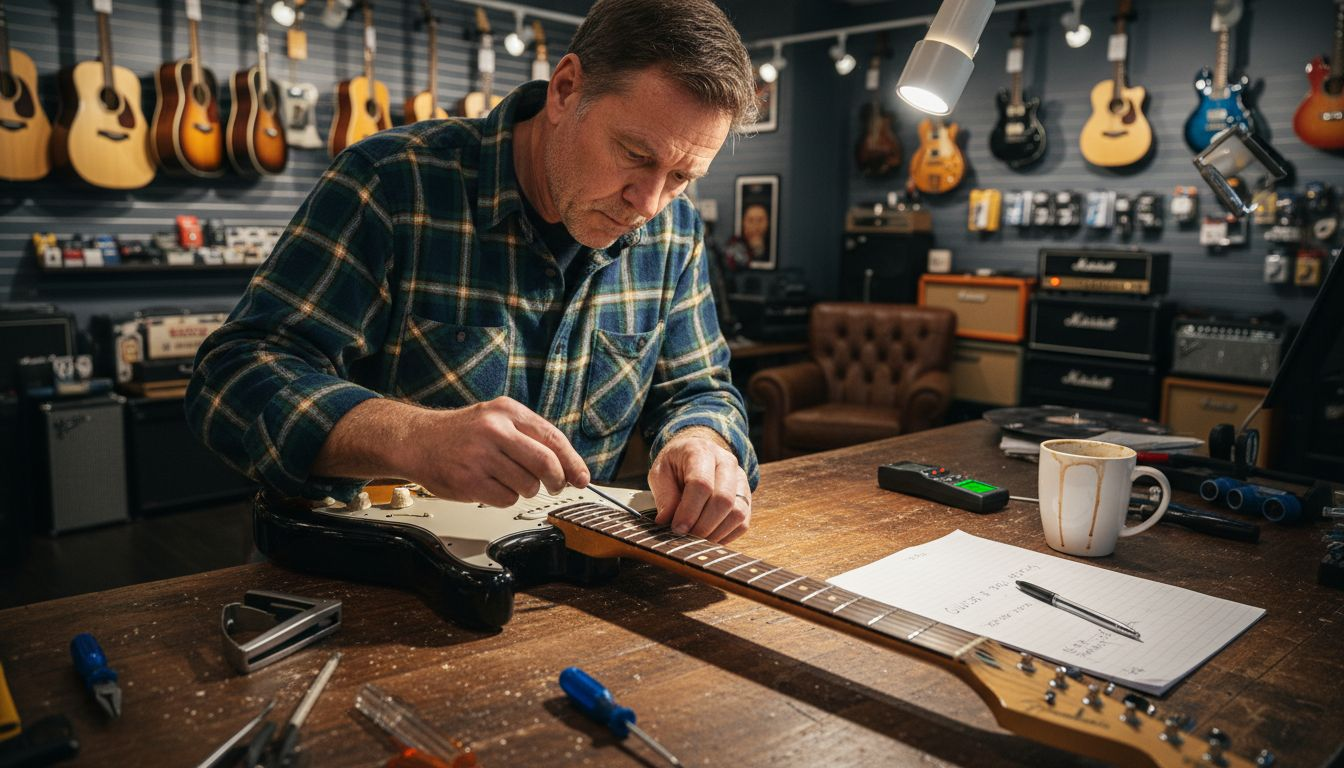
Struggling with persistent string buzz or stiff action is a challenge many British guitarists face, regardless of how much their instrument originally cost. Proper guitar setup is more than simple maintenance—it is a series of fine adjustments that can dramatically improve both comfort and sound. Whether you play at home or on stage, mastering setup techniques will help you achieve clearer tone, smoother playability, and a more consistent musical experience.
Table of Contents
- What Is Guitar Setup And Why It Matters
- Types Of Guitar Setups And Key Adjustments
- How Setup Affects Playability And Tone
- Common Problems Linked To Poor Setup
- Frequency, Costs, And Professional Support
Key Takeaways
| Point | Details |
|---|---|
| Importance of Guitar Setup | A proper guitar setup optimises playability and tonal quality, enhancing the overall musical experience. |
| Types of Setups | Different setups are tailored to specific playing styles, affecting string action and instrument response. |
| Impact of Poor Setup | Inadequate setup can cause issues like tuning instability, excessive string buzz, and reduced note clarity. |
| Professional Assistance | Regular professional setups are recommended to maintain optimal performance, with costs varying based on guitar type and services required. |
What Is Guitar Setup And Why It Matters
A guitar setup is a meticulous process of adjusting and fine-tuning a guitar’s components to optimise its playability, sound quality, and overall performance. Professional guitar setups involve carefully calibrating multiple elements that directly impact how the instrument feels and sounds.
The key components of a guitar setup typically include:
- Adjusting the truss rod to ensure proper neck relief
- Setting the action height for comfortable string play
- Aligning string intonation for accurate pitch across the fretboard
- Checking and adjusting nut and bridge height
- Fine-tuning string height and tension
Without a proper setup, even an expensive guitar can feel challenging to play and produce subpar tonal quality. High action can cause finger strain, while improper neck alignment might result in persistent tuning instability or unwanted string buzz.
A well-executed guitar setup transforms an average instrument into a precision musical tool, making playing more enjoyable and effortless.
Why Guitar Setup Matters:
- Improves overall instrument playability
- Enhances tonal clarity and sustain
- Reduces physical strain during playing
- Prevents potential long-term instrument damage
- Ensures consistent performance across different playing styles
Pro tip: Consider getting a professional setup at least once per year or after significant environmental changes to maintain your guitar’s optimal performance.
Types Of Guitar Setups And Key Adjustments
Guitar setups are nuanced processes tailored to different playing styles and instrument requirements. Guitar setup techniques encompass several specialised approaches designed to address specific performance needs and playing preferences.
The primary types of guitar setups include:
Here is a comparison of different guitar setup types and their typical applications:
| Setup Type | String Action | Preferred Genre or Purpose |
|---|---|---|
| General Purpose | Medium | All-round use |
| Blues/Rock | Lower | Fast playing, bends, aggressive |
| Jazz | Higher | Complex chords, clean articulation |
| Classical | Specialised | Nylon strings, classical repertoire |
| Precision Performance | Ultra-refined | Professional stage/studio use |
- General Purpose Setup: Versatile configuration suitable for most playing styles
- Blues/Rock Setup: Lower action for faster playing and more aggressive techniques
- Jazz Setup: Higher action with increased string height for complex chord voicings
- Classical Setup: Specific adjustments for nylon-string guitars with unique requirements
- Precision Performance Setup: Ultra-refined configuration for professional musicians
Key adjustments during a comprehensive guitar setup involve multiple critical components:
- Truss Rod Adjustment: Correcting neck relief and preventing warping
- Action Height Calibration: Setting optimal string height for comfortable playing
- Intonation Alignment: Ensuring accurate pitch across the entire fretboard
- Nut and Bridge Refinement: Optimising string response and sustain
- String Height and Tension Tuning: Fine-tuning overall playability
Professional guitar setups transform an instrument from merely functional to exceptional, revealing its true sonic potential.
Environmental factors and playing style significantly influence the required setup approach. Humidity, temperature changes, string gauge variations, and individual playing techniques all contribute to determining the most appropriate configuration for a specific instrument.

Pro tip: Consult a professional guitar technician to develop a personalised setup strategy that matches your unique playing style and instrument characteristics.
How Setup Affects Playability And Tone
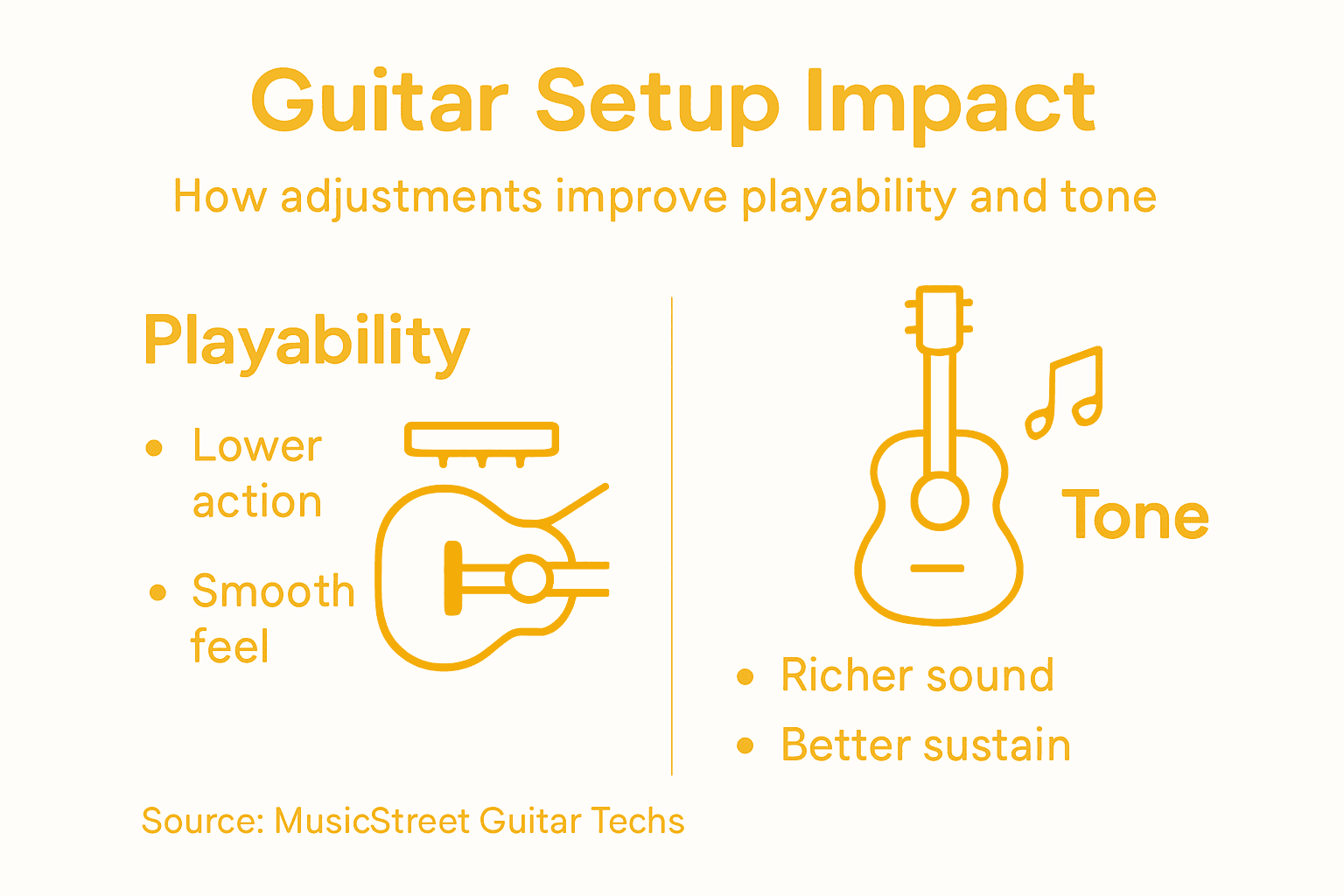
Guitar setup profoundly impacts both the physical playing experience and the instrument’s sonic characteristics. Every adjustment represents a delicate balance between mechanical precision and musical expression, transforming how a guitar feels and sounds.
The critical aspects of setup that directly influence playability include:
- String Action: Determines the distance between strings and fretboard
- Neck Relief: Affects overall neck straightness and string vibration
- Intonation: Ensures accurate pitch across different fretboard positions
- Nut and Bridge Height: Impacts string tension and initial note clarity
- Truss Rod Tension: Controls neck flexibility and structural integrity
Tonal characteristics are equally transformed by meticulous setup adjustments. The way strings vibrate, sustain, and interact with the instrument’s structure fundamentally changes the guitar’s sonic personality. Proper neck alignment allows for cleaner note definition, while precise action height can enhance or reduce harmonic complexity.
A well-executed guitar setup is like a precise mechanical instrument, translating mechanical adjustments into pure musical expression.
Environmental factors such as humidity, temperature, and playing style further complicate setup requirements. String gauge, playing technique, and musical genre all contribute to determining the optimal configuration for maximum playability and tonal richness.
Key tonal impacts of professional setup include:
- Enhanced note sustain
- Improved harmonic clarity
- Reduced unwanted string buzz
- More consistent sound across the fretboard
- Better overall resonance and vibration transfer
Pro tip: Schedule a professional setup every six months or after significant environmental changes to maintain your instrument’s optimal performance and sound quality.
Common Problems Linked To Poor Setup
A poorly executed guitar setup can lead to a cascade of performance issues that dramatically impact playability and musical enjoyment. Guitar setup techniques reveal the intricate ways improper adjustments can compromise an instrument’s fundamental characteristics.
The most common problems arising from inadequate guitar setup include:
- Excessive String Buzz: Caused by incorrect neck relief or action height
- High Action: Increases finger fatigue and makes playing difficult
- Intonation Errors: Produces out-of-tune notes across the fretboard
- Uneven Fret Wear: Results from misaligned neck or inconsistent string height
- Reduced Sustain: Occurs when string vibration is impeded by poor setup
Physical symptoms of a poorly set up guitar can manifest in multiple ways that impact both the instrument and the player. Neck relief issues can cause structural stress, potentially leading to long-term damage to the guitar’s structural integrity. Persistent playing with an incorrectly set up instrument can result in increased finger strain, reduced playing comfort, and diminished musical expression.
A neglected guitar setup is like a neglected machine – it will gradually deteriorate and perform less effectively over time.
The most critical areas of concern for musicians include:
- Persistent tuning instability
- Increased physical strain while playing
- Reduced note clarity and definition
- Accelerated wear on strings and fretboard
- Potential long-term structural damage to the instrument
Pro tip: Invest in a professional setup or learn basic setup techniques to prevent these issues from developing and compromising your instrument’s performance.
Frequency, Costs, And Professional Support
Guitar setup services in the United Kingdom represent a crucial investment in maintaining an instrument’s optimal performance and longevity. Professional setup costs typically range from £50 to £150, depending on the guitar’s complexity and specific requirements.
Typical setup service pricing includes:
- Basic Electric Guitar Setup: £50-£75
- Acoustic Guitar Setup: £60-£85
- Complex Tremolo Systems: £80-£120
- 12-String Guitar Setup: £75-£100
- Vintage or Specialty Instruments: £100-£150
Additional specialised adjustments can incur separate fees, such as:
- Truss rod adjustment: £15-£25
- Intonation calibration: £20-£35
- Nut slot filing: £10-£20
- Fretboard conditioning: £25-£40
- Electronics inspection: £30-£50
Professional guitar technicians offer transparent pricing and comprehensive services to ensure your instrument performs at its absolute best.
Recommended setup frequency varies based on playing intensity and environmental conditions. Casual players might require professional setup annually, while professional musicians or those in challenging climate conditions might need service every 4-6 months.
Below is a quick reference for UK guitar setup service costs and suggested intervals:
| Service Type | Typical Cost Range | Recommended Frequency |
|---|---|---|
| Electric Guitar Setup | £50–£75 | Every 6–12 months (depends on use) |
| Acoustic Guitar Setup | £60–£85 | Annually or after climate changes |
| Tremolo System Tuning | £80–£120 | As needed after upgrades |
| 12-String Setup | £75–£100 | Every 6–12 months or string change |
| Fretboard Conditioning | £25–£40 | Every string change or as required |
Pro tip: Keep a maintenance log to track your guitar’s setup history and anticipate potential future service requirements.
Ensure Your Guitar Performs At Its Best With Expert Setup and Support
Maintaining your guitar’s setup is essential to avoid problems like high action, intonation errors, and tuning instability that affect playability and tone. At MusicStreet, we understand how these issues can cause frustration and physical strain, limiting your musical expression. Our professional inspection and expert setup services are designed to restore your guitar’s precision and vibrancy, whether you play electric, acoustic, or bass guitars.

Discover a personalised approach to guitar care with MusicStreet’s comprehensive solutions. Explore our selection of high-quality guitars and benefit from expert setup and ongoing support. Visit MusicStreet today to shop with confidence and ensure your instrument delivers the best playing experience. Take control of your tone and playability now by booking a professional setup or browsing our latest guitars available for immediate delivery.
Frequently Asked Questions
What is a guitar setup and why is it important?
A guitar setup is the process of adjusting various components of a guitar, such as the truss rod, action height, and intonation, to enhance its playability, tonal quality, and overall performance. Proper setup ensures a guitar feels comfortable to play and produces the best sound possible.
How frequently should I get my guitar set up?
It is generally recommended to have a professional guitar setup every 6-12 months, depending on your playing frequency and environmental conditions. Professional musicians or those who encounter significant climate changes may need setups more frequently, around every 4-6 months.
What are the common problems caused by a poorly executed guitar setup?
Common issues from a poor setup include excessive string buzz, high action, intonation errors, uneven fret wear, and reduced sustain. These problems can negatively impact playability and lead to long-term damage to the instrument.
How does a guitar setup affect tone and playability?
A proper guitar setup influences tone by ensuring accurate pitch, improving sustain, and reducing unwanted buzz. It enhances playability by setting the correct string action, neck relief, and overall comfort, allowing for a more enjoyable playing experience.



Share:
Discover the Best Classical Guitar Techniques for All Levels