


Finding the perfect guitar can feel overwhelming for British beginners and intermediate players with more than 60 percent of first-time buyers feeling unsure about which body type best suits their needs. Body design strongly influences comfort, sound quality, and even how easily you adapt techniques. Gaining a confident understanding of guitar body types helps you make a smart choice whether browsing online shops or visiting stores across the United Kingdom.
Table of Contents
- What Defines A Guitar Body Type?
- Major Guitar Body Types Compared
- Impact On Tone, Feel, And Playability
- Choosing Body Types For Musical Styles
- Common Mistakes When Selecting Guitars
Key Takeaways
| Point | Details |
|---|---|
| Understanding Body Types is Crucial | The choice of guitar body type significantly affects tone, playability, and comfort, impacting a musician’s overall experience. |
| Tailor Selection to Musical Genre | Selecting a body type aligned with specific musical styles enhances performance and sonic expression. |
| Prioritise Comfort and Ergonomics | Always consider how the guitar feels during play, as comfort directly influences long-term enjoyment and technique. |
| Avoid Common Mistakes | Be cautious of choosing based solely on aesthetics or brand reputation; focus on functionality and personal preferences. |
What Defines a Guitar Body Type?
A guitar’s body is the fundamental architectural foundation that determines the instrument’s sonic character, playability, and aesthetic appeal. Understanding body types involves recognising how structural variations impact sound projection, tonal qualities, and musician comfort. Whether exploring acoustic or electric guitars, the body shape represents a critical design element that transforms raw materials into musical instruments.
The primary factors defining a guitar body type include its construction method, material composition, and overall shape. The anatomy of guitar bodies reveals fascinating differences between acoustic and electric models. Acoustic guitars typically feature larger, hollow bodies with sound holes designed to naturally amplify string vibrations. These bodies often use woods like spruce, mahogany, or rosewood to enhance resonance and create rich, complex tones. Electric guitars, by contrast, might have solid, hollow, or semi-hollow bodies engineered to interact effectively with electronic pickups and amplification systems.
Key characteristics that distinguish guitar body types include:
- Internal construction (solid vs hollow)
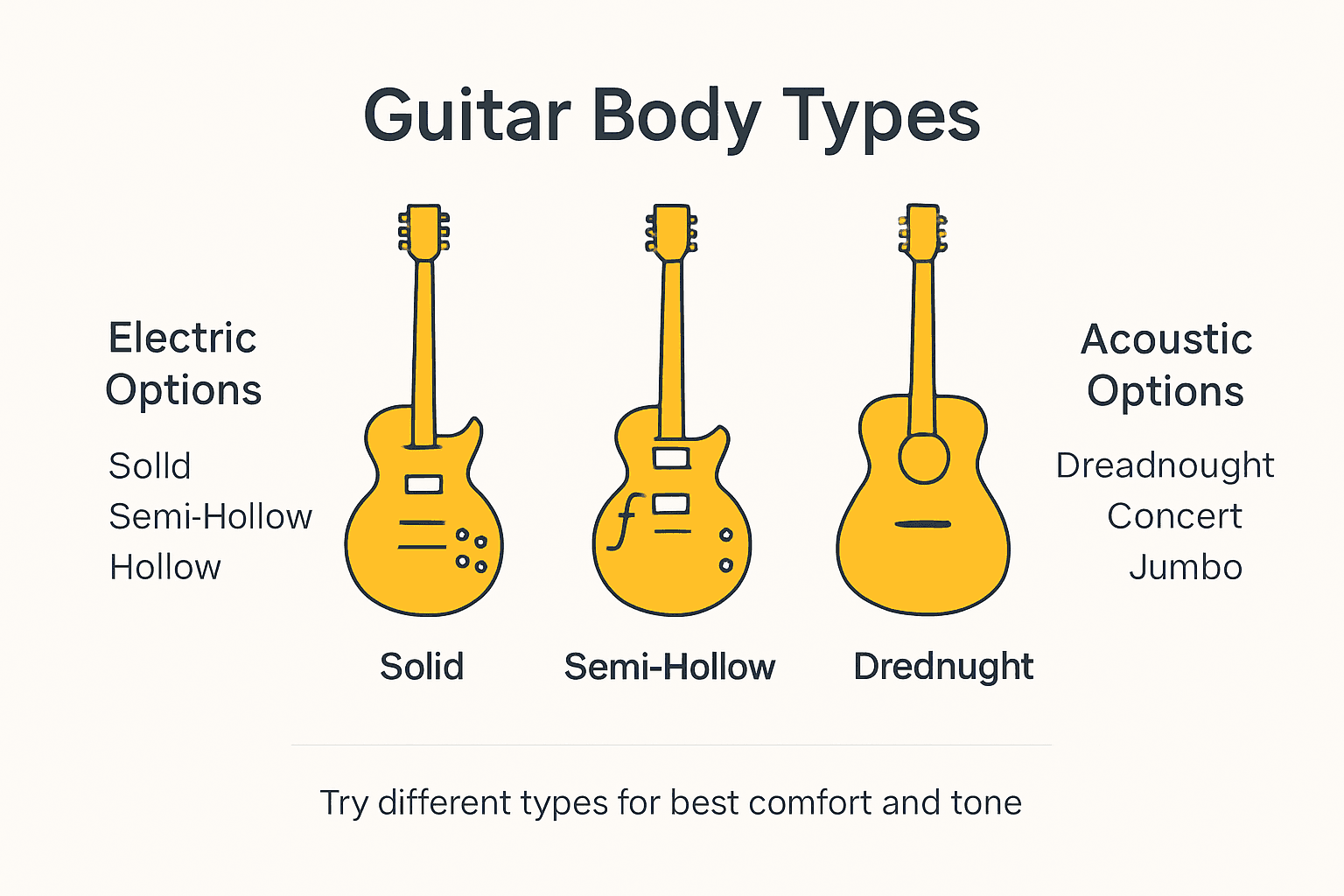
- Overall body shape (dreadnought, concert, jumbo)
- Wood selection and thickness
- Cutaway designs
- Sound projection properties
- Weight and ergonomic considerations
Expert Tip: When selecting a guitar, always prioritise body comfort and how the instrument feels against your body, as this dramatically impacts long-term playing enjoyment.
Major Guitar Body Types Compared
Guitar body types are not just aesthetic choices but critical components that fundamentally shape an instrument’s sound, performance, and musical versatility. Electric guitar body types are primarily categorised into three distinct configurations: solid body, semi-hollow body, and hollow body, each offering unique characteristics that appeal to different musical styles and player preferences.
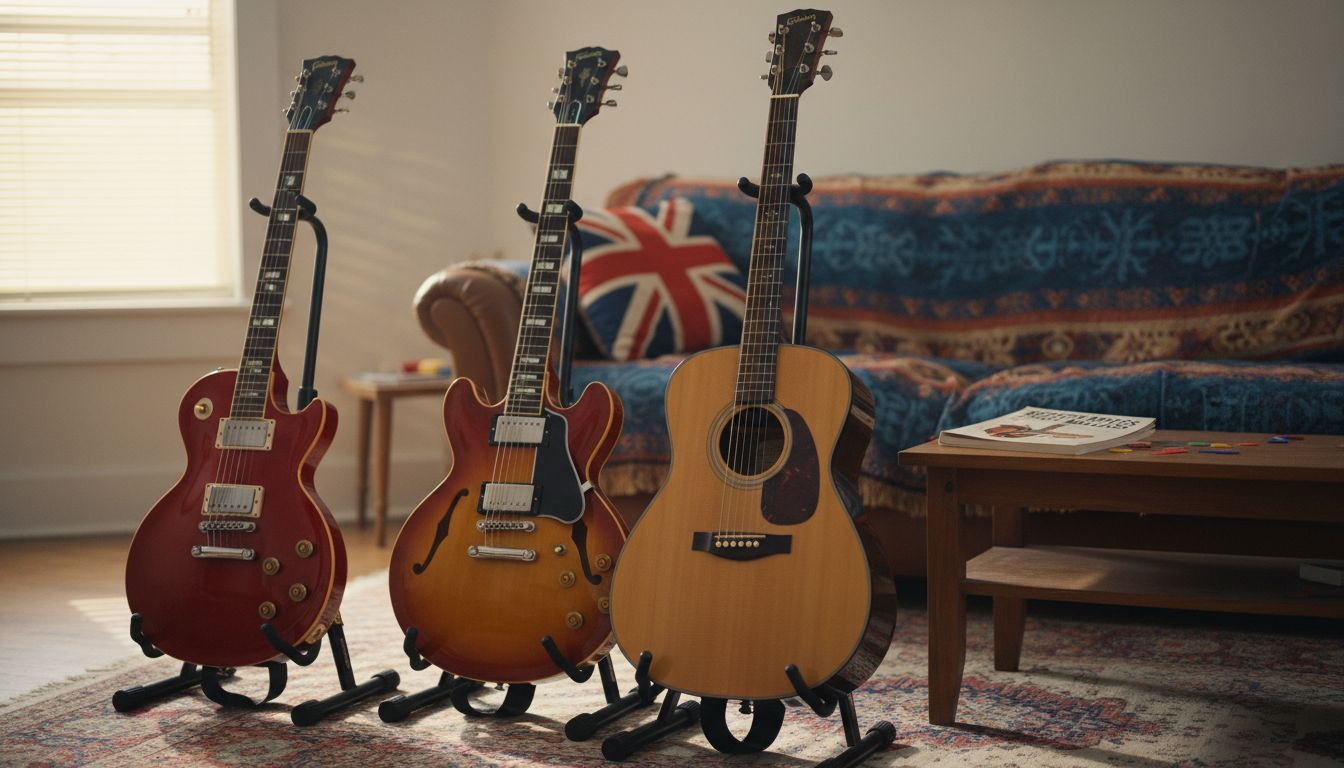
Solid body guitars represent the most common and versatile design, featuring a single piece of wood without internal chambers. These guitars are renowned for their robust sustain, minimal feedback, and ability to handle high-volume playing. Popular in rock, metal, and blues genres, solid body guitars provide exceptional note definition and are typically lighter and more comfortable for extended playing sessions. Semi-hollow body guitars introduce a central wooden block that reduces feedback while maintaining warm, resonant tones, making them excellent for jazz, blues, and alternative rock musicians seeking a more nuanced sound.
Hollow body guitars offer the most organic acoustic qualities, with completely chambered interiors that produce rich, warm tones with significant mid-range presence. These instruments excel in jazz and blues settings but can be challenging in high-volume environments due to their susceptibility to feedback. Each body type presents distinct advantages:
- Solid Body: Maximum sustain, minimal feedback, versatile
- Semi-Hollow Body: Balanced tone, reduced feedback, warmer sound
- Hollow Body: Rich acoustic qualities, complex harmonics, traditional jazz tone
The choice between these body types depends on your musical genre, playing style, and personal tonal preferences. Understanding these fundamental differences allows musicians to select an instrument that truly complements their artistic expression.
Pro Tip: Always test multiple guitar body types in person to understand how their unique tonal characteristics feel and sound in your hands.
Impact on Tone, Feel, and Playability
The guitar body profoundly influences a musician’s tactile and sonic experience, serving as the fundamental platform for musical expression. Understanding guitar tone requires deep appreciation of how body construction impacts sound characteristics, playing comfort, and overall instrumental performance.
Each body type dramatically transforms a guitarist’s physical interaction with the instrument. Solid body guitars offer a robust, stable playing surface with minimal body resonance, allowing precise note articulation and consistent energy transfer from player to instrument. Their dense construction provides exceptional sustain and minimal feedback, making them ideal for high-intensity playing styles like rock and metal. In contrast, hollow and semi-hollow body guitars introduce complex vibrational dynamics, creating more organic resonance that naturally colours the guitar’s tone with warmer, more nuanced harmonic characteristics.
The impact of body type extends beyond mere tonal variation, encompassing critical ergonomic considerations:
- Weight Distribution: Different body types significantly affect playing comfort
- Resonance Characteristics: Internal construction determines harmonic complexity
- Feedback Sensitivity: Body design influences acoustic and amplified performance
- Playing Posture: Shape and contours impact musician’s physical relationship with the instrument
Musicians must consider how body type translates their physical technique into musical expression, recognising that the perfect guitar feels like a natural extension of their musical intention.
The following table summarises the main ergonomic and performance factors to consider for each guitar body type:
| Body Type | Weight & Comfort | Feedback Sensitivity | Typical Use Duration |
|---|---|---|---|
| Solid | Generally lighter, balanced | Minimal, even at high volume | Extended sessions |
| Semi-Hollow | Moderate weight, some bulk | Moderate, manageable | Medium to long gigs |
| Hollow | Heaviest, largest bodies | High, at loud volumes | Short sets or studio play |
Pro Tip: Always test multiple guitar body types with your preferred playing style to understand how different designs interact with your personal technique and musical goals.
Choosing Body Types for Musical Styles
Selecting the right guitar body type is crucial for musicians aiming to achieve their desired sound and performance characteristics. Guitar styles and their unique requirements play a pivotal role in determining which body type will best support a musician’s artistic expression.
Rock and metal musicians typically gravitate towards solid body electric guitars, prized for their aggressive tone, exceptional sustain, and ability to handle high-gain amplification without unwanted feedback. The dense construction provides a tight, controlled sound perfect for distorted riffs and powerful lead lines. Jazz and blues performers, by contrast, often prefer hollow and semi-hollow body guitars that offer warmer, more nuanced tonal characteristics. These body types naturally produce rich harmonic overtones and a more organic sound that responds beautifully to subtle playing techniques.
Different musical genres demand specific body type characteristics:
- Rock/Metal: Solid body guitars with minimal resonance
- Jazz/Blues: Hollow or semi-hollow bodies with complex harmonic response
- Country/Folk: Acoustic guitars with pronounced midrange and balanced projection
- Indie/Alternative: Often versatile semi-hollow designs with unique tonal qualities
Successful musicians understand that body type is more than a cosmetic choice it’s a fundamental tool for musical communication, translating technical skill into emotive sound.
To assist with guitar selection, here is a summary of how popular body types suit various musical genres:
| Musical Genre | Recommended Body Type | Core Tonal Quality |
|---|---|---|
| Rock/Metal | Solid body | Powerful, sustained sound |
| Jazz/Blues | Hollow or semi-hollow | Warmth and harmonic depth |
| Country/Folk | Acoustic | Balanced, resonant mids |
| Indie/Alternative | Semi-hollow | Distinct, articulate tone |
Pro Tip: Experiment with multiple guitar body types within your preferred genre to discover the subtle tonal variations that truly match your musical voice.
Common Mistakes When Selecting Guitars
Navigating the complex world of guitar selection requires more than just aesthetic appreciation. Choosing the perfect guitar demands a strategic approach that many aspiring musicians overlook, often leading to costly purchasing errors that can derail their musical journey.
One of the most prevalent mistakes guitarists make is prioritising visual appeal over functional compatibility. Musicians frequently select guitars based on looks or brand prestige, neglecting crucial factors like body type, playing comfort, and tonal characteristics that directly impact performance. Beginners, in particular, tend to choose instruments that look impressive but fail to match their physical ergonomics or musical genre requirements. For instance, a heavy solid body guitar might look stunning but could prove uncomfortable for smaller players or those pursuing gentler musical styles.
Critical mistakes guitarists often encounter include:
- Ignoring Ergonomic Fit: Selecting guitars that don’t match physical dimensions
- Overlooking Genre Compatibility: Choosing body types inappropriate for specific musical styles
- Neglecting Personal Playing Technique: Failing to consider how body type affects playing comfort
- Budget-Driven Compromises: Sacrificing quality and playability for lower prices
- Disregarding Future Skill Development: Not considering a guitar’s adaptability as skills progress
Successful guitar selection requires thoughtful consideration of personal musical goals, physical comfort, and long-term artistic development.
Pro Tip: Always test multiple guitar body types in person, paying close attention to how each instrument feels and responds to your unique playing style.
Find the Perfect Guitar Body Type at MusicStreet
Choosing the right guitar body type is essential to unlocking your full musical potential. Whether you are drawn to the warm resonance of a hollow body, the balanced tone of a semi-hollow, or the powerful sustain of a solid body, understanding how each design impacts tone, comfort and playability helps you avoid costly mistakes and ensures long-term satisfaction. At MusicStreet, we know that selecting a guitar is about more than looks – it is about finding an instrument that feels like a natural extension of your musical expression.

Explore our extensive collection of electric and acoustic guitars crafted to fit every playing style and genre. Benefit from expert setup, personalised advice and the ability to try before you buy at our Huntingdon store. Act now to experience how the right guitar body type can transform your playing and sound. Visit MusicStreet to start your journey and discover detailed guides that will help you choose your ideal fit. For practical tips on guitar body shapes and how they influence tone, check out our guitar buying guides. Make your next guitar purchase a confident choice with MusicStreet’s trusted service and free UK delivery on orders over a certain amount.
Frequently Asked Questions
What are the main types of guitar body shapes?
The main types of guitar body shapes include solid body, semi-hollow body, and hollow body, each offering unique tonal characteristics and playability suited to different musical styles.
How does a guitar’s body type affect its sound?
A guitar’s body type influences its sound by affecting sustain, resonance, and tonal qualities. Solid body guitars provide maximum sustain, while hollow bodies offer rich acoustic tones.
What should I consider when choosing a guitar body type?
When choosing a guitar body type, consider your musical genre, playing style, comfort, and how the body shape impacts resonance and feedback sensitivity.
Can the body type of a guitar affect my playing technique?
Yes, the body type can significantly affect your playing technique, including weight distribution, feedback sensitivity, and overall comfort during extended playing sessions.




Share:
7 Premier Examples of High-End Guitars for UK Guitarists
Custom Guitar Finishes: Enhancing Style and Sound