


Standing on stage in Huntingdon, many aspiring guitarists find themselves caught between inspiration and frustration as waves of unexpected sound build from their amplifiers. Guitar feedback, once dismissed as a problem, has become a powerful tool for shaping unique tones and textures when controlled intentionally. Understanding the continuous feedback loop between your instrument and amplifier opens doors to creative expression, helping you harness everything from soft sustain to dramatic sonic bursts during live performance.
Table of Contents
- What Is Guitar Feedback And How It Occurs
- Distinct Types Of Guitar Feedback
- Why Guitarists Embrace Feedback Creatively
- Controlling And Managing Feedback Onstage
- Risks, Mistakes And Safe Usage Techniques
Key Takeaways
| Point | Details |
|---|---|
| Understanding Guitar Feedback | It is a self-reinforcing loop where amplified sound causes original strings to vibrate, creating resonant musical effects. |
| Forms of Feedback | Guitar feedback can be classified as acoustic, which relies on environmental acoustics, and electronic, originating from the instrument’s circuitry. |
| Creative Use in Music | Musicians like Jimi Hendrix have transformed feedback from a nuisance into a powerful artistic tool in genres like rock and experimental music. |
| Managing Feedback on Stage | Effective feedback management involves careful microphone placement, gain adjustments, and sound checks to control unwanted noise during live performances. |
What Is Guitar Feedback And How It Occurs
Guitar feedback is a fascinating sonic phenomenon where sound creates an extraordinary self-reinforcing loop. It occurs when the electrical signal from a guitar’s pickup is amplified, creating a continuous cycle of vibration between the instrument and its amplifier. Complex sound loop dynamics transform what was once considered an unwanted noise into a powerful musical technique.
The process begins when a guitar string vibrates, and its movement is captured by the pickup as an electrical signal. This signal travels through the amplifier, which then projects the sound through speakers. The sound waves from the speakers cause the original string to vibrate again, creating a continuous feedback loop. Depending on various factors like gain, proximity, and frequency, this loop can produce sounds ranging from soft humming to piercing, sustained notes.
Guitar feedback manifests in two primary forms:
- Acoustic Feedback: Occurs when the guitar captures its own amplified sound through the air
- Electronic Feedback: Happens within the instrument’s circuitry when high gain causes signal loops
Historically, musicians initially viewed feedback as a technical problem. However, innovative artists like Pete Townshend and Jimi Hendrix transformed this phenomenon into a creative tool during the 1960s, deliberately using feedback to add dramatic texture and sustained notes to their performances.
Pro tip: Experiment with your guitar’s positioning relative to the amplifier to intentionally control and generate desired feedback sounds.
Distinct Types Of Guitar Feedback
Guitar feedback is a nuanced phenomenon with two primary manifestations: acoustic feedback and electronic feedback. Sound loop characteristics reveal the complex dynamics behind these sonic interactions that transform unexpected noise into intentional musical expression.
Acoustic feedback occurs when a guitar’s amplified sound is captured and re-energised through environmental acoustics. This type typically develops during live performances, where sound waves from speakers bounce back and re-excite the guitar strings. Characteristics include:
- Sustained, harmonically rich tones
- Smooth, melodic sound qualities
- Higher dependence on physical positioning
- More predictable signal generation
Electronic feedback emerges within the instrument’s electrical circuitry, generated by high-gain signal loops. Unlike acoustic feedback, this variation produces more aggressive and unpredictable sonic textures. Its key features include:
- Harsher, more distorted sound profiles
- Rapid signal regeneration
- Greater potential for intense, piercing frequencies
- Less reliance on physical instrument placement
Musicians like Jimi Hendrix pioneered transforming these feedback types from technical anomalies into deliberate creative techniques, demonstrating how understanding these sonic dynamics can unlock extraordinary musical possibilities.
Here is a comparison of acoustic and electronic feedback characteristics for guitarists:
| Aspect | Acoustic Feedback | Electronic Feedback |
|---|---|---|
| Primary Source | Environmental sound interaction | Internal electronic signal loop |
| Typical Sound Texture | Smooth and melodic | Aggressive and distorted |
| Control Method | Guitar position and room setup | Gain structure and circuit design |
| Common Use Case | Live performances | Studio experimentation |
Pro tip: Experiment with amplifier positioning and gain settings to intentionally sculpt different feedback characteristics and develop your unique sound.
Why Guitarists Embrace Feedback Creatively
Guitar feedback transitioned from a technical nuisance to a deliberate artistic technique, revolutionising musical expression across multiple genres. Creative sound manipulation enables musicians to transform unexpected noise into powerful sonic landscapes that communicate raw emotion and intensity.
Pioneering guitarists discovered that feedback could be a profound expressive tool, offering unique sonic possibilities beyond traditional playing techniques. This creative approach emerged prominently in genres like rock, shoegaze, and experimental music, where musicians sought to push sonic boundaries. Key motivations for embracing feedback include:
- Generating sustained, ethereal tones
- Creating atmospheric soundscapes
- Expressing intense emotional states
- Developing signature performance styles
Technical mastery of feedback involves sophisticated manipulation of multiple variables:
- Guitar positioning relative to amplifier
- Precise pickup configuration
- Amplifier gain and volume settings
- Strategic use of vibrato and string bending techniques
Legendary performers like Jimi Hendrix and Kevin Shields demonstrated that feedback is not merely a technical glitch, but a nuanced instrument of musical communication. By understanding and controlling these sonic interactions, guitarists can transform unpredictable sound waves into deliberately crafted musical expressions.
Pro tip: Practice controlled feedback by incrementally adjusting your distance from the amplifier and experimenting with different gain levels to discover your unique sound.
Controlling And Managing Feedback Onstage
Managing guitar feedback during live performances requires a sophisticated approach that balances technical skill and strategic positioning. Stage sound management involves understanding complex interactions between instrument, amplification systems, and acoustic environment.
Effective feedback control demands meticulous attention to multiple technical variables. Guitarists must develop a comprehensive strategy that addresses several critical aspects:
- Precise microphone placement
- Strategic stage monitor positioning
- Careful gain structure management
- Dynamic acoustic awareness
Key technical techniques for minimising unwanted feedback include:
- Using directional microphones with tight pickup patterns
- Positioning amplifiers and monitors to reduce sound reflection
- Implementing gradual gain increases during sound checks
- Employing equalization to suppress problematic frequencies
Professional musicians understand that feedback management is not about complete elimination, but about controlled manipulation. By developing keen listening skills and understanding acoustic principles, guitarists can transform potential sonic disruptions into intentional musical expressions.
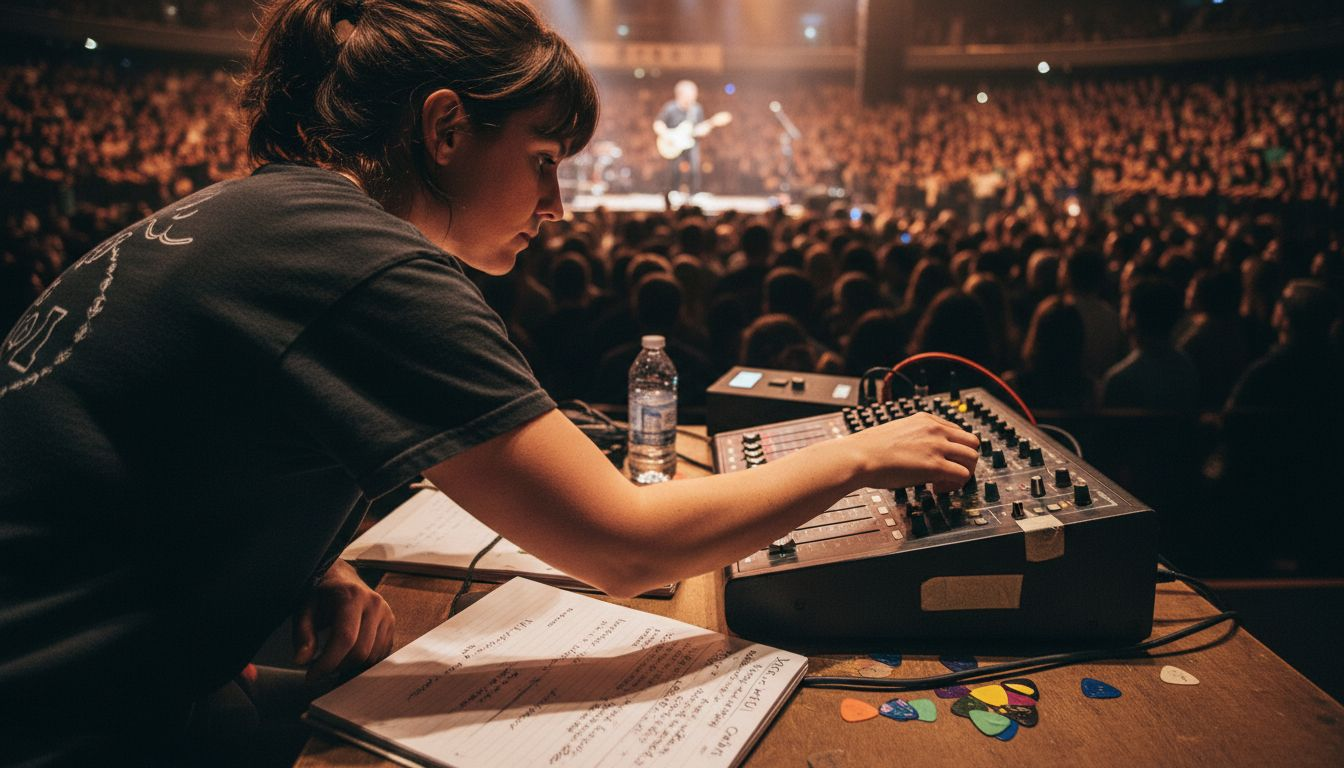
Pro tip: Always conduct a thorough sound check, moving around the stage to identify potential feedback zones and adjust your equipment accordingly.
Risks, Mistakes And Safe Usage Techniques
Navigating guitar feedback requires understanding its potential risks and implementing strategic safeguards. Feedback safety protocols are crucial for protecting both musical performance and personal hearing health.
Significant risks associated with uncontrolled feedback include:
- Potential hearing damage for musicians and audience
- Disruption of live performance dynamics
- Technical equipment strain and potential damage
- Loss of musical control and performance quality
Common mistakes that musicians frequently encounter involve:
- Positioning guitar too close to amplifiers
- Maintaining excessively high gain levels
- Neglecting comprehensive sound checks
- Ignoring stage monitor placement
Safe usage techniques demand a comprehensive approach to managing sonic interactions. Professional musicians develop nuanced skills that transform potential feedback challenges into controlled, intentional musical expressions. This involves continuous monitoring of volume levels, strategic equipment positioning, and understanding complex acoustic environments.
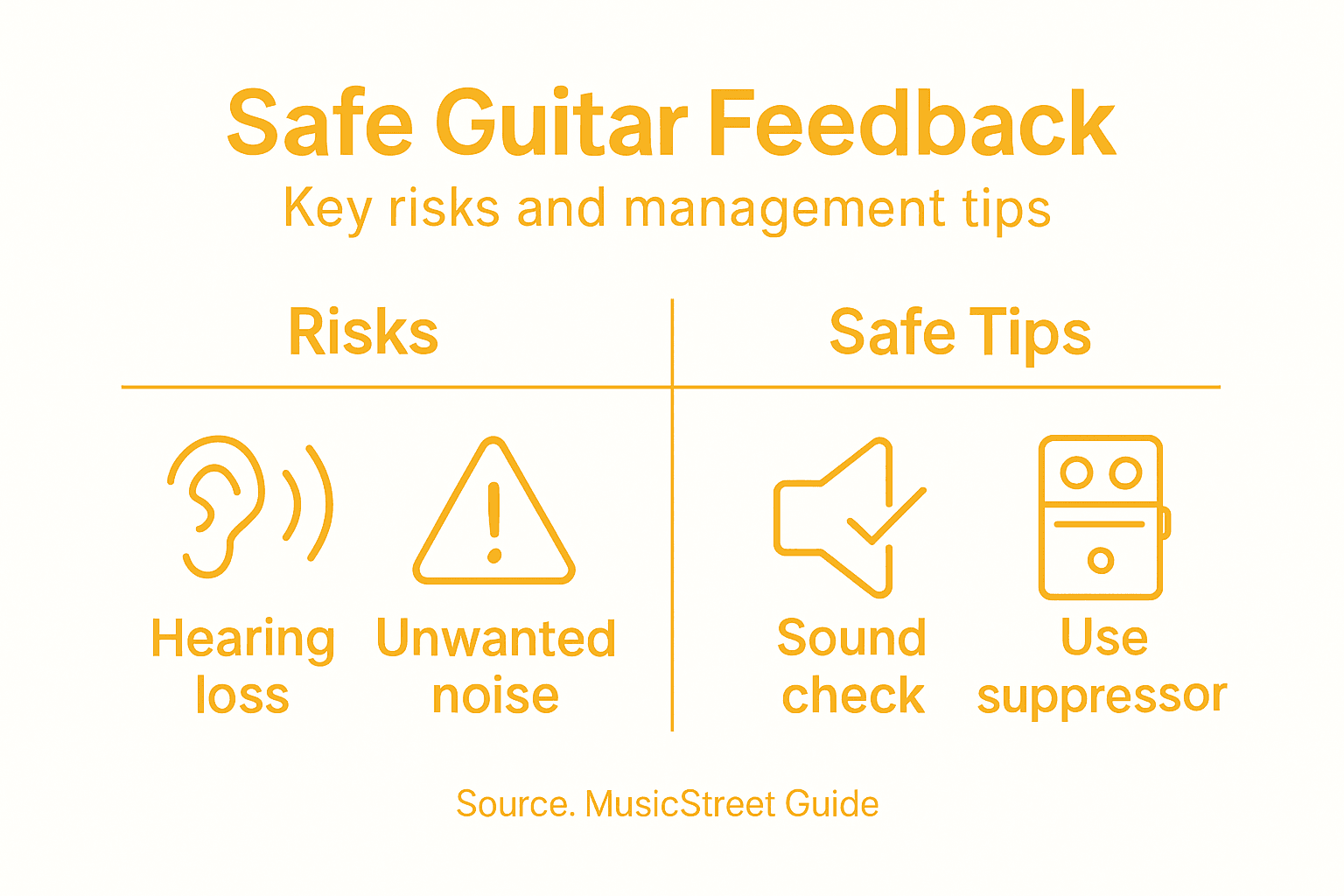
Pro tip: Invest in quality noise gates and feedback suppressors to provide an additional layer of sound control during live performances.
This table summarises safe practices and common mistakes in guitar feedback management:
| Area | Safe Practice | Common Mistake |
|---|---|---|
| Equipment Positioning | Maintain optimal distance from amp | Standing too close to amplifier |
| Volume Control | Moderate gain and volume adjustments | Excessive gain leading to squeals |
| Sound Preparation | Conduct thorough sound checks | Skipping or rushing sound checks |
| Stage Monitoring | Use directional microphones wisely | Poor monitor placement onstage |
Master Your Guitar Feedback With The Right Gear and Support
Understanding guitar feedback unlocks new creative potential but also presents challenges like controlling gain, positioning, and tonal consistency. If you want to harness feedback for live performances while avoiding unintended squeals and disruptions, having the right instrument and expert guidance is essential. At MusicStreet, we specialise in electric, acoustic, and bass guitars designed to deliver outstanding sound quality and feedback response tailored to your style.

Explore our range of premium guitars and accessories at MusicStreet and benefit from expert setup, personalised advice, and aftercare that ensures your feedback control techniques thrive onstage. Whether you are experimenting with amplifier positioning or adjusting gain levels, our specialist team in Huntingdon, Cambridgeshire, is ready to help you find instruments perfectly suited to shape your live sound. Visit MusicStreet online store today and transform your feedback challenges into signature musical expressions.
Frequently Asked Questions
What causes guitar feedback?
Guitar feedback occurs when the electrical signal from the guitar’s pickup is amplified and creates a continuous loop between the instrument and its amplifier. The vibration of the guitar strings is picked up, amplified, and projected, causing the same strings to vibrate again.
What is the difference between acoustic and electronic feedback?
Acoustic feedback occurs when the guitar captures its own amplified sound through environmental acoustics, creating smooth, melodic tones. Electronic feedback occurs within the instrument’s circuitry from high-gain signal loops, producing aggressive and distorted sounds.
How can I control feedback during live performances?
You can control feedback by strategically placing your microphone and amplifier, managing gain levels carefully, and conducting thorough sound checks to identify potential feedback zones. Using directional microphones and adjusting the position of stage monitors can also help reduce unwanted feedback.
What risks are associated with uncontrolled guitar feedback?
Uncontrolled feedback can potentially lead to hearing damage, disrupt live performance dynamics, strain technical equipment, and result in a loss of musical control. It’s important to monitor volume levels and maintain proper equipment positioning to mitigate these risks.


Share:
7 Key Guitar Amplifier Features Every UK Player Must Know
How to Maintain High-End Musical Instruments: