


Choosing the right finish for your electric guitar can spark heated debates among British guitarists, with myths about tone and durability swirling in online forums and music shops. For anyone investing in a top-quality instrument, knowing how guitar finish influences both sound and protection is crucial. This article clarifies common misconceptions, reveals what really matters for tonal clarity and wear resistance, and helps you make informed choices whether you’re buying, upgrading, or caring for your prized guitar.
Table of Contents
- Guitar Finish Explained: Purpose And Misconceptions
- Types Of Guitar Finish And Key Differences
- How Finish Thickness And Material Impact Tone
- Durability, Maintenance, And Ageing Of Finishes
- Choosing Finishes For Playing Style And Value
Key Takeaways
| Point | Details |
|---|---|
| Guitar Finish Purpose | Guitar finish protects wood from moisture and wear, while also influencing resonance and tonal characteristics. Understanding these functions helps inform purchasing and maintenance decisions. |
| Common Misconceptions | Many players misunderstand finish impact on tone, often overvaluing nitrocellulose over polyurethane; both can yield excellent sound depending on context and instrument quality. |
| Finish Durability | Polyurethane offers superior durability and minimal maintenance needs, making it ideal for gigging musicians, while nitrocellulose requires careful upkeep but adds character over time. |
| Player Profile Considerations | Choose finishes based on your environment and playing style; studio musicians may prefer nitro finishes for tonal quality, while touring musicians should opt for the durability of polyurethane. |
Guitar Finish Explained: Purpose and Misconceptions
Guitar finish is far more than aesthetic window dressing. It serves two critical functions on your electric guitar: protecting the wood underneath and influencing how the instrument vibrates and resonates. Many players hold misconceptions about what finish actually does, often overestimating or underestimating its impact on tone. Understanding the genuine purpose of finish helps you make better decisions about your instrument, whether you’re buying your next guitar or maintaining one you already own.
The primary purpose of guitar finish is protective. Wood naturally absorbs moisture from the air, which causes it to expand and contract. This movement leads to warping, cracking, and ultimately, structural failure. A properly applied finish acts as a barrier, sealing the wood and maintaining consistent moisture levels throughout the year. Beyond moisture, finish protects against dust, oils from your hands, spills, and general wear. The secondary function is resonance and vibration control. Different finish types affect how freely the wood vibrates, which has a measurable impact on sustain, brightness, and overall tonal character. Thinner finishes allow more wood vibration and generally produce a warmer, more organic tone. Thicker finishes can dampen some frequencies, sometimes creating a slightly more focused or controlled sound. This is where many misconceptions take root: players often attribute massive tonal differences to finish when other factors like wood selection, electronics, and setup play larger roles.
Common misconceptions plague finish discussions among guitarists. The first is that nitrocellulose finish automatically sounds better than polyurethane. In reality, both can produce excellent tone in the right context. Nitro finishes are thinner and do allow more wood vibration, but polyurethane finishes have improved dramatically over decades and offer superior durability with minimal tonal compromise. Another misconception involves “breathing” wood. Some claim that thinner finishes allow wood to “breathe” and improve over time. Wood doesn’t literally breathe like lungs do. What happens is that thinner finishes provide slightly more flexibility for wood movement, but the tonal difference between a well maintained nitro finish and a quality polyurethane finish on a modern guitar is often negligible compared to the craftsmanship of construction itself. Academic research into electric guitar performance techniques has examined how finish integrates into the instrument’s overall identity and performance characteristics, showing that finish is one variable among many affecting sound quality.
When evaluating a guitar’s finish, focus on what actually matters. A quality finish should be evenly applied with no runs, drips, or orange peel texture. It should feel smooth to the touch and protect the wood effectively. Whether nitro or polyurethane, the finish should match the guitar’s price point and intended use. A £3,000 instrument deserves meticulous finish work, whilst a student model might have adequate protection with a simpler polyurethane coat. For durability, nitrocellulose finishes require more maintenance and are prone to checking and fading over time, whilst polyurethane finishes resist wear, UV damage, and environmental changes far better. Most professional players prioritise durability and consistency over the subtle tonal differences finish provides.
Pro tip: When inspecting a used guitar’s finish, examine it under bright light at multiple angles to spot repairs, refinishes, or damage that might affect value or playability rather than fixating on finish type alone.
Types of Guitar Finish and Key Differences
Three main finish types dominate the electric guitar market, each with distinct characteristics that affect durability, aesthetics, and tone. Nitrocellulose lacquer is the traditional choice, favoured by vintage guitar enthusiasts and players who prioritise tonal characteristics. Polyurethane represents the modern standard, offering superior durability with minimal tonal compromise. French polish, whilst less common on electric guitars, appears on some high-end instruments and classical models. Understanding what separates these finishes helps you choose an instrument that matches both your playing style and your maintenance preferences.
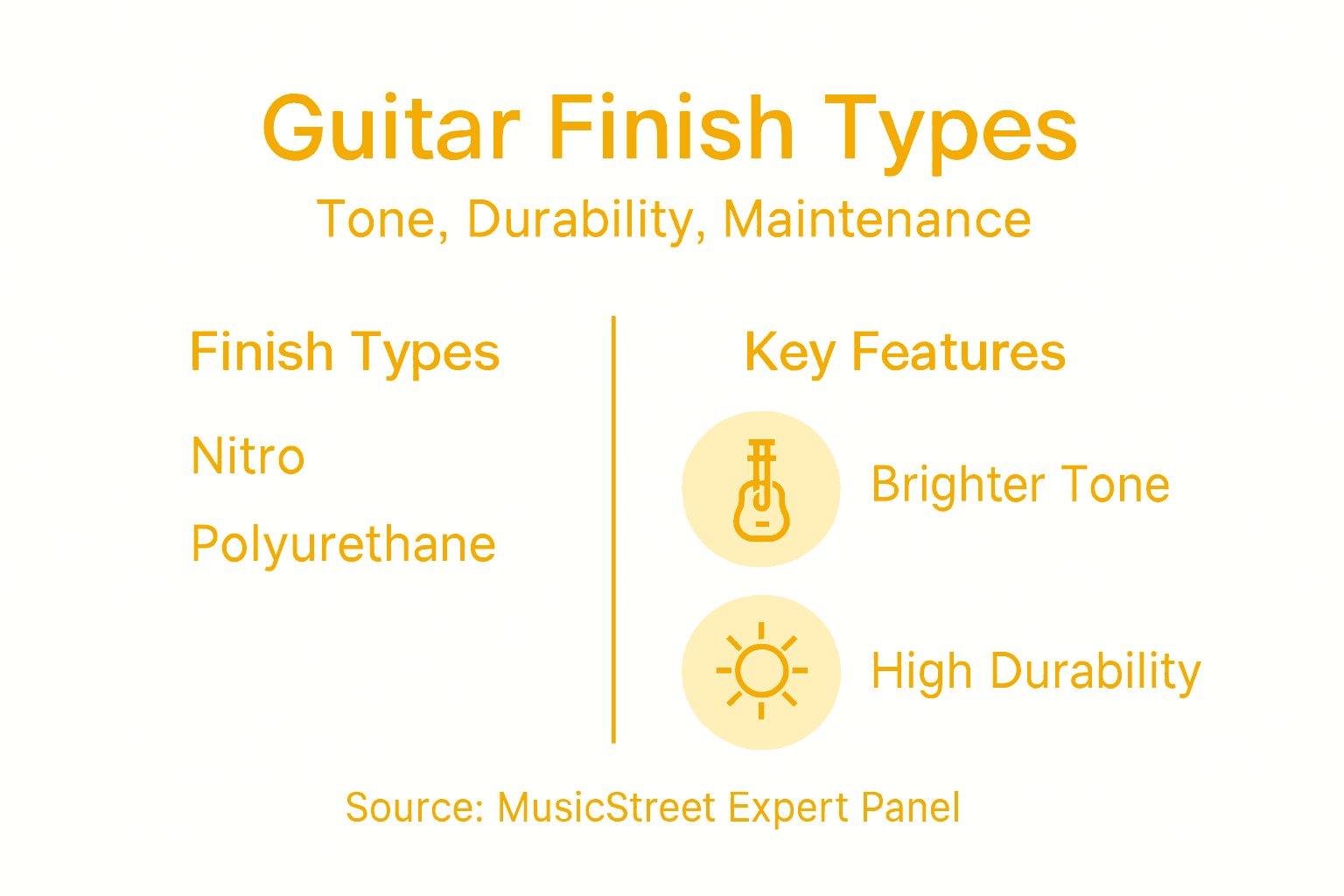
Nitrocellulose lacquer is a solvent-based finish that’s been used on guitars since the 1950s. It’s applied in thin layers, which allows more wood vibration and contributes to the bright, resonant tone associated with vintage guitars. The catch is durability. Nitro finishes yellow and fade under UV exposure, develop fine cracks called “checking” over time, and require regular maintenance to keep them looking respectable. When comparing nitrocellulose versus polyurethane finishes, nitro edges ahead for aesthetics and traditional appeal, but polyurethane wins decisively for longevity. French polish offers exceptional tonal clarity and allows wood resonance that rivals or exceeds nitro, but it’s fragile against moisture, alcohol spills, and heat. It demands careful handling and regular maintenance, making it impractical for gigging musicians.
Polyurethane is a plastic-based finish that dominates modern manufacturing because it strikes a balance between protection and playability. It’s thicker than nitro, creating a more durable barrier against moisture, temperature fluctuations, and physical damage. UV resistance means polyurethane finishes resist yellowing and fading far better than nitro. The tonal trade-off is minimal on quality instruments. Modern polyurethane formulations have been refined extensively, and many professional players can’t detect meaningful differences between a well-crafted nitro and polyurethane guitar when other variables are equal. French polish finishes remain a specialist choice, prized for their ability to enhance resonance but rarely encountered on production electric guitars due to maintenance demands.
For gigging musicians and those in humid climates, polyurethane finishes make practical sense. For collectors prioritising vintage aesthetics and tonal purity, nitrocellulose offers undeniable charm despite higher maintenance. Your choice ultimately depends on how you’ll use the guitar and how much effort you’ll invest in upkeep. A £500 instrument with polyurethane will withstand years of regular playing with minimal care. A £3,000 nitro-finished guitar demands respect and attention but rewards careful ownership with character that deepens over time.
Here is a summary of the main electric guitar finish types and their key characteristics:
| Finish Type | Durability Level | Maintenance Need | Tonal Influence |
|---|---|---|---|
| Nitrocellulose | Medium to low | Regular care required | Brighter, highly resonant tone |
| Polyurethane | High | Minimal regular care | Warm, focused sound with sustain |
| French Polish | Very low | Intensive maintenance | Exceptional resonance, very sensitive |
Pro tip: When buying a used guitar, inspect the finish carefully under bright light; heavy checking, yellowing, or areas where the finish has worn through indicate age and maintenance history, which may affect both price and playability.
How Finish Thickness and Material Impact Tone
Finish thickness is one of the most direct variables affecting how your guitar sounds. Thicker finishes physically restrict wood vibration by adding mass and stiffness to the instrument’s surface. Thinner finishes allow the wood to move more freely, which typically results in greater resonance and sustain. This isn’t subtle physics. Pick up a heavily finished polyurethane guitar and a thin nitrocellulose instrument, and you’ll feel the difference in how readily the body vibrates under your hands. The material itself matters too, as different compounds have different stiffness properties that either enhance or dampen specific frequency ranges.
The relationship between finish thickness and tone is straightforward: less finish generally means more tone. When wood vibrates freely, it transfers energy more efficiently to the air, producing a richer, more complex sound with extended sustain. Professional luthiers and guitarists have observed that thicker finishes tend to deaden tone by restricting wood vibration, whilst thin finishes preserve resonance and allow the wood to breathe. Nitrocellulose, being thinner, typically produces brighter, more articulate tones compared to polyurethane applications on the same guitar model. However, the actual thickness difference between a quality thin polyurethane finish and a nitro finish might be 0.3mm to 0.5mm. That’s tiny, yet it compounds with the stiffness of the polyurethane material to create an audible difference in resonance and harmonic complexity.
Material composition also influences tonal characteristics beyond just thickness. Nitrocellulose is a harder, more brittle lacquer that allows wood vibration patterns to remain relatively unimpeded. Polyurethane is a plastic polymer that’s softer and more flexible, which means it can absorb some vibrational energy before it reaches the air. This absorption is what makes polyurethane finishes more durable, but it also slightly colours the tone by dampening upper midrange frequencies. Some players describe this as a “warmer” or “duller” sound compared to thin nitro, whilst others appreciate the focused, controlled tonal character polyurethane delivers. The difference is real, but it’s one factor among many. Wood selection, body thickness, electronics, and setup all play equally important roles in determining final tone.
When evaluating a guitar’s finish for tonal potential, consider the context of your playing style. If you prioritise maximum sustain and tonal complexity, thinner finishes on quality wood matter more. If you’re playing through heavy distortion or playing live where durability outweighs subtle tonal nuances, a quality polyurethane finish on solid wood will serve you excellently. The myth that finish thickness is everything should be dismissed. A thin finish on poor quality wood will never sound as good as a thicker finish on premium timber and hardware. Finish thickness influences tone meaningfully, but it’s the foundation beneath it that determines your ceiling.
Pro tip: When testing guitars in store, play the same model with different finishes back-to-back through the same amplifier to hear tonal differences directly; listening through different amps or in varying room acoustics can muddy your perception of finish-related tone changes.
Durability, Maintenance, and Ageing of Finishes
Finish durability determines how your guitar will age and what effort you’ll invest keeping it looking and playing well. The three main finishes have vastly different lifespans and maintenance demands. Polyurethane is the marathon runner, resisting wear, UV damage, and environmental changes with minimal intervention. Nitrocellulose ages visibly but can last decades with proper care, developing character whilst gradually showing wear. French polish is the sprinter, offering exceptional tone but demanding careful handling and regular maintenance to prevent deterioration. Understanding these differences helps you make realistic commitments before buying.
Polyurethane finishes are genuinely durable. They resist yellowing, don’t develop checking, and handle humidity fluctuations that would damage other finishes. A polyurethane-finished guitar played regularly for 20 years might show minor scratches and fading, but the finish will remain largely intact and protective. Nitrocellulose tells a different story. It yellows naturally under UV exposure, develops fine cracks called checking over 5 to 10 years of ownership, and requires regular maintenance to prevent deterioration. However, guitar finish durability varies significantly between French polish and nitrocellulose, with French polish offering minimal protection and requiring delicate care, whilst polyurethane resists wear far better. The checking in nitro isn’t always a problem. Many collectors and players embrace it as patina, proof of age and authenticity. But if you want your guitar to look pristine after 15 years, polyurethane is the sensible choice.

Maintenance routines differ dramatically between finishes. Polyurethane guitars need occasional wiping with a microfibre cloth and annual conditioning with appropriate guitar oils. Nitrocellulose requires more attention. Avoid direct sunlight, keep humidity stable, and use nitro-specific care products to prevent checking and fading. French polish demands the most discipline. Protect it from moisture, heat, alcohol, and physical contact. Store it in controlled conditions and refinish periodically when wear becomes significant. The real cost of ownership extends beyond the initial purchase. A £2,000 nitro-finished vintage guitar might require £500 to £800 in refinishing work every decade, whilst a polyurethane equivalent essentially never needs professional attention.
Ageing patterns tell a guitar’s story. Nitrocellulose yellowing, checking, and wear marks become distinctive character marks that vintage collectors prize. Professional players often see this as undesirable, preferring finishes that maintain appearance and protection. Polyurethane resists these ageing marks, staying relatively consistent throughout the guitar’s life. Your choice reflects your priorities. If you’re buying a guitar to play regularly for years, prioritise durability and low maintenance with polyurethane. If you’re investing in a statement piece or vintage-style instrument you’ll play occasionally and preserve carefully, nitro’s character and tonal qualities justify the maintenance commitment.
Pro tip: Store your guitar in a case with humidity control packs (target 45 to 55 percent relative humidity) to prevent finish checking and wood warping, regardless of finish type, and inspect it quarterly for any signs of damage or deterioration.
Choosing Finishes for Playing Style and Value
Your playing style, environment, and long-term goals should guide your finish choice. Studio musicians, collectors, and gigging professionals have different priorities. A session player recording in a climate-controlled studio might treasure a thin nitrocellulose finish for its tonal qualities and aesthetic appeal. A touring musician playing hundreds of gigs annually needs polyurethane’s durability and resistance to wear. Understanding how finish choice affects both your playing experience and your instrument’s resale value helps you make decisions you won’t regret five years down the line.
For studio and home players, thin finishes make sense. If you’re recording, playing for pleasure, or building a collection, nitrocellulose or French polish deliver superior tonal complexity and allow you to invest time in proper maintenance. These finishes develop character over time, and many collectors view the patina of age as adding value rather than detracting from it. The investment in care and occasional refinishing pays dividends in sound quality and personal satisfaction. However, choosing a guitar finish depends on aesthetic preference, tonal characteristics, and durability requirements, meaning your decision should factor in how much maintenance you’re willing to provide. For studio work, that effort is worthwhile. For gigging and touring musicians, polyurethane is non-negotiable. Your guitar travels in cases, gets bumped by equipment, experiences temperature and humidity swings, and spends time in different climates. Polyurethane finishes shrug off this punishment whilst maintaining their protective qualities. A gig-worn polyurethane guitar might show minor cosmetic damage, but the finish will still protect the wood underneath. That protection keeps your instrument playable and valuable for decades.
Resale value and investment potential also hinge on finish choice. Vintage nitrocellulose finishes on classic guitars command premiums, but only if they’re well-maintained or possess desirable aging characteristics. A neglected nitro finish that’s cracked, yellowed, and worn looks cheap, not vintage. Conversely, polyurethane finishes on quality instruments hold steady value because they demonstrate careful ownership and minimal deterioration. When you eventually sell your guitar, potential buyers see a polyurethane finish as proof that the instrument has been well-preserved. If you’re investing £2,500 or more in a guitar, polyurethane finishes often provide better long-term value protection, especially if you’re not prepared to refinish the instrument.
Price point matters too. Entry-level guitars with polyurethane finishes represent excellent value because the finish will outlast your playing ability. Mid-range instruments might justify nitro finishes if you prioritise tone and plan to keep the guitar long-term. High-end instruments often feature nitro or specialised finishes because the tonal benefits and aesthetic appeal justify the premium and maintenance demands. Match your finish choice to your commitment level. You won’t regret investing in durability if you’re a casual player. You won’t regret investing in tone if you’re serious about your craft and willing to care for your instrument properly.
This table highlights how playing style and environment shape finish choice and resale value:
| Player Profile | Best Finish Option | Environment Suitability | Resale Value Trend |
|---|---|---|---|
| Studio professional | Nitrocellulose | Controlled indoor spaces | High for vintage, if maintained |
| Touring musician | Polyurethane | Variable/humid climates | Stable, retains protection |
| Collector | Nitrocellulose | Display or gentle use | Premium for authentic ageing |
| Student/amateur | Polyurethane | Home, varied locations | Reliable for entry-level resale |
Pro tip: Before committing to a guitar, ask the retailer about finish-specific maintenance costs and availability of professional refinishing services in your area, as this information directly impacts your long-term ownership experience and future resale potential.
Discover the Perfect Finish for Your Next Guitar at MusicStreet
Choosing the right guitar finish means balancing tone, durability and maintenance to suit your unique playing style. Whether you seek the vintage warmth of a nitrocellulose lacquer or the rugged protection of a polyurethane coat, understanding finish impact on sustain and resonance helps you make an informed decision. Don’t let uncertainty over finish type hold back your musical journey or risk your investment.

Explore our curated collection of electric, acoustic and bass guitars at MusicStreet where expert setup and professional inspection ensure every instrument meets your expectations. Benefit from our personalised advice to select finishes that align with your environment and care commitment. Act now and experience guitars optimised for both tone and toughness. Visit our website today and take the next step toward owning a guitar that sounds as good as it looks with confident durability and timeless style.
Frequently Asked Questions
What is the primary purpose of a guitar finish?
The primary purpose of a guitar finish is to protect the wood underneath from moisture, dust, oils, and general wear while also influencing how the instrument vibrates and resonates.
How does the thickness of a guitar finish impact its tone?
Thicker finishes tend to restrict wood vibration, which can result in a deadened tone, while thinner finishes allow for greater resonance and sustain, producing a brighter sound.
What are the differences between nitrocellulose and polyurethane finishes?
Nitrocellulose finishes are traditional and offer brighter tones with more wood vibration but require regular maintenance and are less durable. Polyurethane provides superior durability with minimal tonal compromise and is more resistant to wear and environmental changes.
How does a guitar’s finish affect its durability and maintenance needs?
Polyurethane finishes are highly durable and require minimal maintenance, while nitrocellulose finishes need regular care to prevent checking and fading. French polish finishes require intensive maintenance and are less durable, making them impractical for regular use.


Share:
duesenberg guitars for sale
Custom Guitar Build Guide: Achieve Your Dream Instrument