

Many guitarists assume fretboard radius is a minor technical detail best left to luthiers, but this overlooked measurement profoundly shapes how your guitar feels and responds under your fingers. Whether you struggle with barre chords, find string bending awkward, or simply want a more comfortable playing experience, understanding fretboard radius unlocks practical improvements. This guide clarifies what fretboard radius actually means, how different measurements affect your technique, and which options suit your playing style, helping you make informed decisions when selecting or evaluating guitars.
Table of Contents
- What Is Fretboard Radius And Why Does It Matter?
- Common Fretboard Radius Sizes And Their Playability Effects
- What Is A Compound Radius Fretboard And Should You Choose One?
- How To Choose The Right Fretboard Radius For Your Playing Style
- Explore Premium Guitars With Perfect Fretboard Radius Options
Key takeaways
| Point | Details |
|---|---|
| Fretboard radius measures curvature | The radius value describes how curved or flat the fretboard surface appears across its width |
| Smaller radii suit chord work | Rounder fretboards around 7.25" make fretting chords more comfortable for many players |
| Larger radii enable better soloing | Flatter surfaces from 12" upwards facilitate string bending and lower action for lead techniques |
| Compound radius offers versatility | These fretboards combine rounder curves at the nut with flatter profiles higher up the neck |
| Personal preference matters most | Your playing style and comfort should guide radius selection more than conventional wisdom |
What is fretboard radius and why does it matter?
Fretboard radius describes the curvature of the playing surface across the neck’s width. Imagine placing the fretboard against the edge of a perfect circle. The radius of that theoretical circle, measured in inches or millimetres, determines how curved or flat the fretboard feels when you play.
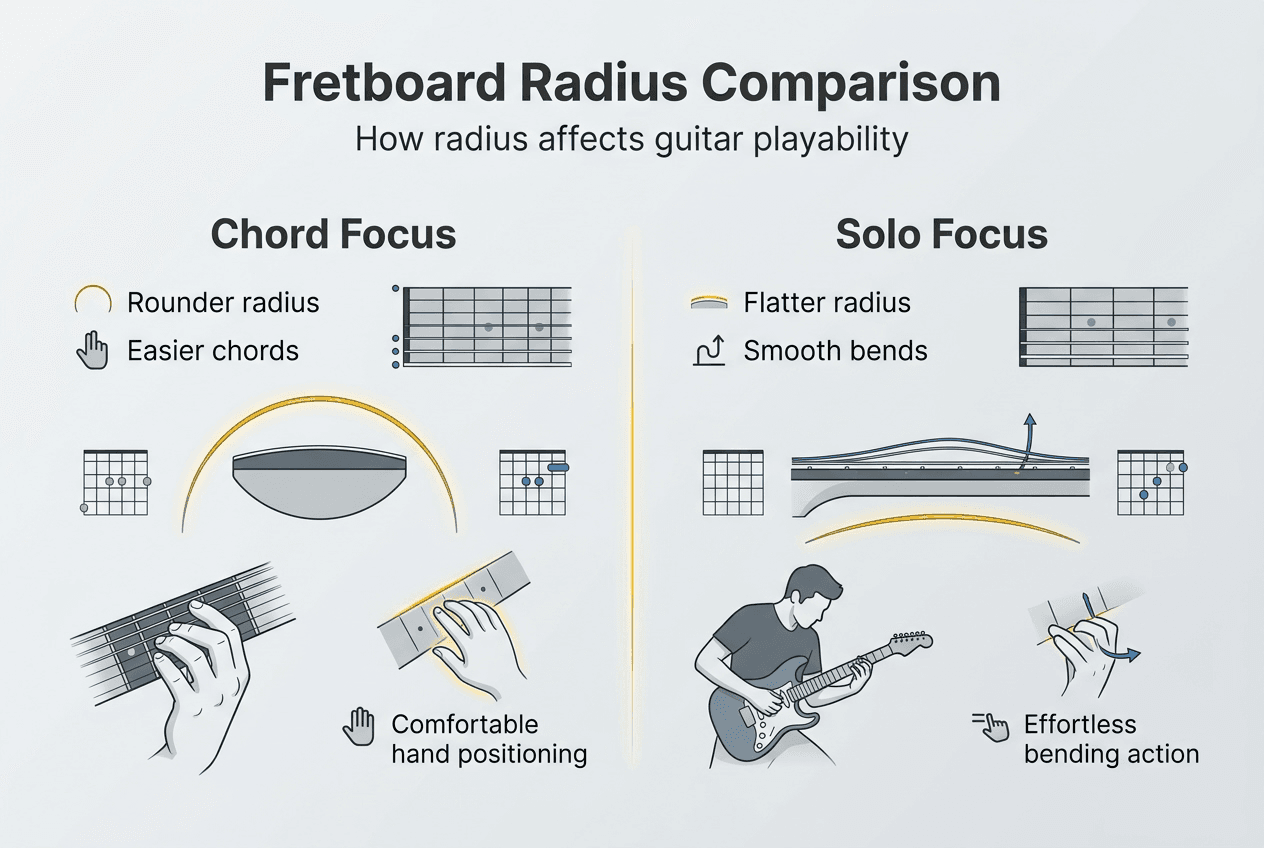
Smaller radius measurements create noticeably rounder, more curved fretboards. A 7.25" radius produces a pronounced arc that wraps around your fretting hand. Larger measurements like 16" create flatter surfaces that feel almost straight across the width. This seemingly subtle difference dramatically affects how strings sit relative to each other and how your fingers interact with them.
The curvature influences string height and action in ways that impact both comfort and technique. On rounder fretboards, the outer strings sit slightly higher relative to the centre strings, creating a natural arch that matches how your fingers naturally curve when forming chord shapes. Flatter fretboards bring all strings closer to the same plane, which suits techniques like string bending where you need consistent resistance and minimal height variation.
Different playing styles benefit from specific radius characteristics:
- Chord-focused rhythm playing feels more natural on rounder surfaces that complement finger positioning
- Lead techniques and string bending work better on flatter profiles that prevent notes from choking out
- Fingerstyle approaches often prefer moderate radii that balance individual string clarity with comfortable reach
- Aggressive techniques like tapping and sweep picking typically favour flatter surfaces for precision
Understanding guitar neck shapes alongside fretboard radius provides complete insight into how your instrument’s playing surface affects technique and comfort.
The radius you choose shapes your entire relationship with the instrument. Players who primarily strum open chords will find rounder radii reduce hand fatigue during extended sessions. Soloists who bend strings frequently need flatter surfaces to maintain clean note articulation without fretting out. Recognising these connections helps you identify which specifications actually matter for your playing rather than chasing arbitrary standards.
Common fretboard radius sizes and their playability effects
Manufacturers typically use several standard radius measurements, each offering distinct advantages for specific techniques. Understanding how these common sizes affect playability helps you recognise what feels right when you pick up different guitars.
The 7.25" radius represents the vintage standard found on classic Fender designs. This pronounced curve feels exceptionally comfortable for barre chords and rhythm work, as your fingers naturally wrap around the arc. However, aggressive string bending can cause notes to choke out because the curved surface brings bent strings closer to adjacent frets.
Modern Fender instruments often feature 9.5" radius fretboards, offering a practical middle ground. This slightly flatter profile maintains chord comfort whilst reducing the fretting-out issues that plague tighter radii during bends. Many players find this measurement versatile enough for both rhythm and lead approaches.
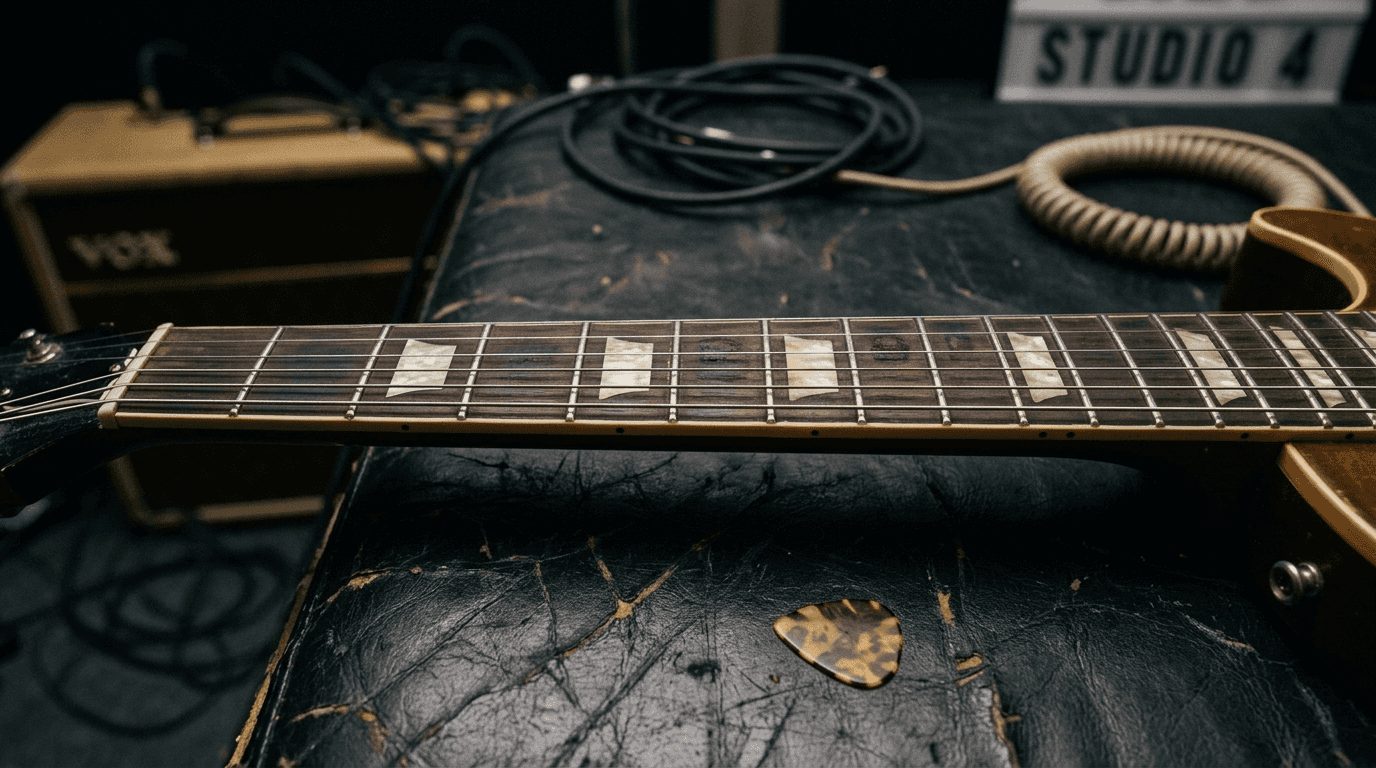
Gibson traditionally uses 12" radii, creating noticeably flatter surfaces that suit rock and blues soloing. The reduced curvature allows lower action setups and cleaner string bending, though some players find chord fingering less intuitive compared to rounder profiles.
Super-flat 16" radii appear on many modern shred-oriented guitars. These nearly straight surfaces enable extremely low action and effortless bending, perfect for technical lead work. The trade-off comes in chord comfort, as the flat profile feels less natural for players accustomed to vintage-style curves.
| Radius Size | Primary Advantages | Potential Limitations | | — | — | | 7.25" | Exceptional chord comfort, natural finger wrap | String bending can cause fretting out | | 9.5" | Versatile for rhythm and lead, reduced choking | May feel too flat for pure rhythm players | | 12" | Excellent for soloing, allows lower action | Chords may feel less comfortable initially | | 16" | Superior for technical lead work, minimal resistance | Flat profile feels unnatural for chord-focused playing |
Rounder radii favour chord work whilst flatter profiles excel at soloing and bending. This fundamental trade-off explains why vintage rhythm guitars used tighter radii whilst modern lead-oriented instruments trend towards flatter surfaces. Your technique determines which compromise serves you best.
Action height interacts directly with radius choice. Flatter fretboards tolerate lower action because strings maintain more consistent height relationships during bends. Rounder profiles require slightly higher action to prevent buzzing when you apply pressure. Understanding this relationship helps when discussing guitar action preferences with technicians.
Pro Tip: Beginners often thrive with mid-range radii around 9.5" because these versatile profiles accommodate developing technique without forcing you to commit to either rhythm or lead specialisation before your style fully emerges.
The radius also affects how guitar nut width translates to playability. Wider nuts combined with rounder radii create substantial curves that some players find fatiguing, whilst narrow nuts with flat radii can feel cramped. These specifications work together to define the complete playing experience.
What is a compound radius fretboard and should you choose one?
Compound radius fretboards combine different radii along the neck’s length, typically starting with a rounder measurement at the nut and gradually flattening towards the higher frets. This progressive design attempts to deliver the best characteristics of both curved and flat profiles in a single instrument.
The concept addresses a fundamental limitation of uniform radii. Lower frets, where you primarily form chords, benefit from rounder surfaces that match natural finger curvature. Higher frets, where lead techniques and bending dominate, work better with flatter profiles that prevent choking. Compound radius fretboards transition smoothly between these extremes.
A typical compound radius might measure 10" at the nut and gradually flatten to 16" at the highest fret. This progression provides comfortable chord fingering in open positions whilst enabling aggressive bending techniques up the neck. The transition occurs gradually enough that most players don’t consciously notice the changing curvature during normal playing.
Benefits of compound radius designs include:
- Natural chord comfort in lower positions without sacrificing lead playability higher up
- Reduced fretting-out during string bends compared to uniform rounder radii
- Versatility for players who regularly switch between rhythm and lead roles
- Improved fret clearance across the entire neck length
However, compound radii introduce practical considerations. Refretting becomes more complex because luthiers must maintain the progressive curve rather than working with a single radius measurement. This typically increases maintenance costs. Some players also report that the transition point feels inconsistent, though quality implementations minimise this issue.
Understanding a compound radius layout follows these steps:
- Measure the radius at the nut to establish the starting curvature, typically between 9" and 12"
- Identify the radius at the final fret, usually between 14" and 16" for most designs
- Recognise that the transition occurs gradually across the fretboard length, not at a single point
- Test how the changing curvature affects your technique by playing chords low and bending high
- Compare the feel against uniform radius guitars to determine whether the versatility justifies any transition inconsistency
Compound radius fretboards improve clearance and help with string bending by providing flatter surfaces exactly where bending techniques occur most frequently.
The design particularly suits players who refuse to compromise between rhythm and lead capabilities. If you regularly perform both roles or enjoy varied playing styles within single songs, compound radii eliminate the need to choose between chord comfort and bending efficiency.
Some guitarists question whether compound radii deliver meaningful advantages or simply add marketing appeal. The answer depends entirely on your technique sensitivity. Players with developed touch often notice and appreciate the progressive transition. Beginners or those with less refined technique may find the benefits negligible compared to a well-chosen uniform radius.
Pro Tip: Try playing guitars with compound radius designs before committing, as individual responses vary significantly based on hand size, finger strength, and established technique habits that may or may not align with the progressive curvature.
Compound radii appear frequently on modern instruments targeting versatile players, making them worth considering if you explore guitars from manufacturers like Ibanez, ESP, or contemporary Fender models. The technology shares philosophical ground with multi-scale guitars in attempting to optimise different neck regions for their primary functions.
How to choose the right fretboard radius for your playing style
Choosing the right radius requires honest assessment of your playing priorities and willingness to experiment with different profiles. No universal radius suits everyone, making personal preference the ultimate deciding factor.
Consider these fundamental questions about your technique:
- Do you spend more time forming chords or playing single-note lines?
- How frequently do you bend strings, and how aggressively?
- Does your playing emphasise rhythm, lead, or balanced versatility?
- What guitar types appeal to you, and what radii do they typically feature?
- Have you experienced discomfort or technical limitations with previous instruments?
Your answers reveal which radius characteristics matter most. Chord-focused players should prioritise rounder profiles that reduce hand fatigue during extended rhythm sessions. Lead-oriented techniques demand flatter surfaces that enable clean bending without choking. Versatile players benefit from moderate radii or compound designs that accommodate varied approaches.
Practical steps for evaluating radius preferences include:
- Visit shops and play multiple guitars with different specified radii, noting which feels most natural
- Perform your typical techniques on each instrument rather than general noodling
- Pay attention to where discomfort or technical limitations appear during extended playing
- Compare how different radii affect your ability to execute specific challenging passages
- Test both new techniques and established comfort-zone playing to assess versatility
When possible, measure the fretboard radius at the last fret using a radius gauge to confirm manufacturer specifications. Published measurements occasionally differ from actual implementations, particularly on vintage or modified instruments. Verification ensures you understand exactly what profile you’re evaluating.
| Playing Focus | Recommended Radius Range | Typical Guitar Styles |
|---|---|---|
| Primarily chords and rhythm | 7.25" to 9.5" | Vintage Fender, classic rock, country |
| Balanced rhythm and lead | 9.5" to 12" | Modern Fender, versatile rock, blues |
| Lead-focused with frequent bending | 12" to 16" | Gibson, hard rock, metal, shred |
| Technical lead and tapping | 16" and flatter | Modern super-strats, progressive metal |
Guitar type influences radius appropriateness beyond pure technique considerations. Stratocasters traditionally feature rounder radii that complement their bright, chimey tones and rhythm-oriented heritage. Les Pauls use flatter profiles matching their thick, sustained lead voice. Matching radius to guitar voice creates coherent instruments where specifications reinforce musical character.
Understanding how radius interacts with other neck specifications provides complete context for instrument selection. Combining radius knowledge with insights about choosing electric guitars and finding perfect guitars for your needs creates comprehensive evaluation frameworks.
Pro Tip: Don’t hesitate to experiment with different radius necks in person, even if conventional wisdom suggests a particular measurement for your style, as individual hand anatomy and technique quirks often trump general recommendations.
Remember that radius represents just one playability factor among many. Neck profile, nut width, scale length, and fret size all contribute to how an instrument feels. Evaluating radius in isolation risks missing how these specifications interact to create the complete playing experience. The best radius for you works harmoniously with other neck characteristics you find comfortable.
Explore premium guitars with perfect fretboard radius options
Finding the ideal fretboard radius becomes straightforward when you explore guitars designed with varied playing styles in mind. At MusicStreet, we stock premium instruments featuring the full spectrum of fretboard radii, from vintage-style 7.25" curves to modern compound designs and super-flat shred profiles. Whether you prioritise chord comfort, lead agility, or versatile performance, our carefully curated selection ensures you’ll discover guitars that match your technique requirements.

Our expert staff understand how fretboard radius affects playability and can guide you towards instruments that complement your specific approach. Visit our Huntingdon showroom to try different radius profiles in person, or explore our online catalogue with detailed specifications for every guitar. We provide professional setup services ensuring your chosen instrument plays optimally, and our ongoing support helps you maximise the benefits of your fretboard radius selection.
FAQ
What radius makes chords easiest to play?
Rounder radii around 7.25" create more curved fretboards that naturally accommodate finger positioning for chord shapes. The pronounced arc matches how your hand curves when forming barre chords, reducing the stretch required and minimising fatigue during extended rhythm playing. Many players find this vintage-style measurement exceptionally comfortable for chord-focused techniques, though it may limit string bending capabilities compared to flatter profiles.
Can I change the fretboard radius on my guitar?
Changing a guitar’s fretboard radius is generally not feasible without replacing the entire neck. The radius is determined by how the fretboard wood is shaped and the fret installation follows this curvature precisely. Altering the radius would require removing all frets, reshaping the fretboard surface, and reinstalling frets to match the new curve. This extensive luthier work typically costs more than purchasing a different neck or guitar with your preferred radius specification.
What advantages do compound radius fretboards offer?
Compound radius fretboards provide easier chording at the nut whilst preventing fretting out when bending higher on the neck. The progressive transition from rounder to flatter curvature delivers the comfort benefits of vintage-style radii in lower positions where you form most chords, combined with the bending efficiency of modern flat profiles in upper registers where lead techniques dominate. This design particularly suits versatile players who regularly switch between rhythm and lead roles without wanting to compromise either capability.
How do I measure fretboard radius on my current guitar?
Radius gauges provide the most accurate measurement method by comparing the fretboard curvature against templates marked with specific radius measurements. Place the gauge perpendicular to the frets and find which template matches the curve most closely. For precise results, measure at multiple positions along the neck, as some guitars feature compound radii that change from nut to bridge. Many luthiers and guitar shops own radius gauges and can measure your instrument if you lack the tool.
Does fretboard radius affect intonation or tuning stability?
Fretboard radius primarily influences playability and comfort rather than intonation or tuning stability. However, the radius indirectly affects these factors by determining optimal action height, which does impact intonation accuracy. Rounder radii typically require slightly higher action to prevent buzzing, whilst flatter profiles tolerate lower setups. Proper intonation adjustment accounts for your specific radius and action combination, ensuring accurate tuning across the fretboard regardless of curvature measurement.



Share:
What is an amp head? A detailed guide for guitarists
Essential guitar gig bag tips for optimal protection