


More than 60 percent of British blues musicians say their first instrument was a harmonica. This compact powerhouse has played a starring role in shaping the sounds of blues, folk, and rock music across the United Kingdom. Whether you want to explore its soulful note bending or understand how it became a British favorite, learning the basics of the blues harmonica opens up a new world of musical expression and creativity.
Table of Contents
- What Is a Blues Harmonica? Essential Basics
- How Blues Harmonicas Produce Their Unique Sound
- Types, Tunings And Popular Blues Keys Explained
- Choosing The Best Harmonica Key For Your Needs
- Common Mistakes When Selecting A Harmonica Key
Key Takeaways
| Point | Details |
|---|---|
| Blues Harmonica Characteristics | A blues harmonica is a compact wind instrument with ten holes designed for producing expressive blues sounds, featuring the ability to bend notes for emotional effect. |
| Sound Production Techniques | Key techniques like breath control, note bending, and vibrato enhance the harmonica’s expressive capabilities, enabling players to create rich and varied tones. |
| Selecting the Right Key | Choosing the appropriate harmonica key is essential; beginners should consider starting with a C Major harmonica while more advanced players require a collection of harmonicas to suit different styles and vocal ranges. |
| Common Selection Mistakes | Beginners often err by relying on a single harmonica key without understanding vocal compatibility and genre requirements, which can hinder their musical progress. |
What Is a Blues Harmonica? Essential Basics
A blues harmonica is a small, handheld wind instrument fundamental to blues, folk, and rock music. Unlike standard harmonicas, blues harmonicas are specifically designed to produce the soulful, expressive sounds characteristic of blues musical traditions. These instruments typically feature ten holes and are constructed to allow players to bend notes, creating the distinctive wailing and emotional tones that define blues music.
Understanding the music theory behind harmonica playing is crucial for aspiring blues musicians. The harmonica’s unique design allows players to produce sound by blowing or drawing air through individual reed chambers, with each hole capable of generating multiple notes depending on the player’s technique. Professional blues harmonica players master complex techniques like note bending, which involves subtly altering pitch to create more expressive, human-voice-like sounds.
Blues harmonicas come in different keys, with each key determining the fundamental notes available to the player. The most common keys for blues harmonica include A, C, D, and G, with C being particularly popular among beginners. Musicians often carry multiple harmonicas in different keys to match various song arrangements and musical styles. The instrument’s portability, combined with its rich sonic potential, makes it an incredibly versatile tool for blues, folk, and rock musicians seeking to add raw, emotional texture to their music.
Key characteristics of blues harmonicas include:
- Diatonic design with ten holes
- Ability to produce bent and vibrato notes
- Compact size for easy transportation
- Made from materials like brass, bronze, and stainless steel
- Available in multiple keys for different musical contexts
How Blues Harmonicas Produce Their Unique Sound
Blues harmonicas generate their distinctive sound through an intricate interplay of air, reed vibration, and precise player technique. Unlike other instruments, harmonicas produce sound when air passes through small metal reeds, causing them to vibrate and create musical tones. Each reed is carefully tuned to respond differently when players blow or draw air through individual holes, enabling musicians to create complex and emotionally rich soundscapes.
Mastering fundamental skills for blues harmonica playing involves understanding the instrument’s unique sound production mechanisms. Professional players employ advanced techniques like note bending, which allows them to subtly alter pitch and create expressive, human-voice-like sounds. By applying different amounts of breath pressure and using their tongue, throat, and mouth cavity, musicians can manipulate the reeds to produce warbling, sliding, and dramatic tonal variations that are quintessential to blues music.
The harmonica’s sound production relies on several critical elements. The instrument’s reed plates are typically constructed from brass or bronze, with precision-tuned reeds mounted in specific configurations. When a player blows into a hole, the corresponding reed vibrates, creating a specific note. Drawing air creates a different note from the same hole, effectively doubling the available notes. This dual-action design allows blues harmonica players to create rich, dynamic sounds with remarkable complexity.
Key sound production techniques include:
- Breath control: Modulating air pressure to alter tone
- Note bending: Stretching notes by changing mouth and throat shape
- Tongue blocking: Using the tongue to cover and uncover holes for varied effects
- Vibrato: Creating slight pitch variations for emotional expression
- Overblowing: Producing notes outside the harmonica’s standard range
Types, Tunings and Popular Blues Keys Explained
Blues harmonicas come in various types and tunings, each designed to produce specific musical characteristics and support different playing styles. Harmonica models range from Major Diatonic to specialized variations that cater to specific musical genres and player preferences, offering musicians an incredible array of sonic possibilities.
The Major Diatonic harmonica remains the most common type for blues musicians, typically available across an impressive range of 18 different keys. Comprehensive key charts detail the intricate relationships between playing positions and musical keys, helping players select the most appropriate instrument for their musical context. Popular blues keys include A, C, D, and G, with each key offering unique tonal characteristics that influence the overall sound and emotional expression of the music.
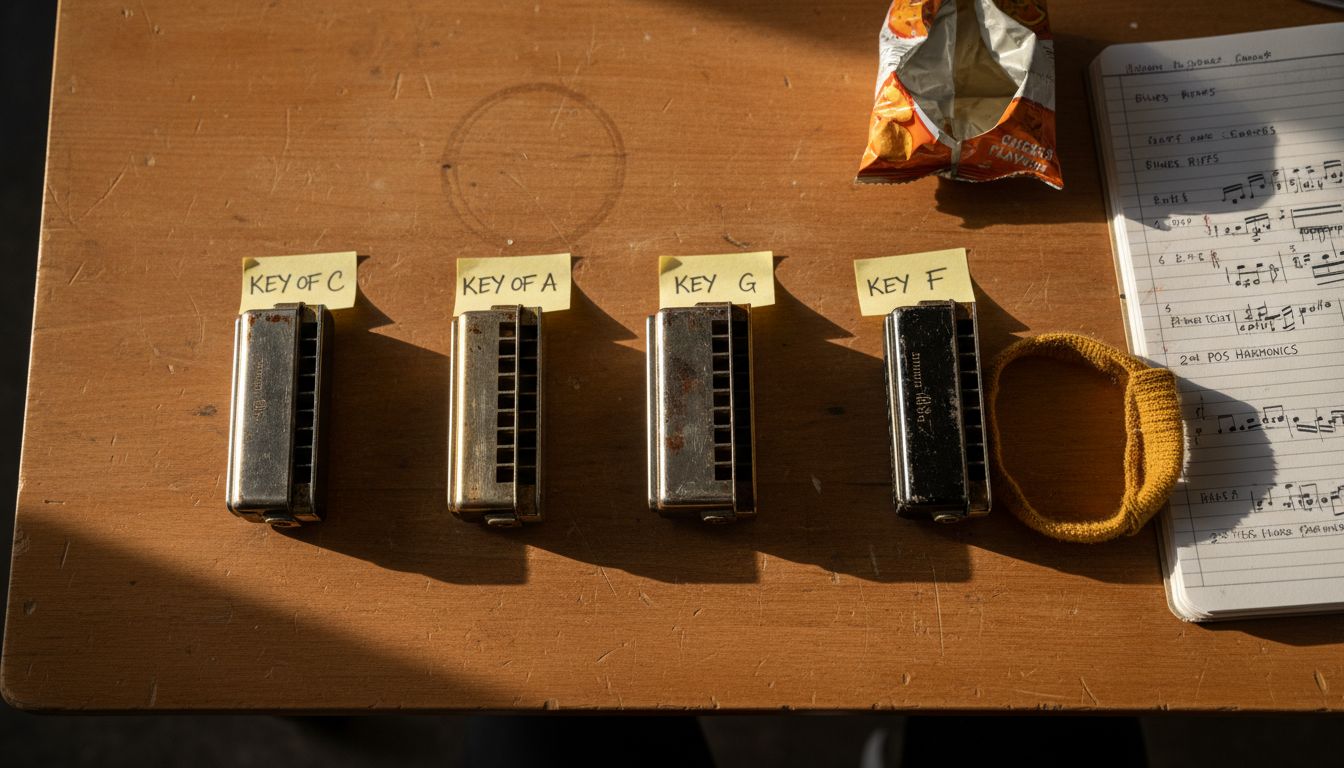
Beyond the standard Major Diatonic, blues harmonica players can explore specialized tunings that expand their musical vocabulary. Natural Minor and Harmonic Minor harmonicas provide alternative scales that enable more complex emotional expressions, while Melody Maker variants offer enhanced note-bending capabilities. Professional musicians often carry multiple harmonicas in different keys to accommodate various musical arrangements and improvisation styles.
Key considerations when selecting blues harmonica keys include:
- Musical genre and style
- Vocal range of accompanying singers
- Desired emotional tone and character
- Complexity of desired musical techniques
- Compatibility with other instruments in the ensemble
Choosing the Best Harmonica Key for Your Needs
Selecting the right harmonica key is a nuanced process that depends on multiple musical and personal factors. Comprehensive key selection guides illustrate the complex relationships between playing positions and musical keys, helping musicians make informed decisions about their instrument selection.
Beginner blues players typically start with a C Major harmonica, as it provides the most versatile foundation for learning techniques and exploring different musical styles. More advanced musicians often carry multiple harmonicas to accommodate various musical contexts, with keys like A, D, and G offering distinct tonal characteristics. Natural Minor harmonica key charts reveal additional options for musicians seeking alternative scale configurations, particularly for genres like blues, reggae, and ska that require more complex emotional expressions.
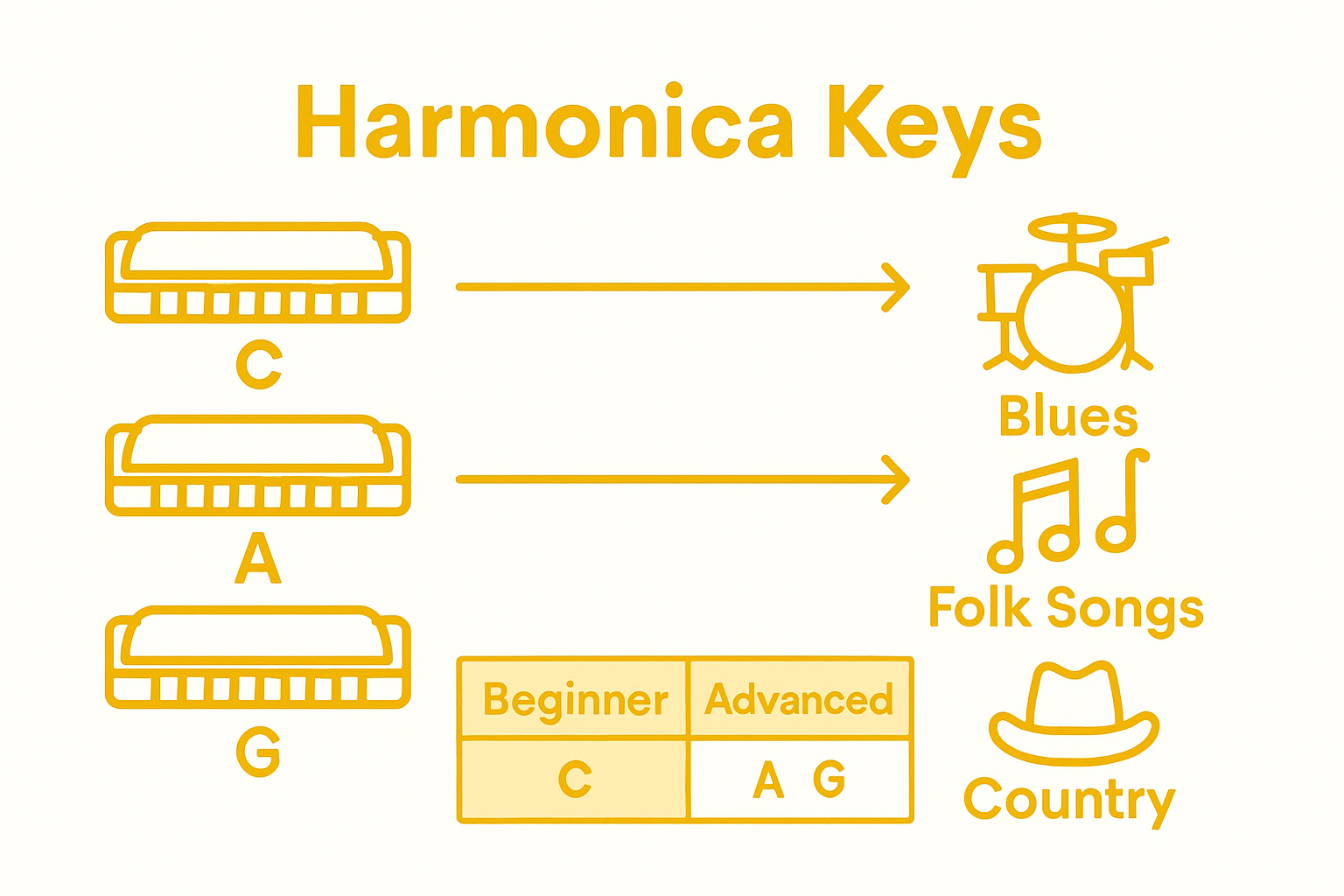
The choice of harmonica key involves considering several critical factors beyond musical genre. Players must evaluate their vocal range, the typical keys of songs they perform, and the specific sound they want to achieve. Some musicians prefer harmonicas that complement their primary instrument or match the vocal range of singers in their band. Professional blues harmonica players often develop a collection of harmonicas in different keys to ensure maximum musical flexibility and expressiveness.
Key considerations for harmonica selection include:
- Compatibility with vocal range
- Musical genre and style preferences
- Intended playing positions
- Complexity of desired musical techniques
- Emotional tone and character of the music
- Interaction with other instruments in the ensemble
Common Mistakes When Selecting a Harmonica Key
Choosing the wrong harmonica key can significantly undermine a musician’s performance and learning experience. Many beginners make critical errors that limit their musical potential, often selecting instruments without understanding the nuanced relationship between key selection and musical expression.
Fundamental technique mastery is crucial before advancing to complex playing styles, and this principle applies directly to harmonica key selection. Novice players frequently make mistakes such as purchasing a single harmonica and expecting it to work universally, or selecting a key without considering their vocal range, musical genre, and technical skill level. Professional musicians understand that different keys offer unique tonal qualities and require specific technical approaches.
Some of the most common mistakes include choosing a key that does not complement the player’s natural vocal range, failing to understand playing positions, and overlooking the importance of having multiple harmonicas for versatile performance. Beginners often gravitate towards the C Major harmonica as a default option, but this approach can limit musical exploration. Advanced players recommend developing a comprehensive understanding of key relationships and maintaining a collection of harmonicas that allows for dynamic musical expression.
Critical mistakes to avoid when selecting a harmonica key:
- Selecting only one harmonica key
- Ignoring personal vocal range
- Overlooking genre-specific key requirements
- Purchasing harmonicas without understanding playing positions
- Neglecting to learn fundamental breathing and bending techniques
- Assuming all harmonicas perform identically across different musical styles
Find the Perfect Harmonica Key at MusicStreet
Choosing the right harmonica key is essential for unlocking your true blues potential. Whether you are struggling with selecting the ideal key to match your vocal range or looking to expand your musical expression through versatile playing positions, the challenge is real. This article emphasises the importance of understanding key relationships, mastering bending techniques, and avoiding common mistakes.

At MusicStreet, we know that every detail counts when building your musical journey. Although our speciality lies in guitars, our expertise in personalised service and professional instrument support means we can guide you to the right products and accessories to complement your blues playing style. Explore our expert buying guides and FAQs to find helpful insights and connect with a boutique retailer that values your musical passion. Don’t wait to enhance your sound — visit MusicStreet today and discover how the right choice makes all the difference.
Frequently Asked Questions
What is the most common key for beginners to start with?
The most common key for beginners is the C Major harmonica, as it provides a versatile foundation for learning techniques and exploring different musical styles.
How do I choose the right harmonica key for my voice?
To choose the right harmonica key, consider your vocal range, the typical keys of the songs you perform, and the sound you want to achieve. It’s essential to select a key that complements your voice for optimal performance.
What are the different types of blues harmonicas?
Blues harmonicas primarily include Major Diatonic, Natural Minor, and Harmonic Minor types. Each has unique characteristics and is suitable for different playing styles and musical expressions.
Why is it important to have multiple harmonicas in different keys?
Having multiple harmonicas in different keys allows musicians to adapt to various musical arrangements and improvisation styles, enabling a wider range of tonal expression and enhancing overall performance.





Share:
Premium Guitar Straps – Comfort, Style and Longevity
Guitar Case vs Gig Bag – Choosing for Life on the Road