


Bolt-on necks tend to deliver more attack and snap, while set necks tend to give more warmth and sustain, but build quality decides more than the joint ever does. A tight, well-fitted bolt-on can outperform a sloppy glued neck, and vice versa. Whichever route you’re weighing, a proper setup from a qualified tech matters more than the label on the joint.
Table of Contents
- Bolt-on construction: anatomy, variants and why fit matters
- Set-neck construction: long-tenon, short-tenon and dovetail explained
- Tonal differences in practice: attack, sustain and how other factors modify the result
- Playability and ergonomics: heel shape, neck angle and upper-fret access
- Maintenance and repairs: replacement, neck resets, and long-term care
- How to choose: quick checklist and questions to ask when trying guitars or buying used
- How MusicStreet helps: setups, repairs and parts we stock
- Our take on bolt-on versus set neck
- Ready to act: parts, setups and next steps
- FAQ
- Sources
Bolt-on construction: anatomy, variants and why fit matters
A bolt-on neck sits in a routed cavity in the body, known as the neck pocket, and is held in place with screws or bolts, often reinforced with a metal heel plate. Maple necks paired with alder or ash bodies are the classic combination, and bolt-on designs have long been associated with a 25.5 inch scale length, which adds string tension and brightness compared with shorter scales found on many set-neck instruments, according to GuitarPlayer.

What actually matters for tone is less the bolts themselves and more how precisely the neck meets the body. A loose pocket, a painted or varnished interior, or undersized screws all rob energy transfer between neck and body. Builders who leave the pocket free of finish and fit the heel snugly can get a bolt-on to approach the resonance usually credited to glued joints, according to GuitarPlayer.
When checking a used bolt-on guitar, look for:
- Gaps or light visible between the heel and the pocket walls.
- Stripped screw holes or a heel plate that has been redrilled.
- Finish or varnish inside the pocket itself, which can dampen contact.
- Movement or creak when you gently flex the neck against the body.
Set-neck construction: long-tenon, short-tenon and dovetail explained
Set necks are glued into the body rather than bolted, and builders use a handful of joint geometries to do it. The dovetail is the traditional approach, with angled wood-to-wood surfaces that lock the neck in place before glue is even applied. The long-tenon extends deep into the body cavity, maximising glued surface area, while the short-tenon, sometimes called a rocker joint, uses a shorter insertion and relies more on precise seating than sheer glue contact.
More glue surface generally means tighter mechanical coupling between neck and body, which builders commonly associate with increased warmth and sustain, according to GuitarPlayer. A long-tenon joint typically offers more of that contact area than a short-tenon or rocker design, which affects both the tonal result and how easy the joint is to repair later.
Set-neck guitars have historically leaned towards a 24.75 inch scale length, which reduces string tension slightly compared with the longer bolt-on standard and contributes to a rounder, less snappy attack, according to GuitarPlayer.
A few things worth keeping in mind:
- Long-tenon joints: maximum glue contact, often the most sustain, hardest to reset.
- Short-tenon or rocker joints: quicker to build, slightly less glue area.
- Dovetail joints: traditional, mechanically self-locating before glue cures.
None of this guarantees a better instrument. A sloppily cut or poorly glued set-neck joint, with gaps or inconsistent pressure, can sound duller and less lively than a well-executed bolt-on, according to GuitarWorld.
Tonal differences in practice: attack, sustain and how other factors modify the result
Attack describes how sharply a note starts, sustain is how long it rings before decaying, warmth refers to rounded low-mid emphasis, and twang is a bright, percussive edge often associated with single-coil pickups and bolt-on necks. The mechanism behind the perceived differences is energy transfer: a glued joint couples neck and body vibration more directly, while a bolted joint can flex slightly at the interface, shaping how quickly energy moves and decays, according to GuitarPlayer.
Pickups, bridge hardware and scale length can easily amplify or mask a joint’s natural tendencies. A humbucker-loaded set-neck guitar with a shorter scale will sound noticeably warmer than a single-coil bolt-on at 25.5 inches, but swap in brighter pickups and that gap narrows fast.
To hear the difference for yourself:
- Use the same amp and settings for both guitars.
- Select the same pickup position on each instrument.
- Play a single sustained note and time how it decays.
- Repeat with a muted, percussive strum to compare attack.
Pro Tip: Test unplugged first, resting your ear near the upper bout. Acoustic resonance often reveals joint character before an amp ever gets involved.
Playability and ergonomics: heel shape, neck angle and upper-fret access
Heel shape has a bigger day-to-day impact on comfort than most players expect. Bolt-on necks traditionally use a squared or slightly contoured heel that can bump against the palm when reaching the highest frets, though many modern designs contour this away. Set necks typically use a slimmer heel carved into the body, which often improves access to the upper register.
Neck angle, meanwhile, affects how the bridge and saddle height interact, particularly on guitars with tremolo systems, where a shallow angle can limit downward adjustment range. Neck profile and fretboard radius are separate from joint type entirely and should be judged on their own merits during a trial.
When trying a guitar, check:
- How your hand clears the heel reaching the 15th fret and above.
- Whether the action feels right without excessive bridge adjustment.
- How the neck profile and radius feel under your specific grip.
- Any binding, buzzing or catching near the joint itself.
Maintenance and repairs: replacement, neck resets, and long-term care
Bolt-on necks are the simpler repair proposition. Removing a handful of screws allows a tech to shim the joint, correct the angle, or swap the neck entirely, often in under an hour, according to GuitarWorld. Set necks require steaming or careful heat application to break the glue bond for a reset, a job that calls for a qualified luthier rather than a DIY attempt.
Signs a set-neck needs attention include a neck angle that has shifted over years of string tension, action that keeps creeping up despite truss rod adjustment, or a visible gap forming at the heel. These jobs tend to take longer and cost more than a bolt-on shim.
Before buying a used instrument, work through this sequence:
- Sight down the neck for warping or twist.
- Check the heel joint for cracks, filler or colour mismatch suggesting a repair.
- Look inside the pocket (bolt-on) or along the heel seam (set-neck) for gaps.
- Wiggle the neck gently to feel for looseness at the joint.
- Ask whether the instrument has ever had a reset or neck replacement.
How to choose: quick checklist and questions to ask when trying guitars or buying used
Match the joint to how you actually play. If reliability on the road and easy field repairs matter most, lean bolt-on. If you chase thick, sustained lead tones and rarely gig without a case, a set-neck earns its reputation.
Ask any seller:
- Has this neck ever been reset, shimmed or replaced?
- Can you see or feel any gap at the heel joint?
- What scale length and pickups does this guitar use?
- Is there any filler or colour mismatch near the neck joint?
- Would you recommend a professional setup before I buy it?
| Priority | Better match |
|---|---|
| Gigging reliability and quick fixes | Bolt-on |
| Maximum sustain and warmth | Set-neck |
| Lower long-term repair cost | Bolt-on |
| Vintage-style tone and feel | Set-neck |
How MusicStreet helps: setups, repairs and parts we stock
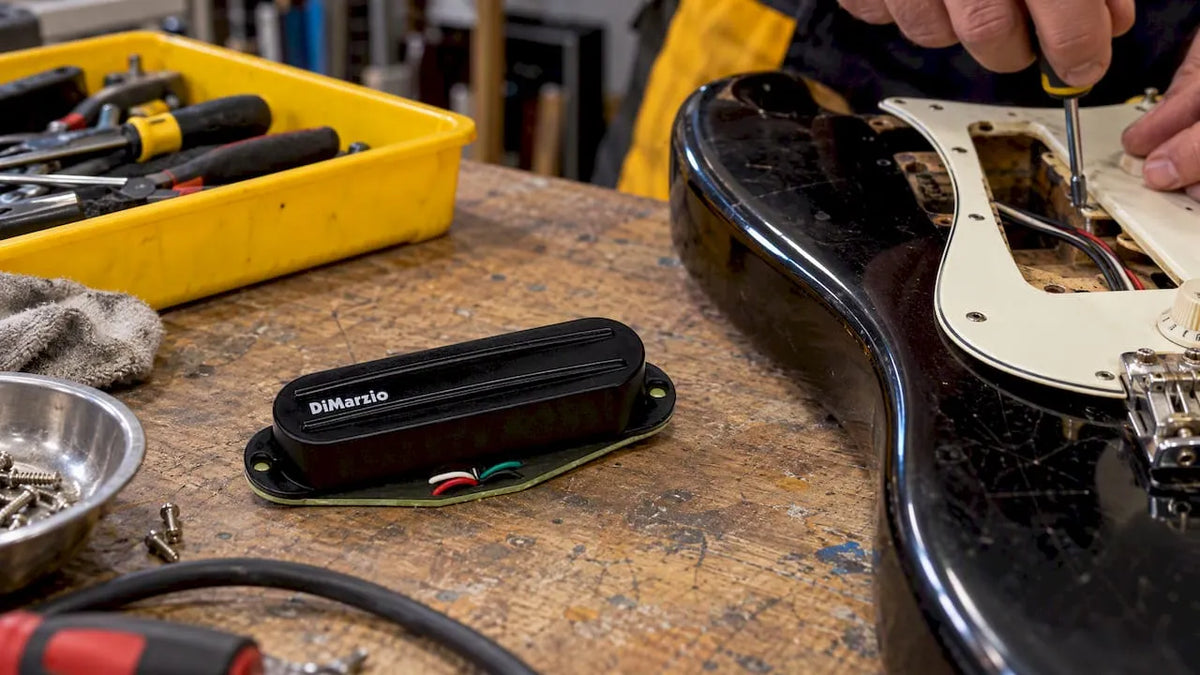
We inspect, set up and repair both types, and can walk you through a neck’s condition before you commit to buying. For players upgrading tone rather than chasing a new joint entirely, we stock the Seymour Duncan SENTIENT NECK BLACK and the DiMarzio True Velvet T Neck, Unplated Nickel Cover, both of which can shift a bolt-on’s character noticeably. We also carry the BN-0251-000 Slotted Bone Nut for improving sustain and tuning stability on either construction. If you suspect a loose joint or a neck needing a reset, get in touch before the problem gets worse.
Our take on bolt-on versus set neck
Chasing the “right” joint before you’ve played enough guitars to know your own priorities is the most common mistake we see. Attack, sustain and warmth are real tendencies, not guarantees, and a well-built example of either joint will usually beat a poorly built one regardless of label. Try both, trust your ears over forum folklore, and book a setup if you’re unsure what you’re actually hearing.
— Music
Ready to act: parts, setups and next steps
If this guide has pointed you towards a tone or playability upgrade rather than a whole new guitar, we can help from here.

- Book a professional setup, service or repair if you suspect a loose joint, high action or a neck needing attention.
- Browse electric guitars, acoustic guitars or bass guitars to compare bolt-on and set-neck models side by side.
- Pick up strings or book our in-store restring service while you’re testing new setups.
- For detailed setup steps you can try at home between visits, this guitar setup walkthrough covers neck relief, action and intonation in plain terms.
Pop into our Huntingdon store or get in touch online, and we’ll help you find or fine-tune the right instrument for how you actually play.
FAQ
Are set necks better than bolt-on necks?
Neither is objectively better: set necks tend to add warmth and sustain through tighter neck-to-body coupling, while bolt-ons tend to offer more attack and far easier repairs, according to GuitarPlayer. A precisely fitted bolt-on can outperform a poorly glued set-neck, so execution matters more than the category.
Is a bolt-on or neck-through design better?
Neck-through designs extend the neck wood straight through the body, offering continuous coupling without a joint at all, while bolt-ons rely on a separate neck fitted into a pocket. Each suits different priorities: neck-through for maximum sustain and a lighter overall feel, bolt-on for repairability and classic bite.
What is the most comfortable guitar neck shape?
Comfort depends on hand size and playing style rather than joint type, since neck profile and fretboard radius are separate design choices from how the neck attaches. Try several profiles, from slim C-shapes to fuller D-shapes, to find what suits your grip.
What are the pros and cons of bolt-on versus set-neck bass construction?
Bolt-on basses generally offer easier neck removal for shims, truss rod work or replacement, plus a brighter, punchier low-end attack. Set-neck basses typically trade that convenience for added sustain and warmth, though a reset requires a luthier rather than a quick screwdriver fix.
Does neck joint type affect a guitar’s resale value?
Joint type alone rarely drives resale value; condition, brand, originality and overall build quality matter far more to buyers. A well-maintained bolt-on and a well-maintained set-neck guitar from comparable brands tend to hold value similarly when both show clean joints and no repair history.
Sources
- Why some guitars sustain better than others | GuitarWorld
- Electric guitar necks: the basics | GuitarPlayer





Share:
Drop C in 4 Steps: Play Ready Tuning for UK Guitarists