


More than half of british guitarists experience signal issues due to neglected output jacks. If your tone suddenly crackles or drops out, the culprit might be this small yet vital component. Understanding how output jacks affect sound quality and reliability helps aspiring and intermediate players prevent headaches. This guide uncovers the myths and facts about output jacks, equipping you with practical steps to confidently upgrade or replace your own for lasting performance.
Table of Contents
- Defining The Guitar Output Jack And Common Myths
- Types Of Guitar Output Jacks Explained
- How Guitar Output Jacks Work In Practice
- Diagnosing Problems And Signs Of Failure
- Replacing And Upgrading Your Guitar Output Jack
- Avoiding Common Mistakes With Jack Installation
Key Takeaways
| Point | Details |
|---|---|
| Importance of Output Jack | The output jack is crucial for transforming guitar vibrations into audio signals. Its quality impacts overall sound and performance reliability. |
| Myth of Standard Jacks | Not all output jacks perform equally; material quality and construction significantly influence signal integrity. |
| Maintenance and Upgrades | Regular maintenance and high-quality upgrades can significantly enhance sound quality and stability. |
| Symptoms of Issues | Common signs of output jack failure include crackling noises and intermittent audio loss; these require prompt attention for diagnosis and repair. |
Defining the guitar output jack and common myths
The guitar output jack is the critical electrical interface that transforms your instrument’s vibrations into an audio signal ready for amplification. Often misunderstood, this small but essential component connects your guitar to amplifiers, recording interfaces, and sound systems. Guitar wiring involves complex electrical interactions, and the output jack plays a fundamental role in maintaining signal integrity and tone quality.
Contrary to popular belief, not all output jacks are created equal. Many guitarists mistakenly assume that any standard jack will perform identically, but material quality, construction, and maintenance significantly impact electrical performance. Mono jacks and stereo jacks have distinct characteristics, with professional musicians understanding that a well-constructed jack can reduce unwanted noise and improve signal transmission. The physical condition of the jack - including potential oxidation, loose connections, or wear - directly influences the guitar’s overall sonic reliability.
Common myths surrounding output jacks often stem from a lack of technical understanding. Some musicians believe that upgrading a jack provides minimal benefit, when in reality, electronic modifications can significantly improve tone and stability. A high-quality output jack can reduce signal interference, provide more consistent electrical contact, and contribute to clearer sound reproduction. The connection between the guitar’s internal wiring and the output jack is a delicate system where even minor improvements can yield noticeable tonal enhancements.
Pro tip: When selecting a new output jack, prioritise oxygen-free copper contacts and robust mechanical construction to ensure long-term reliability and minimal signal degradation.
Types of guitar output jacks explained
Guitar output jacks come in multiple configurations, with the most common being the standard quarter-inch (6.35 mm) phone connector. Audio and video interfaces reveal three primary jack types that musicians encounter: Mono TS (Tip-Sleeve), Stereo TRS (Tip-Ring-Sleeve), and TRS balanced connectors. Each design serves a specific purpose in guitar signal transmission, offering unique electrical characteristics that impact sound quality and connectivity.
The Mono TS jack represents the most basic output configuration, typically found on electric guitars and many vintage instruments. These unbalanced connectors carry a single audio signal, with the tip transmitting the signal and the sleeve serving as the ground connection. In contrast, Stereo TRS jacks provide more complex routing options, often used in active electronics or guitars with multiple pickup configurations. These jacks can simultaneously transmit separate signals or support more advanced wiring schemes, making them versatile for sophisticated guitar setups.
Additionally, phone connectors) showcase nuanced differences in pin configurations that impact signal transmission. Professional musicians and technicians understand that the jack’s physical construction profoundly influences electrical performance. XLR balanced jacks, while less common in standard guitar outputs, offer superior noise rejection and are frequently used in professional audio recording and live sound environments. The choice between different jack types depends on the specific requirements of the instrument’s electronic configuration and the musician’s performance needs.
Here’s a comparison of common guitar output jack types and their practical implications:
| Jack Type | Signal Transmission | Typical Use Cases | Distinct Advantage |
|---|---|---|---|
| Mono TS (Tip-Sleeve) | Unbalanced | Standard electric guitars | Simple, reliable configuration |
| Stereo TRS (Tip-Ring-Sleeve) | Balanced/dual signals | Multi-pickup, active electronics | Supports complex wiring options |
| XLR Balanced | Balanced | Pro audio, live recording | Superior noise rejection |
| TRS Balanced | Balanced | High-end pedals, studios | Reduces interference, clear tone |
Pro tip: When replacing your guitar’s output jack, always match the connector type precisely to your instrument’s original wiring to maintain optimal signal integrity.
How guitar output jacks work in practice
In the practical world of guitar electronics, the output jack serves as a critical signal transmission point. Guitar wiring reveals that this seemingly simple component acts as the final gateway for electrical signals generated by the instrument’s pickups. When a guitarist plugs in their instrument, the jack completes an electrical circuit, transforming the raw electrical signals from pickup coils into a sound ready for amplification. The mechanical connection is precise, with the jack’s internal contacts making direct contact with the guitar’s internal wiring.
The performance of an output jack directly impacts sound quality and reliability. Oxidation, physical wear, or poor contact can introduce unwanted noise, signal loss, or intermittent sound during performances. Electronic modifications demonstrate that professional musicians often invest time in maintaining and occasionally upgrading their output jacks to ensure consistent sound transmission. The jack’s internal mechanism must provide a clean, stable electrical connection that minimises interference and preserves the guitar’s natural tone characteristics.
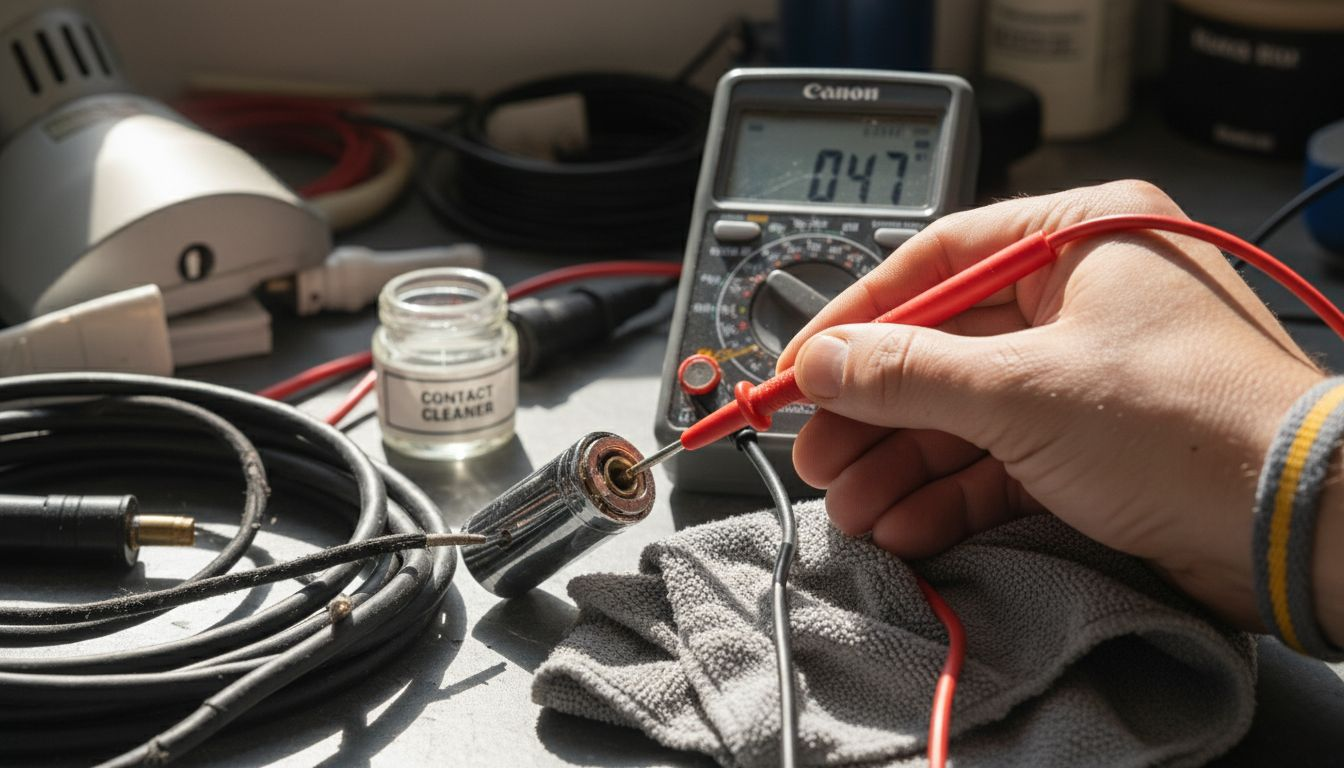
Different playing styles and performance environments place unique demands on guitar output jacks. Rock musicians might require robust jacks that can withstand frequent cable plugging and unplugging, while studio musicians prioritise clean signal transmission with minimal noise. The jack’s design must accommodate various cable types, from standard instrument cables to more specialised audio connectors. Its construction involves precise engineering, with contact materials selected to provide optimal conductivity and longevity. Understanding these practical considerations helps musicians make informed decisions about maintaining and upgrading their instrument’s critical electrical interface.
Pro tip: Clean your output jack’s contacts periodically using specialised contact cleaner to prevent oxidation and maintain optimal signal quality.
Diagnosing problems and signs of failure
Guitar wiring reveals that output jack problems can manifest through various critical symptoms that signal potential electrical failures. Musicians should remain vigilant about unusual sounds or signal inconsistencies, which often indicate underlying jack deterioration. Crackling noises, intermittent signal loss, and complete audio dropout represent the most common warning signs that something is fundamentally wrong with the instrument’s output connection.
Professional musicians understand that diagnosing output jack issues requires systematic investigation. Electronic modifications recommend a comprehensive diagnostic approach that includes several key assessment techniques. Visual inspection can reveal obvious problems like loose wiring or visible corrosion, while physical manipulation of the cable can help identify specific connection issues. Listening carefully for changes in sound quality when slightly moving the cable or gently wiggling the jack can pinpoint exact locations of potential electrical breakdown.
The diagnostic process involves several critical steps for identifying jack-related problems. Continuity testing using a multimeter can help confirm whether electrical connections remain intact, while careful examination of solder joints can reveal hidden structural weaknesses. Rock and studio musicians alike must pay attention to subtle changes in sound transmission, as seemingly minor issues can escalate quickly and compromise entire performance setups. Symptoms such as excessive background noise, signal distortion, or unpredictable volume fluctuations often indicate that the output jack requires immediate professional attention or replacement.
The following table summarises key signs of output jack failure and suggests initial diagnostic tips:
| Symptom | Probable Cause | Basic Diagnostic Step |
|---|---|---|
| Crackling noises | Oxidised contacts | Inspect for corrosion |
| Intermittent audio loss | Loose wiring | Gently wiggle the cable |
| Complete signal dropout | Broken solder joints | Check solder connections |
| Excess background noise | Poor continuity | Use a multimeter to test |
Pro tip: Perform a monthly visual and auditory inspection of your guitar’s output jack, checking for any signs of wear, looseness, or unusual sound characteristics.
Replacing and upgrading your guitar output jack
Guitar wiring reveals that replacing an output jack is a nuanced process requiring precision and understanding of electrical connections. The replacement involves carefully removing the existing jack, assessing the internal wiring, and installing a new component that matches the guitar’s specific electrical requirements. Soldering skills and electrical knowledge are crucial for ensuring a successful modification that maintains the instrument’s sonic integrity.
The selection of a replacement jack involves critical considerations beyond simple mechanical compatibility. Electronic modifications suggest choosing jacks with superior materials like gold-plated contacts, which provide enhanced conductivity and resistance to oxidation. Mono TS jacks, stereo TRS jacks, and switched configurations offer different electrical characteristics, meaning guitarists must carefully match the new jack to their instrument’s specific wiring configuration and performance needs.

Professional musicians approach jack replacement as a comprehensive electrical maintenance procedure. This involves not just swapping the physical component, but also inspecting and potentially repairing associated wiring, cleaning electrical contacts, and ensuring secure solder joints. The process requires specific tools including a soldering iron, wire strippers, multimeter, and potentially heat-shrink tubing. Careful attention to detail during installation can prevent future signal issues and potentially improve the guitar’s overall tonal characteristics and reliability.
Pro tip: Always take a photograph of the original jack’s wiring configuration before removal to ensure correct reinstallation.
Avoiding common mistakes with jack installation
Guitar wiring reveals that output jack installation demands precision and careful attention to prevent potentially costly electrical errors. Inexperienced musicians often make critical mistakes that can compromise their instrument’s performance, ranging from basic wiring errors to improper mechanical installation. Electrical polarity, mechanical stability, and connection integrity represent the three fundamental areas where mistakes frequently occur during jack replacement.
Electronic modifications highlight several common pitfalls that can undermine jack installation success. The most prevalent errors include inadequate soldering technique, which can create high-resistance connections, and failing to properly insulate exposed wiring. Heat shrink tubing, clean soldering points, and thorough connection testing are essential strategies for preventing signal degradation and potential electrical shorts.
Professional guitar technicians understand that jack installation is more than a simple component swap. Critical mistakes often involve overlooking subtle details such as precise wire routing, maintaining appropriate cable strain relief, and ensuring the jack’s mechanical mount provides robust support. Guitarists must pay careful attention to the orientation of the jack, the quality of solder joints, and the overall mechanical stability of the installation. Small oversights can lead to intermittent signal problems, unexpected noise, or complete signal failure that can compromise performance and potentially damage expensive audio equipment.
Pro tip: Use a multimeter to verify electrical continuity and signal path before fully reassembling your guitar after jack replacement.
Upgrade Your Guitar’s Output Jack for Ultimate Tone and Reliability
If you have experienced crackling, intermittent signal loss or worry that your guitar’s output jack is holding back your tone, taking action now is essential. The article highlights how oxidation, poor contacts and incorrect jack types can cause these issues but also how simple electronic modifications and quality upgrades can restore your sound to its full potential. Don’t let subpar connections stand in the way of your musical expression or the longevity of your instrument.

At MusicStreet, we understand the critical role of a well-maintained output jack in preserving your guitar’s signature tone and reliable performance. Whether you need expert advice, precision setup or high-quality replacement components tailored to your instrument’s wiring, our knowledgeable team can assist. Explore our carefully selected guitars and accessories, and get personalised support to upgrade your gear with confidence. Visit MusicStreet today to enhance your playing experience and unlock the true potential of your instrument.
Frequently Asked Questions
What is a guitar output jack?
A guitar output jack is the electrical interface that connects your instrument to amplifiers or recording systems, transforming the vibrations from the guitar into an audio signal for amplification.
How do I know if my output jack needs replacing?
Signs that your output jack may need replacement include crackling noises, intermittent audio loss, complete signal dropout, or excessive background noise during play. Regular inspections can help identify these issues early.
What are the differences between mono and stereo output jacks?
Mono output jacks carry a single audio signal and are typically used with standard electric guitars, while stereo output jacks support dual signals, making them suitable for guitars with complex wiring or multiple pickups.
How can upgrading my output jack improve my guitar’s tone?
Upgrading to a high-quality output jack can enhance signal integrity, reduce unwanted noise, and provide cleaner sound reproduction, contributing to an overall better tonal experience for your guitar performance.










Share:
7 Key Benefits of PRS Guitars Every UK Guitarist Should Know
How to Choose a Guitar for Beginners in the UK