


Struggling with buzzing strings or uneven fretting on your guitar can leave even Cambridge newcomers feeling frustrated. Understanding the role of the guitar nut unlocks smoother playability and clearer tone on any instrument. This guide demystifies the nut’s structure, explores how its material and design shape your sound, and pinpoints simple steps to improve your setup confidence right here in Huntingdon.
Table of Contents
- Guitar Nut Defined: Structure And Main Purpose
- Different Types Of Guitar Nuts Explained
- Common Nut Materials And Their Impact
- How The Nut Influences Tone And Playability
- Essential Tips For Nut Maintenance And Replacement
Key Takeaways
| Point | Details |
|---|---|
| Importance of the Nut | The guitar nut is crucial for string height, spacing, and playability, significantly affecting tone, comfort, and overall performance. |
| Material Options | Choosing the right nut material, such as bone or TUSQ, can enhance tonal quality and tuning stability, impacting the guitar’s sonic character. |
| Maintenance Needs | Regular inspection and simple maintenance of the nut can prevent issues like buzzing and tuning instability, extending the instrument’s lifespan. |
| Upgrade Potential | Upgrading from plastic to higher-quality nuts can make a noticeable difference in playability and sound quality, making it a worthwhile investment. |
Guitar Nut Defined: Structure and Main Purpose
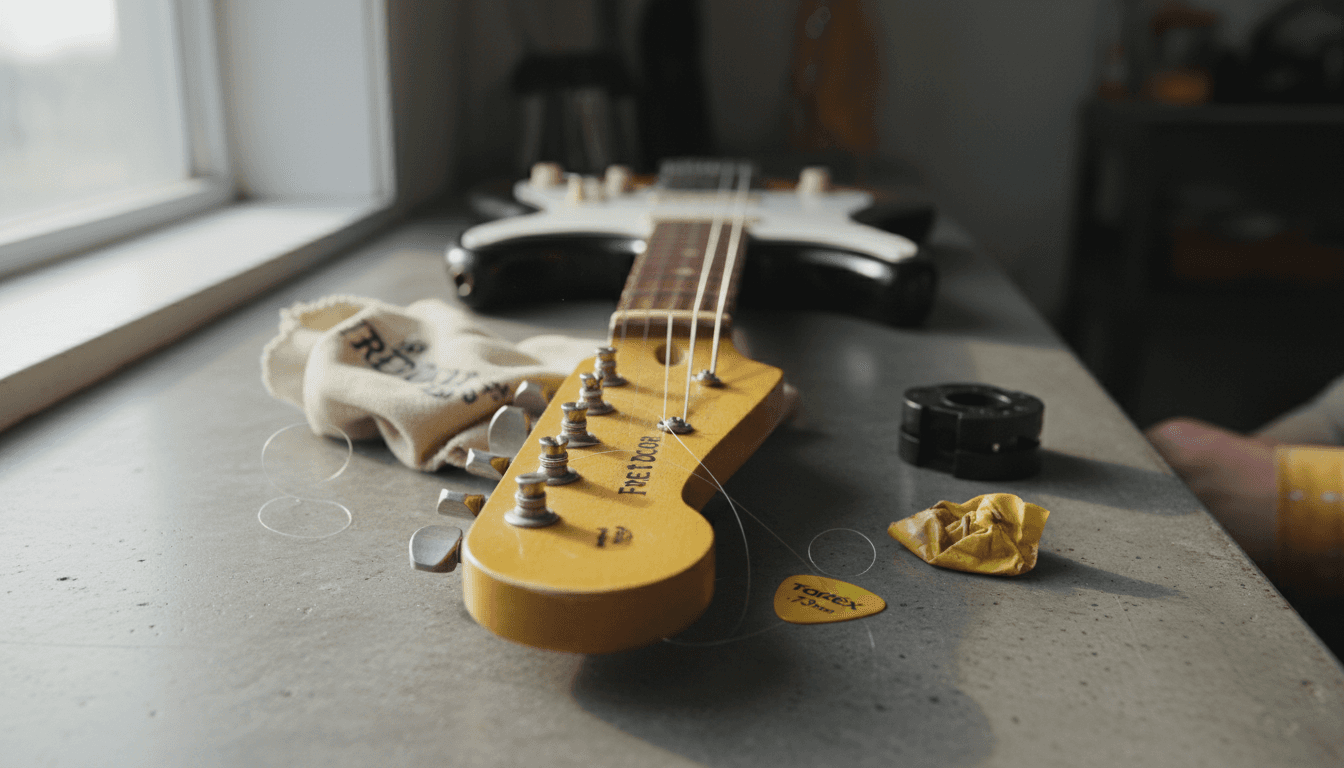
The guitar nut is a small but mighty component sitting at the head of your guitar neck, right where it meets the headstock. This unassuming piece of hard material does far more than you might realise—it’s fundamental to how your guitar plays, sounds, and feels under your fingers.
What exactly is a guitar nut?
A nut on a stringed instrument supports the strings) at the point closest to the headstock. Think of it as the first checkpoint for your strings on their journey down the neck. The nut marks where your open strings begin their vibration, setting the stage for every note you play.
The primary job of the nut is straightforward but critical:
- Holds strings at the correct height above the fingerboard
- Spaces strings evenly across the neck width
- Guides strings smoothly toward the tuning pegs
- Works alongside the bridge to define your guitar’s scale length
- Prevents strings from buzzing against frets
How is a nut structured?
Most guitar nuts are rectangular blocks made from bone, synthetic materials, or plastic. The top surface features grooves or notches—one for each string. These grooves keep strings precisely aligned and prevent them from rolling around during playing or tuning.
The grooves are cut at a slight angle, gradually raising the string height from the bass side to the treble side. This angled design helps strings exit cleanly without binding or catching.
Why the nut matters to your playing
A properly fitted nut affects string spacing, action height, and overall playability. If the nut grooves are cut too deep, your strings sit too low and buzz against the frets—annoying and tone-killing. If they’re too shallow, the strings sit too high, making it harder to fret notes cleanly, especially near the headstock.
A worn or poorly fitted nut can transform even a great guitar into something frustrating to play. Getting this right makes a noticeable difference in comfort and tone.
The nut also influences your guitar’s tonal character. Bone nuts generally produce brighter, more resonant tones compared to plastic or synthetic alternatives. This is why many players upgrade their nuts when they want to enhance their instrument’s sonic qualities.
When considering how guitar nut width affects comfort and playability, you’ll discover that nut dimensions directly impact how the instrument feels in your hands and how easily you can navigate the fretboard.
Pro tip: If your guitar feels uncomfortable to play near the first few frets or your open strings buzz, have the nut checked before assuming other problems. A simple nut adjustment or replacement can sometimes transform your playing experience without spending money elsewhere.
Different Types of Guitar Nuts Explained
Not all guitar nuts are created equal. The material you choose affects everything from how your guitar sounds to how well it holds its tuning. Understanding the differences helps you make smart decisions about upgrades or replacements.
Bone nuts
Bone is the gold standard for serious players. Natural bone offers brightness, clarity, and excellent sustain that’s hard to match. When you strike an open string on a bone nut guitar, you’ll hear more resonance and tonal definition compared to cheaper alternatives.
Bone nuts are durable and wear slowly over time. They’re expensive, though, and require skilled craftsmanship to install properly. Most higher-end acoustic and electric guitars ship with bone nuts as standard.
TUSQ and synthetic materials
TUSQ is a synthetic material offering tone and playability comparable to bone nuts at a lower price point. It’s engineered to provide consistent performance without the variation found in natural bone.
Synthetic nuts work brilliantly for players who want quality without the premium cost. They resist moisture changes better than bone, making them ideal if you live in humid climates like the UK. Installation is straightforward, and they last years before needing replacement.
Plastic nuts
Plastic nuts come standard on budget guitars. They’re cheap to manufacture and adequate for beginners, but they don’t deliver the tonal quality or durability of better materials.
Plastic absorbs moisture, which can cause tuning instability. The grooves wear quickly, leading to string buzzing. If you’re serious about playing, upgrading from plastic to bone or TUSQ makes a noticeable difference.
Metal nuts
Metal nuts produce brighter, more sustained tones. Some players love the extra shimmer they add to their sound. However, metal can increase string slippage during aggressive bending or tuning adjustments.
They’re less common than bone or synthetic options, and installation requires more precision. Metal nuts suit specific playing styles and tonal preferences rather than being universally recommended.
Choosing the right nut for you
Consider your playing style and budget:
- Budget-conscious beginners: Upgrade from plastic to TUSQ for noticeable improvement
- Acoustic players: Bone delivers the warmth and resonance that defines acoustic tone
- Electric players: TUSQ provides excellent value; bone if you want maximum clarity
- Climate concerns: Synthetic materials handle humidity better than bone
The nut material you choose influences tuning stability, tonal character, and playability more than most players realise. It’s one of the highest-impact upgrades you can make.
If you’re considering a full guitar overhaul, remember that guitar hardware affects your overall sound quality, and the nut is just one piece of that puzzle.
Pro tip: If your guitar holds its tuning poorly or sounds duller than it should, have the nut material assessed before spending money on other upgrades. Swapping a plastic nut for bone or TUSQ can transform your instrument’s performance.
Common Nut Materials and Their Impact
Each material brings its own sonic signature and practical considerations to your guitar. Knowing what separates bone from plastic, or brass from synthetic compounds, helps you understand why some guitars feel and sound dramatically better than others.
Bone: The traditional choice
Cow bone remains the industry standard for quality guitar nuts. It produces warm, natural tones with excellent sustain and clarity. Bone nuts allow strings to resonate freely, contributing to the overall brightness and projection of your instrument.
The downside is cost and consistency. Natural bone varies in density and porosity, meaning two bone nuts won’t perform identically. Installation demands skilled craftsmanship, which adds to the price.
TUSQ: The modern alternative
TUSQ is engineered to mimic bone’s tonal qualities whilst offering greater consistency and reliability. You get nearly identical performance from one nut to the next, with no surprises.
Synthetic materials like TUSQ resist moisture absorption better than bone. This matters in the UK climate, where humidity fluctuates significantly throughout the year. Installation is simpler, too, making replacements more affordable.
Ebony and ivory: Premium options
Ebony delivers dense, bright tones with exceptional durability. Ivory, historically used on fine instruments, offers warmth comparable to bone but with a distinctive character. Both are expensive and less common today due to availability and ethical concerns.
These materials suit high-end restoration projects or bespoke instruments rather than everyday playing.
Plastic: Budget-friendly but limited
Plastic nuts keep manufacturing costs low, making guitars more affordable for beginners. They’re adequate for learning, but they don’t deliver the tonal quality or longevity of better materials.
Plastic absorbs moisture easily, leading to tuning instability. The grooves wear quickly, creating string buzzing within a few years of regular playing. Upgrading from plastic transforms your playing experience.
Metal nuts: Brightness with trade-offs
Metal materials like brass influence sustain and tonal brightness) distinctly. Some players love the extra shimmer and cut metal adds to their sound. Others find string binding or slipping problematic.
Metal suits specific playing styles rather than general use. Installation precision matters more with metal than other materials.
Comparing materials at a glance
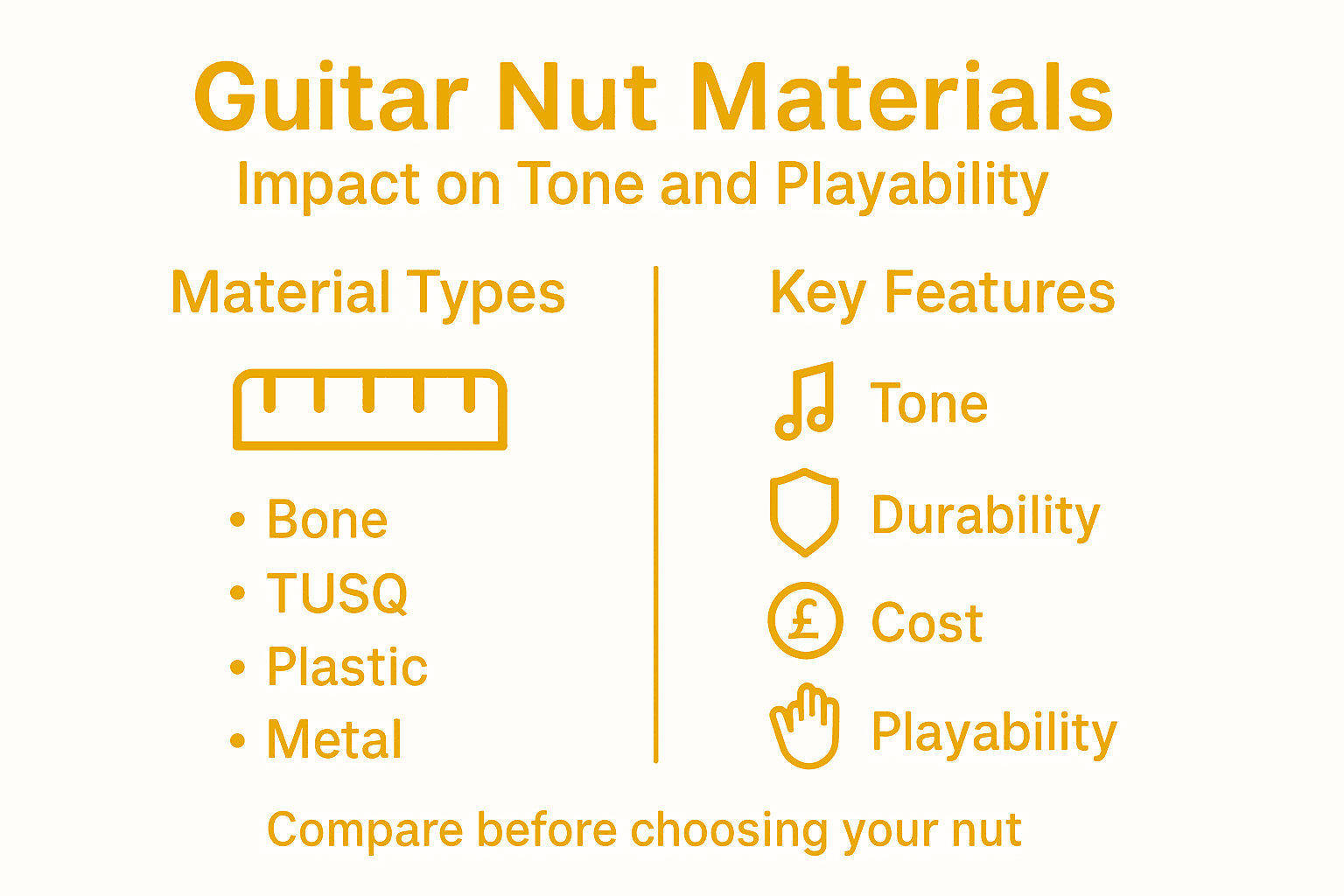
Here’s a concise comparison of popular guitar nut materials and their unique benefits and considerations:
| Material | Tonal Qualities | Durability | Climate Suitability |
|---|---|---|---|
| Bone | Bright and resonant | Wears slowly, robust | Sensitive to humidity |
| TUSQ | Consistent, clear tone | Lasts years, stable | Handles UK humidity well |
| Plastic | Dull, limited sustain | Wears quickly, cracks | Poor moisture resistance |
| Metal | Very bright, long sustain | Strong, needs care | Moisture resistance excellent |
| Ebony/Ivory | Dense, warm, premium | Exceptionally durable | Sensitive, rare/ethical |
- Warmth and resonance: Bone, ebony, ivory
- Consistency and value: TUSQ, Corian
- Brightness and projection: Metal, ebony
- Moisture resistance: TUSQ, metal, ebony
- Affordability: Plastic, Corian
Your nut material directly affects tuning stability, tonal character, and how long your instrument stays playable before needing maintenance.
Pro tip: When buying a used guitar, inspect the nut material before deciding. A plastic nut on an otherwise solid instrument is an inexpensive upgrade that dramatically improves playability and tone quality.
How the Nut Influences Tone and Playability
The nut does far more than hold strings in place. Every aspect of its design—material, slot depth, width, and angle—shapes how your guitar sounds and feels when you play it. Small changes in the nut create noticeable differences in tone and comfort.
Tone shaping through material choice
Your nut material directly influences sustain, brightness, and clarity. Bone nuts deliver warm, resonant tones with excellent string vibration transfer. Synthetic materials like TUSQ aim to replicate bone’s tonal qualities whilst offering consistency.
Plastic nuts reduce tonal quality noticeably. Metal nuts add brightness and shimmer but sometimes at the cost of tuning stability. The material you choose becomes part of your guitar’s sonic identity.
Slot depth and string height
Nut slot depth affects sustain and tonal brightness significantly. Slots cut too deep lower string height, causing buzzing against the frets. Slots too shallow force strings high above the fingerboard, making fretting uncomfortable and tiring.
Precise slot depth creates the sweet spot between easy playing and clean tone. This is why professional setup matters—it’s not just about comfort, it’s about unlocking your guitar’s full potential.
String spacing and playability
Nut width determines string spacing across the neck. Wider spacing suits players with larger hands or fingerstyle techniques. Narrower spacing works better for smaller-handed players or those doing fast lead work.
Proper spacing prevents strings from touching one another during play. It also reduces accidental muting when fingering chords. The spacing directly impacts your confidence and speed when playing.
Slot angle and tuning stability
Properly angled nut slots prevent string binding and slipping. When slots angle correctly, strings exit smoothly toward the tuning pegs without catching. This stability keeps your guitar in tune longer between string changes.
Incorrect angles cause strings to bind, creating tuning problems and risking breakage. Some players prefer slightly steeper slots for slide playing, but standard setups prioritise stability.
How all these factors work together
Think of the nut as a tuning instrument for your whole guitar:
- Material choice determines your tonal ceiling
- Slot dimensions control string height and comfort
- Spacing enables smooth, confident playing
- Angle precision keeps your tuning rock-solid
When your nut is properly fitted, everything else about your guitar plays better. It’s the foundation for good tone, comfort, and reliability.
Understanding how proper guitar setup optimises playability reveals just how interconnected all components are, with the nut playing a starring role in that equation.
Pro tip: If your guitar plays brilliantly in some positions but feels awkward near the headstock, or if your open strings buzz while fretted notes ring cleanly, the nut likely needs adjustment. This single component can make the difference between loving and tolerating your instrument.
Essential Tips for Nut Maintenance and Replacement
Your guitar nut requires occasional attention to keep your instrument playing smoothly. Whether you’re addressing minor issues or planning a full replacement, understanding the maintenance process helps you avoid costly mistakes and extend your guitar’s lifespan.
Regular inspection
Check your nut every few months during routine guitar maintenance. Look for visible wear in the string slots, cracks in the material, or discolouration that suggests moisture damage.
Listen for subtle changes too. If buzzing develops gradually or tuning stability worsens, the nut may need attention. Catching problems early prevents them from affecting playability and tone.
Polishing and slot care
Polishing the nut reduces string binding in the slots, which directly improves tuning stability. A simple polish removes debris and smooths slot surfaces without requiring professional intervention.
Chamfering the edges of slots prevents strings from slipping during aggressive playing. These maintenance tasks are straightforward and cost almost nothing.
When slots go wrong
Slots that are too low cause string buzzing against the frets. Rather than replacing the entire nut, filling and recutting nut slots restores proper string clearance and improves both tone and intonation.
A technician fills worn slots with material like cloth soaked in super glue, then recuts them to the correct height. This repair costs far less than full replacement whilst restoring playability.
Planning a replacement
When a nut is cracked, severely worn, or made from poor material, full replacement becomes necessary. Precise measurements ensure your new nut matches your guitar’s specifications exactly.
Slot spacing, depth, and angle all require accurate calculation during installation. This isn’t a DIY job for most players—professional setup ensures your investment pays off.
Key maintenance actions
To help you decide when maintenance or replacement is required, here’s a quick guide to common nut issues and recommended actions:
| Problem Detected | Likely Cause | Recommended Solution |
|---|---|---|
| Open string buzzing | Slots too deep | Fill and recut slot |
| Tuning instability | Moisture damage | Inspect, clean, polish nut |
| String slippage | Slot angle incorrect | Professional adjustment |
| Persistent discomfort | High nut, rough slots | Replace with quality material |
- Inspect the nut quarterly for wear and damage
- Keep slots clean and free from debris
- Polish the nut occasionally to reduce binding
- Address buzzing or tuning problems immediately
- Budget for professional replacement if cracks develop
A well-maintained nut keeps your guitar playing beautifully for years. Neglecting it forces expensive repairs later.
Choosing replacement materials wisely
If you’re replacing your nut, this is your chance to upgrade. Moving from plastic to bone or TUSQ transforms your guitar’s tone and tuning stability.
Consider your playing style, budget, and climate when selecting materials. A upgrade now prevents future regrets about your instrument’s performance.
Pro tip: Before replacing your entire nut, have a technician assess whether slot work or polishing might solve your problem. Many buzzing or tuning issues resolve with minor maintenance rather than full replacement, saving you money.
Optimise Your Guitar’s Performance with Expert Nut Solutions
Understanding the critical role of the guitar nut in tone, playability and tuning stability highlights a frequent challenge many players face—string buzz, uncomfortable action and dull sound caused by worn or poorly fitted nuts. Whether you need a precise nut adjustment, a professional replacement or want to upgrade to premium materials such as bone or TUSQ, MusicStreet offers the personalised expertise and quality service to transform your guitar’s feel and tone.

Explore our comprehensive range of guitars and accessories at MusicStreet where expert setup and post-sale support ensure your instrument performs at its best. Don’t settle for compromises—get your guitar nut inspected and optimised by experienced technicians who understand how to unlock your instrument’s full potential. Visit us online or in Huntingdon, Cambridgeshire and take the first step towards a superior playing experience today by browsing our latest pre-loved guitars or requesting a professional setup through our dedicated services.
Frequently Asked Questions
What is a guitar nut?
The guitar nut is a small component located at the top of the guitar neck where the neck meets the headstock. It supports the strings and is responsible for holding them at the correct height and spacing, ensuring smooth playability and proper sound.
How does the material of the nut affect my guitar’s tone?
The nut material significantly influences your guitar’s tonal qualities. Bone nuts typically offer a bright and resonant sound, while synthetic materials like TUSQ aim to replicate those qualities with greater consistency. Plastic nuts, however, can result in a duller tone and reduced sustain.
What issues can arise from a poorly fitted guitar nut?
A poorly fitted nut can cause string buzzing, tuning instability, and uncomfortable playability. If the nut slots are too deep, the strings may sit too low, leading to buzzing against the frets. If they are too shallow, the strings may sit too high, making fretting difficult.
How do I know when to replace my guitar nut?
You should consider replacing your guitar nut if it is cracked, severely worn, or made from a low-quality material. Regular inspections for wear and damage, such as visible cracks or excessive buzzing, can help you determine when replacement is necessary.






Share:
Discover the Iconic Sound of the Fender Stratocaster Guitar
Discover the Best Epiphone Les Paul Models to Buy Today