


For most players, a split-coil (P-style) pickup gives the fullest, most reliable low end, while a J-style delivers more bite and articulation for cutting through a mix. Choose active electronics if you need consistent headroom and onboard EQ across different stages and amps. Fit and trial matter as much as the pickup itself: measure your rout and string spacing before ordering, and try before you commit. Musicstreet’s Huntingdon workshop can test and fit whichever route you take.
- P-style pickups are the most forgiving live and provide a punchy, mid-forward tone ideal for rock, blues, and reggae, with many touring bassists relying on them as backups.
- Active pickups are better suited for heavier genres, long cable runs, and onboard tone shaping, but require battery maintenance and may reduce subtle playing nuances.
- Proper pickup placement and fit are crucial, with bridge pickups emphasizing attack and low-end warmth, while neck pickups favour resonance; measurement and trial are essential before installation.
- Magnet material influences tone: alnico offers warmth and natural compression, ceramic provides punch and brightness, and neodymium delivers high output in compact designs with a slightly more clinical sound.
- Wiring configurations like series, parallel, and coil-splitting drastically affect tone and are inexpensive upgrades, often achievable without major modifications by a technician.
Table of Contents
- What are the main types of electric bass guitar pickups?
- Active vs passive bass pickups: which one suits your playing?
- How does pickup placement and fit affect your tone?
- How do you choose the right pickup: a practical checklist
- Why buy and fit pickups through Musicstreet?
- How do magnet materials change your bass tone?
- How does pickup wiring change the sound?
- How do you maintain and troubleshoot bass pickups?
- The honest take on chasing the “perfect” pickup
- Recommended pickup sets available now at Musicstreet
- Sources
- FAQ
What are the main types of electric bass guitar pickups?
Every pickup family has its own voice, and knowing what each one does before you shop saves you from buying twice.
Single-coil / J-style pickups produce a bright, articulate tone with plenty of top-end snap. Two single coils, typically placed near the neck and bridge, give you the classic Jazz Bass sound: growly, cutting, and forgiving in busy mixes. Session players and funk or fusion bassists lean on this voice because it sits clearly against guitars and horns without needing much EQ help. The trade-off is hum. A single coil picks up more electrical noise than a split design, though noiseless or stacked versions now reproduce that J-style voice while cutting hum for stage use, which is worth knowing if you gig under fluorescent lighting or near dimmer switches.
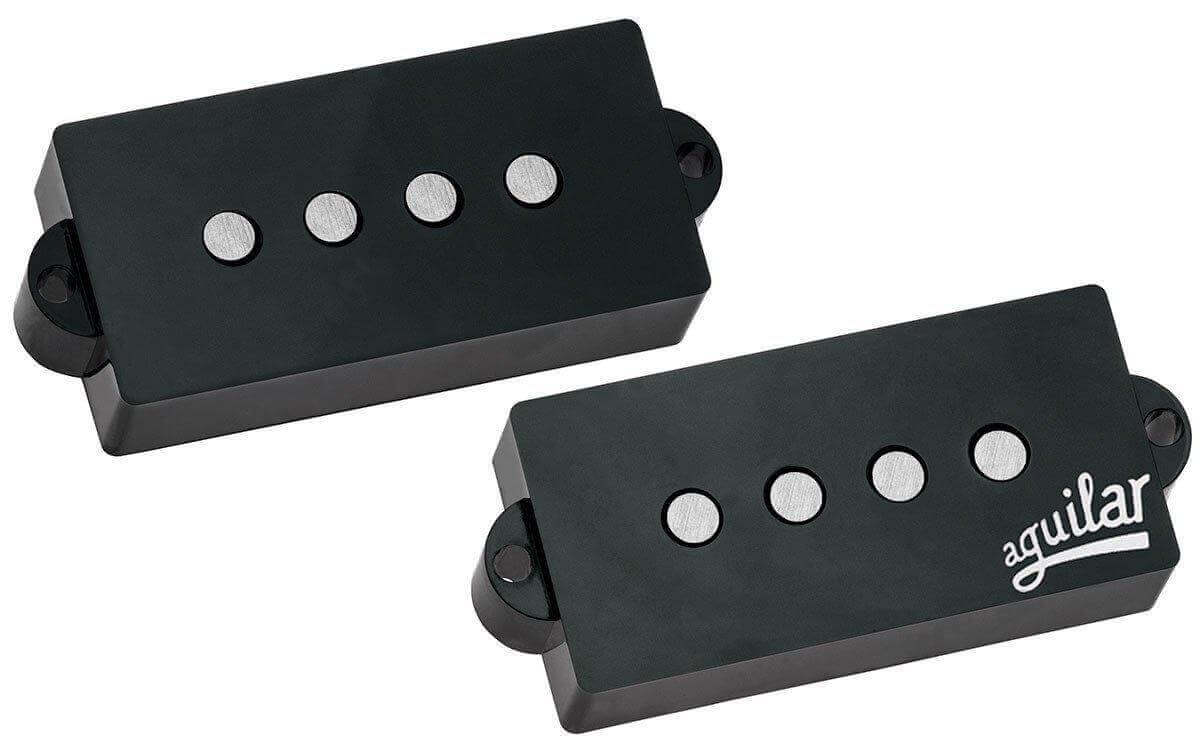
Split-coil / P-style pickups are the workhorse of rock, blues, and reggae. Two offset coils, one per pair of strings, cancel hum while producing a punchy, mid-forward tone with a full low end. It is less versatile than a J-style but far more forgiving live, which is exactly why so many touring bassists keep one on hand as a backup instrument.
Humbucker / MM-style pickups, popularised by Music Man’s StingRay, use a wider coil pair for higher output and a thicker, more aggressive tone. Modern rock, metal, and slap-heavy styles favour this design because it pushes harder into an amp without extra gain.
Soapbar pickups are named for their shape, not their circuit. A soapbar housing might contain a split coil, single coil, humbucker, or rail design, so never assume two soapbars are interchangeable just because they look alike.
Rail and blade-style pickups use a continuous magnetic strip instead of individual pole pieces, giving even output regardless of string spacing changes. Piezo and optical pickups exist too, but they’re niche: magnetic designs remain the standard for electric bass, and piezo units generally need different preamps and EQ handling than a standard magnetic setup.
- J-style: bright, articulate, best for cutting through dense arrangements
- P-style: punchy, full-bodied, dependable across genres
- Humbucker/MM: high output, thick and aggressive
- Soapbar: shape only, check the coil inside
- Rail/blade: consistent output, useful for altered tunings
Active vs passive bass pickups: which one suits your playing?
Passive pickups send a raw signal straight to your amp, relying on the coil and magnet alone for tone. Active pickups pair the coil with a battery-powered preamp, and that preamp boosts output and adds onboard EQ shaping, giving you more headroom and a more consistent signal down long cable runs.
The catch is maintenance. Active electronics need a 9-volt (sometimes 18-volt) battery that will eventually die mid-set, and some players find the compressed, hi-fi character of active circuits smooths over the subtle dynamic nuance that makes passive pickups feel organic under the fingers. Repairs can also be fiddlier, since there’s a preamp board and battery clip to trace alongside the coils themselves.
Choose active pickups if:
- You play heavier genres that need consistent high output
- You run long cables or multiple pedals and want to fight signal loss
- You want onboard bass/mid/treble control without an outboard preamp
Choose passive pickups if:
- You want a vintage, fluid feel that responds directly to playing dynamics
- You’d rather not think about battery life before a gig
- Your style is roots, reggae, or classic rock where a raw signal suits the genre
Pro Tip: Carry a spare 9-volt battery in your gig bag if you run active pickups. A dead battery mid-soundcheck is one of the most common, and most avoidable, stage disasters bassists report.
How does pickup placement and fit affect your tone?
Position changes character as much as pickup type does. Bridge-position pickups deliver a tighter, clearer attack with more growl, while neck-position pickups favour warmth and low-end resonance, which is exactly why so many basses run both and let you blend between them. Some luthiers rate placement as important as the pickup itself when chasing a specific sound, so don’t treat position as an afterthought.
Fit is where plans go wrong. Guitar pickups can technically be dropped into a bass rout, but pole alignment, string spacing, and different frequency response often cause uneven output and a weaker low end once you plug in. Bass-specific designs exist for a reason.
- Check pole piece spacing matches your string spacing exactly, especially on 5-strings.
- Measure rout depth and width before ordering; replacing humbuckers with P/J sets sometimes needs light routing or a pickguard swap.
- Adjust pickup height gradually: moving it closer to the strings increases output and attack, while backing it off softens the sound and lowers distortion risk.
- If your conversion involves rewiring or shielding, ask a technician to check cavity depth and wiring paths before you commit to a purchase.
How do you choose the right pickup: a practical checklist
Work through this before you spend anything. It stops you buying on looks or brand reputation alone and forces you to match the pickup to how you actually play.
- Target tone: bright and cutting, punchy and full, or thick and aggressive?
- Active or passive: do you need onboard EQ and headroom, or a simpler raw signal?
- Output level: higher output suits heavier styles; lower output often suits dynamic fingerstyle playing.
- Magnet type: affects warmth, clarity, and output (covered in detail below).
- Physical fit: rout size, string spacing, and mounting screws all need to match.
- Noise level: single coils hum more than split-coil or humbucker designs.
- Budget and warranty: factor in fitting costs alongside the pickup price itself.
In-store, run through open strings, single-note scales, slap passages, and fingerstyle runs, listening for string-to-string balance and how the tone sits against a typical band mix, not just how it sounds solo through headphones. Blend neck and bridge pickups if your bass has both, and test with your actual amp settings rather than a shop’s flattering preset.
Ask your supplier three things before ordering: does this pickup fit my rout without modification, what’s the returns policy if it doesn’t suit my playing, and is fitting available if I’m not confident doing it myself?
Why buy and fit pickups through Musicstreet?
Musicstreet’s Huntingdon workshop offers expert setup and hands-on trials before you commit to a purchase, so you’re not guessing from a spec sheet. Every instrument that passes through the shop gets professional inspection, and that same scrutiny applies when you’re fitting new pickups: correct pole alignment, height adjustment, and wiring checks all happen as part of the job, not as an afterthought.
Proper installation includes checking rout compatibility, re-shielding where needed, and setting pickup height to your playing style before the bass leaves the workshop… Post-sale, Musicstreet supports further adjustments if your ears change your mind after a few gigs.
How do magnet materials change your bass tone?
The magnet inside a pickup shapes its character as much as the coil winding does, and this is one of the most overlooked factors when players compare pickups on spec sheets alone.
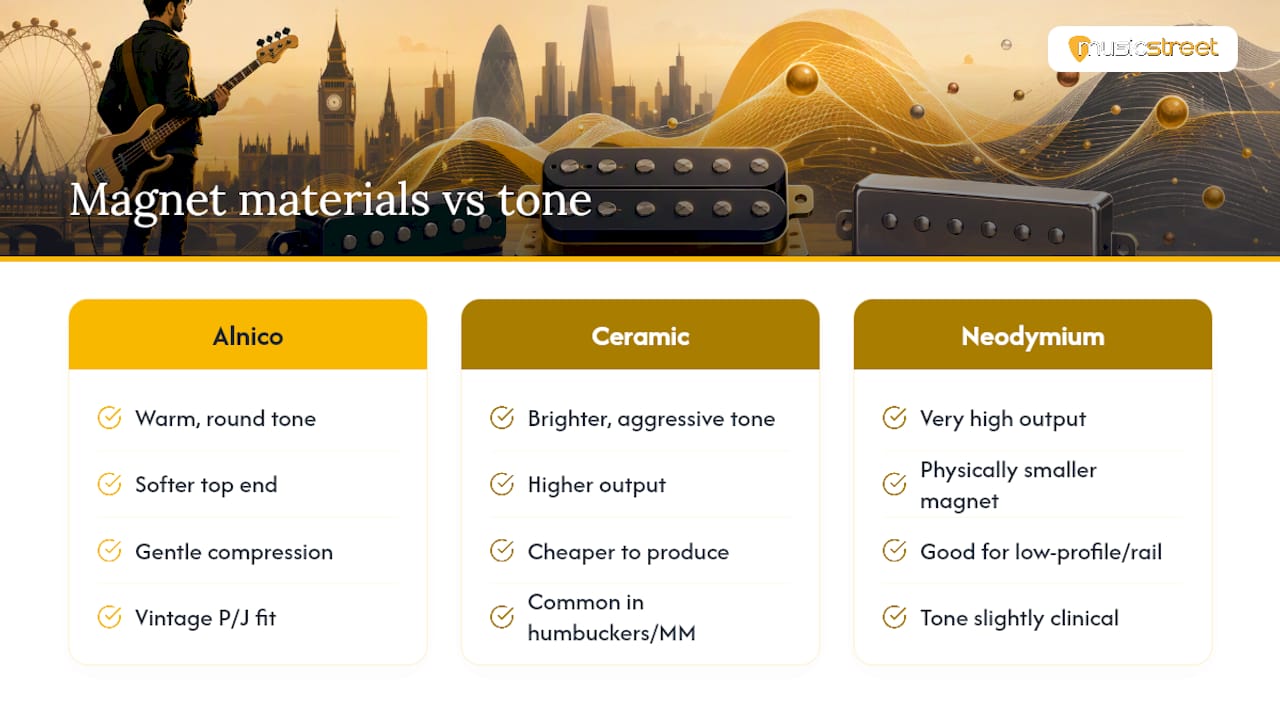
Alnico (an alloy of aluminium, nickel, and cobalt) produces a warmer, rounder tone with a softer top end. It’s the traditional choice for vintage-voiced P and J pickups, and it compresses gently under heavy playing, which many fingerstyle players find musical rather than harsh.
Ceramic magnets are stronger and cheaper to produce, giving higher output and a brighter, more aggressive top end. They’re common in humbucker and MM-style pickups aimed at rock and metal players who want the pickup to push hard into an amp without extra gain staging.
Neodymium magnets are the newest of the three, offering very high output from a physically smaller magnet. That size advantage matters in low-profile or rail-style pickups where space is tight, though some players find the tone slightly more clinical than alnico’s natural compression.
None of these is strictly better. Alnico suits warmth and dynamics, ceramic suits punch and projection, and neodymium suits compact designs that still need serious output. Match the magnet to the genre you actually play rather than chasing whichever one gets talked about most on forums.
How does pickup wiring change the sound?
Wiring configuration decides how the coils inside a pickup interact, and it can change the tone as much as swapping the pickup entirely.
Series wiring connects two coils end to end, which is the standard setup for most humbucker and split-coil designs. It produces higher output and a thicker, fuller tone because the coils’ signals add together.
Parallel wiring connects the coils side by side instead. Output drops slightly, but the tone opens up with a brighter, more transparent character. Some basses offer a series/parallel switch specifically so you can toggle between the two without swapping pickups.
Coil-splitting takes a humbucker and switches off one of its two coils, turning it into a single-coil voice on demand. This is popular on MM-style basses because it gives you the humbucker’s punch and a brighter single-coil tone from the same pickup, controlled by a push-pull pot or mini-switch.
None of these changes require new pickups, only new wiring, which makes them one of the cheapest tonal upgrades available if your current pickups already support it. A technician can usually retrofit a series/parallel or coil-split switch into an existing control cavity without major routing work, though it’s worth checking cavity space first if your bass is a tight fit already.
How do you maintain and troubleshoot bass pickups?
Pickups need very little upkeep, but the small jobs matter. Dust and finger grime build up on exposed pole pieces over time, so wipe them with a dry, soft cloth after gigs rather than letting grime harden into the pole piece gaps. Never spray cleaning products directly onto a pickup; moisture near the coil winding risks corrosion and shorted connections.
If you notice a sudden drop in output or a scratchy, intermittent signal, check the obvious causes first: a worn instrument cable, a loose output jack, or a battery running low if you’re using active electronics. Uneven volume between strings usually points to pickup height rather than a fault. Small adjustments to pole piece height, closer for more output and attack, further back for a softer response, often solve balance complaints without any rewiring at all.
Hum that appears only near certain lighting or equipment usually signals a single-coil design picking up interference rather than a fault with the pickup itself. If the noise is new and wasn’t there before, check the shielding inside the control cavity, since foil or paint shielding can degrade or come loose over years of use. Persistent electrical faults, crackling pots, or a completely dead pickup are jobs for a technician rather than a home fix.
The honest take on chasing the “perfect” pickup
Most buying guides treat pickup choice like a single decision: pick the type, buy it, done. That’s backwards. The research on this is consistent: placement and fit change the sound as much as the pickup family itself, yet most players spend all their attention on brand and magnet type and none on rout measurements or height adjustment.
The conventional advice to “just get a P-style if you’re unsure” is fine as a starting point, but it skips the more useful question: what’s the pickup replacing, and does the new one actually fit the cavity without surgery? A humbucker swap and a straight P-to-P replacement are completely different jobs, and treating them the same is how players end up with a badly routed cavity and a pickup that hums.
Prioritise fit and trial over spec-sheet chasing. Measure first, test with your own amp settings, and only then decide between alnico warmth and ceramic punch. The tone you’re chasing is usually a placement and height problem before it’s a pickup problem.
— Music
Recommended pickup sets available now at Musicstreet
If the checklist above has pointed you towards a P-style upgrade, Musicstreet stocks Aguilar’s 60S Series and Hot-P Series sets ready to order or fit in-store.
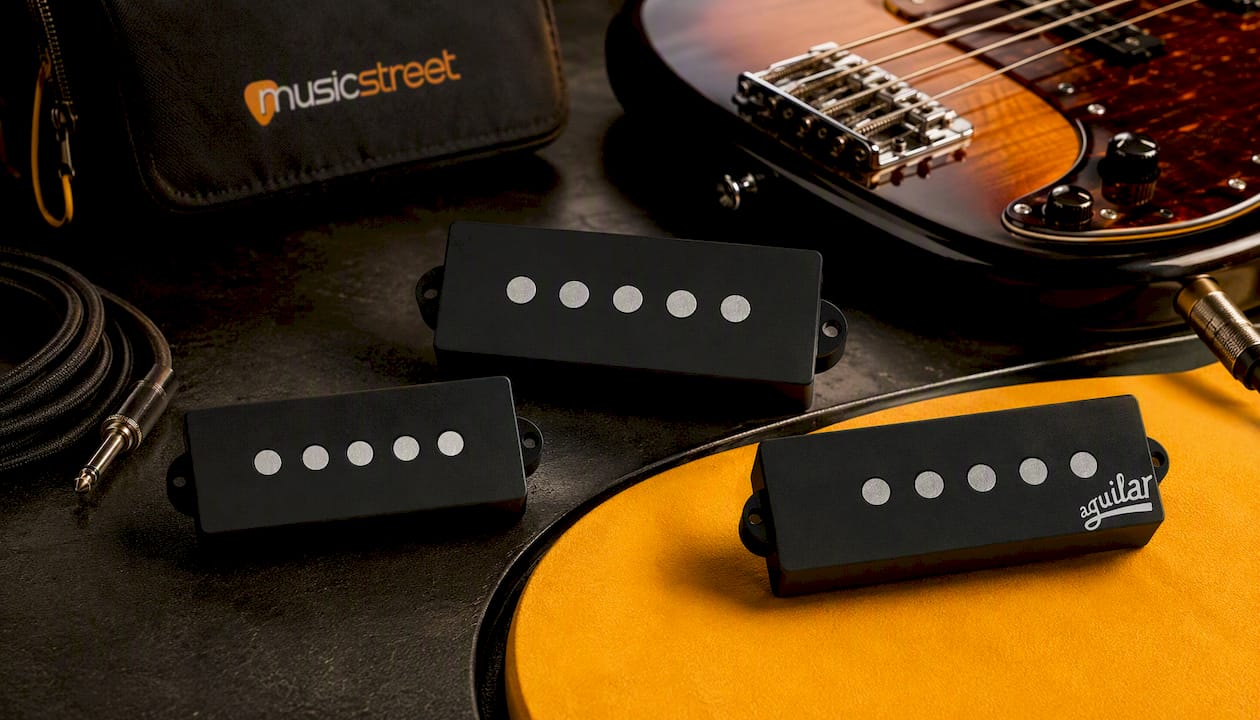
The Aguilar 60S Series 4 String Precision Bass Set suits players wanting a vintage-voiced, direct P-style replacement with warm alnico character, a straightforward drop-in for most standard P-routed basses. Five-string players get the same tonal profile with the Aguilar 60S Series 5 String Precision Bass Set, built to the wider pole spacing a 5-string needs rather than a squeezed 4-string design. If you play heavier styles and want more punch and midrange push from the same P-style footprint, the Aguilar Hot-P Series 4 String Precision Bass Set delivers hotter output without moving to a different pickup family entirely.
Order online or book an in-store trial at the Huntingdon workshop, where Musicstreet’s team can check your rout, confirm fit before you buy, and handle fitting as part of the purchase. Warranty cover and free UK delivery apply on qualifying orders, and returns are straightforward if a set doesn’t suit your bass once fitted. Get in touch to book a fitting slot or ask about compatibility with your instrument before you order.
Sources
- A guide to bass pickups · Yamaha hub
- Bass guitar pickups explained · Guitar World
- TalkBass forum thread — can I put guitar pickups on bass
- How do bass guitar pickups work? · InstrumentInsight
FAQ
What are the best pickups for a bass guitar?
There’s no single best option: P-style pickups give the fullest low end for rock, blues, and reggae, J-style pickups add bite and articulation for funk and session work, and MM-style humbuckers suit heavier, higher-output styles. Match the family to your genre first, then fine-tune with magnet type and active or passive electronics.
What is the three-fret rule on bass guitar?
This refers to a common fingerstyle technique guideline where players keep their fretting hand within a three-fret span to maintain efficient movement across the neck, rather than a pickup or wiring specification.
Can I use guitar pickups on a bass?
Technically yes, but pole alignment, string spacing, and frequency response differences often cause uneven output and a weaker low end, so bass-specific pickups almost always perform better in practice.
Do most bass players use a pick?
Most bassists play fingerstyle for a warmer, more dynamic tone, though pick playing is common in punk, metal, and some pop styles for a brighter, more percussive attack. Pickup choice can complement either technique. A P-style or humbucker often suits pick players well, since the higher output handles the sharper attack cleanly.





Share:
3 Bass Pickup Types and Which One Fits Your Gig or Studio
UK Buyer's Guide to Boutique & High-End Electric Guitars: Expert Advice for Selecting Premium Instruments