


Choosing the right guitar pick influences tone, control, and playing comfort without modifying the instrument.
Experimenting with different thicknesses, materials, and shapes helps players find tools suited to their style and genre.
Choosing the right guitar pick is the single most direct way to change your tone, control, and comfort without touching your instrument’s setup. A guitar pick, also called a plectrum, is the small rigid or semi-flexible tool you use to strike or strum the strings. Its thickness, material, and shape each shape the sound you produce and the way your hand feels after an hour of playing. Get the match right and everything clicks. Get it wrong and you fight your instrument on every chord. This guide walks you through every key variable so you can select picks with confidence, whatever your level or style.
How to choose a guitar pick: start with thickness
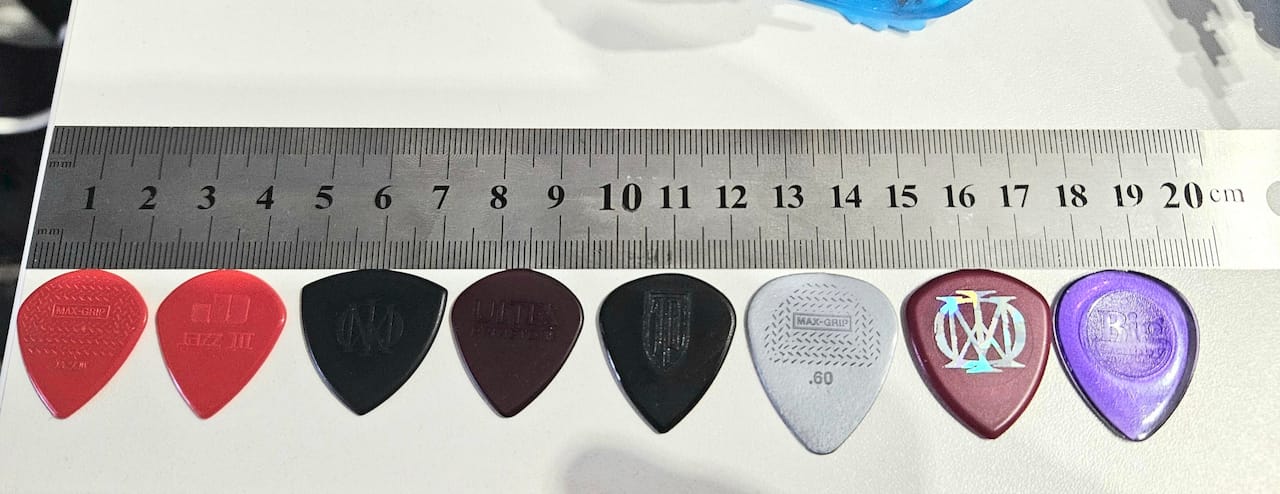
Thickness is the first variable to understand because it controls two things at once: flexibility and tone. Pick thickness categories are defined as thin (under 0.60mm), medium (0.60–0.80mm), and heavy (0.80mm and above). Each category behaves differently in your hand and against the strings.
Thin picks flex noticeably on every stroke. That flex produces a bright, snappy attack and a natural give that suits open chord strumming on acoustic guitar. Medium picks sit in the middle ground. They offer enough flexibility for strumming but enough rigidity for single note runs, which is why they suit beginners and players who switch between techniques. Heavy picks barely flex at all. They transfer more energy directly into the string, producing a fuller, warmer tone with greater control over dynamics and attack.
Experts recommend starting with a medium thickness pick of around 0.73mm as a versatile base. That single number gives beginners a concrete starting point rather than a vague suggestion to “try a few.”
| Thickness | Range | Flexibility | Tonal character | Best use |
|---|---|---|---|---|
| Thin | Under 0.60mm | High flex | Bright, snappy attack | Acoustic strumming, folk |
| Medium | 0.60–0.80mm | Moderate | Balanced, versatile | All-round playing, beginners |
| Heavy | 0.80mm and above | Low flex | Full, warm, controlled | Lead guitar, jazz, metal |
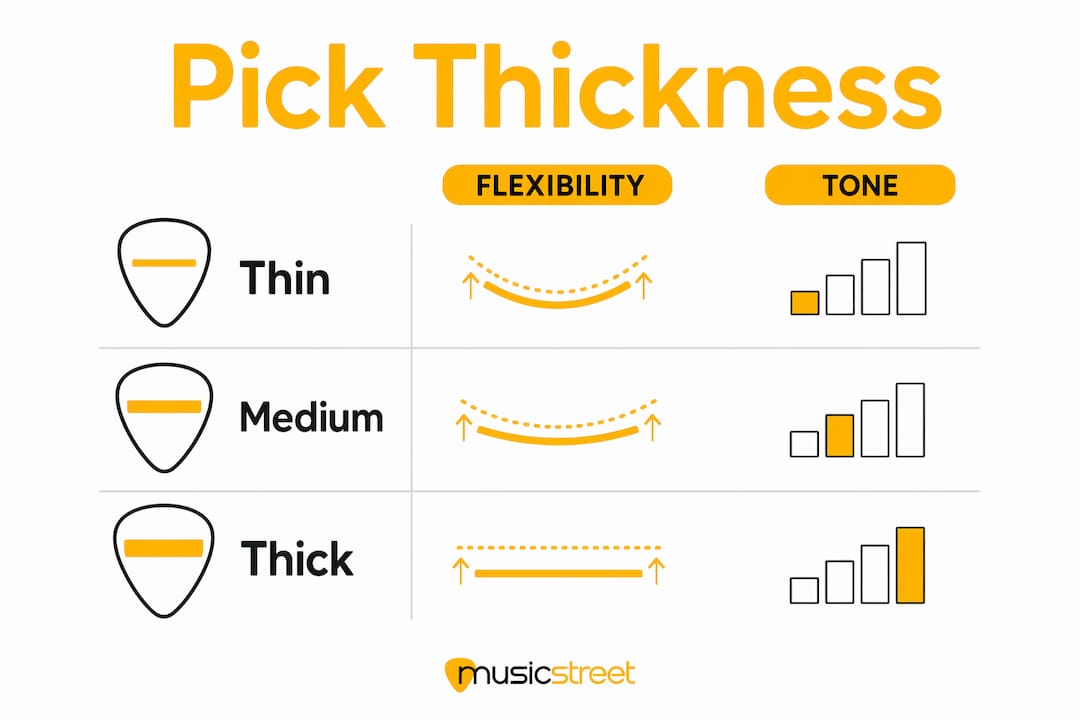
Pro Tip: Change one variable at a time when experimenting. Test three picks of different thicknesses but the same material and shape. That way you hear exactly what thickness does to your tone.
What materials are guitar picks made from?
Material shapes tonal warmth, flexibility, and pick longevity in ways that thickness alone cannot. It also affects grip, which matters more than most players expect during a long set.
The most common materials each bring a distinct character:
-
Celluloid: The classic choice. Celluloid produces a warm, rounded tone and feels familiar in the hand. It wears down faster than modern synthetics, but many players love the vintage feel and the way it ages.
-
Nylon: Softer and more flexible than celluloid at the same thickness. Nylon picks produce a slightly muted, smooth attack. They grip well even when your fingers are warm, making them a reliable choice for live performance.
-
Delrin (also sold under the Tortex brand name): One of the most durable synthetic materials available. Delrin picks hold their shape and texture for a long time, and the matte surface grips the fingers without feeling sticky. The tone sits between celluloid warmth and the brightness of harder plastics.
-
Ultem: A stiffer, denser material that produces a bright, articulate tone. Players who want clarity and speed often gravitate toward Ultem, particularly for lead work.
-
Carbon fibre: Extremely rigid and consistent. Carbon picks deliver a very bright, precise attack. They suit players who want maximum definition on every note.
Niche materials like bone, wood, metal, and stone change tonal response and feel drastically. A metal pick, for instance, produces a sharp, almost percussive attack that no plastic pick can replicate. These are creative choices rather than everyday tools, but they show how personal and expressive pick selection can become.
The electric guitar wood guide on Musicstreet covers how material choices across your whole setup interact with tone, which puts pick material in useful context.
How do pick shape and bevel affect control?
Shape determines how the pick sits in your hand and how much of the tip contacts the string. The four shapes you will encounter most often are standard, jazz, teardrop, and triangle.
The standard shape is the most widely available and suits most playing styles. Its rounded shoulders give you a comfortable grip, and the pointed tip offers reasonable precision. The jazz shape is smaller and more pointed. It gives you a shorter distance between your fingertips and the string, which improves control for fast single note lines. Many lead players and jazz guitarists prefer it precisely because it feels more connected to the string. The teardrop shape sits between standard and jazz in size. It is a popular choice for players who want precision without the compact feel of a jazz pick. The triangle shape is the largest of the common options. It offers three usable corners, which means you can rotate the pick as one edge wears down. Rhythm players and those with larger hands often find triangle picks more comfortable for extended sessions.
Pick bevel affects glide and tone in a way most players overlook. A deeper bevel on the pick’s edge lets the tip glide across the string more quickly, which aids fast playing and produces a brighter tone. A non-bevelled edge creates more friction and a mellower, rounder sound. Thicker picks tend to carry deeper bevels, which is one reason heavy picks suit lead players who need both speed and tonal clarity.
| Shape | Size | Control level | Best application |
|---|---|---|---|
| Standard | Medium | Moderate | All-round playing, strumming |
| Jazz | Small | High | Lead lines, fast picking |
| Teardrop | Medium-small | Good | Fingerstyle, melodic playing |
| Triangle | Large | Lower | Rhythm, extended sessions |
Pro Tip: Hold each pick shape for at least ten minutes of continuous playing before judging it. First impressions are unreliable. The shape that feels awkward at first often becomes the one you reach for every time.
What is the best practical approach to testing picks?
Picks cost as little as £0.50 each, and packs of 10–12 typically run between £4 and £10. That low price makes systematic experimentation genuinely affordable. Buy a mixed pack and treat it as a structured test rather than a lucky dip.
A clear testing method produces faster results than random switching:
-
Fix two variables, change one. Start with medium thickness picks in the same material. Play the same chord sequence and the same riff with each. Listen for differences in brightness and attack.
-
Switch material next. Keep thickness and shape constant. Compare how celluloid feels and sounds against nylon or Delrin. Notice grip differences as well as tonal ones.
-
Test shape last. Once you have a preferred thickness and material, try that combination in two or three shapes. Pay attention to how each shape affects your picking angle and hand fatigue.
-
Play in context. A pick that sounds great for slow chord work may feel wrong for fast alternate picking. Test each pick across the techniques you actually use.
-
Evaluate comfort after 20 minutes. Picks causing hand stiffness should prompt re-evaluation of both pick and technique. Discomfort is a signal, not something to push through.
Beginners often err by seeking a single “perfect” pick rather than viewing picks as flexible tools for different songs and contexts. The goal is to build a small collection of two or three picks that each serve a different purpose.
Which picks suit different music genres?
Genre gives you a useful starting point, but professional players consider technique and attack location more influential on tone than pick choice alone. Use genre recommendations as a first filter, then adjust based on what you hear and feel.
-
Acoustic folk and singer-songwriter: Thin to medium picks (0.46–0.73mm), nylon or celluloid, standard shape. The flexibility suits open chord strumming and produces a warm, natural tone that sits well in acoustic recordings.
-
Jazz: Heavy picks (1.0mm and above), Ultem or celluloid, jazz shape. Jazz players prioritise control and a warm, rounded attack on single note lines. The small jazz shape keeps the pick close to the string.
-
Rock: Medium to heavy picks (0.73–1.0mm), Delrin or nylon, standard or teardrop shape. Rock rhythm playing benefits from the durability of Delrin and the balanced tone it produces.
-
Metal: Heavy picks (1.0mm and above), Ultem or carbon fibre, jazz or teardrop shape. Fast alternate picking in metal demands rigidity and a sharp bevel for string clearance. A flimsy pick loses definition at high speed.
-
Lead guitar across genres: Heavy picks with a pointed tip and deep bevel. The combination of rigidity and glide gives lead players the speed and articulation they need for melodic runs.
The guitar genres guide on Musicstreet expands on how technique and style interact across ten different genres, which is worth reading alongside this pick selection framework. For players who want to understand how genre shapes playlist strategy beyond the instrument itself, the genre pitch guide at Playlist Pilot offers a useful perspective on how genre identity translates across different music contexts.
Key takeaways
The right guitar pick comes from matching thickness, material, and shape to your playing style, then refining through structured experimentation rather than guesswork.
| Point | Details |
|---|---|
| Thickness is the primary variable | Start with a medium pick (0.60–0.80mm) and adjust from there based on tone and comfort. |
| Material shapes tone and grip | Celluloid offers warmth, nylon softness, and Delrin durability. Match material to your playing context. |
| Shape affects control and ergonomics | Jazz shapes suit lead players; standard shapes suit all-round playing; triangle shapes suit rhythm guitarists. |
| Bevel depth changes speed and tone | Deeper bevels aid fast playing and produce brighter tone. Check bevel when selecting thicker picks. |
| Experimentation is affordable | Mixed packs cost £4–£10. Test one variable at a time to identify what each change actually does. |
What I have learned from years of pick experimentation
The advice I give most often is the advice I ignored longest: stop looking for the one pick and start building a small toolkit. For years I played everything with the same medium celluloid pick because it felt safe. When I finally forced myself to spend a month rotating through different thicknesses and materials, my tone changed more than it had from any amp or pedal purchase.
The shift that surprised me most was moving to a heavier pick for recording. Live, I reach for a medium nylon pick because the grip holds under sweaty conditions. In the studio, a heavy Ultem pick gives me the articulation and consistency I need for tight takes. Those are two different tools for two different contexts, and recognising that distinction changed how I think about the whole instrument setup.
My honest advice: prioritise comfort above everything else at first. A pick that causes tension in your hand after twenty minutes is costing you progress, regardless of how good it sounds. Technique and pick choice develop together. The pick you prefer at six months of playing will probably not be the one you reach for at two years. Stay open to that change and treat each new pick as information rather than a commitment.
— Music
Guitars worth pairing with your perfect pick

Finding the right pick matters most when you are playing an instrument that rewards the difference. Musicstreet stocks a wide range of guitars suited to every level and style, from acoustic options ideal for testing picks in a warm, natural setting to electric guitars built for lead work and genre exploration. The Yamaha FGX5 acoustic guitar is a strong choice for players who want to hear exactly what different picks do to an acoustic tone. It is responsive enough to make the contrast between a thin nylon pick and a heavy Delrin pick immediately obvious. Browse the full Musicstreet selection online or visit the store in Huntingdon, Cambridgeshire, to try picks and guitars together before you buy.
FAQ
What thickness pick should a beginner start with?
A medium pick of around 0.73mm is the best starting point for beginners. It offers enough flexibility for strumming and enough rigidity for single note playing, covering most techniques without limiting development.
How do I hold a guitar pick correctly?
Hold the pick between the tip of your index finger and the flat of your thumb, with roughly 5–10mm of the tip exposed. Grip firmly enough that the pick does not rotate, but not so tightly that your hand tenses up.
Does pick material really make a difference to tone?
Yes. Celluloid produces warmth, nylon a softer attack, and Delrin a balanced, durable tone. The difference is most audible on acoustic guitar and during single note lead playing where each string rings clearly.
What is the best pick shape for fast lead guitar?
The jazz shape is the most effective for fast lead playing. Its small size and pointed tip keep the pick close to the string, improving control and reducing the distance travelled on each stroke.
How often should I replace my guitar pick?
Replace a pick when the tip shows visible wear, rounding, or chipping. A worn tip changes your tone and attack in ways that are hard to compensate for with technique alone. At £0.50 per pick, replacement is never worth delaying.





Share:
Acoustic vs semi-acoustic guitar: key differences explained
Semi-acoustic vs acoustic guitar: key differences explained