


TL;DR:
- Locking tuners clamp strings internally, preventing slippage and improving tuning stability.
- They allow faster string changes and reduce tuning issues during aggressive playing or tremolo use.
- Suitable for all guitar types, most upgrades are straightforward and highly effective for stability.
If you have ever blamed yourself for persistent tuning problems, you are not alone. Many guitarists spend months adjusting their technique, swapping strings, or fiddling with the nut, never suspecting that the tuning pegs themselves are the weak link. The truth is, standard machine heads allow tiny amounts of string slippage around the post, and that slack is often the real culprit. Locking tuners solve this at the source by clamping the string firmly in place. In this guide, you will learn exactly how they work, which brands lead the market, whether they suit your guitar, and how to decide if upgrading is the right move for you.
Table of Contents
- What are locking tuners and how do they work?
- Benefits of locking tuners: why upgrade?
- Types of locking tuners: popular brands and features
- Should you upgrade? Deciding if locking tuners are right for your guitar
- What most guitarists miss about locking tuners
- Find the right locking tuners and accessories
- Frequently asked questions
Key Takeaways
| Point | Details |
|---|---|
| Locking tuners explained | Locking tuners clamp strings in place for improved tuning stability and easier string changes. |
| Major brands and options | Leading brands like Gotoh and Grover offer diverse styles suited to different guitars and preferences. |
| Benefits of upgrading | Upgrading to locking tuners can reduce tuning issues and make maintenance much faster for any guitarist. |
| Practical buying advice | Check compatibility with your guitar and consider preferred features before purchasing locking tuners. |
What are locking tuners and how do they work?
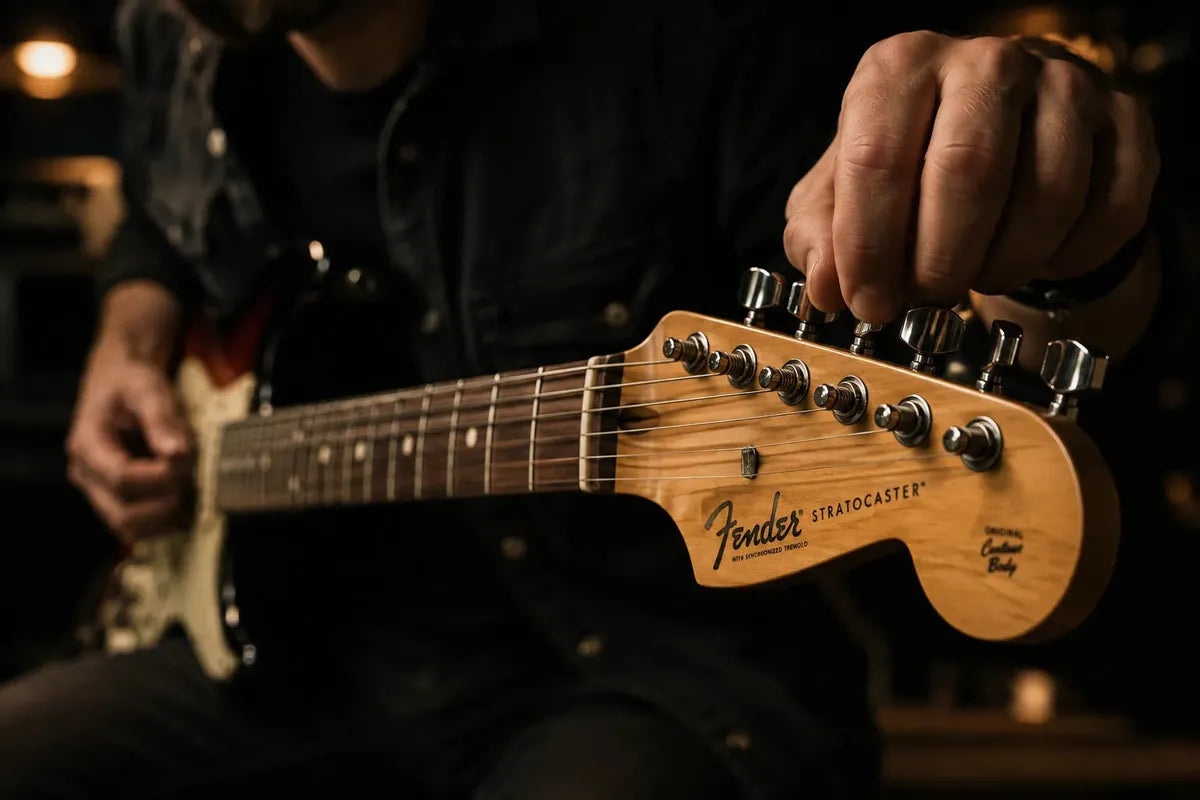
Locking tuners are machine heads that clamp the string inside the tuning post rather than relying on multiple winds to hold it in place. With a traditional tuner, you thread the string through a hole in the post and wind it several times to create enough friction. That winding is where slippage happens, particularly when you bend strings hard or use a tremolo arm. A locking tuner removes that variable entirely.
The mechanism is straightforward. When you thread the string through the post, a small internal clamp, activated by a thumb wheel or lever on the back of the headstock, grips the string tightly. You then tune to pitch with just a fraction of a turn rather than several full rotations. No excess string. No loose coils. No slipping.
The main components are the tuning peg itself, the post with its internal clamp, and the locking mechanism, which is typically a thumb wheel on the rear of the headstock or a small lever. Some designs use a rear-locking system where the clamp is tightened from behind, keeping the front of the headstock looking clean and traditional.
The practical difference becomes obvious the moment you change strings. With standard tuners, winding on a new set takes time and patience. With locking tuners, you thread, clamp, and tune up in a fraction of the time. String changes that once took twenty minutes can be done in under ten. That matters enormously at a gig when you snap a string mid-set.
For a broader look at how tuning hardware fits into the overall picture, the guitar hardware explained guide covers everything from bridges to nuts in plain language.
| Feature | Traditional tuners | Locking tuners |
|---|---|---|
| String winding required | 3 to 5 winds | Less than 1 full turn |
| Slippage risk | Moderate to high | Very low |
| String change speed | Slower | Up to 50% faster |
| Tuning stability | Standard | Significantly improved |
| Typical mechanism | Open post | Internal clamp |
Key characteristics of locking tuners at a glance:
- Internal clamp holds the string without relying on friction from multiple winds
- Thumb wheel or lever activates the locking mechanism quickly and easily
- Minimal string winding means less mass on the post and more consistent tension
- Compatible with most headstocks, though always check before purchasing
Gotoh MG-T and Grover Roto-Grip are among the most respected locking tuner designs currently available, trusted by players and guitar manufacturers alike.
Benefits of locking tuners: why upgrade?
Understanding how locking tuners function leads naturally to the obvious question: why should you consider upgrading? The short answer is that they address the root cause of most tuning instability rather than just managing the symptoms.
The most immediate benefit is tuning stability. When you bend a string up a tone or two, or use a tremolo arm to drop pitch dramatically, the string needs to return to exactly the same tension it had before. With traditional tuners, tiny slippages in the winding mean it rarely does. Locking tuners eliminate that movement, so the string returns to pitch reliably every time.
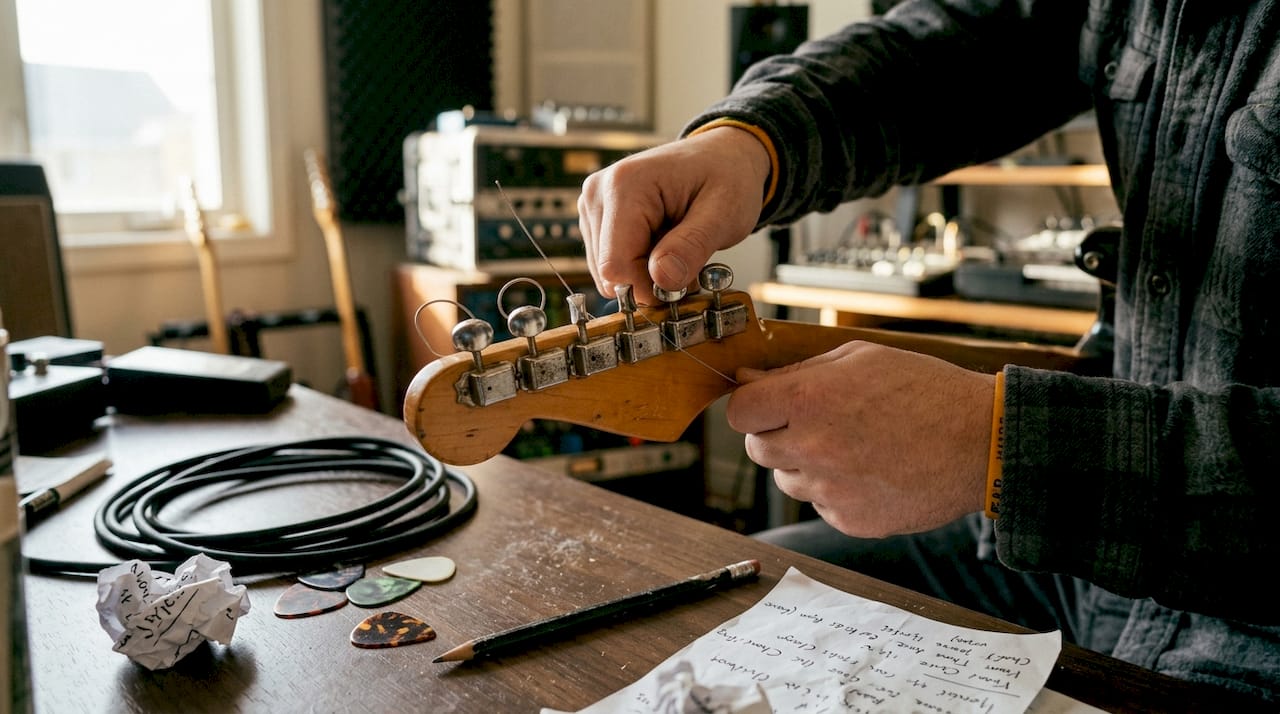
For gigging guitarists, fewer tuning adjustments between songs makes a real difference to your confidence on stage. You spend less time with your ear to the guitar and more time connecting with the audience. That alone is worth the upgrade for many players.
Here are the core benefits worth knowing:
- Improved tuning stability under bending, vibrato, and tremolo use
- Faster string changes, saving up to 50% of the time compared to standard tuners
- Reduced string slippage during aggressive playing
- Less breakage risk at the post, as there are fewer sharp bends in the string
- Cleaner headstock appearance with minimal excess string
One persistent myth is that locking tuners are only for metal players or professionals. That is simply not true. A folk guitarist who plays open-air gigs in variable temperatures benefits just as much as a shredder using a Floyd Rose. Temperature and humidity changes affect string tension, and locking tuners help maintain stability regardless of genre or playing style.
As major guitar brands confirm, locking tuners are trusted across the industry for both stability and the practical advantage of fast string changes.
Pro Tip: Pair locking tuners with a quality set of strings suited to your playing style. The tuners hold the string more securely, but the string itself still needs to be appropriate for your gauge preference and tuning. Check out must-have guitar accessories for a full rundown of upgrades that work well together, and browse best guitar accessories for current recommendations.
Types of locking tuners: popular brands and features
Now that the benefits are clear, the next step is understanding which brands and models might be right for your needs. The market offers several excellent options, each with slightly different designs, gear ratios, and compatibility profiles.
Gotoh MG-T is widely regarded as the benchmark. Gotoh’s engineering is precise, the build quality is exceptional, and the thumb-wheel locking system is smooth and reliable. They are available in multiple finishes and post sizes to suit a wide range of headstocks.
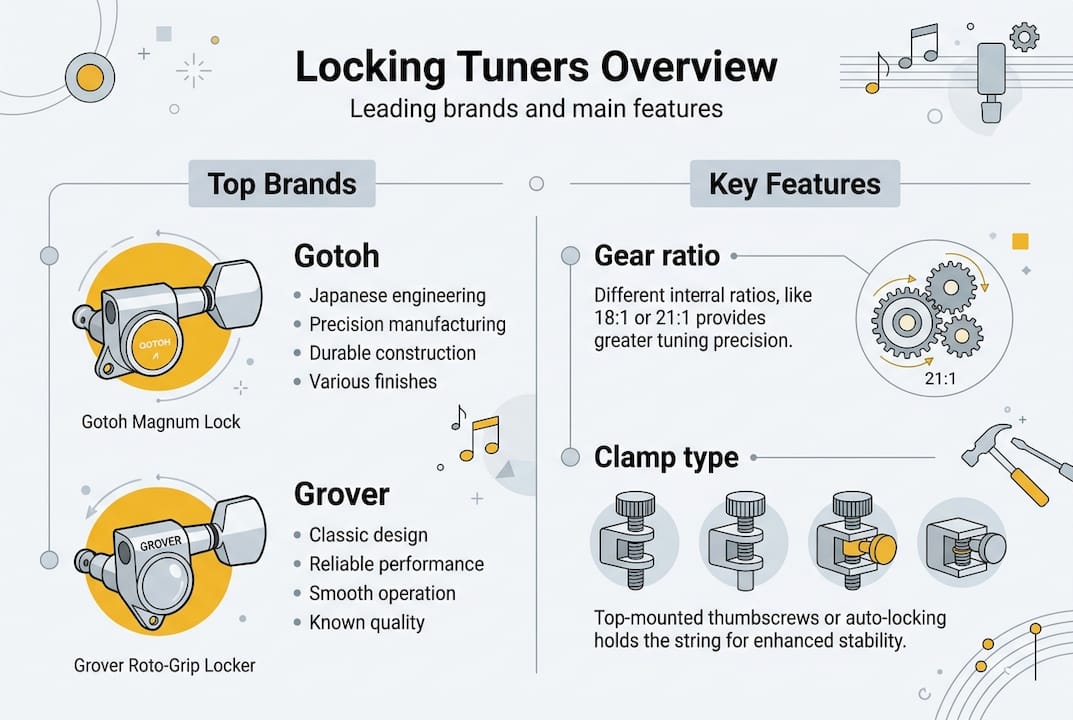
Grover Roto-Grip uses a similar thumb-wheel mechanism and has a strong following among players who want a straightforward drop-in replacement for standard Grover tuners. The fit is often direct on guitars that already use Grover hardware.
Graph Tech Ratio takes a different approach entirely. Instead of a single gear ratio across all six tuners, each tuner has a ratio calibrated to the string it serves, making fine-tuning feel more consistent across the whole neck. Many players find this genuinely useful once they experience it.
Sperzel pioneered the locking tuner concept and uses a side-mounted lever rather than a thumb wheel. The lever system is fast and intuitive once you are used to it.
Hipshot offers locking tuners with a strong reputation for quality and a range of configurations, including options for both six-in-line and three-a-side headstocks.
Leading brands including Gotoh, Grover, Graph Tech, Sperzel, and Hipshot each bring distinct approaches to gear ratios and clamping mechanisms, giving you genuine choice depending on your priorities.
| Brand | Gear ratio | Clamp type | Best suited for |
|---|---|---|---|
| Gotoh MG-T | 16:1 | Thumb wheel | Most electric guitars |
| Grover Roto-Grip | 18:1 | Thumb wheel | Grover-fitted guitars |
| Graph Tech Ratio | Variable | Thumb wheel | Players wanting even feel |
| Sperzel | 15:1 | Side lever | Quick-change preference |
| Hipshot | 18:1 | Rear locking | Various headstock types |
Gear ratio refers to how many turns of the tuning peg equal one full rotation of the post. A higher ratio, such as 18:1, gives you finer control over pitch adjustment. A lower ratio, such as 15:1, is slightly faster to wind but less precise. For most players, anything between 15:1 and 18:1 is perfectly adequate.
Compatibility is the key practical concern. Most locking tuners are designed to fit standard headstock hole sizes, but always measure your existing holes before ordering. If you are already using a tremolo system, pairing locking tuners with it amplifies the stability benefits considerably. The locking tremolos explained guide is worth reading if you use a floating bridge.
Should you upgrade? Deciding if locking tuners are right for your guitar
With an overview of available options, the last big question is whether upgrading makes sense for you and your instrument. The honest answer is that most guitarists who try locking tuners never go back. But there are situations where the upgrade is more or less pressing.
Ask yourself these questions before deciding:
- Do you experience tuning drift during or after heavy string bending?
- Do you use a tremolo arm regularly?
- Do you change strings frequently or need fast changes at gigs?
- Do you play in environments where temperature changes are common?
- Have you already ruled out the nut and bridge as sources of instability?
If you answered yes to two or more of those, locking tuners are very likely to make a noticeable difference. If your guitar stays in tune reliably and you rarely bend strings aggressively, the upgrade is still worthwhile but less urgent.
As locking tuners suit both professionals and hobbyists across a wide range of guitar types, there is no reason to think they are only for serious players. A beginner who gigs occasionally will benefit just as much as a touring professional.
The potential downsides are minor. On a vintage-style guitar, locking tuners can look slightly out of place aesthetically, though many brands offer aged or gold finishes to match vintage hardware. There is also a small additional cost, typically between £30 and £80 for a quality set, which is modest compared to other upgrades.
Always check whether your chosen locking tuners are a direct fit for your headstock or whether minor modifications, such as enlarging the tuner holes, are needed. A few minutes of research saves a frustrating afternoon at the workbench.
Pro Tip: If you are unsure about compatibility, take your guitar to a trusted shop before ordering. The team at choosing guitar accessories can help you match the right hardware to your specific instrument.
What most guitarists miss about locking tuners
Here is the perspective that most upgrade guides skip over. Guitarists often spend significant money on new pickups or a premium bridge before considering locking tuners, yet the tuners are frequently the simplest and most cost-effective fix available. A set of quality locking tuners costs a fraction of a pickup swap and can be installed in under an hour with a screwdriver and a spanner.
The fear that locking tuners are complicated or overkill is genuinely misplaced. The mechanism is simple, the installation is usually straightforward, and the results are immediate. The first time you play through a full set without reaching for the tuning pegs, something shifts in how you relate to your instrument. You stop managing the guitar and start playing it.
There is also a common misconception that locking tuners somehow affect tone. In practice, the difference is negligible for the vast majority of players. What you gain in reliability and confidence far outweighs any theoretical tonal consideration. Explore guitar accessories every player needs to see where locking tuners sit alongside other genuinely impactful upgrades.
Find the right locking tuners and accessories
If this guide has convinced you that locking tuners deserve a place on your guitar, the next step is finding the right set for your instrument and budget.

At MusicStreet, we stock a wide range of locking tuners and accessories from leading brands, and our team is on hand to help you identify the best fit for your specific guitar. Whether you are shopping online or visiting our store in Huntingdon, Cambridgeshire, you will find expert advice alongside quality hardware. Our guitar shop guide covers everything you need to know about making the most of your visit or online order, including setup support and post-sale assistance.
Frequently asked questions
Are locking tuners hard to install?
Most locking tuners install easily in under 30 minutes using basic tools, though some guitars may require minor headstock modifications such as enlarging the tuner holes.
Will locking tuners fit any guitar?
Many locking tuners are designed for standard headstocks, but compatibility varies by model, so always check measurements or ask a shop before ordering.
Do locking tuners change the sound of my guitar?
Locking tuners primarily improve tuning stability and speed up string changes, with negligible impact on tone for the vast majority of players.
Are locking tuners only for electric guitars?
No. Companies like Gotoh and Grover produce locking tuners designed for both electric and acoustic guitars, so players of all instruments can benefit.





Share:
Locking tremolos explained: stability, setup and why they matter
Guitar Tuners: Types, How They Work, and the Best Ones to Buy in the UK