


The main Stratocaster families break down into five tiers: Squier (budget, beginner-friendly), Player (affordable and versatile), Vintera and Classic Player (era-specific vintage voicing), American Performer/Professional/Ultra/Original (USA-built, professional-grade), and Custom Shop or signature models (bespoke and collector-grade). Each one solves a different problem, and knowing which problem you have saves you from either overspending or outgrowing your guitar within a year.
Here’s the rule-of-thumb version. If you’re starting out or working to a tight budget, Squier or Player covers you. If you want a specific decade’s tone without vintage prices, Vintera or Classic Player nails that. If you gig regularly and need modern reliability with classic looks, American Performer or Professional is the sweet spot. If you’re recording professionally or chasing the last word in tuning stability and tonal range, American Ultra or a Custom Shop build earns its price tag. Collectors chase original-era instruments or numbered Custom Shop runs, where provenance matters as much as tone.
Musicstreet currently stocks three Stratocasters that map neatly onto this spread:
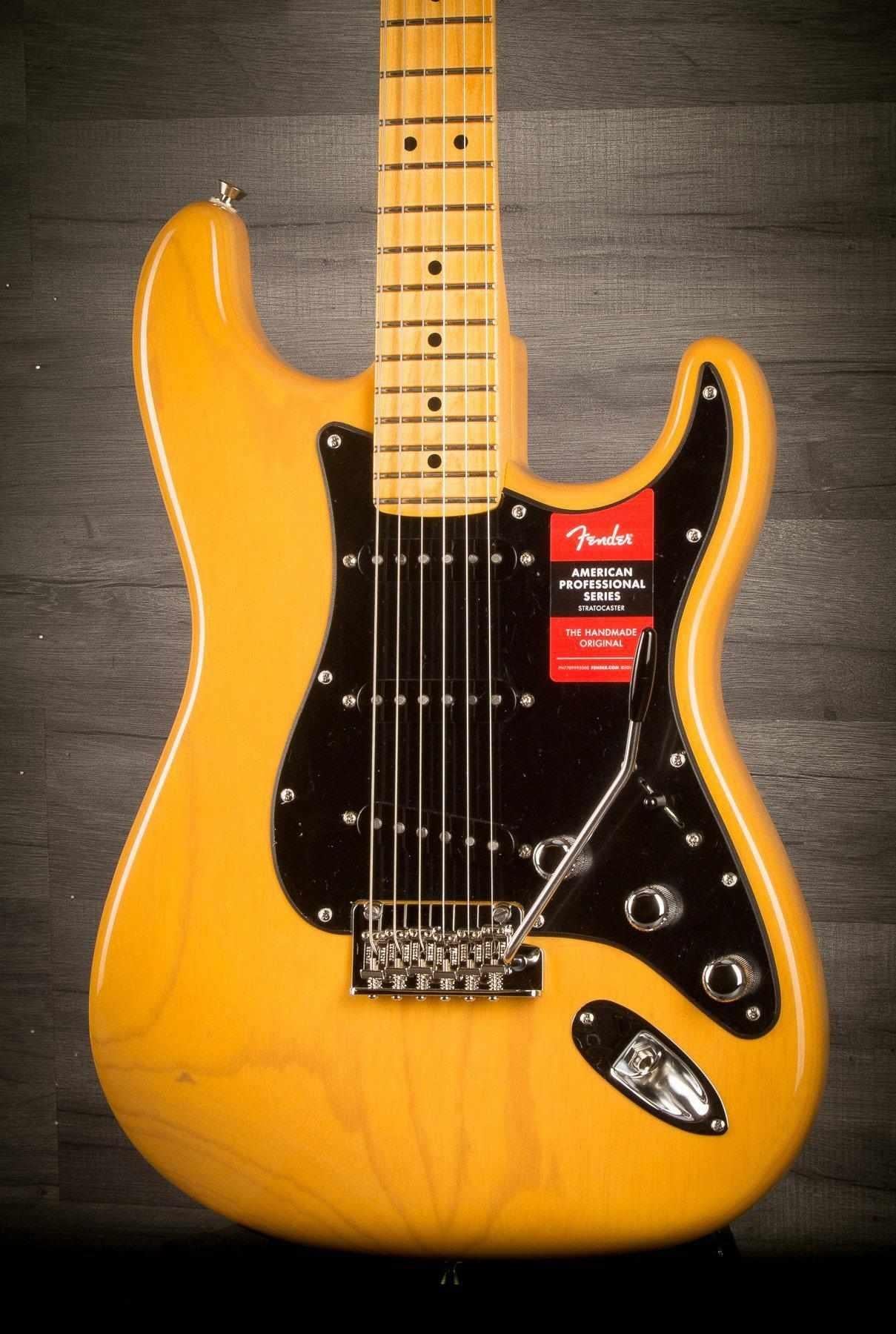
- The Fender American Pro Ash Strat Butterscotch Blonde for players who want USA build quality and professional versatility
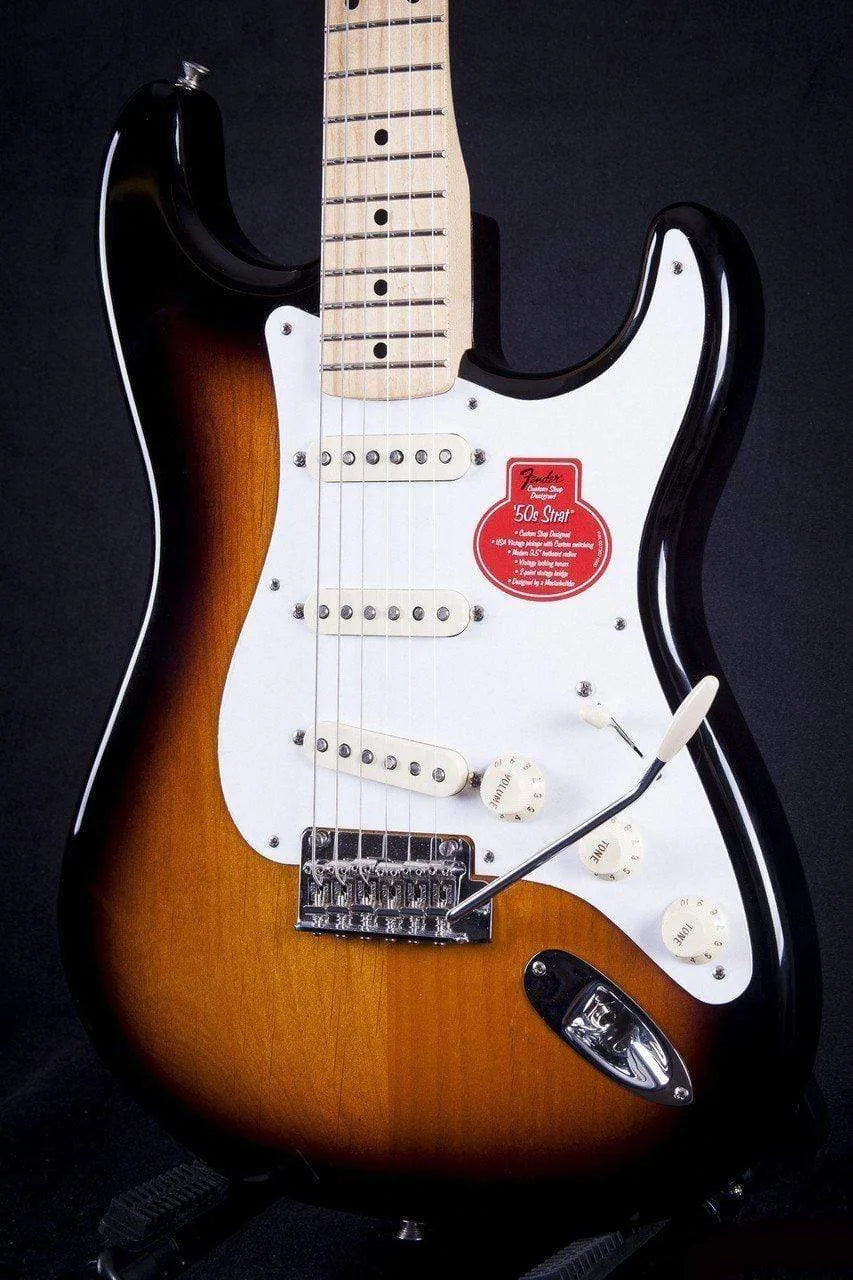
- The Fender Classic Player 50’S Stratocaster in two-tone sunburst for anyone chasing 1950s tone without buying a genuine vintage instrument
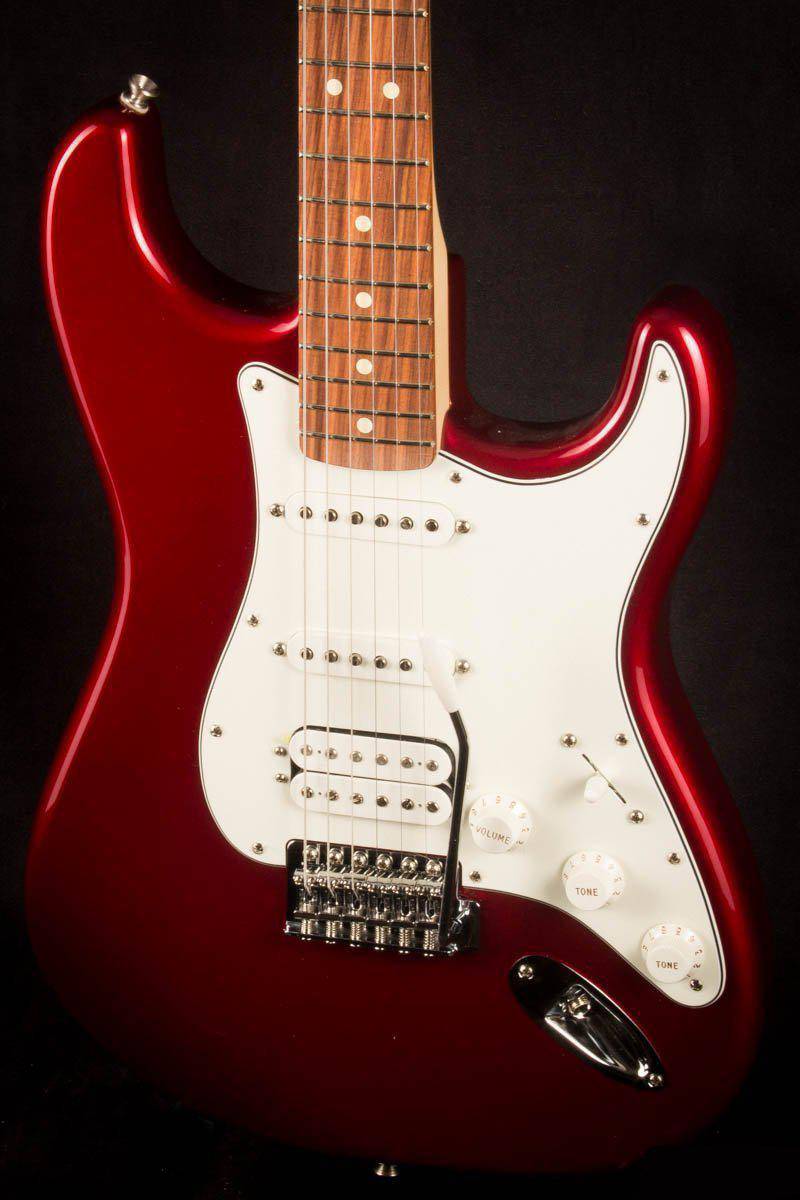
- The Fender Standard Strat HSS in candy apple red, pau ferro fretboard, for players who want humbucker punch on a sensible budget
The rest of this guide unpacks why those three sit where they do. It also explains how to test any Stratocaster before you commit.
Key Takeaways
Choosing the right Stratocaster comes down to matching pickup voicing and neck profile to your playing style, not simply buying the highest series your budget allows.
| Point | Details |
|---|---|
| Series map to player type | Squier and Player suit beginners and budget buyers; Vintera and Classic Player suit vintage-tone seekers; American series suits gigging and studio players. |
| Pickups define tone first | Vintage single-coils sound glassy and thin; Tex-Mex and Noiseless options add output or hum cancellation without major treble loss. |
| Neck and fret spec change feel | Vintage C profiles with narrow frets favour chording; modern C/D profiles with medium-jumbo frets favour bending and lead work. |
| Setup matters as much as spec | Action, intonation, and pickup-height adjustments can make a mid-tier Strat outplay a poorly set up premium one. |
| Musicstreet stocks all three tiers | The American Pro Ash, Classic Player 50’s, and Standard HSS models each represent a distinct series worth trying in-store. |
Table of Contents
- The types of Fender Stratocasters: a series-by-series breakdown
- How pickups, necks, frets and bridges change what you actually hear and feel
- A checklist for choosing your Stratocaster
- Why buying from Musicstreet changes the outcome
- How the Stratocaster got here: a short history
- Upgrades and mods that change which model makes sense
- What actually separates a good choice from a great one
- Try these three Stratocasters at Musicstreet before you decide
- Sources
- FAQ
The types of Fender Stratocasters: a series-by-series breakdown
Fender currently builds well over 100 different Stratocaster variants across its range, split by factory origin, pickup configuration and neck spec. That sounds overwhelming until you realise almost all of them fall into six clear buckets. Work out which bucket fits your playing, and the shortlist gets short fast.
1. Squier Stratocasters
Squier is Fender’s own budget brand, built mainly in Indonesia and China, and it’s where most players make first contact with a Strat shape. The Bullet and Affinity lines use basic alnico or ceramic single-coil pickups, bolt-on necks with a fairly flat C profile, and simple synchronised tremolo bridges that won’t win prizes for tuning stability but do the job for a beginner learning to use one at all. Best for: first-time buyers, students, and anyone who wants to confirm they’ll stick with the instrument before spending more.
2. Player Series
The Player Series is built in Mexico and represents the point where Fender specs start to matter. You get Alnico 5 single-coil pickups (or an HSS humbucker option), a modern C-shaped neck profile, 22 medium-jumbo frets, and a 9.5-inch fretboard radius that makes bending easier than the flatter vintage radius. Fender’s own positioning of this line, alongside Vintera and the American-series instruments, treats Player as the entry point into “real” Fender specification rather than a beginner compromise. Best for: intermediate players who’ve outgrown a beginner pack and want proper Fender tone without American-series pricing. The Fender Standard Strat HSS in candy apple red sits right in this territory, giving you a humbucker in the bridge for rock tones alongside the neck and middle single-coils for cleaner work.
3. Vintera and Classic Player Series
Vintera (and its predecessor line, Classic Player) exists to recreate a specific decade rather than a specific price point. These are Mexican-built guitars with period-correct pickup wind, neck shapes, and often vintage-style tuners and bridge saddles, aimed at players who want a '50s or '60s voice without paying for an actual '50s or '60s instrument. The Classic Player 50’s Stratocaster in two-tone sunburst is the clearest example on Musicstreet’s shelves: a fatter '50s-style neck, staggered vintage-style single-coils, and a warmer, glassier top-end than you’d get from a modern Player. It’s worth knowing that “vintage-styled” and “vintage-correct” aren’t the same claim. Genuine original-era Stratocasters get sorted into specification eras by collectors, from the 1954 to 1958 maple-board originals through the pre-CBS slab-board years to the later three-bolt necks, and none of that history is reproduced component-for-component in a modern reissue. What you’re buying with Vintera or Classic Player is the tone and feel, not the metallurgy.
4. American Performer, Professional, Ultra and Original
This is where “Made in USA” starts meaning something specific rather than just a stamp on the headstock. American Performer sits at the entry point of the USA range, with Yosemite single-coil pickups and a slightly narrower price gap to Player than you’d expect. American Professional (now largely superseded by newer naming in some markets) added Fender’s V-Mod pickups and a deep C neck profile with rolled fingerboard edges, a detail that makes a genuine difference under the fretting hand during long sessions. American Ultra pushes further with Noiseless pickups that kill 60-cycle hum without the treble loss older noiseless designs suffered, a modern D neck profile, and locking tuners for faster string changes and better tuning stability at the top of the neck. American Original, by contrast, deliberately turns the clock back with period-correct pickups and bridge design for players chasing a specific vintage voice built to current manufacturing tolerances. The Fender American Pro Ash Strat Butterscotch Blonde on Musicstreet’s shelves belongs to this tier: an ash body (lighter and brighter-sounding than the more common alder), professional-grade pickups, and hardware built to survive nightly gigging. Best for: working musicians, session players, and anyone recording who needs an instrument that won’t drift out of tune mid-take.
5. Deluxe and Noventa Series
Fender’s Deluxe line, built in Mexico, sits between Player and American Performer, often adding features you’d normally only find on USA instruments, locking tuners, push-pull coil splits, or S-1 switching, at a mid-range price. Noventa is a narrower, more specialised line built around a single bridge humbucker or a stripped-back two-pickup layout aimed at players chasing a rawer, more vintage-punk aesthetic and tone. Neither line is essential reading for most buyers, but they’re worth knowing about if a standard Player or American Performer spec sheet doesn’t quite match what you want.
6. Signature and Custom Shop models
Above the standard production lines sit two categories that operate on different rules entirely. Signature models are built to a specific artist’s spec, often with unusual pickup combinations, neck shapes borrowed from a player’s personal guitar, or hardware substitutions you won’t find anywhere else in the catalogue. Custom Shop instruments are the top of Fender’s tree: hand-selected timber, choice of neck carve, relic ageing options, and prices that reflect genuinely bespoke construction rather than a factory run. Best for: collectors and players who already know exactly what they want and are prepared to pay for it. Most players never need to go here, and that’s fine.
Pro Tip: Don’t assume a higher series number always means “better for you.” American Ultra’s D-profile neck and locking tuners are genuinely superior for fast lead work, but a Classic Player’s fatter neck and vintage tremolo feel better under a rhythm player’s hand. Match the spec to your style, not the price tag.
How pickups, necks, frets and bridges change what you actually hear and feel
Spec sheets read the same regardless of price until you actually plug in and play. The differences between a £400 Player and a £1,400 American Professional aren’t marketing fluff. They’re audible within thirty seconds if you know what to listen for.
Pickups do more to define a Stratocaster’s character than any other single component. Vintage-style single-coils (the type found in Classic Player and Vintera models) sound thinner and glassier on their own, but they respond beautifully to a valve amp pushed into light overdrive, which is exactly why so many blues and classic-rock players won’t touch anything else. Tex-Mex and Texas Special pickups, common in mid-tier American and some Player variants, wind hotter for more output and a slightly fatter midrange, useful if your amp is clean-headroom-heavy and you want more push without adding a pedal. Noiseless pickups, standard on American Ultra, cancel the 60-cycle hum that plagues single-coils under fluorescent lighting or near computer monitors, and modern designs like Fender’s do this with far less of the treble loss that made earlier noiseless pickups sound flat. HSS and HSH configurations swap the bridge single-coil (and sometimes the neck too) for a humbucker, giving you the classic Strat quack in the middle position alongside genuine rock and metal gain-handling at the bridge. The Standard Strat HSS in candy apple red is built exactly for players who want both worlds without switching guitars.
Neck profile, fret size and fingerboard radius decide how the guitar feels under your hand far more than they decide how it sounds. A vintage-style '50s C neck, chunkier front to back, suits players with big hands or a preference for a firmer grip and tends to pair with a flatter 7.25-inch radius that favours chord work over aggressive bending. Modern C and D profiles, standard across Player and American-series necks, are slimmer and faster, paired with a 9.5-inch or 12-inch radius that flattens out toward the edges, making high-position bends and legato runs noticeably easier. Fret size matters too: vintage-tall, narrow frets (common on Classic Player models) give a woody, precise feel that favours clean playing, while medium-jumbo frets on Player and American instruments make string bending and vibrato easier at the cost of a slightly less precise fretting feel for very fast legato.
Bridge and tremolo hardware is the difference most players underestimate until they’ve gigged with a bad one. A traditional six-screw vintage-style synchronised tremolo (Classic Player, some Squier models) gives a smoother, more musical vibrato feel but tends to drift out of tune faster under heavy use unless it’s set up correctly. The two-point tremolo used across most Player and American-series guitars improves tuning return because it pivots on just two points rather than six, and when it’s paired with locking tuners, as on American Ultra, string changes and tuning stability improve dramatically. Hardtail (fixed bridge) Stratocasters, less common but available in some Player and American configurations, trade the vibrato entirely for maximum sustain and rock-solid tuning, a fair swap for players who never use the bar anyway.
- Vintage single-coil: glassy, thinner, best through overdriven valve amps
- Tex-Mex/Texas Special: hotter output, fatter midrange
- Noiseless: hum-free, minimal treble loss on modern designs
- HSS/HSH: single-coil versatility plus humbucker punch
- Two-point tremolo with locking tuners: best tuning stability of the tremolo options
- Hardtail: maximum sustain, zero vibrato flexibility
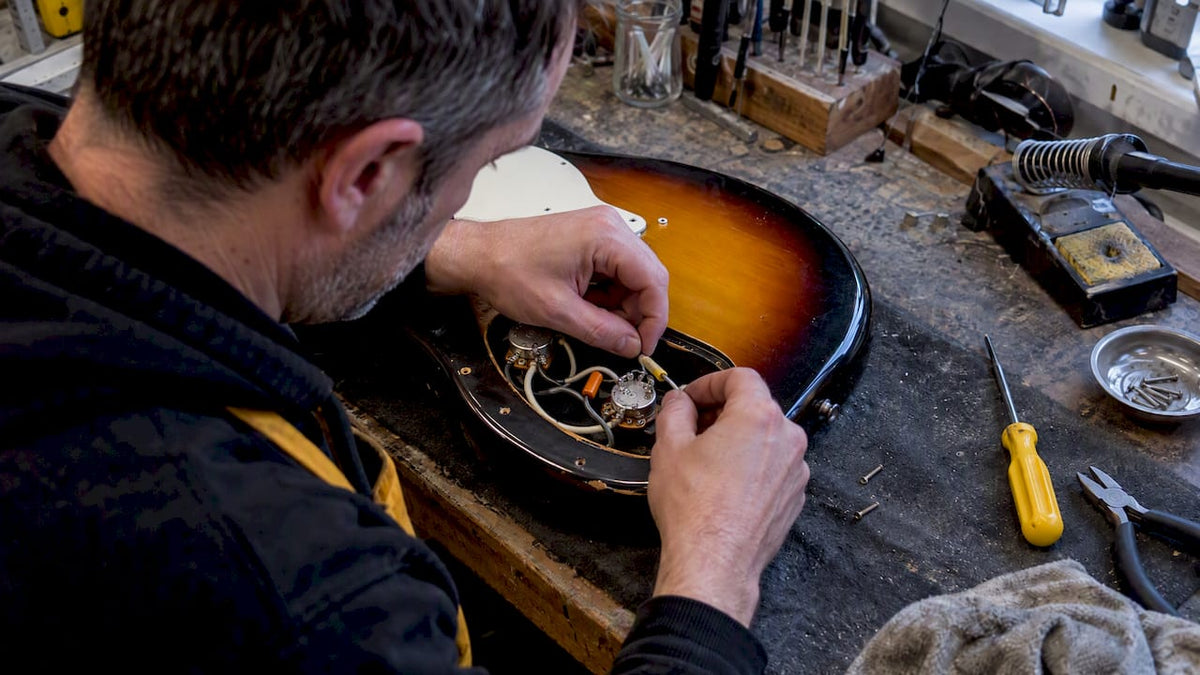
One detail worth knowing before you buy: standard SSS Strats wire two tone controls to the neck and middle pickups but leave the bridge pickup on volume only, a legacy of the original 1954 circuit. Many technicians now rewire the bridge pickup onto a tone control during a routine setup, which tames the bridge pickup’s edge and makes it far more usable for lead work. It’s a five-minute job that changes how a whole pickup position sounds, and it’s the kind of upgrade worth discussing before you buy rather than after.
A checklist for choosing your Stratocaster
Work through this in order rather than falling in love with a colour first. Colour is the easiest thing to get wrong your way into a guitar that doesn’t actually suit how you play.
- Set your real budget, including a setup or accessories allowance, not just the sticker price. A cheaper guitar with a professional setup often outplays a pricier one straight out of the box.
- Decide your pickup priority. If you play blues, funk, or classic rock, single-coils (vintage or modern voiced) should lead your search. If you play harder rock or need higher gain tolerance, look at HSS or HSH models first.
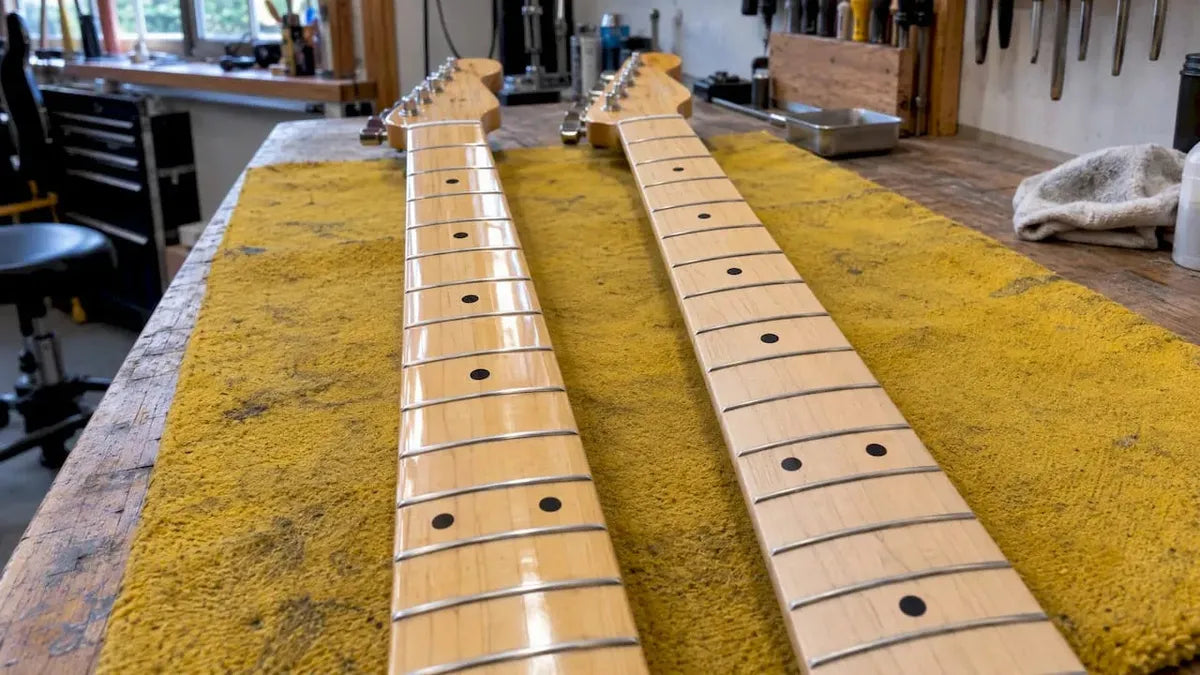
- Try at least two neck profiles side by side. A vintage C and a modern D feel genuinely different within the first thirty seconds, and most players have a strong, immediate preference once they’ve felt both.
- Test tremolo against hardtail if you’re unsure. If you rarely or never use a vibrato arm, a hardtail model removes one variable and typically improves tuning stability.
- Check the hardware tier, not just the badge. Locking tuners, staggered saddles, and two-point tremolos all affect day-to-day playability more than most players expect.
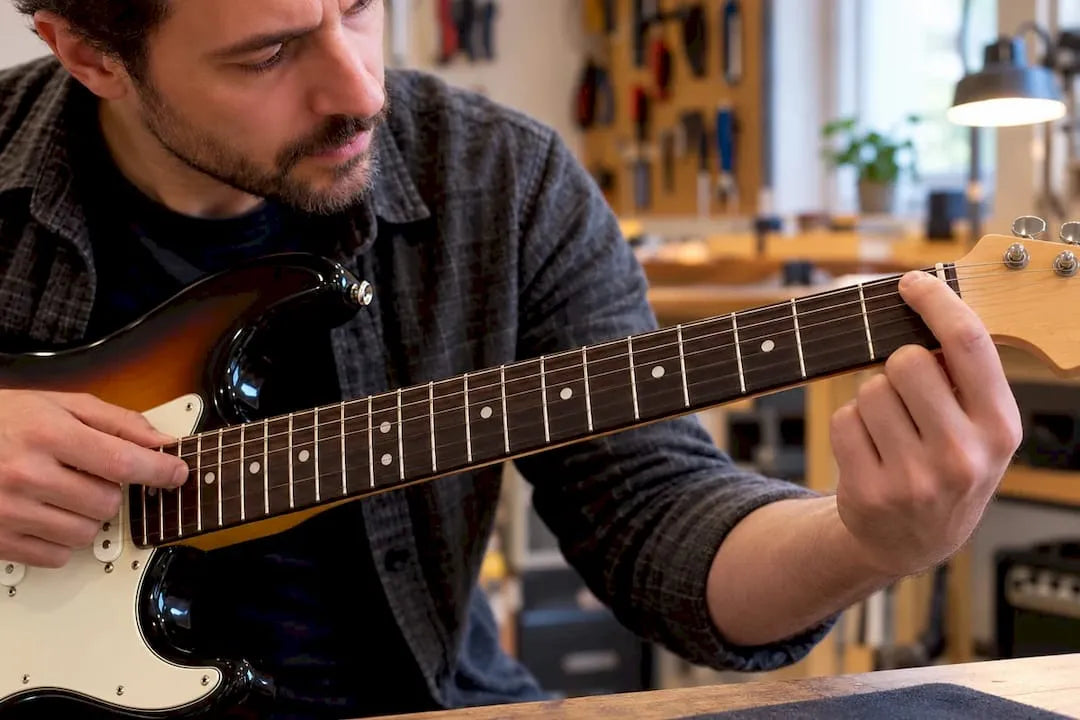
In the shop, run the same routine every time: play open chords across all pickup positions, run a single-note line up the neck to feel the fret edges and bending ease, check that the guitar holds intonation cleanly at the twelfth fret, and give the tremolo arm three or four firm dips to see how quickly it returns to pitch.
Three red flags are worth knowing before you buy secondhand or from an unfamiliar listing. First, mismatched or vague spec claims, a “USA neck” on a guitar with a serial number that doesn’t support it is a common misrepresentation worth checking independently. Second, worn frets, look for divots under the first three frets particularly, since that’s where most buzzing and intonation problems start. Third, poor setup masquerading as a fault, high action or fretting-out on bends is very often a setup issue rather than a guitar problem, and it’s worth asking whether a proper setup has ever been done before writing off an otherwise decent instrument.
Pro Tip: If a listing calls a guitar “vintage-correct” without naming a specific reissue series like American Original or Vintera, ask exactly which components are period-spec. Genuine vintage-correct claims usually name the year and series precisely, because that’s what justifies the price.
Why buying from Musicstreet changes the outcome
A Stratocaster that looks right on a spec sheet can still play badly out of the box, and that’s the gap a physical inspection closes. Musicstreet operates a real shop in Huntingdon, Cambridgeshire, alongside its online catalogue, which means every guitar that leaves the building has been physically checked rather than shipped straight from a warehouse pallet.
That inspection typically covers three adjustments that change how a Stratocaster feels within minutes:
- Action height, set low enough for comfortable playing without introducing fret buzz on bends
- Intonation, checked at the twelfth fret across all six strings so chords stay in tune up the neck, not just open
- Pickup height, balanced so no single position overwhelms the others in volume or tone
Get any one of those wrong and a genuinely good guitar plays like a mediocre one. Setup work like this is standard practice at a reputable retailer, and it’s the single biggest reason two identical models from different sellers can feel worlds apart.
A guitar with a proper setup and a slightly lower-spec pickup will almost always outplay a top-tier model left in factory condition. The setup is the part nobody sees on a spec sheet, and it’s the part that matters most in your hands.
Musicstreet backs every sale with insurance-supported warranty cover, free UK delivery over a set order threshold, and ongoing support if something needs adjusting after the first few weeks of playing in.
How the Stratocaster got here: a short history
Leo Fender’s team launched the original Stratocaster in 1954, and the core design has barely changed since: three single-coil pickups, a bolt-on neck, and a synchronised tremolo bridge that was genuinely radical for its time. Early 1950s models used maple fretboards and a simple ash or alder body; by 1959, Fender moved to rosewood fretboards on most instruments, a change collectors still use as a dating marker today.
The mid-1960s brought Fender’s sale to CBS, and 1965 to 1967 “transition” guitars sit in an odd space, still built to pre-CBS quality standards but under new ownership, before cost-cutting became more visible from 1968 onward with larger headstocks and different finishes. The three-bolt neck plate and bullet truss rod, introduced around 1971, are widely regarded by players and collectors as a low point for build consistency, and Fender reverted to the original four-bolt design by the early 1980s.
Since then, the Stratocaster’s story has been one of parallel tracks: continual reissues chasing specific vintage years (the lineage that became today’s American Original and Vintera series), alongside genuine forward development in pickup technology, neck profiles and hardware that produced the modern American Ultra and Professional lines. Both tracks are still running, which is exactly why the current range spans from museum-piece recreations to guitars with tech nobody had access to in 1954.
Upgrades and mods that change which model makes sense
Knowing what you can change after purchase often reshapes which model you should buy in the first place. If a Player Strat’s stock pickups are the only thing holding it back from American-series tone, a £60 to £150 pickup swap closes most of that gap for a fraction of the price difference between the two series.
The most common upgrades, in rough order of cost and impact, are pickup swaps (the single biggest tonal change available), the bridge pickup tone control rewiring mentioned earlier (cheap, often done during a basic setup, and genuinely transformative for lead tone), locking tuner retrofits (improves tuning stability on any tremolo-equipped Strat), and bridge saddle upgrades to reduce string binding and improve return-to-pitch accuracy. Neck swaps and refrets are possible but expensive enough that they usually only make sense on a guitar you already love for other reasons.
This matters directly when choosing a series: if you’re drawn to an American-series model purely for its pickups, a Player or Vintera model plus a pickup swap might get you 80% of the way there for considerably less outlay. If you want the neck profile, fret size, and hardware tier of the American range, no amount of modding a cheaper guitar reaches that, since those are built into the neck and body rather than bolted on. Musicstreet’s breakdown of Stratocaster anatomy is worth reading if you want to understand exactly which parts are swappable and which aren’t before you commit to a model.
What actually separates a good choice from a great one
Most buying guides treat Stratocaster series as a strict quality ladder, Squier at the bottom, Custom Shop at the top, and push readers to buy as high up that ladder as their budget allows. That advice undersells how good the modular design actually is. A Player Series Strat with a pickup swap and a proper setup will outplay a poorly set up American-series guitar most days of the week, and the price gap between those two outcomes is enormous.
What actually separates a good purchase from a great one is matching neck profile and pickup voicing to how you already play, not chasing the highest series number your budget stretches to. A blues player who buys American Ultra for the Noiseless pickups and D-profile neck, when what they actually wanted was the warmer, grittier voice of a Classic Player, has bought the wrong guitar at the right price. Try before you commit wherever possible, and treat the setup as part of the purchase decision, not an afterthought you’ll get round to later.
Try these three Stratocasters at Musicstreet before you decide
Reading specs only gets you so far with a guitar this modular. If you’ve narrowed your search to Player, Classic Player, or American-series territory using the breakdown above, Musicstreet has a representative model from each tier ready to try in Huntingdon or order online.
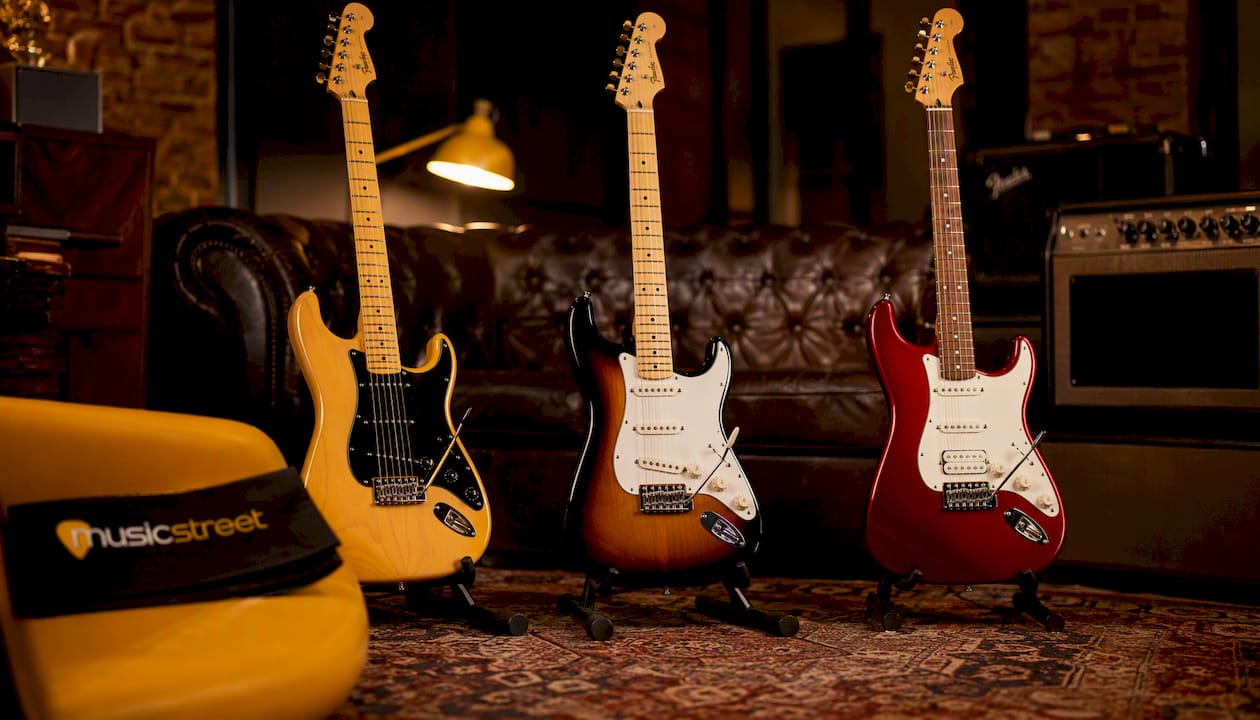
The Fender American Pro Ash Strat Butterscotch Blonde suits players who need USA-level reliability and tonal range for gigging or studio work, its ash body giving a brighter, punchier voice than the more common alder. The Fender Classic Player 50’S Stratocaster in two-tone sunburst is the one to try if you’re chasing genuine '50s warmth without collector-market pricing. The Fender Standard Strat HSS in candy apple red gives you humbucker grit alongside classic Strat quack, a strong all-rounder if you’re not yet sure which tone camp you belong to.
Every guitar that leaves Musicstreet’s Huntingdon shop has been through the action, intonation, and pickup-height checks covered earlier, backed by insurance-supported warranty cover. Book an in-store tryout, or order online with free UK delivery over the qualifying threshold, and if something needs tweaking once you’ve played it in, Musicstreet’s setup team is on hand to sort it.
Sources
FAQ
What are the different types of Stratocasters?
The main types are Squier (budget), Player (entry-level Fender spec), Vintera and Classic Player (era-specific vintage tone), American Performer/Professional/Ultra/Original (USA-built professional grade), and Custom Shop or signature models (bespoke, collector-grade).
What is the best type of Fender Stratocaster?
There’s no single best type, it depends on your playing style and budget, but American Professional or American Performer models offer the strongest balance of tone, playability, and reliability for gigging musicians, while Player models offer the best value for intermediate players.
What is the holy grail of Stratocasters?
Among collectors, pre-CBS models from 1954 to 1965, particularly early maple-neck examples, are widely considered the most desirable due to their build quality and rarity, though specification eras within that period vary significantly in value.
What type of Fender Stratocaster do I have?
Check the neck plate and headstock decal for series naming, the pickguard screw count and pickup configuration (SSS or HSS), and the serial number location, Squier and Player models typically show the series name clearly on the headstock, while American-series guitars state “Made in USA” alongside the model name.




Share:
How to tune a bass guitar: a step-by-step guide
How do you string an acoustic guitar yourself?