


Musicians often assume all guitar amplifiers deliver similar sound, but tube amplifiers stand apart with their distinctive warm, rich tones that have captivated players for decades. These valve-powered units use vacuum tube technology to create the sought-after harmonic complexity and natural compression that solid-state amplifiers struggle to replicate. Understanding what tube amplifiers are, how they function, and why they matter helps you make informed decisions about your sound. This guide demystifies tube amp mechanics, explores their unique tonal qualities, and provides practical insights for getting the most from these remarkable instruments.
Table of Contents
- Key takeaways
- How tube amplifiers work: the role of vacuum tubes
- Understanding tube amplifier classifications and tone
- Exploring tube amplifier sound characteristics and comparison with solid-state
- Practical considerations: using and maintaining tube amplifiers safely
- Explore premium guitar equipment at MusicStreet
- Frequently asked questions
Key Takeaways
| Point | Details |
|---|---|
| Tube amplifier definition | Tube amplifiers use vacuum tubes to amplify electrical signals by controlling electron flow within a sealed glass envelope. |
| Tube types explained | Triodes provide voltage gain in preamps, pentodes supply power and reduce distortion in power stages, beam tetrodes offer strong output with controlled harmonic content, and dual triodes are common in compact preamps. |
| Tone by class | Class A delivers smooth, harmonically rich tones with constant conduction, high heat and low efficiency, whereas Class AB offers greater power and efficiency while preserving tube warmth. |
| Biasing and maintenance | Bias voltage governs how much current flows through power tubes at rest, shaping saturation and harmonic content and making regular bias checks essential. |
How tube amplifiers work: the role of vacuum tubes
Tube amplifiers rely on vacuum tubes to amplify electrical signals by controlling electron flow within a sealed glass envelope. The fundamental principle involves three key electrodes working in harmony: the cathode emits electrons when heated, the control grid modulates this electron flow based on the input signal, and the plate collects the amplified output. This elegant design transforms your guitar’s weak electrical signal into powerful sound capable of driving speakers.
The magic happens through precise voltage control. Tube heaters typically operate at 6.3V to warm the cathode, whilst plates function at high voltages ranging from 200 to 450V. When you play a note, the varying voltage from your guitar reaches the control grid, which acts like a valve regulating how many electrons flow from cathode to plate. More electrons mean stronger signal amplification, translating directly into louder, richer sound.
Different tube types serve distinct functions within your amplifier’s signal chain:
- Triodes contain three electrodes and excel in preamp stages, providing voltage gain and tonal shaping with smooth characteristics
- Pentodes feature five electrodes, delivering greater power amplification efficiency whilst reducing unwanted distortion in power amp sections
- Beam tetrodes use four electrodes with focused electron beams, offering excellent power output with controlled harmonic content
- Dual triodes combine two triode sections in one envelope, commonly found in preamp circuits for compact design
Understanding these components helps you appreciate why guitar amplifier types sound different. Each tube type imparts unique tonal signatures, and manufacturers carefully select combinations to achieve specific sonic goals. The 12AX7 triode remains the most popular preamp tube for its high gain and balanced frequency response, whilst EL34 and 6L6 power tubes define the classic British and American amp voices respectively.
Understanding tube amplifier classifications and tone
Amplifier operating classes fundamentally shape your tone by determining how tubes conduct electrical current. Class A amplifiers operate tubes continuously at full conduction through the entire 360-degree signal cycle, creating exceptionally smooth, harmonically rich tones that guitarists describe as lush and three-dimensional. This constant operation generates significant heat and achieves only 30 to 50% efficiency, meaning most energy converts to heat rather than sound.
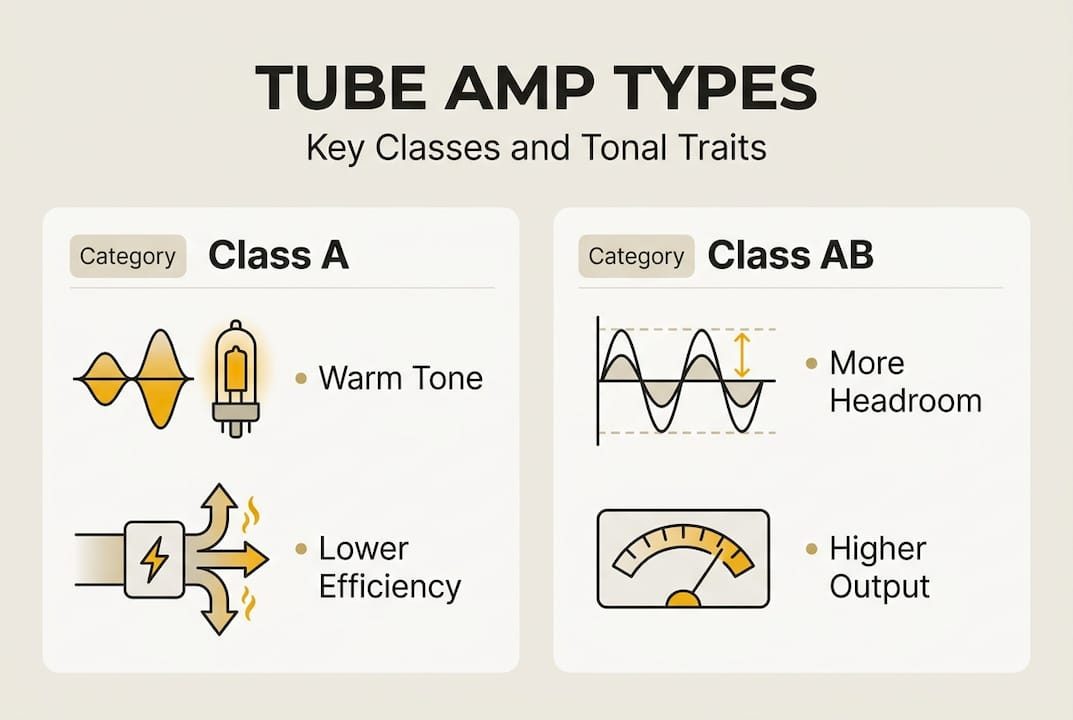
Class AB amplifiers employ a push-pull design where tubes conduct for more than 180 degrees but less than 360 degrees of the signal cycle. This configuration delivers greater power output and improved efficiency up to 78%, whilst maintaining much of the tonal warmth associated with tubes. Most modern tube amplifiers use Class AB operation because it balances the competing demands of tone quality, power output, and practical reliability.
Biasing profoundly affects your amplifier’s voice and tube longevity. The bias voltage controls how much current flows through power tubes at rest, directly influencing saturation characteristics and harmonic content. Hot bias settings push more current through tubes, creating earlier breakup and richer distortion but risking premature tube failure. Cold bias reduces current flow, extending tube life but producing thinner tone with less desirable saturation.
Pro Tip: Check your amplifier’s bias every six months or after tube replacement to maintain optimal tone and prevent expensive damage from incorrect settings.
Here’s how Class A and Class AB compare across critical performance dimensions:
| Feature | Class A | Class AB |
|---|---|---|
| Efficiency | 30-50% | 60-78% |
| Tonal character | Lush, smooth, harmonically complex | Balanced warmth with greater clarity |
| Power output | Lower (5-30W typical) | Higher (15-100W+ typical) |
| Heat generation | Significant | Moderate |
| Typical applications | Studio recording, small venues | Versatile stage and studio use |
| Tube wear | Faster due to constant conduction | Slower with alternating conduction |
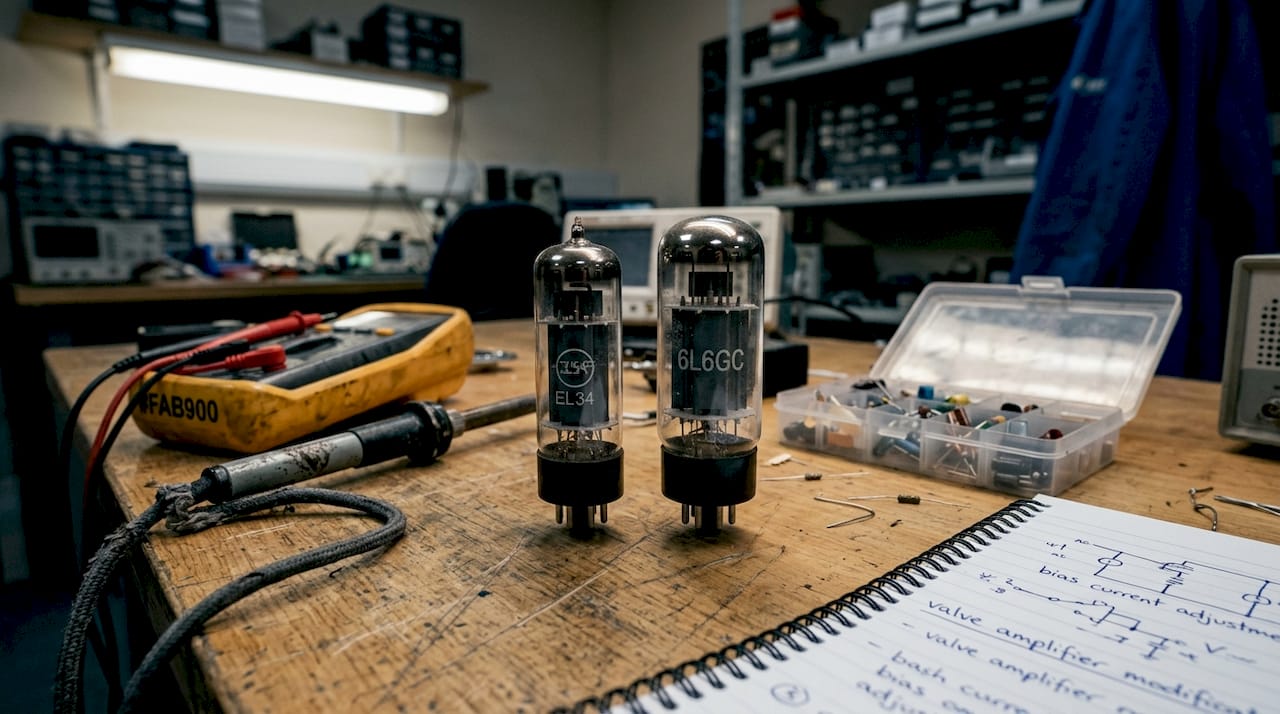
Power tubes like the EL34 and 6L6GC define much of your amplifier’s personality. The EL34 produces the aggressive, midrange-focused British tone heard in classic rock recordings, whilst the 6L6GC delivers the scooped, punchy American sound favoured for country and modern rock. Some amplifiers accept multiple tube types, letting you experiment with different voices by simply swapping power tubes and adjusting bias accordingly.
Tube rectifiers add another tonal dimension through voltage sag. Unlike solid-state rectifiers that maintain constant voltage, tube rectifiers compress slightly under heavy playing, creating the characteristic spongy feel and natural compression that blues and rock players cherish. This subtle effect enhances dynamic response, making your amplifier feel more alive and touch-sensitive.
Exploring tube amplifier sound characteristics and comparison with solid-state
The distinctive warmth of tube amplifiers stems from their generation of predominantly even-order harmonics during amplification. When tubes amplify your signal, they add second, fourth, and sixth harmonic overtones that blend musically with the fundamental frequency. These harmonics create the rich, full-bodied tone that musicians describe as warm, smooth, and three-dimensional. Your ears perceive even-order harmonics as consonant and pleasing, naturally complementing rather than clashing with the original note.
Soft clipping behaviour sets tubes apart from transistor circuits. As you increase volume or gain, tubes gradually compress and saturate rather than abruptly cutting off signal peaks. This progressive distortion acts like natural compression, smoothing your dynamics whilst preserving note clarity and touch sensitivity. You can dig into strings harder for more grit or play gently for cleaner tones, giving you expressive control that responds intuitively to your playing technique.
Solid-state amplifiers produce odd-order harmonics including third, fifth, and seventh overtones that sound harsher and less musical to most listeners. When transistor circuits clip, they do so abruptly, creating square-wave distortion that many players find unpleasant and fatiguing. Whilst solid-state technology has improved significantly, the fundamental harmonic structure differs from tubes in ways that experienced musicians consistently notice.
The preference for tube amplifiers’ warmth remains empirically consistent among experienced musicians, though limited peer-reviewed research exists comparing subjective tonal qualities in controlled conditions.
Practical differences extend beyond tone alone:
- Tube amplifiers typically run at temperatures around 400°F, requiring adequate ventilation and careful handling to prevent burns
- Power tube replacement costs £200 to 300 every five years depending on usage intensity and tube quality
- Operating efficiency ranges from 30 to 40%, converting much energy to heat rather than sound output
- Solid-state amplifiers achieve 70 to 80% efficiency, run cooler, and require virtually no maintenance beyond occasional cleaning
- Weight differs substantially, with tube amps often twice as heavy as equivalent solid-state models due to output transformers
Tube rectifier sag contributes significantly to playing feel. When you strike a chord hard, the rectifier momentarily sags under current demand, slightly compressing the attack and adding bounce to your tone. This dynamic response makes the amplifier feel alive and responsive, particularly valued by blues players who exploit this compression for expressive phrasing. Solid-state rectifiers maintain constant voltage, delivering tighter response but losing this interactive quality.
Hybrid amplifiers attempt to bridge both worlds by combining tube preamps with solid-state power sections. This approach captures much of the harmonic richness and touch sensitivity from tubes whilst gaining the reliability and lighter weight of transistor power stages. Many gigging musicians favour hybrids for their practical advantages, though purists argue they sacrifice some of the magic found in full tube designs.
Practical considerations: using and maintaining tube amplifiers safely
Never attempt to service tube amplifiers yourself, as lethal voltages exceeding 400V remain present inside the chassis even after unplugging from mains power. Capacitors store dangerous charges for hours or days, posing serious electrocution risk to anyone opening the cabinet without proper discharge procedures and safety equipment. Always engage qualified technicians for repairs, tube replacement, and internal adjustments to protect yourself from potentially fatal injury.
Bias adjustment proves critical after installing new power tubes to maintain optimal tone quality and tube longevity. Incorrect bias settings either run tubes too hot, causing premature failure and possible damage to output transformers, or too cold, producing thin tone with insufficient saturation. Professional technicians use specialised meters to measure current draw and adjust bias voltage to manufacturer specifications, ensuring your amplifier performs at its best.
Follow these five essential maintenance practices to maximise your tube amplifier’s lifespan and performance:
- Schedule bias checks every six months or immediately after tube replacement to maintain proper operating conditions and prevent costly damage
- Allow adequate ventilation around your amplifier, keeping vents unobstructed and avoiding enclosed spaces that trap heat
- Replace power tubes every one to three years depending on usage intensity, as worn tubes lose tone quality and efficiency
- Use only tube types specified by your amplifier manufacturer, as incorrect substitutions can damage circuits or create dangerous operating conditions
- Transport your amplifier carefully to prevent microphonic tubes, which develop internal rattles from physical shock and vibration
Tube rectifier sag affects both feel and response in ways that influence your playing dynamics. The momentary voltage compression when you strike chords hard adds bounce and touch sensitivity, creating the spongy feel that many players love. Some amplifiers include switches to bypass tube rectifiers for tighter response when needed, giving you flexibility to match your playing style and musical context.
Volume settings dramatically impact tube saturation and characteristic tone. Attenuation at low volumes prevents tubes from reaching their sweet spot where natural compression and harmonic richness fully develop. Whilst master volume controls help manage stage levels, you’ll discover that tubes sound best when pushed moderately hard. Power attenuators let you drive your amplifier into saturation whilst reducing speaker output, offering a compromise for home practice and quieter venues.
Pro Tip: Start with factory bias specifications when installing new tubes, then experiment cautiously with slight adjustments to find your preferred balance between headroom and saturation.
Standby switches deserve special mention for proper warm-up procedure. Engage standby mode when first powering on, allowing tube heaters to reach operating temperature for 30 to 60 seconds before switching to play mode. This gradual warm-up reduces thermal shock to tubes and extends their service life, particularly important for vintage amplifiers with original components.
Explore premium guitar equipment at MusicStreet
Now that you understand tube amplifier technology and tonal characteristics, you’re ready to explore how the right equipment elevates your playing. MusicStreet specialises in premium guitars and tube amplifiers carefully selected for exceptional tone and build quality. Every instrument receives professional setup and inspection before reaching you, ensuring optimal playability from the moment you unpack.

Whether you’re seeking your first tube amplifier or upgrading to professional-grade equipment, our amplifier types guide helps you navigate the options with confidence. We offer expert advice on matching amplifiers to your playing style, musical genres, and practical requirements. Visit our Huntingdon showroom to experience tube amplifiers firsthand, or explore our comprehensive beginner’s guide to choosing guitar amps to make informed decisions backed by decades of experience serving musicians at every level.
Frequently asked questions
What is a tube amplifier?
A tube amplifier uses vacuum tubes rather than transistors to amplify electrical signals from your guitar. These glass envelopes contain electrodes that control electron flow, creating the warm, harmonically rich tones that musicians prize for their musical quality and natural compression.
Are tube amplifiers safe for beginners to use?
Tube amplifiers are safe for playing when used properly, but never open the chassis or attempt repairs yourself. Lethal voltages remain present even after unplugging, requiring professional servicing. Always allow adequate ventilation and avoid touching hot tubes during or immediately after use.
Why do tube amplifiers sound better than solid-state models?
Tube amplifiers generate even-order harmonics that blend musically with your original signal, whilst solid-state amps produce harsher odd-order harmonics. Tubes also clip softly, creating natural compression and touch sensitivity that most players find more expressive and pleasing than transistor distortion.
How often should I replace tubes in my amplifier?
Replace power tubes every one to three years depending on how frequently you play and how hard you push your amplifier. Preamp tubes last considerably longer, often five to ten years. Watch for loss of volume, increased noise, or changes in tone quality as signs that tubes need replacement.
What does bias adjustment do for tube amplifier tone?
Bias controls current flow through power tubes at rest, directly affecting saturation characteristics and harmonic content. Proper bias ensures optimal tone quality and tube longevity, whilst incorrect settings either risk tube damage from excessive current or produce thin tone from insufficient current. Always have qualified technicians perform bias adjustments.








Share:
What is amp biasing: guide to guitar amp tone and performance
What is headroom in amps: a guitarist's guide to cleaner tone