

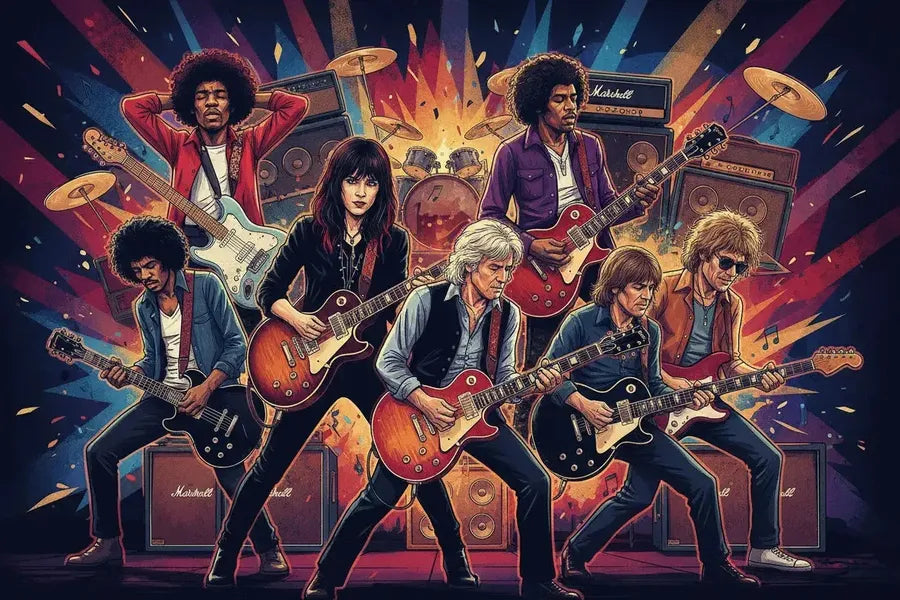
Legendary Electric Guitarists: Discover the Greatest Players, Iconic Gear, and Influential Techniques
Electric guitarists who rewrote musical rules left legacies that shape tone, technique, and instrument design to this day. This article explains who the most influential electric guitarists are, what instruments and gear created their iconic sounds, how their playing techniques developed, and practical steps you can take to emulate those tones. Readers will learn concise biographies, gear-to-artist mappings, signature technique breakdowns, and actionable tone-recreation guides that link musical history to purchase and workshop decisions. Many players struggle to translate listening inspiration into playable tone and gear choices; this guide bridges that gap with clear equipment lists, signal-chain advice, and practice pathways. The piece maps the artists, the instruments (Fender Stratocaster, Gibson Les Paul, vintage amplifiers), key solos, and contemporary British influences, then explains how to buy, set up and maintain instruments for authentic results. Throughout, you'll find recommended accessories, comparison tables, and notes on how MusicStreet supports players seeking signature and vintage-inspired instruments.
Who Are the Most Influential Electric Guitarists in Rock and Blues History?
The most influential electric guitarists are those who combined stylistic innovation, distinctive tone, and songwriting to shift musical expectations. Their innovations work through technique, gear choices and compositional roles, producing new sounds that became templates for generations. Recognising these players helps musicians target specific techniques and equipment to shape their own voice. Below is a concise list of leading figures with one-line descriptors to capture why each is critical to rock and blues history, followed by context that links players to the instruments and approaches they popularised.
- Jimi Hendrix — Revolutionary use of Fender Stratocaster, feedback and expressive effects that expanded sonic vocabulary.
- Eric Clapton — Blues phrasing economy and the "Woman Tone" that fused British blues with rock sensibilities.
- Jimmy Page — Riff-driven songwriting and Gibson Les Paul sustain that defined hard rock arrangements.
- Jeff Beck — Tone sculpting and innovative use of dynamics across rock, jazz and fusion settings.
- David Gilmour — Melodic phrasing and Stratocaster sustain used for soaring, lyrical solos.
These artists each connect to specific instrument families and amplifier types, which influenced their sound and the subsequent market for signature models and reissues. The way they used pickups, tone controls and effects pedals created new expectations for shape and circuitry in electric guitars and amplifiers.
What Made Jimi Hendrix a Revolutionary Guitarist?
Jimi Hendrix reshaped electric guitar by combining left-handed Stratocaster voicings, controlled feedback and expressive effects into a stage-forward performance language. His approach relied on Stratocaster single-coil timbres, wah and fuzz devices, and amp settings that emphasised midrange bite and dynamic response. Hendrix's value lay in turning technological quirks into musical tools—using feedback as melodic material and hand technique to extract vocal-like phrasing from the instrument. Understanding his gear choices clarifies how tone components interact and points players toward specific Stratocaster models and pedal combinations to approximate his sound.
Jimi Hendrix: Revolutionising Rock and Blues Through Effects and Techniques
Jimi Hendrix is a household name for any aficionado of 1960s rock music. His distinctive, effects-driven approach to music simultaneously revolutionised the genres of Rock and Blues. From his utilisation of amplifier feedback, the Wah pedal, and hammer-on fingering in solos to his lyrics, which served as an outlet through which he processed his childhood, his musical artistry helped define a decade of music. He achieved success in England as a Black artist while African Americans continued their struggle for Civil Rights back in America. England's acceptance of Black musicians and its affinity for American Blues allowed him to hone his craft in London before making his mark on the American music scene. As a member of the '27 Club', Hendrix was lost too soon, though the legacy of his music left an immediate impression. His unique style inspired artists such as Stevie Ray Vaughan, who replicated his musical approach. Hendrix’s musical legacy has never been in doubt; he is widely regarded as one of the finest guitarists of all time and ranked number one on Rolli
How Did Eric Clapton Shape Blues Rock Guitar Playing?
Eric Clapton popularised concise, emotive blues phrasing and a tone characterised by mid-focused clarity and controlled sustain often called the "Woman Tone". This sound derives from Gibson and Fender instruments with neck/middle pickup emphasis, tone-knob rollbacks, and tube amplifier breakup that favours harmonic richness over aggressive distortion. Clapton's economy of notes emphasises vibrato and bends as melodic devices more than technical showmanship, making phrasing and touch essential for imitation. Learning his approach means prioritising feel, single-note melodic construction, and amp voicing as much as gear selection.
Why Is Jimmy Page Considered a Guitar Legend?
Jimmy Page combined studio experimentation, layered guitar parts and a Gibson Les Paul's sustain to craft riffs that became the backbone of modern hard rock songwriting. Page's technique interweaves heavy riffing, open-string drones, and melodic solos, with Les Paul humbuckers providing the warmth and compression that make riffs sing through a band mix. His recording techniques—double-tracking, varied mic placement and creative overdubs—expanded the guitar's role from solo instrument to textural engine in composition. Studying Page reveals how instrument choice and recording approach together define a guitarist's signature sound.
Which Other Guitarists Are Recognized as Top British Electric Guitar Heroes?
Beyond Hendrix, Clapton and Page, British electric guitar history includes players who altered tone, technique and composition in distinct ways across decades. Figures such as Jeff Beck, Brian May, Mark Knopfler and David Gilmour each contributed innovations from tonal layering to unique right-hand technique and orchestral voicings. These players influenced production choices, signature guitar models and the market for reissues that capture era-specific specs. Their cumulative impact shaped schools of playing that continue to inform contemporary rock and blues guitarists worldwide.
How Have Guitarists Like Stevie Ray Vaughan and B.B. King Influenced Modern Blues?
Stevie Ray Vaughan and B.B. King represent two branches of modern blues influence: SRV's Texas blues amplified with aggressive attack and thick tube-amp saturation; B.B. King's economy of notes and vocal-like single-note phrasing. Vaughan's use of heavier strings, powerful vibrato and thick overdrive contrasts with King's cleaner amplifier settings and lighter touch that emphasise lyrical bends. Modern players synthesize these approaches, combining expressive vibrato, targeted bending and amp selection to create personalised blues tones. The lineage from these players clarifies practice priorities—phrasing control, dynamic variation and contextual gear choices.
What Are the Iconic Guitars and Gear Used by Famous Electric Guitarists?
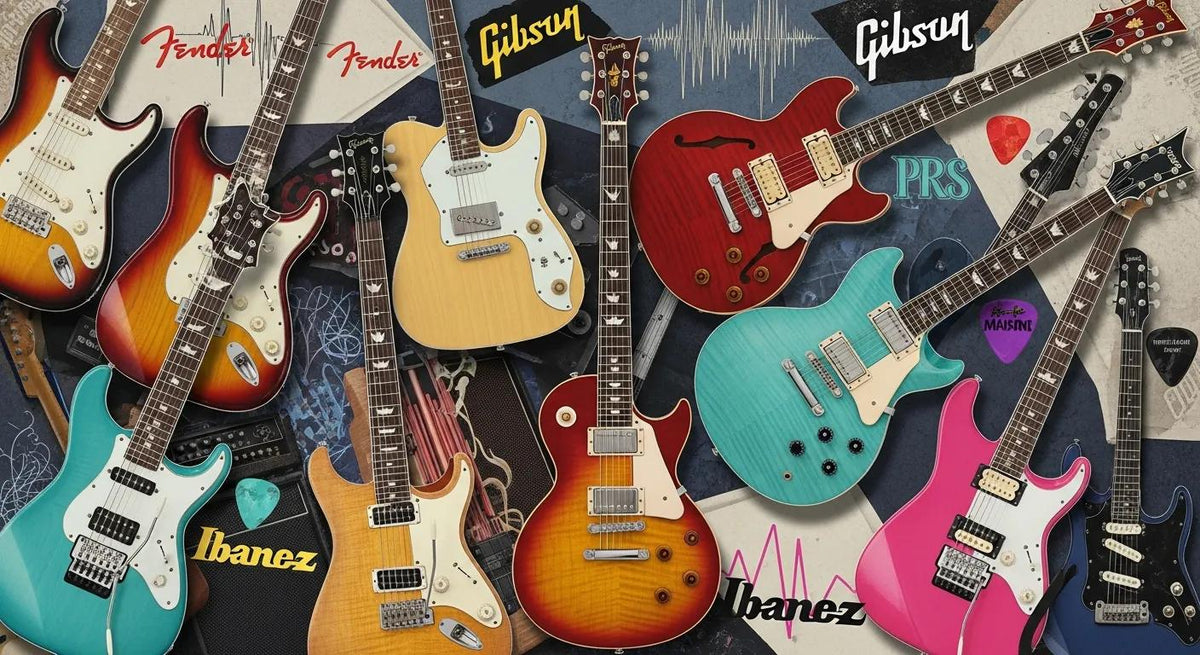
Iconic guitars and gear are the physical components that, through construction and circuitry, produce characteristic tones associated with famous players. Instruments like the Fender Stratocaster and Gibson Les Paul differ in pickup configuration, body construction and scale interactions, which alter sustain, brightness and harmonic content. Amplifiers and effects pedals further shape these raw signals by adding gain stages, EQ curves and time-based or modulation effects. Understanding the relationship between guitar model, amp voicing and pedal choice is essential for both historical appreciation and practical shopping decisions when seeking signature or vintage-inspired instruments.
Before the comparison table below, this mapping helps shoppers identify which instrument families to prioritise when searching for specific artist tones. The table provides a quick reference connecting model, player and characteristic tone.
| Instrument Model | Used By (Player) | Characteristic Tone / Notable Use |
|---|---|---|
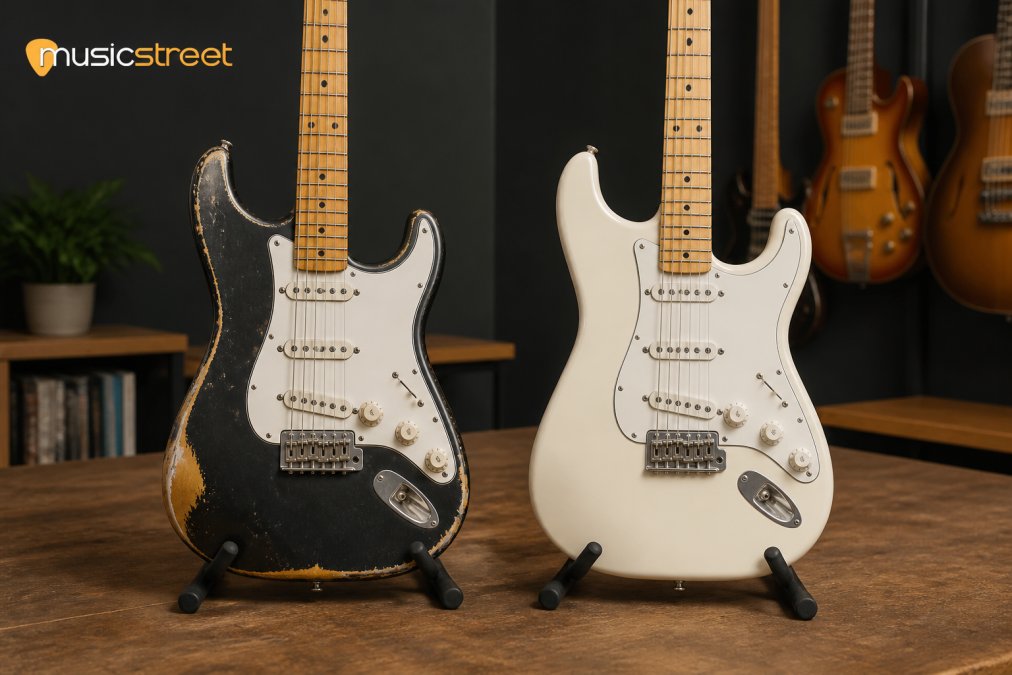
| Fender Stratocaster | Jimi Hendrix, David Gilmour | Clear single-coil bite, expressive tremolo use, defined attack |
| Gibson Les Paul | Jimmy Page, Slash | Warm, thick sustain from humbuckers, ideal for heavy riffs |
| ES-style Semi-hollow | B.B. King | Resonant, singing midrange suited to clean vibrato |
| Telecaster variants | Jeff Beck, Mark Knopfler | Snappy attack, twangy bridge pickup presence |
This table clarifies core instrument-to-player associations and highlights why particular models became central to certain tones. Musicians can use that mapping to prioritise which models to try when aiming for a specific sonic target.
Which Fender Stratocaster Models Did Jimi Hendrix and David Gilmour Use?
Jimi Hendrix favoured early and mid-1960s Stratocaster variants—often right-handed instruments restrung for left-hand play—whose single-coil pickup clarity and three-way switching enabled bright, cutting tones and expressive wah and feedback combinations. David Gilmour typically used late 1950s to 1960s Strats and signature models emphasising neck and middle pickup tones for sustained, vocal-like phrasing and smooth tremolo expression. The differences in pickup setup, neck profile and bridge type create tangible divergences in feel and tone. Players seeking these sounds should prioritise Stratocaster models with vintage-style single-coil voicings and consider pickup height and neck profile when choosing a guitar.
How Did Gibson Les Paul Guitars Define the Sound of Jimmy Page and Slash?
Gibson Les Paul guitars, with carved mahogany bodies and dual humbucking pickups, produce a warm, compressed tone with long sustain that became ideal for riff-driven rock and thick lead lines. Jimmy Page exploited the Les Paul's sustain and harmonic richness for riffs and layered studio parts, while Slash used Les Paul sustain and midrange presence for searing solos. Humbucker wiring and the instrument's mass enhance note decay and harmonic content, making Les Pauls suited to overdriven tube amplifiers. For players, understanding pickup type and construction guides purchasing decisions when seeking that classic rock timbre.
What Amplifiers and Effects Pedals Shaped Legendary Guitar Tones?
Amplifiers and pedals shape the guitar signal by controlling gain staging, EQ character and time-based or modulation effects, turning an instrument's raw sound into a recognisable signature tone. Classic amplifier families—Marshall for crunchy mid-forward rock, Fender for clean headroom and chime, Vox for jangly British voicing—offer distinct tonal palettes that artists used to sculpt their identities. Effects pedals such as wah, fuzz, overdrive, delay and reverb altered timbre and spatial characteristics, enabling innovations from Hendrix's psychedelic textures to Gilmour's ambient delays. A clear signal chain example follows: guitar pickup selection → overdrive/fuzz → wah/modulation → time-based effects → amp; this sequence determines how each device colours the sound.
- Marshall: aggressive midrange and power amp breakup.
- Fender: clean headroom and glassy top end.
- Vox: chimey midrange and compression.
These amp and pedal families remain central to modern tone design and are often reproduced in signature reissues and modern equivalents.
Where Can You Find Signature and Vintage Guitar Models Inspired by These Legends?
Sourcing signature reissues and vintage instruments requires understanding the differences between authorised modern signature models and original vintage examples, and conducting careful condition checks. Authorised dealers and reputable pre-owned sellers provide authentication, warranty options and controlled return policies; buyers should inspect neck straightness, fret wear, electronics and serial-number provenance when considering pre-owned instruments. MusicStreet, a premium guitar shop in Huntingdon, Cambridgeshire, UK, operates as an authorised dealer for brands such as Gibson and Fender and offers both new and pre-owned instruments along with in-store trial availability. For buyers aiming to match a legend's equipment, authorised reissues offer reliable spec replication while vintage originals carry historical value but may need additional setup in a dedicated workshop.
This guidance helps balance the desire for authenticity with practical considerations such as playability, serviceability and budget constraints.
How Did Famous Electric Guitarists Develop Their Unique Playing Techniques?
Famous electric guitarists developed unique techniques by combining physical method, musical context, and gear adaptation to stretch the instrument's expressive range. Techniques such as vibrato, bending and tapping function to add pitch variation, sustain and melodic ornamentation, and each technique's effectiveness depends on instrument setup and player ergonomics. Tracing these methods to pioneering players illuminates both musical lineage and practical practice steps for learners. Below are focused explanations and practice tips linking technique to the players who popularised them and to the gear that supports mastery.
| Technique | Pioneering Player | Key Components (gear/technique) | Beginner Practice Tip |
|---|---|---|---|
| Vibrato | B.B. King | Light touch, single-note sustain, clean amp voicing | Practice slow controlled wrist motion on sustained notes |
| Bending | Eric Clapton | Accurate intonation, finger strength, strategic vibrato | Start with half-step bends and use tuner to check pitch |
| Two-hand tapping | Eddie Van Halen | Fast right-hand fretting, light strings, high-output pickups | Practice single-note patterns with metronome, gradually increase tempo |
What Is the Role of Vibrato, Bending, and Tapping in Iconic Guitar Solos?
Vibrato, bending and tapping each contribute distinct expressive functions: vibrato adds pitch modulation to sustain a note with vocal-like motion, bending creates melodic inflection and expressive slides between scale degrees, and tapping expands range and speed for arpeggiated passages. These techniques are tools for phrasing—vibrato emphasises emotional centre points, bends create call-and-response tensions, and tapping enables rapid linear runs that would otherwise be ergonomically difficult. Players should integrate these techniques into musical contexts, focusing on timing and dynamic control so that each device enhances the musical sentence rather than serving as mere ornament.
How Did Eddie Van Halen Popularize Two-Hand Tapping?
Eddie Van Halen popularised two-hand tapping by applying right-hand finger fretting to extend melodic range and speed, turning the fretboard into a horizontal piano-like surface for rapid arpeggios. His technique relied on light, low-action setups, thinner gauge strings and higher-output pickups to preserve clarity at speed, while practice focused on alternating hands and synchronising rhythmic subdivisions. Van Halen's recordings demonstrated the musical utility of tapping—not just as showmanship but as a compositional device—encouraging learners to practise controlled patterns, economy of motion and muting to maintain articulation.
Which Techniques Define Eric Clapton's "Woman Tone" and Jimi Hendrix's Feedback Mastery?
Eric Clapton's "Woman Tone" results from rolling back the tone knob on a humbucker-equipped guitar, using neck or middle pickup positions and tube amp settings that emphasise compression and midrange warmth to produce vocal-like sustain. Jimi Hendrix's feedback mastery uses controlled proximity to the amplifier, pickup selection and dynamic hand technique to turn amplifier feedback into a musical pitch source. Recreating these approaches requires understanding signal chain interactions—pickup choice affects harmonic content and tone controls shape the frequency emphasis—along with careful practice to avoid uncontrolled feedback and to preserve intonation.
How Can Beginners Learn the Techniques of Legendary Guitarists?
Beginners should follow a progressive pathway that builds core mechanics before adding stylistic flourishes: begin with basic fretboard knowledge, then practise precise fretting, controlled vibrato and gradual bending before attempting rapid ornamentation or tapping. Structured practice sessions split into warm-up, technical repetition and musical application accelerate skill transfer; regular metronome use and slow, focused practice are essential. Starter gear should prioritise playability—low action, comfortable neck profile and a reliable amp with clean-to-breakup response—which reduces physical friction and allows technique to develop organically.
What Are the Greatest Iconic Guitar Solos and Their Stories?
Iconic guitar solos endure because they combine melodic invention, contextual placement within a song and tone choices that amplify emotional impact. Solos like "Stairway to Heaven" and "Purple Haze" serve as case studies for how phrasing, recording technique and gear merge to create moments that teach generations of players. Analysing these solos reveals why certain note choices, rhythmic placements and timbral decisions resonate, and it provides concrete learning targets for students seeking to internalise iconic phrasing. The following curated set of solos highlights different eras and styles with notes on what makes each essential study material.
- "Stairway to Heaven" — Jimmy Page: melodic contour, dynamic build and tonal layering.
- "Purple Haze" — Jimi Hendrix: effects-driven phrasing and aggressive attack.
- "Sultans of Swing" — Mark Knopfler: fingerstyle clarity and economical melodic lines.
These examples span composition styles and technical demands, illustrating how solos function as both emotional peaks and pedagogical templates.
What Makes "Stairway to Heaven" by Jimmy Page a Legendary Guitar Solo?
The "Stairway to Heaven" solo combines melodic clarity, carefully placed tension notes and dynamic contrast that mirror the song's narrative arc. Page's tone—Les Paul sustain into overdriven tubes—creates a singing quality, while the solo's construction balances scalar runs with motif development that fits the song's arrangement. Recording choices, like layered guitars and subtle equalisation, enhance the solo's presence and longevity. For learners, dissecting the solo's motifs and practising them at varied dynamics reveals how economy of material produces memorable melodic impact.
How Did Jimi Hendrix's "Purple Haze" Solo Influence Rock Guitar?
"Purple Haze" showcased Hendrix's radical use of effects and unorthodox phrasing to expand rock guitar vocabulary; the solo integrates fuzz, wah and controlled feedback to create sounds previously unheard in mainstream rock. Hendrix's phrasing mixes blues-derived licks with angular intervals and rhythmic displacement, demonstrating how effects can be compositional tools rather than mere coloration. Subsequent generations adopted not just the sounds but the experimental mindset, treating pedals and amp behaviour as compositional elements.
Which Other Solos Are Considered Must-Know for Electric Guitar Fans?
A compact selection of must-know solos covers stylistic breadth and technical lessons for players seeking comprehensive study material. Each solo teaches different musical priorities—melody, technique, tone, or production—and together they build a rounded skill set for aspiring guitarists.
- "Comfortably Numb" — David Gilmour: melodic phrasing and sustain control.
- "Crossroads" — Eric Clapton: blues phrasing economy and dynamic control.
- "Eruption" — Eddie Van Halen: technique innovation and rhythmic precision.
Studying these solos helps players internalise idiomatic phrasing and tone choices across rock and blues traditions.
How Do These Solos Reflect the Guitarists' Signature Styles?
Each solo encodes the guitarist's stylistic fingerprint through note choice, phrasing habit and tone selection—Gilmour's long, singing lines contrast with Van Halen's percussive, technical bursts, and Clapton's simplicity emphasises vowel-like bends and vibrato. These patterns show how personal technique and gear preferences merge into stylistic identity. For learners, identifying recurring motifs and tonal habits provides a roadmap to adopt and then adapt those signatures into personal expression.
How Have British Electric Guitarists Shaped the Global Rock Scene?
British electric guitarists shaped global rock by introducing production techniques, new tonal aesthetics and riff-based songwriting that influenced international musicians and instrument markets. Their innovations included expanded use of effects, novel recording approaches and the fusion of blues traditions with rock arrangements, which in turn influenced instrument design and pedal manufacturing. This cross-pollination of ideas transformed not only how guitar parts were written but also how instruments were built and marketed globally. The following sections identify leading British figures, their innovations, and the lasting commercial and educational impacts.
Who Are the Greatest British Electric Guitarists of All Time?
A concise list of leading British guitarists includes those whose innovations changed technique, tone or compositional roles for guitar in rock and blues: Eric Clapton, Jimmy Page, Jeff Beck, David Gilmour and Brian May. Each contributed distinct attributes—Clapton's blues phrasing, Page's riff-centric writing, Beck's tonal experimentation, Gilmour's melodic restraint and May's orchestral layering. These contributions influenced instrument specs and educational priorities, and they shaped the expectations of players and listeners worldwide. Their recordings serve as foundational learning resources for contemporary guitarists.
What Innovations Did British Guitarists Bring to Rock and Blues Genres?
British guitarists introduced several technical and production innovations: wider use of effects chains, refined mic and amp techniques in studios, and a riff-based approach to songwriting that emphasised guitar as both rhythmic engine and melodic lead. These advances led manufacturers to experiment with pickup designs, bridge types and amp circuits to capture the emerging sounds. The result was a fertile ecosystem where player demand drove new product specifications and educational resources to teach these evolving techniques.
How Did Bands Like Led Zeppelin and The Yardbirds Influence Guitar Playing?
Bands such as Led Zeppelin and The Yardbirds served as incubators for technical and compositional experimentation, where guitarists explored distortion textures, alternate tunings and studio layering to create novel timbres. These group contexts encouraged collaborative breakthroughs—experimenting with song structure, tone and arrangement—that individual players then carried into solo careers and wider trends. The band-driven approach amplified guitar innovation by placing the instrument at the centre of both songwriting and sonic identity.
What Is the Legacy of British Guitar Heroes in Today's Music Industry?
British guitar heroes left a legacy visible in signature reissues, modern instrument specs and the prioritisation of tone education in contemporary curricula. Their influence persists in makers producing reissue models and in schools teaching phrasing and recording techniques that reference classic British recordings. That legacy continues to shape buying decisions, lesson content and the design of workshop services aimed at recreating or maintaining era-accurate instruments.
How Can You Achieve the Signature Tone of Famous Electric Guitarists?
Achieving a signature tone combines gear selection, setup, signal chain configuration and playing technique into a repeatable process that translates listening into sound. Essential elements include guitar model and pickup choice, amplifier voicing and gain staging, pedal selection and precise control of tone knobs and pickup heights. The practical settings table below presents tone elements, typical settings and resulting use-cases to help replicate well-known player sounds. Following the table, gear recommendations and service suggestions support purchase and setup decisions.
| Tone Element (Guitar/Amp/Pedal) | Typical Setting | Resulting Sound / Use-case |
|---|---|---|
| Stratocaster neck pickup / Fender-style amp | Neck pickup, amp clean to slight break-up | Warm, vocal lead tones (Gilmour-style) |
| Les Paul humbucker / Marshall stack | Bridge humbucker, moderate gain, mid-forward EQ | Thick riffing and sustaining leads (Page/Slash) |
| Fuzz + Wah + Tube amp | Fuzz before wah, wah engaged dynamically | Psychedelic textures and expressive filters (Hendrix) |
This settings table offers actionable starting points that players can adapt to their instruments and rooms; small tweaks in pickup height, amp proximity and pedal order significantly alter the outcome.
What Gear Settings Create Jimi Hendrix's Psychedelic Stratocaster Sound?
To approximate Hendrix's psychedelic Stratocaster sound, use a Strat-style guitar with single-coil pickups, place fuzz and wah early in the chain, and set the amp for a responsive, slightly compressed breakup that reacts to picking dynamics. Playing technique—aggressive attack, thumb-over chords and controlled feedback—completes the picture. Experimenting with pickup height, cable capacitance and the order of wah and fuzz will reveal crucial tonal differences; small adjustments in treble and presence on the amp help recreate the brightness and edge Hendrix used for solos and rhythm parts.
How to Recreate Eric Clapton's Blues Rock Tone?
Recreating Clapton's blues rock tone focuses on humbucker or single-coil neck settings (depending on era), rolling back tone controls to achieve the "Woman Tone", and using tube amp saturation with gentle overdrive for harmonic richness. Accessory choices such as medium-gauge strings and rounded picks support warm attack and controlled bends. Practising dynamic control and phrasing is as important as matching gear; Clapton's tone is inseparable from his touch and economy of phrases.
Which Accessories Help Emulate Iconic Guitar Techniques?
Accessories materially affect tone and playability: string gauge determines tension and response, pick shape influences attack and articulation, and slides or capos enable specific techniques and voicings. Pedals such as wah, delay and overdrive are essential for many iconic sounds, while proper cables and a well-set bridge ensure tuning stability and sustain. Choosing accessories that complement the chosen guitar and amp setup is crucial for a coherent signal chain that supports targeted techniques.
Recommended accessories to consider:
- Strings and picks tailored to preferred attack and tension.
- Pedals: wah, overdrive/fuzz, delay and reverb for tonal shaping.
- Setup tools: tuner, capos or slides as stylistic aids.
These accessories are practical investments that facilitate technique development and tone replication.
Where to Buy Authentic Guitars and Gear Inspired by Legendary Players?
Buying authentic instruments requires comparing authorised signature models with vintage originals and prioritising reputable sellers that provide inspection and trial options. Authorised dealers typically offer verified specs and warranty support, while pre-owned instruments require detailed inspection for playability and provenance. MusicStreet is a premium guitar shop in Huntingdon, Cambridgeshire, UK, that operates as an authorised dealer for brands such as Gibson and Fender, and offers new and pre-owned stock along with in-store trial opportunities and a dedicated workshop for setups and repairs. For players aiming to secure reliable instruments, in-person trials and workshop setup services reduce risk and improve immediate playability.
This practical buying approach helps translate research into purchase decisions that yield playable, toneful instruments.
What Is the Enduring Legacy of Famous Electric Guitarists in Music Today?
The enduring legacy of famous electric guitarists is evident in instrument design, teaching curricula and the continued popularity of signature models and reissues that preserve era-specific specs. These legacies influence how contemporary players approach tone, technique and composition, with many modern guitarists citing classic players as primary influences for phrasing and sound palette. The market for signature models supports both collector interest and educational access, allowing new generations to study and reproduce historic sounds. The sections below examine direct modern influence, the role of reissues, and how specialised retailers and workshops support players inspired by these icons.
How Do Modern Guitarists Cite Legends as Their Influences?
Contemporary guitarists frequently reference the phrasing, tone and recording techniques of past masters when describing their stylistic lineage, adapting classic motifs into new contexts and genres. Influence manifests in pedalboard choices, amp selection and in composition methods that prioritise riff-writing or melodic soloing depending on the legacy cited. Educational content—lessons, masterclasses and analysis—often frames historic players as technical and musical templates, guiding practice priorities for emerging players.
What Role Do Signature Models and Reissues Play in Preserving Guitar Heritage?
Signature models and reissues replicate historic specifications—neck profiles, pickup winding and bridge types—to make classic sounds accessible without the scarcity and maintenance issues of true vintage instruments. They play a dual role: enabling players to access era-correct tones and supporting the collector market that values original specimens. For buyers, choosing between reissues and vintage originals involves trade-offs between authenticity, cost and immediate playability; reissues usually require less setup and present fewer risks for regular use.
How Does MusicStreet Support Guitarists Inspired by These Icons?
MusicStreet supports players through a combination of authorised brand availability, pre-owned instrument sourcing, and workshop services that include setups and repairs, all designed to help musicians achieve playable and authentic-sounding instruments. The store facilitates in-store trials so players can evaluate guitars and amplifiers in person and offers part exchange options for upgrading instruments. Its dedicated workshop provides professional setup and repair services to ensure instruments perform reliably and meet the tonal targets players pursue. These services form a practical bridge from historical research to tangible musical results for local and visiting musicians.
Where Can Fans Learn More About Famous Guitarists and Their Gear?
Fans and players can deepen their understanding through books, documentaries, lesson channels and curated blog content that analyse artist histories, gear schematics and technique breakdowns, which inform both study and purchase decisions. MusicStreet's information hub and product categories provide starting points that pair educational content with hands-on options like in-store trials and workshop services to translate learning into action. Combining historical study with practical gear trials and professional setups helps players apply lessons from the greats to their own instruments and performances.
Resources to continue learning:
- Documentary films and authorised biographies for historical context.
- Technique-focused lessons for practical skills development.
- In-store trials and workshop sessions to test gear and ensure playability.
These combined resources create a coherent path from appreciation to practical musicianship, helping players emulate and evolve the techniques of legendary electric guitarists.




Share:
Mastering Guitar Setups: A Comprehensive DIY & Pro Guide
Hybrid Guitar Amps Explained: Versatility for Modern Players