

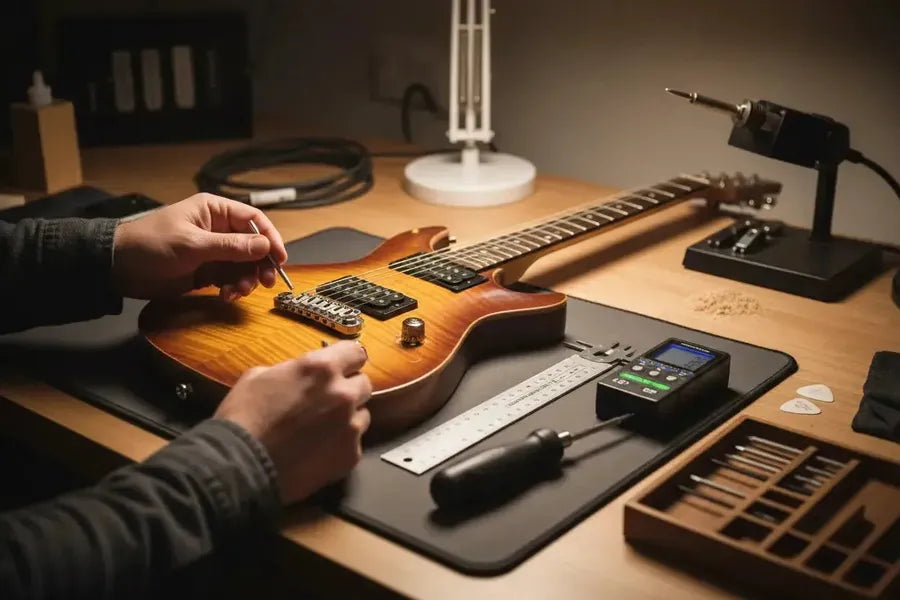
Mastering Guitar Setups: The Ultimate DIY & Professional Guide for Perfect Playability
Setting up a guitar properly is essential for achieving optimal playability and tone. Whether you're a seasoned musician or a beginner, understanding the intricacies of guitar setups can significantly enhance your playing experience. This comprehensive guide will delve into the various aspects of guitar setups, including DIY methods and when to seek professional help. By mastering these techniques, you can ensure your instrument performs at its best, allowing for a more enjoyable and expressive playing experience. We will explore the importance of guitar setups, how to adjust action, achieve accurate intonation, and optimize neck relief, among other critical topics.
What Is a Guitar Setup and Why Is It Essential?
A guitar setup refers to the process of adjusting various components of the instrument to ensure optimal playability and sound quality. This includes adjusting the action, intonation, neck relief, and other elements that affect how the guitar feels and sounds when played. Proper setups are essential because they can significantly enhance the instrument's performance, making it easier to play and improving the overall tone. Many players experience issues such as fret buzz or difficulty in tuning, which can often be resolved through a well-executed setup.
How Does Proper Setup Improve Guitar Playability and Tone?
A well-executed guitar setup can lead to several improvements in playability and tone. For instance, adjusting the action to the right height can make it easier to press down on the strings, reducing finger fatigue and allowing for more fluid playing. Additionally, proper intonation ensures that the guitar stays in tune across the fretboard, which is crucial for achieving a harmonious sound. Many musicians report that after a professional setup, their guitars feel more responsive and sound clearer, enhancing their overall playing experience.
When Should You Choose DIY Setup vs. Professional Services?
Choosing between a DIY setup and professional services depends on several factors, including your skill level, the complexity of the adjustments needed, and your budget. If you're comfortable with basic tools and have a good understanding of your instrument, a DIY setup can be a rewarding experience. However, for more complex issues or if you're unsure about the adjustments, seeking professional help is advisable. Professional guitar technicians have the expertise and tools to perform precise adjustments, ensuring your instrument is set up correctly.
How to Adjust Guitar Action for Electric, Acoustic, and Bass Guitars
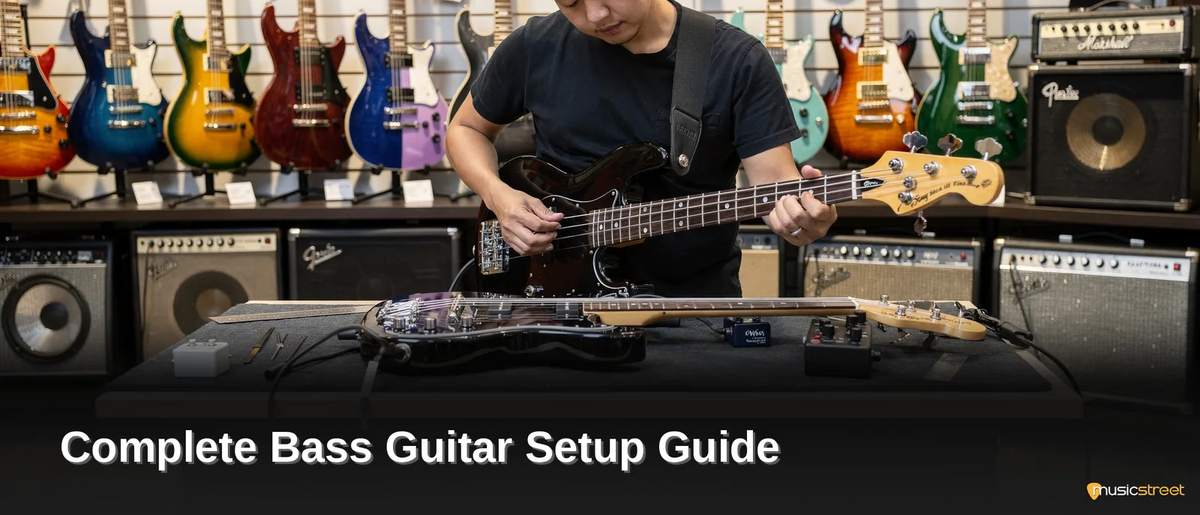
Adjusting guitar action involves setting the height of the strings above the fretboard, which can greatly affect playability. The ideal action height varies depending on the type of guitar and personal preference. For electric guitars, a lower action can facilitate faster playing, while acoustic guitars may benefit from slightly higher action to prevent buzzing. Bass guitars generally have higher action than electric guitars to accommodate thicker strings and playing style. Understanding how to measure and adjust string height is crucial for achieving the desired setup.
The bridge is a critical component where many of these adjustments, including action and intonation, are made.
Guitar Bridge Adjustments: Action & Intonation
Likewise, string changing, action and intonation adjustments are all made at the bridge, and the fine tuners are also on the bridge.
Headless Hotshots!(IT May 1986), 1986
What Tools Are Needed to Measure and Adjust String Height?
To measure and adjust string height, you'll need a few essential tools:
- String Action Ruler: A specialized ruler designed for measuring string height accurately.
- Allen Wrenches: For adjusting the bridge and truss rod on electric and bass guitars.
- Screwdrivers: To make adjustments on various components of the guitar.
These tools will help you achieve precise measurements and adjustments, ensuring your guitar is set up to your liking.
How to Diagnose and Fix Common Fret Buzz Issues
Fret buzz is a common issue that can arise from improper action or neck relief. To diagnose the problem, start by checking the string height at various frets. If the strings are too low, they may buzz against the frets. Adjusting the action or the truss rod can often resolve this issue. Additionally, checking for uneven frets can help identify the source of the buzz. If the problem persists, consulting a professional technician may be necessary.
While some buzzing issues can be simple fixes, others, especially those originating from the bridge, might require expert attention.
Troubleshooting Guitar Bridge Buzz & Professional Setups
There are many reasons your bridge is buzzing. Some can be identified and fixed easily while others need a professional hand for your guitars setup.
URGH! Why Do My Guitar Strings Buzz At The Bridge?, 2020
What Are the Steps to Achieve Accurate Guitar Intonation?
Achieving accurate guitar intonation is crucial for ensuring that your instrument plays in tune across the entire fretboard. Intonation adjustments involve setting the length of each string so that it is perfectly in tune when played open and at the 12th fret. This process requires careful measurement and adjustment of the bridge saddles.
Ensuring precise intonation is paramount for a guitar to play in tune across its entire range, a task primarily accomplished through careful bridge saddle adjustments.
Guitar Intonation Adjustments for Optimal Playability
However, for the guitar to play in tune (ie to have good intonation), adjustments have to be made to the bridge saddles to ensure that the string length is correct for each string.
The Guitarist's Guide to Set-Up & Maintenance, 2005
How to Use Tools for Precise Intonation Adjustment
To adjust intonation accurately, you will need:
- Electronic Tuner: For precise tuning at the 12th fret.
- Screwdriver: To adjust the bridge saddles.
- Capo: To help with open string measurements.
Using these tools, you can measure the pitch of each string at the 12th fret and make necessary adjustments to the saddle positions until the guitar is perfectly in tune.
How to Intonate a Floyd Rose and Other Bridge Types
Intonating a Floyd Rose bridge can be more complex than standard bridges due to its unique design. To intonate a Floyd Rose, follow these steps:
- Tune the Guitar: Ensure the guitar is in standard tuning.
- Check the 12th Fret Pitch: Use an electronic tuner to check the pitch at the 12th fret.
- Adjust the Saddle: If the pitch is sharp, move the saddle back; if flat, move it forward.
This process may require multiple adjustments to achieve perfect intonation, but it is essential for optimal performance.
How to Adjust Neck Relief and Truss Rod for Optimal Neck Health
Neck relief refers to the slight curvature of the neck that allows for proper string clearance over the frets. Adjusting the truss rod is the primary method for achieving the correct neck relief. Too much relief can lead to high action and difficulty in playing, while too little can cause fret buzz.
What Are Different Truss Rod Types and Their Functions?
There are several types of truss rods, including:
- Single-Action Truss Rods: Adjust only in one direction, typically used in budget guitars.
- Double-Action Truss Rods: Can adjust in both directions, allowing for more flexibility in neck adjustments.
- Dual-Action Truss Rods: Another term often used interchangeably with double-action truss rods; both refer to rods that can adjust neck relief in both directions.
Understanding the type of truss rod in your guitar is essential for making effective adjustments.
How to Safely Adjust Neck Relief to Prevent Fret Buzz
To adjust neck relief safely, follow these steps:
- Check Relief: Use a capo on the first fret and press down on the last fret. Measure the gap at the 7th or 8th fret.
- Adjust the Truss Rod: If the gap is too large, tighten the truss rod (turn clockwise); if too small, loosen it (turn counterclockwise).
- Recheck Relief: After adjustments, recheck the relief to ensure it is within the desired range.
Making these adjustments carefully can help prevent fret buzz and improve playability.
How to Optimize Nut and Saddle for Better Playability and Tone
The nut and saddle play crucial roles in a guitar's overall tone and playability. Properly shaped and adjusted nuts and saddles can enhance sustain and clarity, making a significant difference in sound quality.
What Is the Process for Filing and Slotting a Guitar Nut?
Filing and slotting a guitar nut involves:
- Removing the Nut: Carefully take the nut off the guitar.
- Measuring String Height: Use a feeler gauge or ruler to determine the desired height for each string.
- Filing Slots: Use a nut file to create slots at the correct depth and angle.
This process requires precision to ensure that the strings sit at the correct height, which can greatly affect playability.
How to Adjust Saddle Height on Acoustic and Electric Guitars
Adjusting saddle height can be done by:
- Measuring Current Height: Use a ruler to measure the height of the saddle.
- Removing the Saddle: Carefully take the saddle out of the bridge.
- Shaping the Saddle: Sand down the bottom of the saddle to lower it or add material (such as a shim) to raise it.
These adjustments can help achieve the desired action and improve the overall tone of the guitar.
When and Why Should You Seek Professional Guitar Setup Services in the UK?
While many guitarists can perform basic setups, there are times when professional help is necessary. Professional guitar setup services can provide a level of expertise and precision that is difficult to achieve on your own.
What Does a Full Professional Setup Include?
A full professional setup typically includes:
- Action Adjustment: Setting the optimal string height for playability.
- Intonation Adjustment: Ensuring the guitar is in tune across the fretboard.
- Neck Relief Adjustment: Fine-tuning the neck for optimal performance.
- Nut and Saddle Adjustment: Filing or replacing the nut and adjusting the saddle for optimal string height and tone.
- Fret Inspection and Leveling: Checking for uneven frets and performing fret leveling if necessary.
- Cleaning and Lubrication: Cleaning the fretboard and lubricating moving parts like tuning machines and the nut slots.
These services ensure that your guitar is in top condition, allowing for the best possible playing experience.
How Does Music Street’s Workshop Ensure Quality and Satisfaction?
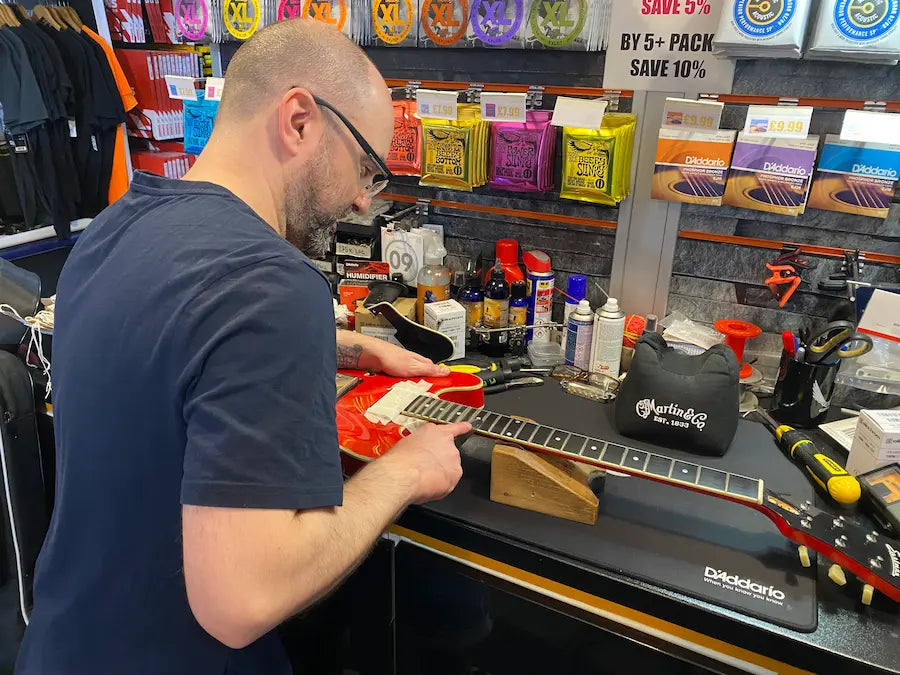
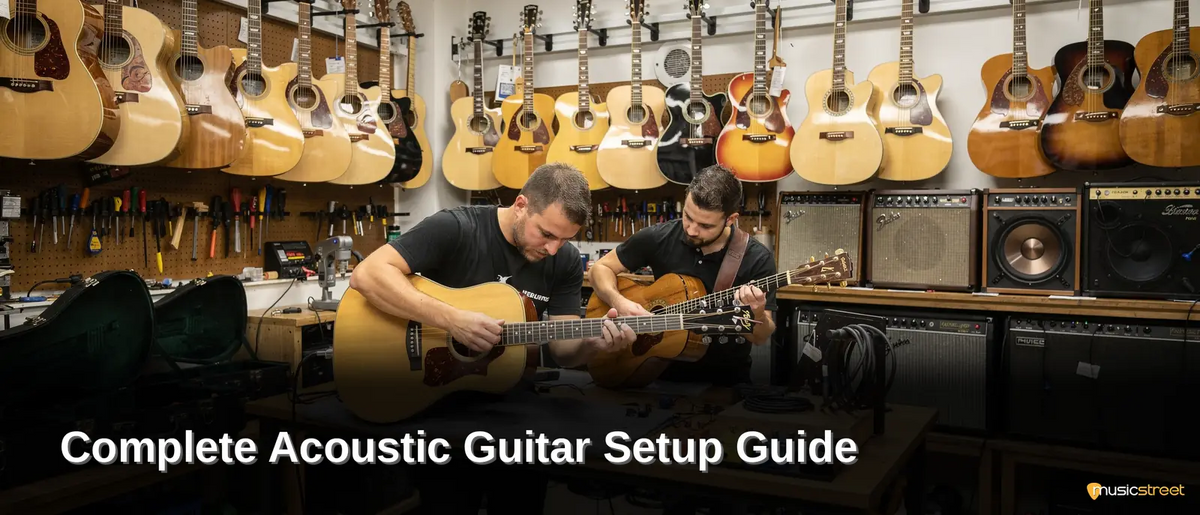
At Music Street, our workshop is dedicated to providing high-quality guitar setup services. Our experienced technicians use precise tools and techniques to ensure that every guitar is set up to perfection. We prioritize customer satisfaction, offering a guarantee on our services to ensure that you leave with an instrument that feels and sounds great.
| Component | Adjustment Type | Purpose |
|---|---|---|
| Action | Height | Improve playability |
| Intonation | Saddle Position | Ensure tuning accuracy |
| Neck Relief | Truss Rod | Prevent fret buzz |
Conclusion
Mastering guitar setups can dramatically enhance your instrument's playability and tone, allowing for a more enjoyable playing experience. By understanding the key adjustments—such as action, intonation, and neck relief—you can ensure your guitar performs at its best. Whether you choose to tackle these adjustments yourself or seek professional help, the value of a well-set-up guitar cannot be overstated. Discover our expert services and elevate your guitar's performance today.







Share:
Discover the Best Electric Guitar Strings for Every Player
Top Famous Electric Guitarists Who Shaped Rock History