


Electric guitars use electromagnetic pickups to convert string vibrations into electrical signals for amplification. Proper setup and maintenance of the guitar improve sound quality, playability, and longevity. Beginners should prioritize a well-adjusted, comfortable instrument suited to their musical style for a better learning experience.
An electric guitar is a stringed instrument that uses electromagnetic pickups to convert string vibrations into electrical signals, which an amplifier then projects as sound. Unlike acoustic instruments, electric guitars produce little sound on their own. Amplification is not a feature. It is the entire point. Scale lengths typically run from 24.75 inches on Gibson-style necks to 25.5 inches on Fender-style necks, and that difference alone shapes how a guitar feels under your fingers. Whether you are buying your first instrument or deepening your knowledge of one you already own, understanding all about electric guitar mechanics, types, and care will make you a sharper player and a better-informed buyer.
How does an electric guitar work?
The electric guitar’s voice comes from electromagnetic induction. Magnetic pickups wrapped in copper wire sit beneath the strings and detect the vibrations of each metal string as a fluctuating magnetic field. That fluctuation generates a small electrical current, which travels through the guitar’s wiring to the output jack and then on to an amplifier.

Pickup types and their tonal character
Three pickup types define most of what you hear on recorded music.
- Single-coil pickups produce a bright, articulate tone with clear note separation. They are the sound of classic blues, country, and clean funk. The trade-off is a faint electrical hum, particularly noticeable in high-gain settings.
- Humbuckers use two coils wired together to cancel that hum. The result is a thicker, warmer tone with more midrange weight. Rock, jazz, and metal players gravitate toward them.
- P90 pickups sit between the two. They share the single-coil format but with a wider bobbin, producing punchy mids and a grittier character that suits blues-rock and indie styles particularly well.
Wiring, controls, and setup
Volume and tone potentiometers (pots) control the signal level and roll off high frequencies respectively. Most guitars carry one or two of each. Active electronics, found on some instruments, include a preamp powered by a 9-volt battery. They boost the signal before it leaves the guitar, giving a cleaner, more consistent output at the cost of battery management.
Pickup height, string action, and intonation directly affect tone clarity and tuning stability. Set pickups too close to the strings and you introduce magnetic pull, which creates strange overtones and pulls notes sharp. Set them too far away and the signal becomes thin. A proper setup addresses all three factors together, not in isolation.
Pro Tip: If your guitar sounds slightly out of tune even after tuning it open, check the intonation at the 12th fret. The fretted note should match the harmonic exactly. If it does not, the saddle position needs adjusting.
What are the main types of electric guitars?
Electric guitars fall into three broad categories: solid-body, semi-hollow, and hollow-body. Each category produces a different relationship between the player, the wood, and the amplifier.
Solid-body guitars
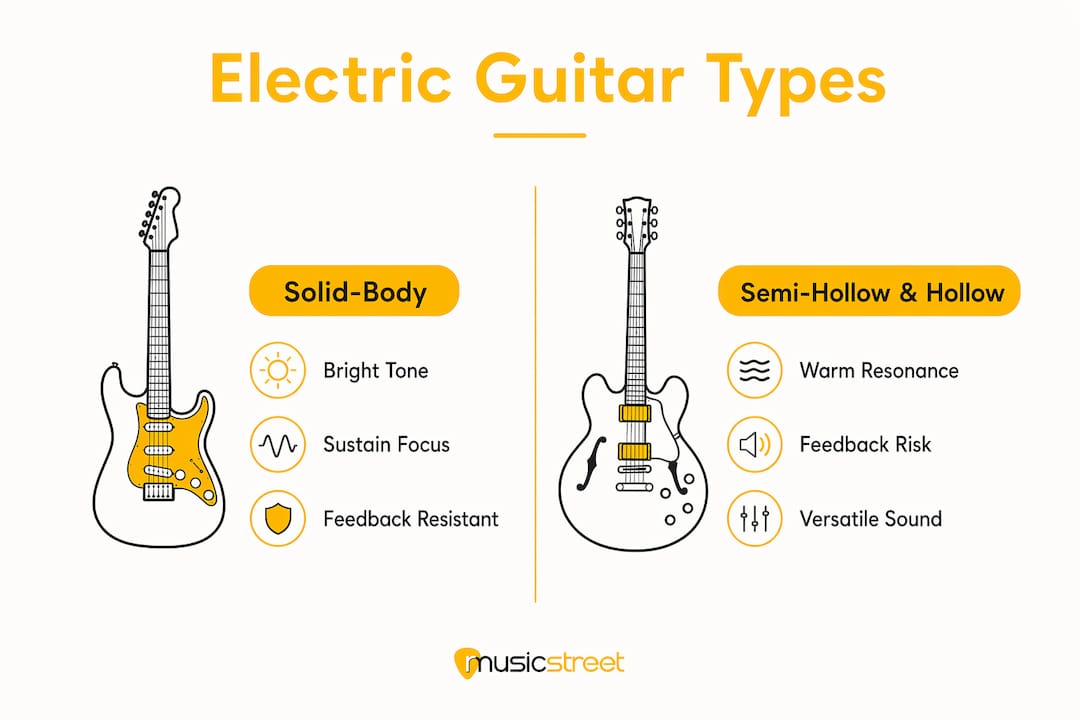
Solid-body guitars are carved from a single slab or laminated block of wood with no internal air cavity. They resist feedback at high volumes, sustain notes for longer, and handle heavy distortion cleanly. That makes them the default choice for rock, metal, punk, and most modern pop. They are also the most physically forgiving for beginners because feedback is rarely a problem.
Semi-hollow and hollow-body guitars
Semi-hollow guitars have a solid centre block running through a chambered body. The chambers add warmth and resonance without the full feedback risk of a hollow instrument. Blues, jazz, and indie players prize them for their rounded, woody tone. Hollow-body guitars have no centre block at all. They are the most acoustically resonant of the three types and produce the warmest, most open sound. Jazz and rockabilly players use them extensively, though they require careful volume management to avoid feedback.
| Body type | Tonal character | Feedback risk | Best suited for |
|---|---|---|---|
| Solid-body | Bright, sustained, punchy | Low | Rock, metal, pop, country |
| Semi-hollow | Warm, resonant, balanced | Moderate | Blues, indie, jazz |
| Hollow-body | Open, woody, full | High | Jazz, rockabilly, fingerstyle |
Choosing between these types is not just about genre. It is about how you want the guitar to feel and respond. A semi-hollow played clean through a small valve amp sounds nothing like a solid-body through a high-gain stack, even if both players are playing the same chord.
Pro Tip: If you play across multiple genres, a semi-hollow gives you the widest tonal range without the feedback risk of a full hollow-body. It is the most versatile of the three categories.
Beginners often benefit from starting with a solid-body electric guitar because it handles varied playing styles without the complications of feedback management. You can learn technique without fighting the instrument.
How to maintain an electric guitar properly
Beginners often treat their guitar like furniture rather than a precision instrument. That approach shortens the instrument’s life and degrades its playability within months. Consistent care keeps an electric guitar sounding and feeling its best for decades.
-
Clean the body and neck after every session. Use a dry microfibre cloth to remove sweat and oils from the finish and strings. Skin oils accelerate string corrosion and can stain unfinished wood over time.
-
Control humidity. Maintaining humidity above 35% prevents fret sprout, where the fret ends protrude beyond the fretboard edge as the wood shrinks. A case humidifier and a small hygrometer are the two tools that protect the wood year-round.
-
Condition the fretboard. Rosewood and ebony fretboards benefit from lemon oil applied twice yearly. The oil hydrates the wood and darkens the finish, which improves both durability and appearance. Maple fretboards are sealed and do not require conditioning.
-
Adjust the truss rod seasonally. The truss rod inside the neck counters over 100 lbs of string tension and needs adjustment as temperature and humidity shift between seasons. Turn no more than a quarter turn at a time, then wait ten minutes before reassessing. Over-tightening cracks the wood.
-
Tighten the input jack nut. Using a 10mm wrench to snug the input jack prevents the jack from rotating inside the body, which eventually breaks the wires soldered to it. This takes thirty seconds and prevents a repair bill.
-
Check and clean the potentiometers. Scratchy volume or tone controls indicate oxidation on the pot contacts. A short burst of contact cleaner resolves this without replacing the component.
For a full list of recommended products, Musicstreet’s guide to guitar care products covers the specific tools worth keeping in your case at all times.
Pro Tip: Store your guitar in its case rather than on a wall hanger during winter months. Central heating drops indoor humidity sharply, and a case with a humidifier provides far better protection than open air storage.
What should beginners know before buying an electric guitar?
Choosing your first electric guitar shapes your early experience more than any other decision. A guitar that is hard to play or poorly set up discourages practice. A well-chosen, properly set-up instrument makes learning feel natural.
- Set a realistic budget. Entry-level instruments from established brands deliver reliable quality. Spending slightly more at the start avoids the frustration of a guitar that cannot hold its tuning or stay in intonation.
- Match the guitar to your musical interests. If you want to play blues and classic rock, a solid-body with humbuckers gives you the right tonal foundation. If you are drawn to jazz or soul, a semi-hollow is worth considering from the outset.
- Prioritise playability over looks. A guitar with low, comfortable string action and a smooth neck profile encourages you to pick it up. A guitar that looks great but feels stiff will sit in the corner.
- Factor in essential accessories. A tuner, a cable, a small practice amplifier, a strap, and a set of spare strings are all necessary from day one. Budget for them alongside the guitar itself.
- Get a professional setup before you start. Most new guitars benefit from a setup that adjusts the action, intonation, and neck relief to suit the player’s style and string gauge. A setup transforms a mediocre-feeling guitar into one that plays well.
Musicstreet’s guide on choosing the right electric guitar covers these factors in depth, with specific advice matched to playing styles and genres. For first-time buyers, the first guitar buying guide at Musicstreet is also worth reading before you commit to a purchase.
Learning how to play electric guitar is most effective when the instrument itself is not fighting you. Consistent practice on a well-set-up guitar builds muscle memory and ear training simultaneously. Online resources and structured lessons both work, but neither substitutes for time spent actually playing.
Key takeaways
The electric guitar rewards players who understand both its mechanics and its maintenance needs, because a well-cared-for instrument plays better, sounds better, and lasts longer.
| Point | Details |
|---|---|
| Electromagnetic pickups define tone | Single-coils, humbuckers, and P90s each produce a distinct character suited to different genres. |
| Body type shapes sound and feedback | Solid-body resists feedback; semi-hollow balances warmth and control; hollow-body suits jazz and low-volume playing. |
| Setup affects everything | Pickup height, action, and intonation must be correctly set for the guitar to play and sound its best. |
| Humidity control protects the wood | Keeping humidity above 35% prevents fret sprout and wood cracking, especially during winter months. |
| Beginners should prioritise playability | A properly set-up solid-body guitar with comfortable action makes learning significantly easier and more rewarding. |
What years of playing taught me about electric guitars
The thing most players get wrong early on is treating the electric guitar as a static object. You buy it, you plug it in, and you assume it will stay that way. It will not. Wood moves with the seasons. Strings corrode. Pots oxidise. The guitar you bought in september will feel different by january if you have not adjusted the truss rod.
I spent years chasing tone through pedals and amplifiers before realising that the guitar itself was the weak link. A poorly set-up instrument with the wrong pickup height sounds thin and unresponsive regardless of what you plug it into. Once I started treating setup and maintenance as part of the playing process rather than an afterthought, everything changed. The guitar became more responsive, more expressive, and more enjoyable to play.
My honest advice: spend as much time learning about your instrument as you spend learning songs. Understand what each control does. Experiment with pickup selector positions. Try different string gauges. The electric guitar is not just a tool for making sound. It is a system with many variables, and the players who understand those variables get more out of every session.
— Music
Quality electric guitars and accessories at Musicstreet
Musicstreet stocks a carefully selected range of new and pre-owned electric guitars covering solid-body, semi-hollow, and hollow-body styles, alongside the maintenance tools and accessories every player needs.

Whether you are looking for a used electric guitar to start your playing life without overspending, or a specialist instrument like the Gretsch G5422G-12 for something more distinctive, the inventory at Musicstreet is worth browsing. The CruzTools Groovetech Guitar Player Tech Kit covers the essential setup and maintenance tasks covered in this guide. Every instrument sold through Musicstreet is professionally inspected, and the team in Huntingdon, Cambridgeshire is available for post-sale support and repairs.
FAQ
What is an electric guitar and how does it produce sound?
An electric guitar uses magnetic pickups to convert string vibrations into electrical signals, which an amplifier then projects as audible sound. Without amplification, the instrument produces very little volume on its own.
What are the three main types of electric guitars?
The three main types are solid-body, semi-hollow, and hollow-body. Solid-body guitars suit high-volume and high-gain playing; semi-hollow guitars offer warmth with moderate feedback control; hollow-body guitars produce the most resonant, open tone and are favoured in jazz.
How often should I maintain my electric guitar?
Wipe down the strings and body after every session, condition the fretboard with lemon oil twice yearly, and check the truss rod adjustment at the start of each new season. Tighten the input jack nut every few months to prevent signal loss.
What pickup type should a beginner choose?
A solid-body guitar with humbuckers is the most forgiving starting point. Humbuckers cancel electrical hum and produce a full, warm tone that works across rock, blues, and pop without requiring precise technique to sound good.
Is learning electric guitar online effective?
Online learning works well when combined with consistent daily practice on a properly set-up instrument. Structured video lessons build technique, but ear training and muscle memory only develop through regular time spent actually playing.








Share:
How to choose an acoustic guitar: a complete buyer's guide
Best type of acoustic guitar strings: your 2026 guide