


Phosphor bronze strings are the most versatile choice for most players due to their warm tone and long-lasting coating. Coated strings extend lifespan and resist corrosion, making them ideal for daily and humid conditions. Larger guitars benefit from bright 80/20 bronze strings, which project well for folk and bluegrass playing.
Choosing the best type of acoustic guitar strings is determined by three factors: alloy composition, coating, and gauge. These three variables collectively shape your tone, playability, and how long a set lasts before it needs replacing. Phosphor bronze coated strings balance warm tone with extended lifespan, making them the most widely recommended choice for general use. Whether you play fingerstyle folk, strummed pop, or bluegrass flatpicking, the right string material transforms how your instrument sounds and feels. Musicstreet’s team works with players across all skill levels and consistently finds that string choice is one of the most underestimated upgrades a guitarist can make.
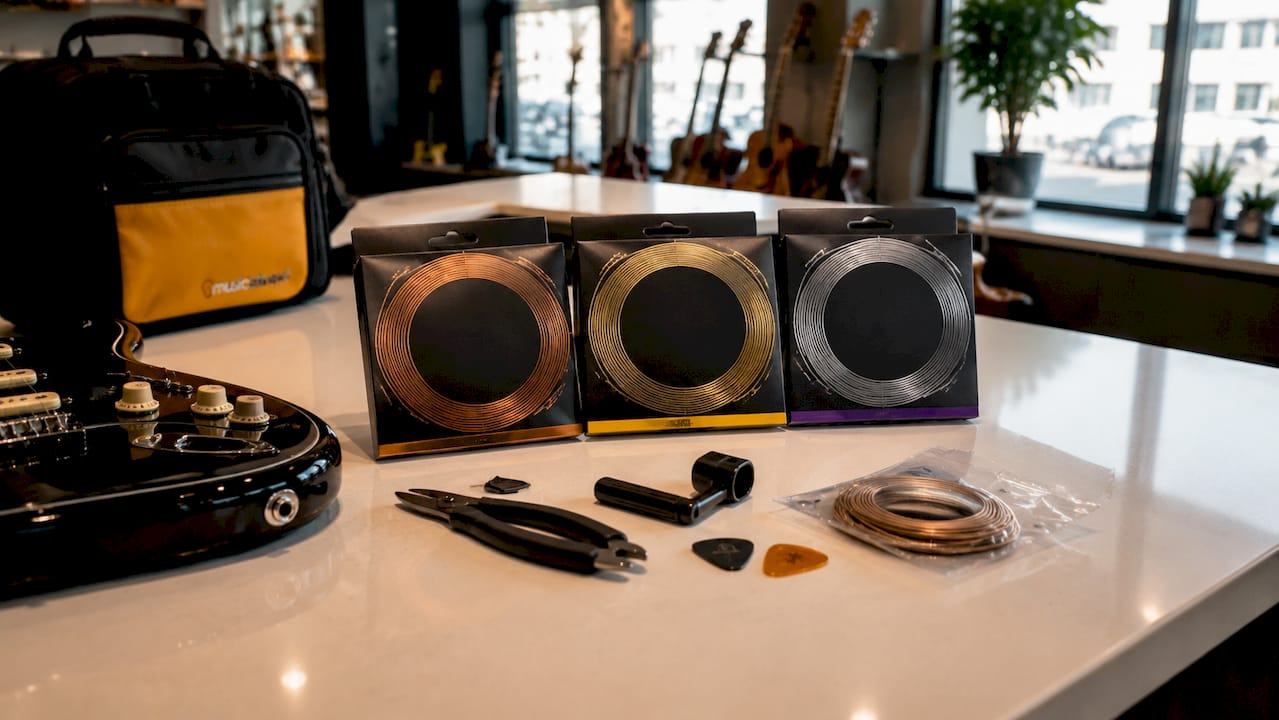
1. What are the best type of acoustic guitar strings overall?
Phosphor bronze strings are the best starting point for most players. They deliver a warm, mellow, and balanced tone that suits fingerpicking, strumming, and everything in between. The string material guide at Musicstreet explains how different alloys affect your sound in practical terms.
The material itself is copper alloyed with 8–10% tin and phosphorus. That phosphorus content is the key detail. It gives the string natural corrosion resistance, which means uncoated phosphor bronze typically lasts 4–6 weeks before tone degrades noticeably. Coated versions extend that lifespan by 3–5 times.
Phosphor bronze works across guitar body sizes, from parlour guitars to full dreadnoughts. That versatility is why most string manufacturers list it as their standard acoustic offering.
2. Why phosphor bronze strings are favoured by most players
Phosphor bronze strings produce a tone that sits in the middle ground between bright and dark. They are warm without being muddy, and clear without being harsh. That balance makes them forgiving across playing styles.
Key characteristics of phosphor bronze strings:
- Tone: Warm, mellow, and balanced with good mid-range presence
- Lifespan: 4–6 weeks uncoated; up to 3–5 times longer with a coating
- Corrosion resistance: Higher than 80/20 bronze due to phosphorus content
- Versatility: Suits fingerpicking, strumming, and hybrid picking styles
- Guitar compatibility: Works well on dreadnoughts, concert bodies, and parlour guitars
The coated version of phosphor bronze is the most practical choice for players who gig regularly or practise daily. The coating prevents sweat and dirt from penetrating the winding, which is the primary cause of tone loss.
Pro Tip: If you change strings more than once a month, switch to coated phosphor bronze. The higher upfront cost pays for itself within two or three sets.
3. Why choose 80/20 bronze strings and who are they best for?
80/20 bronze strings consist of 80% copper and 20% zinc. That zinc content is what produces their defining characteristic: a bright, sharp, and projecting tone that cuts through a mix.
Key characteristics of 80/20 bronze strings:
- Tone: Bright, crisp, and highly projecting with strong treble presence
- Lifespan: Shorter than phosphor bronze; uncoated sets oxidise within 4–6 weeks
- Best guitar match: Large-bodied guitars such as dreadnoughts and jumbos
- Playing styles: Bluegrass flatpicking, folk strumming, and country
- Coated versions: Available and recommended for players who want brightness with better durability
The brightness of 80/20 bronze is both its strength and its limitation. On a large-bodied guitar with strong natural bass response, that brightness creates a pleasing tonal balance. On a smaller-bodied guitar, it can sound thin or overly trebly.
Pro Tip: If you play bluegrass or folk and want your guitar to project in an acoustic session without amplification, 80/20 bronze uncoated strings give you the most immediate brightness. Swap to coated 80/20 if you want that tone to last longer.
4. What are coated acoustic guitar strings and how do they extend lifespan?
Coated strings are acoustic strings with a thin polymer layer applied to the outer winding. Common coating materials include Teflon and nanoweb-style polymer films. The coating acts as a barrier against the two main causes of string degradation: sweat and airborne moisture.
Key benefits and considerations for coated strings:
- Lifespan: Coated strings last 3–5 months for daily players, compared to 4–6 weeks for uncoated sets
- Feel: Slightly smoother and more slippery than uncoated strings
- Tone: Marginally less bright initially, but tone stays consistent for far longer
- Cost: Higher upfront price, but better value over time
- Best for: Gigging musicians, players with naturally acidic sweat, and humid climates
Players who sweat heavily or live in humid environments benefit most from coated strings. Coated strings resist corrosion far better than uncoated sets, which is a practical advantage rather than a marketing claim.
The tonal difference between coated and uncoated strings is real but subtle on day one. The significant difference appears after two or three weeks of playing, when uncoated strings have already begun to lose brightness and feel rough under the fingers.
Pro Tip: Try a set of coated strings for one month and compare them to your usual uncoated set. Most players who make the switch do not go back.
5. How do string gauge and guitar body size influence your choice?
String gauge refers to the thickness of the string, measured in thousandths of an inch. Gauges range from extra light through light, medium light, medium, and heavy. Each gauge produces a different balance of tone, volume, and tension.
The relationship between gauge and guitar body size matters more than most players realise. Heavier gauge strings produce fuller tone and more volume, but they require more finger pressure and place greater tension on the guitar top. Using heavy gauge strings on a small-bodied acoustic can reduce resonance, reduce volume, or cause structural issues over time.
A practical gauge guide by guitar type:
- Extra light (.010–.047): Best for smaller-bodied guitars and beginners. Low tension, easy to play, bright and punchy tone.
- Custom light (.011–.052): A popular middle ground. Works well on concert and orchestra-body guitars.
- Light (.012–.054): The most common gauge for dreadnoughts. Balances playability with full tone.
- Medium (.013–.056): Suited to large-bodied guitars played with a firm strumming hand. Fuller bass response.
- Heavy (.014–.059): Specialist choice for open tunings or slide playing. Not recommended for standard playing on most guitars.
Lighter gauge strings are easier to play and better suited for beginners, offering bright tone with lower tension. For a detailed breakdown of gauge selection, the string gauge guide at Musicstreet covers every body type in practical terms.
6. What other string materials should musicians consider?
Beyond phosphor bronze and 80/20 bronze, several other materials offer distinct tonal qualities worth knowing about. Most players will spend their lives on one of the two main types, but these alternatives solve specific problems.
- Nickel bronze: Produces a natural, clear tone with long tuning stability. A good choice for players who want something between the warmth of phosphor bronze and the brightness of 80/20 bronze.
- Brass: Bright and jangly, with a tone that is more metallic than either bronze alloy. Rarely used outside specialist or vintage applications.
- Silk and steel: Soft, mellow tone with lower tension, easier on the fingers, and well suited to folk and fingerpicking. A practical option for players with sensitive fingertips or older guitars with lighter bracing.
- Aluminium bronze: Produces a crisp, clear tone with strong note definition. Less common but worth trying if you find phosphor bronze too warm and 80/20 bronze too bright.
Silk and steel strings are particularly useful for beginners who find standard light gauge strings uncomfortable. The lower tension reduces finger soreness during the early weeks of learning. The trade-off is reduced volume and projection compared to all-metal strings.
The acoustic string differences guide at Musicstreet covers these materials with specific tonal comparisons for players who want to go deeper.
Key takeaways
The best strings for acoustic guitar are phosphor bronze coated light gauge sets for most players, with 80/20 bronze as the preferred choice for brightness and projection on larger-bodied instruments.
| Point | Details |
|---|---|
| Phosphor bronze is the default choice | Warm tone, natural corrosion resistance, and wide compatibility make it the best all-round option. |
| 80/20 bronze suits larger guitars | Its bright, projecting tone works best on dreadnoughts and jumbos, especially for folk and bluegrass. |
| Coated strings last 3–5 times longer | The higher upfront cost pays off for daily players and those in humid environments. |
| Match gauge to guitar body size | Heavy gauges on small-bodied guitars reduce resonance and risk structural damage over time. |
| Alternative materials solve specific problems | Silk and steel suits beginners and folk players; nickel bronze offers a tonal middle ground. |
What I have learned from years of recommending strings
The question I hear most often is: “Which strings are best?” The honest answer is that no single set suits everyone. The choice depends on your guitar body size, your playing style, and how often you play.
What I have found consistently is that beginners almost always benefit from coated phosphor bronze in a light gauge. The coating reduces the frequency of string changes, which matters when you are still developing calluses and technique. The light gauge lowers the tension, making chord shapes easier to hold. That combination removes two common frustrations at once.
For more experienced players, I encourage experimentation. If you have only ever played phosphor bronze, try a set of 80/20 bronze on your dreadnought. The brightness may surprise you in a good way, particularly if you play in a band context where your guitar needs to cut through. Conversely, if your guitar sounds harsh or bright, dropping to phosphor bronze often solves the problem without any other changes.
Climate matters more than most players acknowledge. If you live somewhere humid or your hands sweat during playing, uncoated strings will degrade faster than the standard 4–6 week estimate. Coated strings are not a luxury in those conditions. They are the practical choice.
String care also extends lifespan noticeably. Wiping strings down after every session with a dry cloth removes the sweat and oils that cause corrosion. It takes ten seconds and adds weeks to the life of an uncoated set.
— Music
Acoustic guitars and accessories at Musicstreet
Strings are only part of the equation. The guitar itself shapes how any string material sounds and responds.

Musicstreet stocks a range of acoustic guitars suited to every skill level, from beginner-friendly models to professional instruments. The Yamaha FGX5 Acoustic Guitar is a strong example of a full-bodied dreadnought that responds particularly well to phosphor bronze light gauge strings. For players interested in electro-acoustic options, the Yamaha FGC-TA TransAcoustic offers built-in reverb and chorus effects that interact interestingly with different string materials. Musicstreet also carries maintenance kits and accessories to keep your strings and instrument in good condition. Browse the full range online or visit the store in Huntingdon, Cambridgeshire for hands-on advice.
FAQ
What is the best string material for a beginner?
Coated phosphor bronze in a light gauge is the best starting point for beginners. The coating extends string life, and the lighter gauge reduces finger soreness during early practice.
How often should I change acoustic guitar strings?
Uncoated strings last approximately 4–6 weeks for regular players. Coated strings last 3–5 months, making them the better choice for anyone who plays daily.
Can I use electric guitar strings on an acoustic?
Electric strings on an acoustic produce a thin, lifeless tone and should be avoided. Acoustic strings are wound and constructed specifically for soundboard projection.
What gauge strings suit a dreadnought guitar?
Light gauge (.012–.054) is the standard choice for dreadnoughts. Medium gauge (.013–.056) suits players with a heavier strumming hand who want more bass response.
Do coated strings sound different to uncoated strings?
Coated strings sound marginally less bright on day one, but their tone stays consistent far longer. After two to three weeks, coated strings still sound fresh while uncoated sets begin to sound dull.







Share:
All about electric guitar: the complete player's guide
Wood for electric guitar body: the builder's guide