


Moving a prized guitar from one gig to the next means trusting your case with more than just convenience. For British musicians who invest countless hours practising and performing, choosing the right case material directly affects instrument safety during every journey. With options including ABS plastic, plywood, fibreglass, and even carbon fibre, understanding how each material delivers different levels of protection, weight, and moisture resistance helps you keep your guitar secure no matter where music takes you.
Table of Contents
- What Are Guitar Case Materials?
- Types: Hard, Soft, and Hybrid Cases
- Durability, Weight, and Moisture Protection
- Cost, Value, and Practical Trade-Offs
- Choosing the Right Material for Your Needs
Key Takeaways
| Point | Details |
|---|---|
| Material Choice is Crucial | Select guitar case materials that provide the right balance of protection, weight, and moisture resistance based on your usage needs. |
| Understand Case Types | Familiarise yourself with hard, soft, and hybrid cases to choose the best option for your transportation frequency and protection requirements. |
| Budget Appropriately | Plan to spend 6% to 15% of your instrument’s value on a case, considering the trade-offs between cost and protective capabilities. |
| Assess Environmental Factors | Take into account the climate and travel conditions when selecting a case to ensure optimum protection for your instrument. |
What Are Guitar Case Materials?
Guitar cases are more than simple containers they are vital shields protecting your musical investment. Various materials used in guitar case construction provide different levels of protection, durability, and aesthetic appeal for musicians.
Traditionally, guitar cases are crafted from several primary materials including wood, metal, plastic, and advanced composites. Plywood remains a classic choice, often covered with robust materials like tweed or tolex, which offer excellent structural integrity. ABS plastic has gained popularity due to its impact resistance and lightweight nature, while fiberglass provides superior protection for more delicate instruments.
The interior of guitar cases is equally crucial, typically lined with soft, protective fabrics like plush wool or velvet. These interior materials cushion the instrument, preventing scratches and absorbing potential shock during transportation. Carbon fibre represents the pinnacle of modern case materials, offering exceptional strength and minimal weight for professional musicians who demand top-tier protection.
Pro tip: When selecting a guitar case, prioritise materials that balance weight, protection, and your specific travel requirements.
Here is a summary comparing the most common guitar case materials:
| Material | Protection Level | Weight | Moisture Resistance |
|---|---|---|---|
| Wood/Plywood | Good for impacts | Heavy, less mobile | Requires treatment |
| ABS Plastic | Strong, shockproof | Medium, portable | Very moisture resistant |
| Fibreglass | Superior shielding | Medium, manageable | Excellent barrier |
| Carbon Fibre | Exceptional | Extremely light | Outstanding resistance |
| Nylon (Soft) | Basic, minimal | Very light | Low, absorbs moisture |
Types: Hard, Soft, and Hybrid Cases
Guitar musicians have three primary case options, each offering unique protection levels and transportation benefits. Guitar cases range from soft to flight-grade protection with distinctive characteristics designed for different playing environments and travel needs.
Hard Cases represent the most robust protection category. Constructed from materials like wood, ABS plastic, and fibreglass, these cases provide exceptional shock resistance and environmental protection. Professional musicians and those frequently transporting instruments appreciate hard cases for their rigid exterior that shields against impacts, temperature fluctuations, and potential crushing forces during transit.

Soft Cases (also known as gig bags) offer lightweight convenience for musicians who prioritise portability. Typically made from padded nylon with internal foam cushioning, these cases provide basic protection suitable for short-distance transportation. While they won’t withstand severe impacts, soft cases are ideal for musicians travelling locally or carrying instruments between home and nearby performance venues.
Hybrid Cases emerged as a compromise between hard and soft case designs. These innovative solutions combine elements of both protection styles, featuring reinforced exteriors with softer, more flexible interiors. Hybrid cases aim to deliver enhanced protection without the substantial weight of traditional hard cases, making them increasingly popular among gigging musicians who need balanced protection and ease of transport.
Pro tip: Consider your typical travel environment and performance frequency when selecting a guitar case to ensure optimal protection for your instrument.
The table below highlights typical case types and their ideal use scenarios:
| Case Type | Best For | Typical Price Range | Portability Level |
|---|---|---|---|
| Hard Case | Frequent travel, professionals | £100–£500 | Bulky, less convenient |
| Hybrid Case | Gigging, moderate protection | £60–£250 | Good compromise |
| Soft/Gig Bag | Local commutes, students | £30–£150 | Extremely portable |
Durability, Weight, and Moisture Protection
Musicians must carefully consider the critical balance between durability, weight, and moisture protection when selecting a guitar case. Case materials dramatically impact protection levels for musical instruments during transportation and storage.
Durability stands as the primary concern for most guitarists. Hard cases constructed from ABS plastic, fibreglass, and reinforced woods offer superior structural integrity, protecting instruments from physical impacts and external pressures. These robust materials can withstand significant compression, accidental drops, and rough handling, making them ideal for professional musicians who travel frequently or transport instruments in challenging environments.
Weight considerations play a crucial role in case selection. While hard cases provide maximum protection, they often come with substantial weight penalties. Fibreglass and ABS plastic cases represent an intelligent compromise, offering robust protection without the extreme heaviness of traditional wooden cases. Soft cases remain the lightest option, though they sacrifice significant protective capabilities in exchange for portability.
Moisture protection represents another critical factor in guitar case design. Different materials offer varying levels of humidity resistance. ABS and fibreglass cases create near-impermeable barriers against moisture, protecting instruments from potential warping, mould growth, and wood degradation. Plywood cases, while durable, can absorb moisture if not properly treated, potentially compromising the instrument’s structural integrity over time.
Pro tip: Invest in a case with moisture-resistant properties and consider using silica gel packets to control humidity levels inside your guitar case.
Cost, Value, and Practical Trade-Offs
Guitar case investments require careful consideration of financial constraints and protective requirements. Case pricing reflects protection capabilities across different materials and design approaches.
Typically, musicians should expect to invest between 6% to 15% of their instrument’s value in a suitable case. Hard cases represent the most expensive option, ranging from £100 to £500, but offer comprehensive protection for high-value instruments. Professional touring musicians and collectors often justify these costs by preventing potential instrument damage that could cost thousands in repairs or replacement.
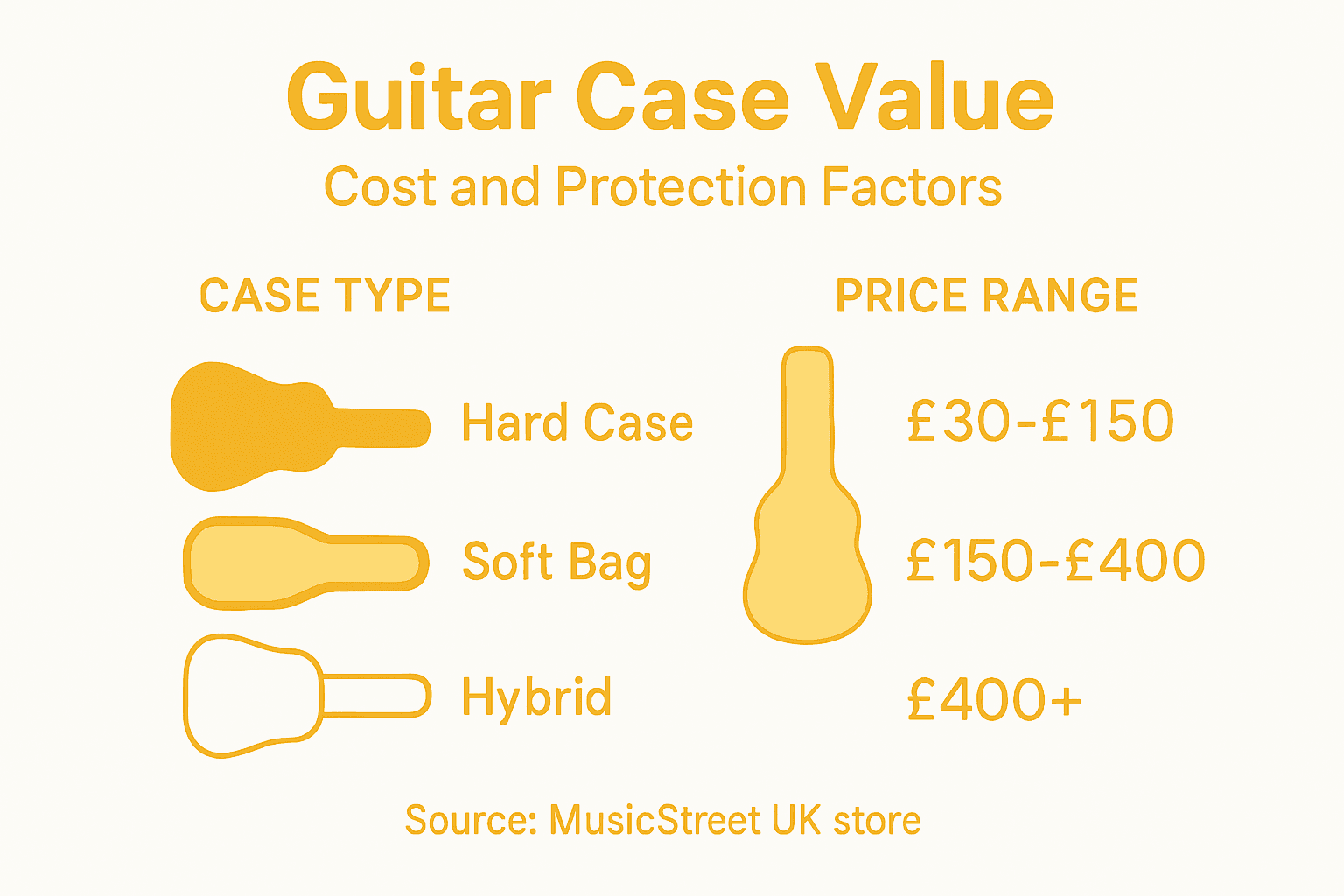
Soft cases provide a more budget-friendly alternative, usually priced between £30 and £150. While significantly cheaper, they compromise on protection and durability. Hybrid cases emerge as an intelligent middle ground, offering enhanced protection at a moderate price point. These cases balance affordability with improved structural integrity, making them attractive for musicians who travel occasionally but still require reliable instrument protection.
The practical trade-offs between cost and protection are nuanced. Cheaper cases might save money initially but could potentially lead to expensive instrument damage. Professional musicians typically invest in high-quality cases as a form of insurance, recognising that preventative spending can save significant money in the long term. Amateur musicians and occasional players might prioritise lighter, more affordable options that provide basic protection for local transportation.
Pro tip: Calculate your case budget as a percentage of your instrument’s value, aiming to spend at least 10% on quality protection.
Choosing the Right Material for Your Needs
Guitar case material selection requires careful assessment of your specific musical lifestyle, travel requirements, and instrument value. The perfect case balances protection, weight, and practicality across different scenarios.
Climate and Travel Conditions play a pivotal role in material selection. Musicians frequently travelling through varied environments need robust, moisture-resistant cases. Fibreglass and ABS plastic cases offer superior environmental protection, resisting temperature fluctuations and humidity changes. Carbon fibre represents the pinnacle of protection, providing exceptional durability with minimal weight, though at a premium price point.
Frequency of transportation determines your ideal case material. Professional touring musicians require maximum protection and might invest in heavy-duty wooden or fibreglass cases that withstand constant movement and potential rough handling. Local performers or home musicians might prefer lightweight hybrid or soft cases that provide basic protection during short trips. The key is matching case material to your typical usage pattern, considering factors like distance travelled, transportation method, and potential exposure to environmental risks.
Budget considerations intersect with material choices. While carbon fibre and high-end fibreglass cases offer superior protection, they come with significant cost implications. Plywood and ABS plastic cases provide a balanced compromise, offering reasonable protection at more accessible price points. Understanding your instrument’s value and potential replacement costs helps justify investment in higher-quality materials.
Pro tip: Assess your specific travel and storage needs before selecting a case material, considering factors like frequency of transport, climate conditions, and budget constraints.
Secure Your Guitar with the Right Case from MusicStreet
Choosing the perfect guitar case material can feel overwhelming when weighing protection, weight, and moisture resistance for your valuable instrument. Whether you seek the robust durability of hard cases or the portability of soft gig bags, making the right choice is essential to safeguard your investment and prevent costly damage.
At MusicStreet, we understand these challenges and are proud to offer a wide selection of high-quality guitar cases matched to every need and budget. From tough ABS plastic and fibreglass cases to lightweight hybrid options, our expert team will help you find the best fit that balances protection with portability. Experience confidence every time you travel or store your guitar knowing that your instrument is shielded by materials designed to defend against impacts, humidity, and wear.
Take the next step in protecting your guitar by visiting MusicStreet today. Browse our curated collection, explore exclusive offers, and benefit from our personalised advice and outstanding customer support. Don’t wait until damage happens—invest in the perfect guitar case now and play with peace of mind.

Frequently Asked Questions
What materials are commonly used to make guitar cases?
Guitar cases are typically made from wood, ABS plastic, fibreglass, and advanced composites. Each material offers different protection levels and durability.
How important is the weight of a guitar case?
Weight is crucial when selecting a guitar case. While hard cases provide the best protection, they tend to be heavier. Softer cases offer more portability but less protection, so it’s essential to consider your travel requirements.
What type of case should I choose for frequent travel?
For frequent travel, hard cases or hybrid cases are ideal as they provide superior protection against impacts and environmental factors. They are particularly suited for professional musicians who often transport their instruments.
How can I protect my guitar from moisture damage in its case?
To protect your guitar from moisture, choose a case made from moisture-resistant materials like ABS plastic or fibreglass. Additionally, consider using silica gel packets to control humidity levels inside the case.






Share:
7 Steps for a Complete Guitar Buying Checklist UK Buyers Need
Guitar Amplifier Types Explained: Find Your Sound