


Finding the right guitar in Huntingdon can feel confusing when so many parts influence sound and playability. For anyone starting out, understanding the guitar headstock is crucial if you want a reliable and enjoyable instrument. The headstock controls string tension and tuning stability, acting as the anchor for your strings and tuners. This article helps you spot quality features, explains core functions, and shows how headstock design shapes your guitar’s feel and performance.
Table of Contents
- Guitar Headstock: Core Definition And Functions
- Types Of Headstocks And Visual Distinctions
- Impact On Tuning, Playability, And Durability
- Common Misconceptions And Mistakes To Avoid
Key Takeaways
| Point | Details |
|---|---|
| Headstock Importance | The headstock significantly influences tuning stability and overall playability of the guitar. Understanding its role is crucial for quality sound. |
| Design Variations | Different headstock designs affect string tension and access to tuning machines, impacting how comfortably you can play. |
| Material and Craftsmanship | High-quality materials and construction are essential for durability and consistent tuning performance. |
| Common Mistakes | Beginners often overlook the headstock’s role in sound and stability, leading to costly errors in selecting a guitar. |
Guitar headstock: Core definition and functions
The guitar headstock is the elongated section at the end of your neck, above the fretboard. It’s where the tuning machines (or tuners) live, and it’s absolutely vital to how your guitar sounds and plays. Think of it as the control centre for string tension—get this right, and your guitar stays in tune. Get it wrong, and you’re fighting an uphill battle.
At its core, the headstock serves one primary purpose: holding the tuning machines that control string tension. These tuners have small pegs or buttons that you turn to adjust how tightly the strings are wound around the post. Tighten a peg, the string gets higher in pitch. Loosen it, the string drops lower. This simple mechanical system is how you tune your guitar.
But the headstock does far more than just mount the tuners. Its design directly affects how your strings behave across the entire instrument.
Key functions of the guitar headstock:
- Anchors the tuning machines that adjust string tension and pitch
- Provides the first point of contact for strings beyond the fretboard
- Influences the angle at which strings break over the nut
- Affects tuning stability and sustain across all six strings
- Determines the overall balance and weight distribution of your guitar
The angle at which strings leave the headstock and travel over the nut (the small piece at the top of the fretboard) is crucial. A steeper angle creates more downward pressure, which typically improves tuning stability. A shallower angle might feel less aggressive but can sometimes result in tuning problems or buzzing strings.
The headstock’s design isn’t just cosmetic—it’s a structural element that directly impacts how stable your tuning stays during playing and whether your guitar sustains notes properly.
You’ll notice that different headstock designs—solid blocks, slotted designs, angled backs—all affect how the strings sit and behave. Some designs offer better tuning stability, whilst others provide easier access to the tuning pegs. This is why understanding the components of electric guitar design matters when you’re selecting your instrument.
When you’re evaluating a guitar, spend time looking at the headstock. Check how the tuners feel—do they turn smoothly without wobbling? Look at the string angle over the nut. Does it seem dramatic or subtle? These small observations tell you whether the headstock is well-designed and properly maintained.
To help identify a well-designed guitar headstock, use this quick reference:
| Indicator | Sign of Quality | Potential Issue |
|---|---|---|
| Tuner operation | Smooth, firm turning | Wobbly or sticky |
| String break angle | Consistent, moderate angle | Very steep or shallow |
| Nut craftsmanship | Clean slots, no rough edges | Unfinished or uneven grooves |
| Material match | Headstock matches neck wood | Veneer over cheap base |
Pro tip: When trying a guitar at MusicStreet, pay attention to how the tuning pegs respond—smooth, consistent turning indicates quality craftsmanship and proper setup, which directly affects how easily you’ll keep the guitar in tune during practice.
Types of headstocks and visual distinctions
Guitar headstocks come in remarkably different shapes and layouts. The type you choose affects not just how your guitar looks, but how it plays and feels in your hands. Understanding the main variations helps you pick an instrument that suits your style and comfort preferences.
The most obvious distinction is how the tuning machines are arranged. Headstock configurations vary widely depending on the guitar’s intended style and manufacturer philosophy. Two primary layouts dominate the market.
Common headstock layouts:
- 3+3 (slotted headstock) – Three tuners on each side, typically found on acoustic guitars and some electric models
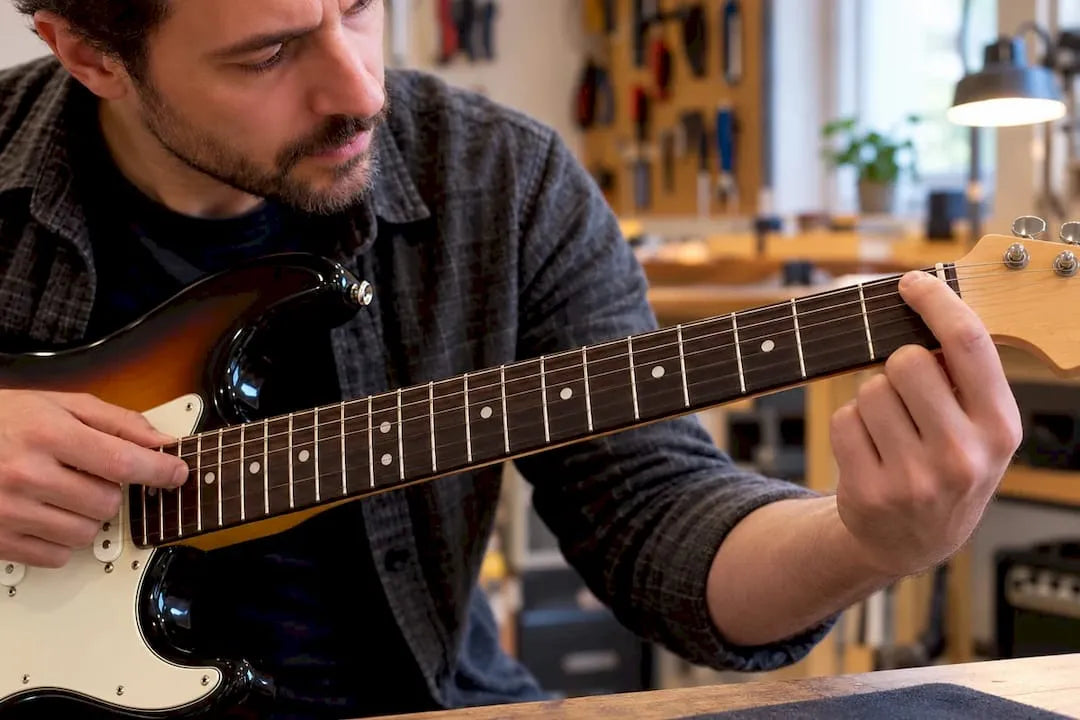
- 6-in-line (inline headstock) – All six tuners arranged in a single row on one side, common on electric guitars like Fenders
- 4+2 – Four tuners on one side, two on the other, offering a balanced aesthetic
- Angled or straight – Refers to whether the headstock tilts back or stands perpendicular to the neck
Beyond tuner arrangement, visual identity matters too. Some headstocks feature inlaid logos and carved designs that make them instantly recognisable. Others have simple, minimalist aesthetics that let the wood grain speak for itself.
Here’s how popular headstock layouts differ in practice:
| Headstock Layout | Typical Guitar Type | Tuning Access | Visual Appeal |
|---|---|---|---|
| 3+3 Slotted | Acoustic, some electric | Easy on both sides | Classic, vintage style |
| 6-in-line | Electric (e.g., Fender) | Very accessible, one-sided | Sleek, modern look |
| 4+2 | Electric, hybrid models | Balanced, quick access | Unusual, contemporary |
| Angled Back | Various, mainly high-end | Often easier grip | Distinct, dramatic angle |
The physical shape varies dramatically as well. Some taper smoothly from the neck, whilst others flare outward dramatically. Vintage-style headstocks often feature softer curves, whereas modern designs can be angular and geometric. These aren’t just cosmetic choices—shape affects weight distribution and how the guitar balances when you’re playing standing up or sitting down.
Material also distinguishes headstocks visually. You’ll see solid wood blocks, thin veneers over cheaper wood, and occasionally composite materials. A quality headstock uses matching wood that complements the rest of the instrument, creating a cohesive look.
The headstock’s visual design tells a story about the guitar’s heritage and intended purpose. A 3+3 slotted design suggests acoustic tradition, whilst a sleek 6-in-line layout points toward electric guitar innovation.
When examining headstocks at MusicStreet, notice how the tuners are mounted. Some sit flush against the headstock, whilst others protrude or use a combination approach. This affects not just looks but also how easy the tuners are to access and adjust.
Pro tip: Visit our Huntingdon store to compare different headstock types in person—hold several guitars with different layouts to see which feels most comfortable for your hand size and playing style, as this can significantly impact your long-term enjoyment.
Impact on tuning, playability, and durability
The headstock isn’t just decorative—it directly shapes how well your guitar stays in tune, how it feels to play, and how long it lasts. This is where design choices have real, practical consequences for your playing experience.
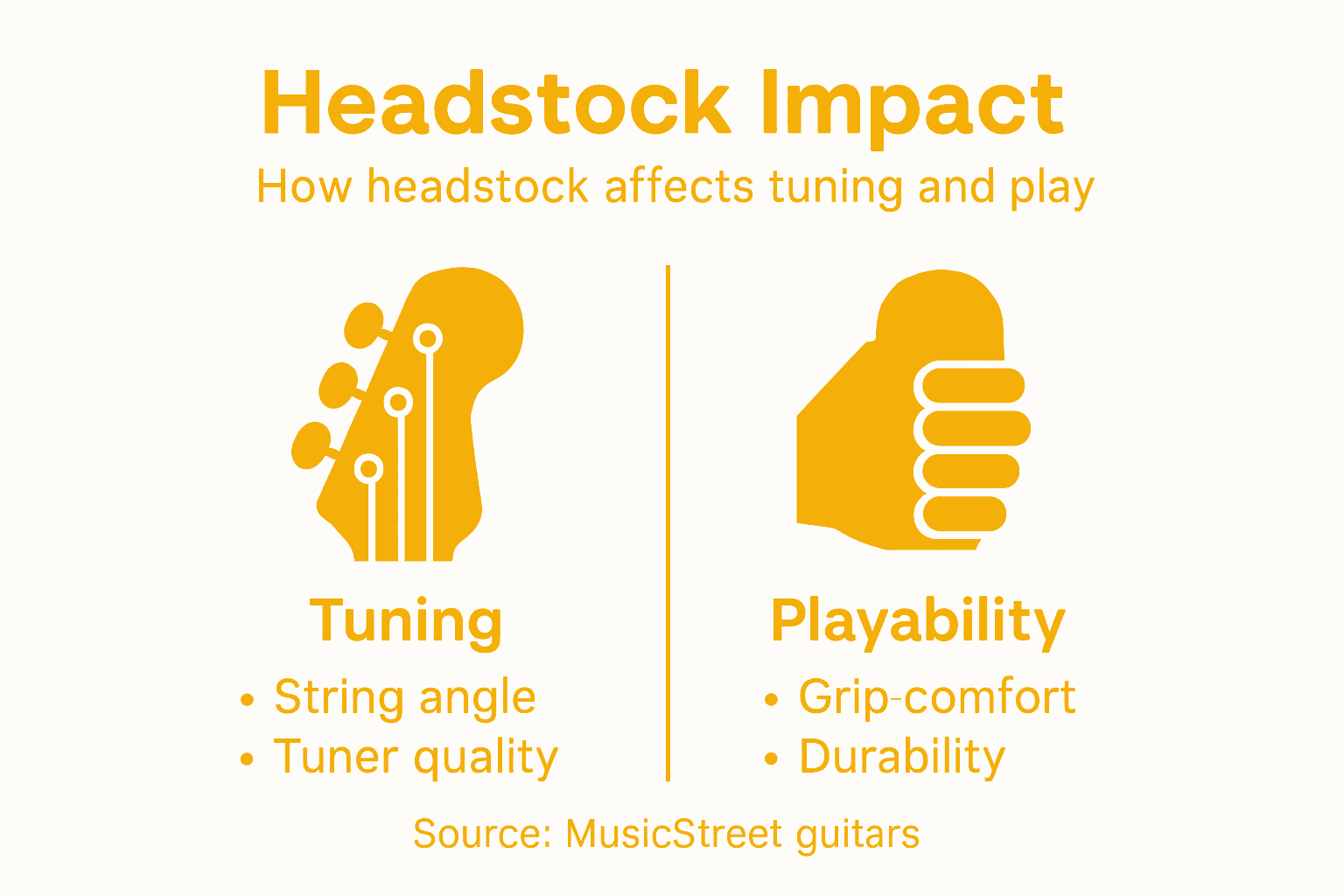
Tuning stability starts at the headstock. The angle at which your strings break over the nut, determined by headstock design and string break angle, controls how much downward pressure exists at that critical contact point. More pressure typically means better tuning stability because the strings seat firmly in the nut grooves.

However, there’s a trade-off. An angled headstock can increase friction at the nut, potentially causing tuning issues unless the nut is properly lubricated or carefully designed. This is why quality matters—a well-manufactured headstock with proper nut design keeps your guitar stable without creating problems.
How headstock design affects your playing:
- Steeper angles improve tuning stability but require precise nut lubrication
- Shallower angles feel gentler but can allow slight tuning drift during vigorous playing
- Tuner placement influences how evenly string tension distributes across the headstock
- Weight distribution affects overall guitar balance and fatigue when playing standing up
Playability connects directly to headstock ergonomics. A well-designed headstock positions the tuning machines so you can access them easily without awkward hand movements. When tuners sit too far back or at odd angles, even simple adjustments become frustrating. This matters during rehearsals, gigs, and practice sessions.
Durability comes down to material choice and construction quality. Headstocks made with rigid, dense materials resist warping and damage far better than cheaper alternatives. A solid wood headstock constructed properly withstands temperature and humidity changes that would cause cheaper veneers to crack or separate.
A quality headstock construction provides consistent tuning stability, resists environmental damage, and maintains playability for years—making it one of your most critical investment factors when purchasing a guitar.
When you’re evaluating guitars at MusicStreet, test the tuning stability by playing for a few minutes, then checking if the tuning has drifted. A well-designed headstock keeps you in tune. Also notice whether the overall setup and maintenance of the instrument shows care, as this reflects the quality of the headstock work.
Pro tip: When comparing guitars, deliberately detune slightly and retune each one multiple times—a headstock with superior design and materials will return to pitch more consistently, showing its long-term durability and tuning stability advantages.
Common misconceptions and mistakes to avoid
Beginners often overlook the headstock’s importance because they focus on flashier elements like pickups or body shape. This leads to costly mistakes that undermine playability and tone. Understanding what actually matters helps you avoid these pitfalls.
The biggest misconception is that the headstock has minimal effect on sound. This simply isn’t true. The headstock’s mass and material influence vibration and your guitar’s overall tone character. A poorly constructed headstock with thin veneers produces noticeably different sustain and resonance compared to a quality solid-wood design.
Many beginners also misunderstand string routing. They assume any arrangement of strings works, but proper string routing over the nut and tuning pegs dramatically affects tuning stability. Incorrect routing creates uneven string tension, leading to tuning problems that no amount of adjustment can fully fix.
Common headstock mistakes to avoid:
- Ignoring tuner quality and assuming all tuning machines work equally well
- Neglecting proper nut lubrication, which causes friction and tuning instability
- Over-tightening tuner posts, which can strip threads and damage the headstock
- Assuming expensive wood always means better performance or durability
- Overlooking craftsmanship in favour of price alone
Another frequent error is believing that expensive materials automatically guarantee superior sound. Craftsmanship and design matter just as much. A well-designed headstock made with quality construction outperforms an expensive but poorly engineered one.
Many players also make the mistake of improper tuner installation or replacement. Forcing tuner posts into holes that don’t align properly damages the headstock and creates instability. This is why professional setup and installation are valuable investments.
Don’t assume headstock problems are unfixable. Most tuning issues stem from poor nut lubrication or string routing—both easily corrected by a qualified technician—rather than fundamental design flaws.
When selecting a guitar, don’t judge the headstock solely by appearance. Press gently on different parts to check for flex or movement that suggests weak construction. Listen for how the tuners feel when you adjust them—smooth operation indicates quality craftsmanship.
Pro tip: When trying guitars at MusicStreet, ask our team to show you the difference between quality tuner installation and poor setup—once you feel the difference in tuning stability and ease of adjustment, you’ll instantly recognise why headstock craftsmanship matters so much for your playing experience.
Discover Guitars with Perfect Headstock Craftsmanship at MusicStreet
Understanding the role of the guitar headstock is essential for ensuring tuning stability, playability and durability. If you have ever struggled with tuning issues, string buzzing or uncomfortable tuner placement the expert setup process and high-quality instruments at MusicStreet have you covered. We carefully inspect every guitar’s headstock design and tuners to deliver instruments that perform flawlessly and inspire confidence.

Explore our wide range of electric and acoustic guitars designed with expert craftsmanship focused on precise tuner operation and ideal string break angles. Whether you prefer the classic 3+3 slotted style or the sleek 6-in-line headstock, MusicStreet offers personalised service to help you find the perfect fit for your playing style. Visit MusicStreet to browse our selection, book an in-store tryout at Huntingdon, or arrange professional setup and maintenance that ensures your guitar stays in tune longer. Act now and experience the difference a quality headstock makes to your music.
Frequently Asked Questions
What is the primary function of the guitar headstock?
The primary function of the guitar headstock is to hold the tuning machines that control string tension and pitch, which is vital for tuning the instrument properly.
How does headstock design affect tuning stability?
The angle at which strings break over the nut, determined by the headstock design, influences how much downward pressure exists at that contact point. A steeper angle usually improves tuning stability, while a shallower angle may lead to tuning issues.
What common mistakes should beginners avoid regarding headstocks?
Beginners often overlook the importance of tuner quality, neglect proper nut lubrication, and assume that expensive wood guarantees better performance. These mistakes can lead to tuning instability and poor playability.
How does different headstock layouts impact playability?
Different headstock layouts, such as 3+3 and 6-in-line configurations, affect how easily you can access the tuning machines. The placement and arrangement can influence comfort during tuning and overall playability, depending on the player’s style.






Share:
How to Pick Luxury Guitar Accessories for the Perfect Sound
Discover the Iconic Sound of the Fender Stratocaster Guitar