


Frustrated that your guitar’s sound never quite matches the rich tones you hear on classic British rock albums? Many players believe swapping pickups is the magic fix, yet there’s so much more involved. As you move beyond beginner level in the United Kingdom, understanding the real role of a pickup as a transducer converting string vibrations into electrical signals can help cut through the myths. Discover how pickups shape your instrument’s voice, why no two designs are alike, and what you truly need to know before choosing an upgrade.
Table of Contents
- Guitar Pickups Explained And Common Myths
- Types Of Pickups And Tonal Differences
- How Upgrading Pickups Changes Your Sound
- Essential Features And Choosing The Right Upgrade
- Costs, Risks, And What To Avoid
Key Takeaways
| Point | Details |
|---|---|
| Pickups are just one factor | While pickups significantly impact tone, other elements like amp quality and playing technique also play crucial roles. |
| Variability in pickups | Not all pickups of the same type sound identical; differences in construction lead to unique tonal characteristics. |
| Choose wisely based on needs | Consider your musical goals and the context of your setup before upgrading; price does not always equate to quality. |
| Installation matters | Proper installation and compatibility are essential; consider professional help if you lack experience. |
Guitar pickups explained and common myths
Let’s start with what pickups actually do. A pickup is essentially a transducer, converting the physical vibrations of your strings into electrical signals that your amplifier can then process and amplify. At its core, a pickup contains magnets wound with thousands of tiny coils of copper wire. When your strings vibrate above these magnets, they create tiny fluctuations in the magnetic field, which induce an electrical current in the coils. That current travels through your cable to your amp. Without pickups, an electric guitar is just a lump of wood and metal producing barely audible sound. This fundamental principle holds true whether you’re using single coil pickups, humbuckers, or any other design variation.
Now here’s where things get interesting, and where most misconceptions take root. Many guitarists believe that pickups alone determine your tone. This is perhaps the most damaging myth in guitar culture. The reality is far more nuanced. Yes, pickups matter enormously, but they are just one ingredient in a complex recipe. Converting string vibrations into electrical signals is their job, but what happens after that signal leaves your guitar influences tone just as much. Your amplifier, cable quality, room acoustics, the wood used in your guitar’s body and neck, your playing technique, finger pressure, pick thickness, and even the age of your strings all shape your final tone. Swapping pickups without considering these other factors is like redecorating a house whilst ignoring its foundation. You might get some improvement, but you’re not addressing the full picture. A vintage single coil pickup in a poorly set up guitar won’t sound better than a quality humbucker in a well maintained instrument. Think of pickups as the microphone in a recording studio. A world class microphone sounds terrible in a dead room with bad preamps behind it, but sounds phenomenal when paired with proper gear and technique.
Another widespread myth claims that all pickups of the same type sound identical. This couldn’t be further from the truth. Two supposedly identical humbucker designs from different manufacturers, or even from the same manufacturer made in different years, can sound noticeably different. Variations in magnet type and strength, wire gauge, number of windings, coil spacing, and assembly tolerances all create subtle but audible differences. Some pickups are wound hotter (more windings), giving a thicker output. Others are wound lighter, preserving clarity and dynamics. Even the solder used and how carefully the coils are wound can influence tone. A Fender styled single coil from one brand will have a different character than a Fender styled single coil from another. This is actually good news for you as a musician, because it means upgrading pickups gives you genuine choices rather than just choosing between arbitrary categories.
Here’s another bit of confusion worth clearing up. Some players think that buying expensive pickups automatically means better tone. Price certainly correlates with quality to some degree, but you can absolutely overspend for your needs. A £150 pickup won’t necessarily sound significantly better than a £80 pickup if your amp, guitar wood, and playing technique are holding you back. The sweet spot for most intermediate to advanced players is typically mid range pickups from reputable manufacturers. You’re paying for proven design, quality control, and customer service, not necessarily luxury branding. When you do decide to upgrade, focus on what you actually want to improve in your tone. Do you want more presence and punch? Look at humbuckers. Do you want clarity and vintage character? Consider single coils. Understanding what you’re actually upgrading from and what you’re upgrading towards matters far more than price tags.
Pro tip: Before buying new pickups, listen closely to recordings of pickups you’re considering through your actual amp rather than through YouTube speakers or headphones. Your amp is the critical filter between pickup and ear, so hearing them through your own gear gives you the clearest picture of how they’ll actually sound in your setup.
Types of pickups and tonal differences
When you start shopping for new pickups, you’ll quickly discover that not all pickups are created equal. The main types you’ll encounter are single coils, humbuckers, and P90s, each with distinct construction and sonic character. Single coil pickups are the simplest design, with one magnet surrounded by a coil of wire. They’re bright, articulate, and punchy, delivering that classic clarity that made Fender guitars iconic. The trade-off is that single coils are susceptible to electromagnetic interference, which manifests as a 50 hertz hum in your signal, especially problematic when playing near fluorescent lights or stage lighting. Many players embrace this characteristic as part of the vintage tone, but it can be frustrating in modern recording environments or quieter genres. Humbuckers, invented by Gibson, solve this hum problem by using two coils wound in opposite directions. The opposing coils cancel out electromagnetic noise whilst preserving your guitar’s signal. This design produces a thicker, warmer, and more compressed tone with more output. Humbuckers excel in heavier genres, blues, and rock where that fat, saturated sound shines. Single coils give you transparency and articulation; humbuckers give you thickness and sustain.
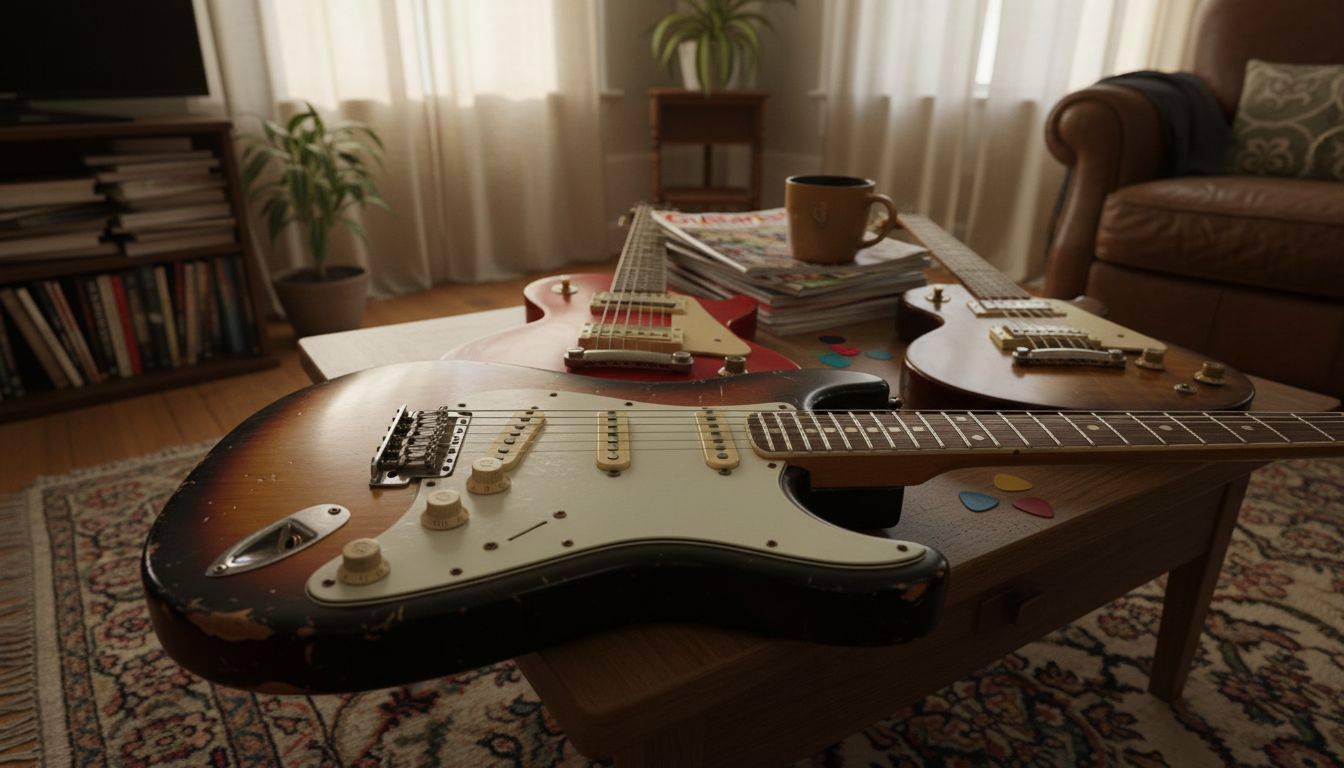
P90s occupy an interesting middle ground. They’re larger than single coils but still use a single coil construction, giving them a raw, gritty character with more midrange punch than either of the other two. P90s sound aggressive and woody, somewhere between the clarity of single coils and the warmth of humbuckers. They became legendary through vintage semi-hollow body guitars and remain popular in alternative and indie rock. What matters here is understanding how different pickup designs shape your overall tone, because your choice locks you into a sonic territory that influences everything from playability to genre suitability. A heavy metal player might find single coils too thin and articulate, whilst a country player might find humbuckers too dark and compressed.
Beyond these main types, you’ll encounter variations within each category. Some manufacturers offer overwound single coils that produce more output closer to humbucker territory. Others make underwound humbuckers that preserve clarity and dynamics. You’ll see terms like “vintage spec” pickups, which aim to recreate the sound of authentic 1950s or 1960s designs by using period appropriate materials and winding specifications. Modern boutique manufacturers push boundaries with exotic magnet materials like Alnico V or ceramic, which alter frequency response and sensitivity. The bottom line is that within each broad category, significant variation exists. Two humbucker pickups from different makers can sound substantially different because of magnet type, wire gauge, winding count, and coil spacing. This variation is actually useful for you, because it means you’re not locked into choosing between three options. You’re choosing from hundreds of interpretations, each offering slightly different tonal flavours.
Genre plays a huge role in which pickup type serves you best. Blues players almost universally gravitate towards humbuckers for that smooth, singing sustain. Vintage rock and Americana players often prefer single coils for their clarity and snap. Punk and indie players frequently use P90s for their aggressive punch. Metal and hard rock players overwhelmingly favour humbuckers. However, rules exist to be broken. Plenty of successful players use single coils in heavy music or humbuckers in country. Your playing style, the other gear in your chain, and your personal taste matter more than genre conventions. The only way to discover what truly works for you is to listen critically to players you respect and try pickups when possible before committing to an upgrade.
To help you compare the primary pickup types at a glance, see the following table:
| Pickup Type | Tonal Qualities | Typical Genres | Noise Handling |
|---|---|---|---|
| Single Coil | Bright, clear, articulate | Blues, country, vintage rock | Susceptible to hum |
| Humbucker | Warm, thick, compressed | Rock, metal, jazz | Excellent hum rejection |
| P90 | Gritty, punchy, midrange-rich | Indie, punk, alternative | Moderate hum resistance |
Pro tip: Search YouTube for “[your desired pickup model] vs [competitor model]” and listen to the clips through your own headphones or speakers rather than your phone speaker, as this gives you a far more accurate sense of the actual tonal differences between options.
How upgrading pickups changes your sound
Let’s cut straight to it. Upgrading your pickups produces tangible, audible differences in your tone. The magnitude of change depends on what you’re upgrading from and what you’re upgrading to, but decent new pickups will shift your sound noticeably. The most immediate difference you’ll notice is increased output and clarity. Older pickups, especially worn ones, lose some of their electromagnetic efficiency over time. Their magnets weaken slightly, coils develop micro fractures, and the overall signal degrades. A fresh set of quality pickups restores and often improves this signal path. You’ll hear more definition in your notes, better articulation between strings, and a tighter response to your playing dynamics. Single notes will ring clearer. Chords will separate better rather than becoming a muddy blur. This is particularly noticeable if you’ve been playing the same guitar for years and never changed the pickups. The improvement can genuinely feel like you’ve upgraded to a better instrument, even though you’ve only changed the pickups.
Beyond clarity, upgraded pickups provide better dynamic response and richness through superior materials, winding techniques, and magnet choices. Modern pickups use magnets graded more precisely than vintage designs, allowing manufacturers to dial in specific frequency ranges. A humbucker wound with Alnico V magnets will sound noticeably different from one wound with ceramic magnets. The Alnico will be warmer, more musical, and break up more smoothly when overdriven. The ceramic will be brighter, more aggressive, and cut through a mix more easily. Quality wire insulation also matters. Older pickups used single layer insulation that degraded over decades. Modern pickups use advanced insulation that maintains signal integrity and reduces unwanted capacitance. You’ll hear this as less fizziness and more controlled treble response. The winding pattern itself influences tone. A tightly wound, consistent coil produces different frequency response than a loosely wound one. Boutique manufacturers often hand wind pickups or use computerised precision winding, ensuring consistency that factory pickups from decades past couldn’t achieve.
The practical impact varies by genre and playing style, but here’s what you can realistically expect. If you play through a distorted amp, upgraded pickups will give you cleaner articulation even at high gain. Your notes won’t turn into a wall of fuzz. You’ll retain definition and dynamics. If you play clean, you’ll notice increased headroom and less breakup at lower volumes, giving you more range before the tone compresses. If you use effects pedals, upgraded pickups provide a stronger, clearer base signal for your pedals to work with, which means your effects will sound more refined and responsive. In a band setting, your guitar will sit better in the mix. The improved clarity means you won’t lose definition even when the drummer is crashing cymbals or the bassist is playing. Solo notes will project with more presence. Chords will maintain separation and definition rather than becoming background noise.
One crucial point: the extent of improvement depends on the rest of your setup. If you’re using a low quality amp or cheap cables, a premium pickup upgrade will help but won’t transform your tone completely. The pickup is just one link in the signal chain. However, if your amp is decent and your setup is reasonably good, upgrading pickups from worn stock units to quality new ones produces easily perceptible improvement that will stick with you every time you play. Many players report that after upgrading pickups, they actually want to play more frequently because the instrument responds better. The feedback loop between player and guitar becomes tighter and more satisfying. That’s not placebo. That’s the result of a more efficient signal path and better harmonic complexity in your tone.
Pro tip: When you install new pickups, spend time adjusting their height relative to the strings, as pickup positioning dramatically affects tone brightness and output, with higher pickups producing more volume but potentially more muddiness and lower pickups offering cleaner tone but less punch.
Essential features and choosing the right upgrade
Choosing the right pickup upgrade requires understanding a handful of key specifications and how they relate to your playing style and musical goals. Start with magnet type, as this fundamentally shapes your tone. Alnico magnets, typically found in vintage style pickups, produce a warm, organic sound with smooth harmonic saturation. Ceramic magnets deliver a brighter, more aggressive character with higher output and better noise rejection. Some modern pickups use Alnico V specifically, which sits between traditional Alnico and ceramic in terms of brightness and aggression. Your choice here depends on what you’re trying to achieve. If you play blues and want singing sustain with natural breakup, Alnico makes sense. If you play metal and want clarity and punch through a dense mix, ceramic is the better choice. The second critical spec is output level. High output pickups produce more signal, which drives your amp harder and causes earlier breakup and saturation. Low output pickups preserve dynamics and articulation but require more amp volume to achieve overdrive. Vintage output pickups (around 6 to 8 kilohms) work well for clean tones and light overdrive. Medium output pickups (8 to 10 kilohms) suit rock and blues. High output pickups (10 kilohms and above) excel in metal and hard rock.
Noise handling is another essential consideration, especially if you record or perform in quiet environments. Single coil pickups inherently suffer from hum caused by electromagnetic interference. Humbuckers solve this through their dual coil design but sacrifice some clarity. If you absolutely need silent pickups, humbuckers are your answer. If you can tolerate single coil hum or use noise gates, single coils offer brighter, more articulate tone. Some manufacturers now offer humbuckers sized to fit single coil cavities, giving you humbucker noise rejection in a single coil footprint, though at premium prices. When selecting pickups based on magnet type, output levels, and noise handling, also consider your guitar’s construction. A lightweight basswood body with a thin neck demands different pickups than a heavy mahogany body with a thick neck. The guitar’s resonance characteristics affect how pickups perform. A resonant guitar body can handle high output pickups without sounding muddy. A less resonant guitar might benefit from medium output pickups to avoid bloat.
Your amplifier is equally important in the selection process. A vintage style tube amp with natural compression responds differently to pickups than a modern solid state amp with digital effects. A warm, dark amp pairs well with bright pickups to create balance. A bright, transparent amp might be better served by warmer pickups. If you’re still using the same amp you’ve had for years, factor its characteristics into your pickup choice. The best pickup in the world sounds wrong through an amp that doesn’t complement it. Musical context matters too. If you play primarily heavy rock, high output humbuckers make sense. If you play vintage blues, lower output Alnico single coils are more appropriate. If you play multiple genres, medium output pickups offer versatility. Consider which genre represents 70 percent of your playing and optimise for that, knowing you’ll compromise slightly on the other genres.
Compatibility is non negotiable. Verify that your pickup choice physically fits your guitar’s cavities. Some guitars use standard sized pickups, whilst others use non standard dimensions. Check whether you need front coil tapping or series wiring options if you use those features. Confirm that the pickup comes with proper shielding to minimise noise. Read customer reviews specifically from users playing your guitar model, as real world feedback often reveals compatibility issues or unexpected tonal characteristics. Finally, consider whether you’ll install them yourself or have a professional do it. Professional installation costs £40 to £80 per pickup but ensures proper height adjustment, shielding, and grounding. If you’ve never soldered before, professional installation is worth the cost. If you’re comfortable with soldering and have the tools, DIY installation saves money and gives you intimate knowledge of your instrument.
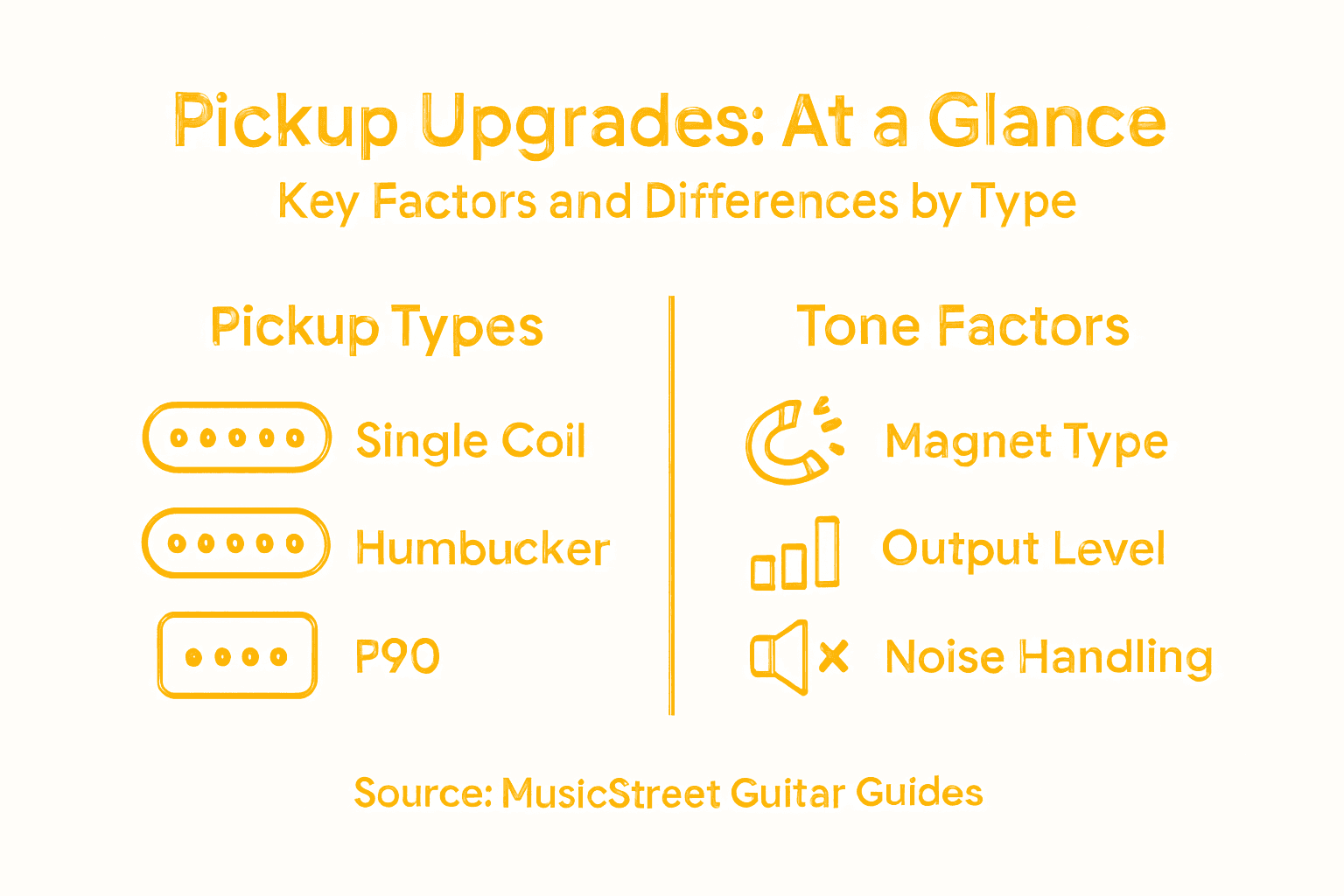
For reference, here is a summary of key factors affecting pickup upgrade choices:
| Factor | Effect on Tone | Buyer Consideration |
|---|---|---|
| Magnet Material | Alters warmth and attack | Choose Alnico for warmth, ceramic for bite |
| Output Level | Affects distortion and headroom | Lower for clarity, higher for drive |
| Noise Resistance | Impacts recording and performance | Humbuckers excel in quiet settings |
| Physical Fit | Compatibility with guitar body | Measure and confirm before purchase |
Pro tip: Before committing to an expensive pickup upgrade, purchase one quality pickup and install it in the neck position first, allowing you to audition it thoroughly and ensure compatibility before investing in a matched set for both positions.
Costs, risks, and what to avoid
Pickup upgrades range dramatically in price, and understanding where your money actually goes helps you avoid wasting it on hype or false economy. A basic budget pickup set costs between £60 and £100. Mid range options sit between £120 and £250. Premium pickups from boutique manufacturers run £300 to £500 or more per pair. The question isn’t which price bracket is best, but which offers the best value for your specific situation. A £150 pickup upgrade on a guitar you paid £200 for makes little financial sense. A £200 upgrade on a £1500 instrument is reasonable. The rule of thumb is to spend no more than 15 percent of your guitar’s value on pickups. Beyond the pickup cost itself, factor in installation. If you hire a professional, expect to pay £80 to £160 for both pickups. If you do it yourself, you need soldering equipment that costs £30 to £80 if you don’t already own it. These secondary costs add up quickly, so calculate the total before committing.
The biggest risk in pickup upgrades is buying expensive pickups for the wrong guitar or wrong reason. Many players upgrade pickups thinking this will fix fundamental problems with their instrument. A cheap guitar with a warped neck, high action, and dead frets won’t sound dramatically better with new pickups. You’ll waste money chasing tone when the real issue is setup or hardware quality. Before upgrading pickups, have a qualified technician inspect your guitar. Poor setup costs £60 to £120 to fix and often improves tone more than new pickups. Another common pitfall is buying pickups based purely on brand reputation without considering whether they suit your actual playing style. A highly rated pickup is worthless if it doesn’t match your musical goals. Some players also purchase pickups from unknown Chinese manufacturers at suspiciously low prices. These budget options often suffer from poor quality control, weak magnets, and inconsistent winding that produces thin, uninspiring tone. You save £40 on a pair of pickups but end up disappointed. Managing costs and risks through adequate planning prevents overspending and unexpected problems when upgrading components. Research your options thoroughly before spending money.
Compatibility issues create expensive headaches. Purchasing pickups that don’t fit your guitar’s cavities, require routing, or need rewiring you’re not equipped to handle turns an upgrade into a frustration. Some guitars use non standard pickup sizes. Offset and semi hollow body guitars often have unusual cavity dimensions. Before buying, verify exact cavity measurements and confirm your chosen pickups fit. Read customer reviews from people playing your exact guitar model, not just similar guitars. Installation mistakes rank high among upgrade regrets. Poor soldering joints create crackling, intermittent signal, or complete failure. Improper grounding introduces hum and noise. Incorrect height adjustment causes tone problems or string rattle against magnets. If you’ve never soldered before, professional installation is worth the expense. Attempting DIY soldering without experience often costs more in damaged components and professional repairs than paying for installation upfront.
Here’s what to genuinely avoid. First, don’t buy pickups from unvetted online sellers with no reviews or return policy. Second, don’t assume expensive always means better. Spend what you need to spend for quality, not what marketing tells you to spend. Third, avoid upgrading pickups on a whim without clear sonic goals. Know exactly what you want to improve before shopping. Fourth, don’t neglect the rest of your signal chain. Upgrading pickups whilst using a cheap cable, poor amp, or neglected guitar produces disappointing results. Fifth, avoid installing pickups yourself without proper tools and experience. The cost of professional installation is insurance against expensive mistakes. Finally, don’t ignore return policies and warranties. Quality manufacturers offer 30 day returns and stand behind their products. If a company won’t accept returns, that’s a red flag. The cheapest pickup isn’t cheap if you can’t return it when you discover it doesn’t suit your needs. A sensible approach is starting with mid range pickups from reputable manufacturers with good return policies, getting professional installation, and then making additional decisions based on actual results rather than speculation.
Pro tip: Before purchasing new pickups, sell or trade your current pickups to offset costs, as many used pickups hold value reasonably well and online marketplaces for musical equipment make this straightforward and quick.
Discover Your Perfect Pickup Upgrade at MusicStreet
If you have been searching for that elusive transformation in your guitar tone upgrading your pickups is a vital step that can unlock the full potential of your instrument. The article highlights how choosing the right pickups involves understanding magnet types output levels and noise resistance to achieve the tone you desire. However tackling these technical choices alone can feel overwhelming especially when factoring in guitar compatibility and professional installation needs. MusicStreet understands these challenges and offers personalised expert support to guide you through selecting pickups that truly complement your playing style and guitar setup.

Experience the difference by exploring our range of premium and mid range pickups available online or visit our physical store in Huntingdon Cambridgeshire for hands on advice and tryouts. At MusicStreet we combine competitive pricing with professional instrument inspections and expert installation services so you can upgrade with confidence today. Don’t settle for guesswork improve clarity articulation and dynamic response now by visiting MusicStreet and taking advantage of our customer centric approach to guitar upgrades.
Start your journey to better tone by checking out our latest quality pickups and expert guides at MusicStreet. Let us help you make the upgrade that truly transforms your sound and inspires you to play more.
Frequently Asked Questions
Why should I upgrade my guitar pickups?
Upgrading your guitar pickups can significantly enhance your tone by increasing clarity, dynamic response, and overall output. This is especially beneficial if your current pickups are old, worn, or not suited to your musical style. New pickups can restore and refine your instrument’s sound, making it more enjoyable to play.
What types of pickups are available and how do they differ?
The main types of pickups are single coils, humbuckers, and P90s. Single coils offer a bright and clear tone but are prone to interference. Humbuckers eliminate hum and provide a warmer, thicker sound, ideal for heavier genres. P90s combine features of both, delivering a gritty and punchy character with more mid-range presence. Each type offers distinct tonal qualities suitable for different genres.
How does the choice of magnet type influence my guitar’s tone?
Magnet type is crucial in shaping your tone. Alnico magnets produce a warmer, organic sound ideal for blues and classic rock, while ceramic magnets offer a brighter, more aggressive tone with higher output. The choice of magnet affects the overall feel and response of the pickups, influencing how your amp interacts with the signal.
What factors should I consider before upgrading my pickups?
Before upgrading, consider your playing style, musical goals, and the characteristics of your guitar and amplifier. Think about the output level, noise handling, and magnet type of the pickups. Ensure compatibility with your guitar’s cavities and check for any additional installation costs. It’s also wise to have your guitar properly set up to maximise the benefits of new pickups.







Share:
Why to Choose Fender VI Electric Bass Guitar? A Complete Guide
How to Pick a Guitar Amp for Beginners: Step-by-Step Guide