


Best Electric Guitars: Your Ultimate Buying Guide and Reviews for Beginners and Pros

Electric guitar is a stringed instrument that converts string vibration into electrical signals, enabling a huge range of amplified tones from clean sparkle to saturated distortion. This guide explains the major types of electric guitar, highlights the best electric guitars for beginners in 2025, profiles leading brands and signature models, and gives a practical buying checklist plus maintenance advice so you can choose and care for an instrument that fits your sound and skill. Many players struggle to match genre, playability and budget when buying their first electric guitar; this article resolves that by defining body types, pickups, neck shapes and essential accessories while comparing representative models and brands. You will learn how solid-body, semi-hollow and hollow-body designs affect sustain and feedback, which beginner features (neck profile, action, tuners) matter most, and how Fender, Gibson and PRS differ tonally and in construction. The guide also includes comparison tables that present quick EAV-style model attributes, step-by-step checklists for choosing a guitar, and clear how-to maintenance steps to keep an electric guitar sounding its best. Read on to confidently select a best electric guitar 2025 that matches your musical goals, whether you want a budget starter, a reliable practice instrument, or a step-up stage guitar.
What Are the Different Types of Electric Guitars and Their Features?
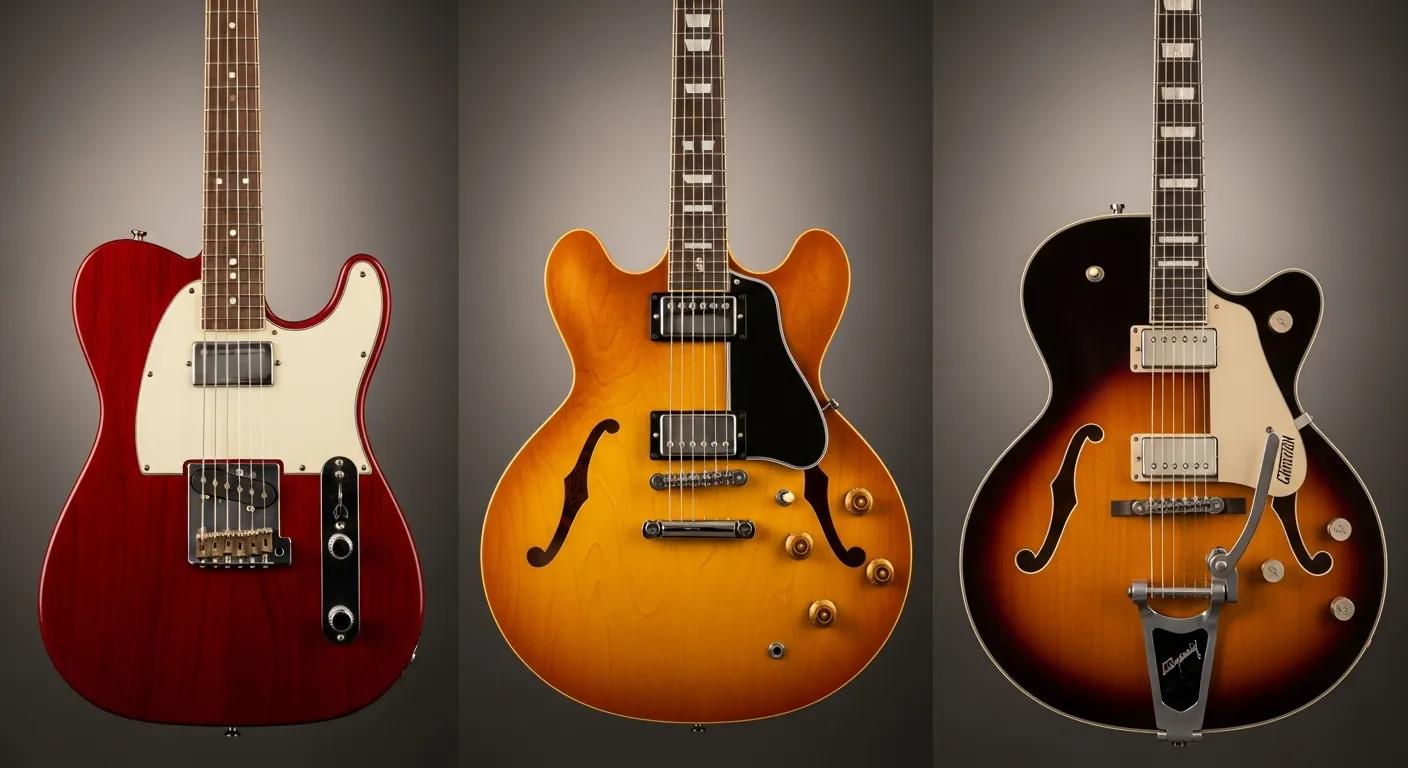
An electric guitar is commonly categorised by body construction: solid-body electric guitar, semi-hollow electric guitar and hollow-body electric guitar, each shaping tone and behaviour through mass and resonance. Solid-body instruments rely on dense tonewoods and hardware to deliver long sustain and resistance to feedback, making them ideal where high gain is used; semi-hollow designs combine a centre block with hollow wings to add warmth and midrange complexity while reducing microphonic feedback; hollow-body guitars emphasise acoustic resonance and airy tones but can feed back at high volume. These construction differences affect sustain, feedback tendency and genre suitability, so choosing the right body type helps match the instrument to your playing context. Understanding these distinctions prepares you for the sound-based trade-offs that will determine whether you pick a Strat-style single-coil sound, a humbucker-driven Les Paul warmth, or the jazzier voice of an archtop hollow-body.
How Do Solid-body, Semi-hollow, and Hollow-body Guitars Differ?
Solid-body electric guitars are built from a solid slab of tonewood such as alder or mahogany and typically feature fixed bridges and stable tuning hardware; this design maximises sustain and keeps feedback minimal. Semi-hollow electric guitars include a central block plus hollow chambers that produce a warmer, more open tone while still supporting moderate overdrive and sustain; players favour them for blues, indie and classic rock where some acoustic character is desirable. Hollow-body electric guitars are fully resonant, often carved or laminated with F-style or archtop construction, yielding rich, rounded tones perfect for jazz and clean blues but prone to feedback under high-gain settings. Choosing between these relies on the mechanism of sound production—mass and coupling for solids, chambered resonance for semi-hollows, and full acoustic resonance for hollows—and the benefit is selecting an instrument whose sonic personality matches your genre and amplification needs.
What Iconic Electric Guitar Shapes Should You Know?
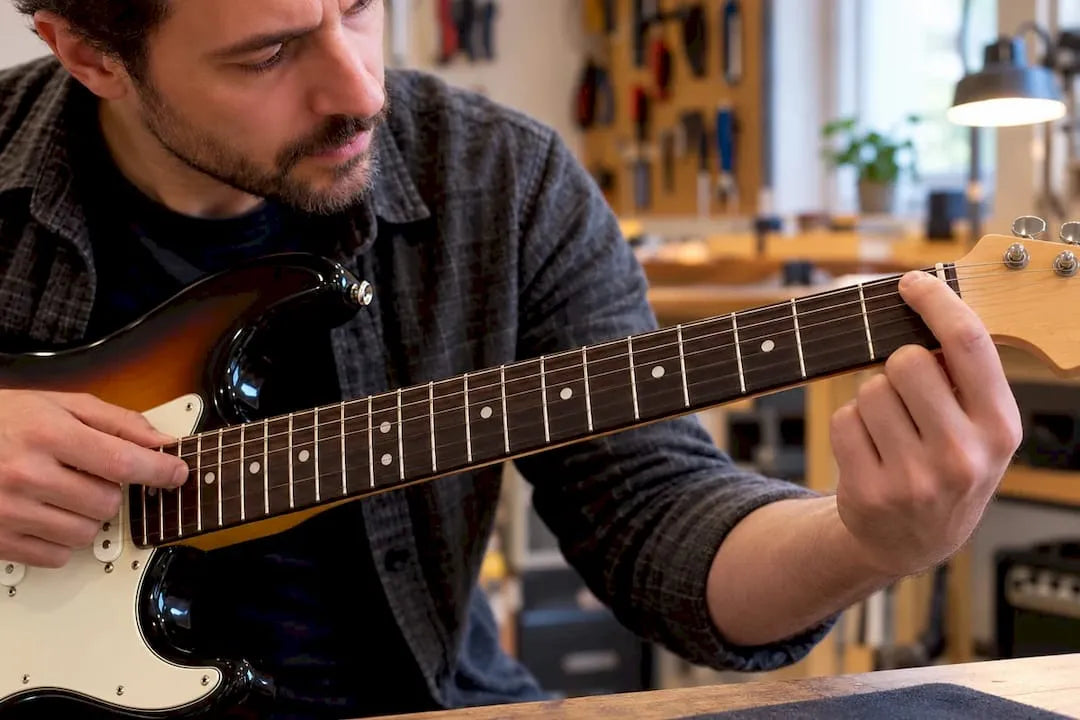
Iconic electric guitar shapes—Stratocaster, Telecaster, Les Paul, SG, Jazzmaster and various offset-body guitars—combine ergonomics and tone shaping in distinct ways that influence comfort and playing style. The Fender Stratocaster’s contoured body and three single-coil pickups provide ergonomic balance and a bright, bell-like tone that suits funk, pop and blues, while the Telecaster’s simpler slab body and bridge pickup deliver twang and clarity favoured by country and rock players. Gibson Les Paul models use a carved top and set neck with humbuckers for sustained, warm tones; SG shapes are lighter with double horns for upper-fret access and a sharper midrange. Offset shapes and jazz boxes like the Jazzmaster or Jaguar give unique tremolo systems and muffled lows that appeal to indie and surf players. Knowing these shapes helps you predict how the guitar will feel on the body and how it will sit against your playing posture, aiding quicker selection for comfort and style.
- Common shapes influence ergonomics and tone in predictable ways: Strat-style: comfortable contours, bright single-coil clarity.Les Paul-style: weighty sustain, warm humbucker tone.Tele-style: snappy bridge pickup, clear rhythm articulation.
These shape differences lead directly into considerations for beginners and which models deliver the best playability and value.
Which Are the Best Electric Guitars for Beginners in 2025?

A beginner-friendly electric guitar combines comfortable playability, stable tuning, and an affordable price that still offers meaningful tone and upgrade paths. Important mechanisms that make a guitar beginner-friendly include a forgiving neck profile that suits small hands, low action for easy fretting, and straightforward electronics that minimise setup headaches; the primary benefit is faster progress and fewer frustrations during the learning curve. When assessing best electric guitars for beginners, prioritise neck playability, reliable hardware and a sensible pickup configuration that supports multiple styles. Below is a compact comparison table to help you scan practical model choices across budget bands.
| Model | Price Range | Best For / Key Features |
|---|---|---|
| Value Strat-style | Budget | Comfortable neck, versatile single-coils, low action for learning |
| Entry Les Paul-style | Budget to Value | Warm humbuckers, solid sustain, forgiving for rock/blues |
| Step-up Semi-hollow | Intermediate | Warm resonance, great for blues/jazz, moderate feedback control |
What Features Make an Electric Guitar Ideal for Beginners?
A beginner electric guitar should prioritise ergonomics, simple electronics and stable hardware so new players form good technique without battling the instrument. Key components include a comfortable neck profile—often a modern C or slim C—that reduces hand fatigue, a manageable nut width and scale length that fit smaller hands, and low factory action that lets students press strings cleanly; the benefit is smoother chord shapes and faster fretboard navigation. Reliable tuning machines and a fixed bridge typically require less maintenance than tremolo systems, while straightforward pickup configurations (single-coil or simple humbucker setups) minimise switching confusion. A final consideration is a well-finished fretboard and accurate frets to avoid buzzing; these setup attributes make practice more productive and less discouraging for beginners.
- Comfortable neck profile and moderate nut width.
- Low action and proper intonation from the factory.
- Stable tuners and simple electronics.
These essentials lead naturally into model recommendations that balance cost and quality for new players.
Which Models and Brands Offer the Best Value for New Players?
Value for new players often comes from brands that offer affordable build quality and sensible specs, such as comfortable necks, decent pickups, and reliable hardware that won’t need immediate upgrades. Many budget and entry-level models emulate proven shapes—Stratocaster-style for versatility or Les Paul-style for rock warmth—so beginners can explore genres before committing to a specialist instrument. The following EAV-style table compares representative beginner models by model family, typical price band and what each is best for.
| Model Family | Price Band | Best-For / Pros |
|---|---|---|
| Strat-style value models | Budget | Versatile tone, light body, good learning platform |
| Les Paul-style entry models | Budget-Value | Thick tone, sustain, forgiving for power chords |
| Semi-hollow entry models | Value-Intermediate | Warm clean tones, jazz/blues orientation |
Each row reflects the primary value proposition: versatility for practice, tonal character for genre-specific learning, or acoustic-like resonance for cleaner styles. Prioritise playability and setup over flashy features; you can upgrade electronics later if required.
What Are the Top Electric Guitar Brands and Their Signature Models?
Major electric guitar brands establish tonal identities through wood choices, neck construction and pickup voicings, which in turn guide players toward instruments that match their sonic goals. Fender is associated with bright, single-coil voices and bolt-on neck construction that offers snap and clarity; Gibson is linked to set-neck construction, mahogany tonewoods and humbucker warmth; PRS (Paul Reed Smith) blends precision workmanship with versatile pickups that straddle clear single-coil brightness and humbucker fullness. Understanding these brand signatures helps you pick a manufacturer whose instruments naturally complement your preferred genres and playing techniques. The table below summarises signature model traits to make quick comparisons.
| Brand | Signature Model | Signature Features |
|---|---|---|
| Fender | Stratocaster | Three single-coils, contoured body, tremolo system |
| Gibson | Les Paul | Humbuckers, set neck, mahogany body for warmth |
| PRS | Custom-style | Versatile voicing, carved tops, balanced sustain |
How Do Fender, Gibson, and PRS Differ in Style and Sound?
Fender, Gibson and PRS differ primarily in scale length, neck joining and typical pickup voicings, producing recognisably different timbres: Fender’s longer scale and single-coils emphasise clarity and high-end shimmer, Gibson’s shorter scale and humbuckers yield thicker midrange and sustain, while PRS often combines design elements to provide balanced versatility. These construction differences create predictable benefits: Fender for articulate clean tones and single-note lines, Gibson for saturated, singing leads and chunky chords, PRS for players wanting flexibility across clean and overdriven settings.
What Are Notable Features of Popular Models Like Stratocaster and Les Paul?
The Fender Stratocaster is defined by its three single-coil pickup layout, contoured alder or ash body and synchronized tremolo, offering dynamic tone shaping and ergonomic comfort that benefits players seeking expressive clean and overdriven textures. The Gibson Les Paul is characterised by a carved maple top over a mahogany body, set neck joint and dual humbuckers that produce warm low-mid emphasis and long sustain suited to rock and blues leads. These technical features—pickup configuration, bridge type and neck joint—directly influence harmonic content and playability, so knowing how they interact helps you choose the specific model that delivers the tonal palette you need for your musical direction.
How to Choose the Right Electric Guitar: Buying Guide and Essential Accessories
Choosing the right electric guitar follows a stepwise process: define your primary genre and tonal needs, set a realistic budget, prioritise playability (neck, action, weight), and evaluate pickups and build quality against your use case. Start with a simple checklist when shopping so you can compare instruments consistently and avoid impulse choices based on finish alone. The following EAV table compares core component decisions and practical recommendations to match player needs.
| Component | Attribute | Recommendation |
|---|---|---|
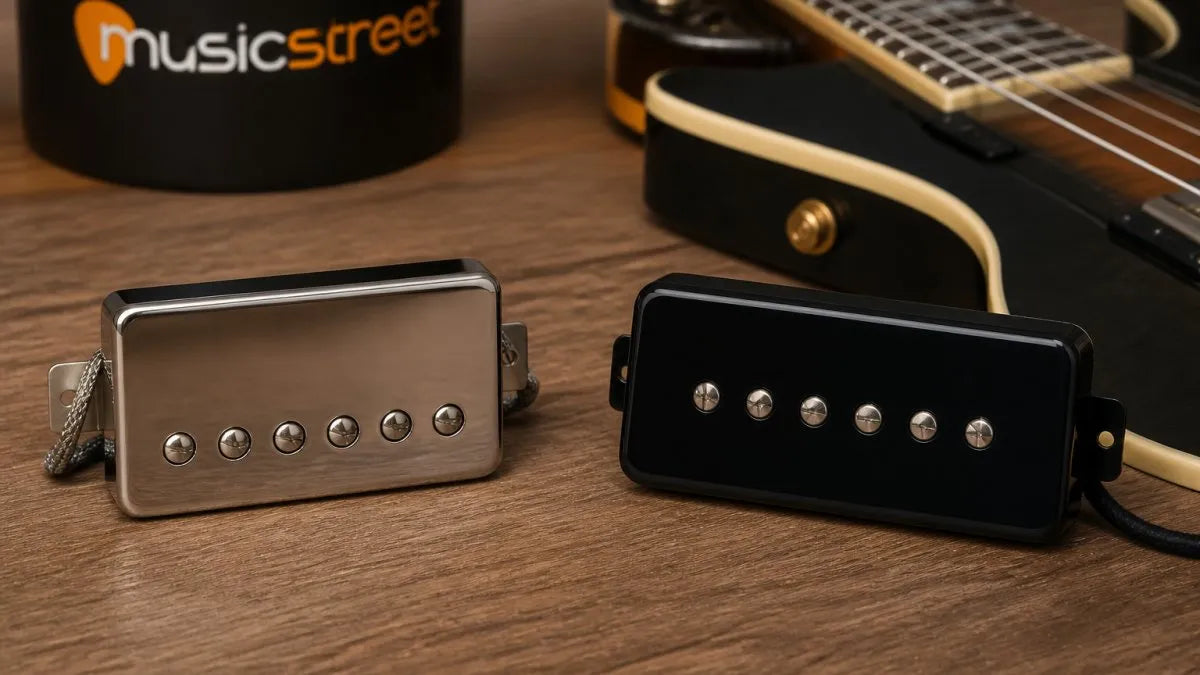
| Pickups | Type/Voicing | Single-coils for clarity, humbuckers for warmth, P90s for midrange bite |
| Neck Shape | Profile | Slim C for modern comfort, U for thicker grips, V for vintage feel |
| Tonewood | Character | Mahogany for warmth, maple for brightness, alder for balanced response |
This table helps align pickup type, neck shape and tonewood selection to your genre and hand-size requirements. Treat this as a decision matrix: prioritise the top two attributes that affect your playing most and use those to narrow choices.
What Should You Consider When Selecting Pickups, Tonewoods, and Neck Shapes?
Pickups are the primary electronic component shaping an electric guitar’s voice: single-coil pickups deliver clarity and top-end presence, humbuckers reduce noise and add thickness, while P90s give raw midrange character; choosing the pickup is about matching timbre to genre and amplifier interaction. Tonewoods—mahogany, maple, alder—contribute to the instrument’s resonant signature, with mahogany emphasising warmth and sustain, maple adding brightness and snap, and alder producing balanced mids; these interactions with pickups define the guitar’s overall sonic fingerprint. Neck shape and nut width govern playability: a modern C suits most hands and genres, thicker U or V profiles support vintage techniques and palm placement, and scale length affects tension and string feel. Combining these elements determines whether a guitar feels intuitive to play and whether it projects the tone you expect.
Quick selection checklist:
- Choose pickup type matched to primary genre.
- Match tonewood character to desired tonal balance.
- Select neck profile that fits your hand size and technique.
Which Accessories Are Essential for Electric Guitar Players?
Essential accessories support practice, performance and maintenance: a reliable amp and cable, a tuner, a strap, picks and a protective gig bag or case are baseline items every player needs to start playing immediately. Maintenance tools—string winder, spare strings, cleaning cloth and a basic toolkit for minor setups—help preserve playability and avoid service downtime. Practice aids such as a metronome, headphones for silent practice and learning apps accelerate progress.
- Essential: Tuner, instrument cable, amplifier suitable for practice.Strap, picks and spare strings.Gig bag or hard case for transport.
- Highly recommended: Multi-tool or small setup kit, clean cloth, string winder.Metronome or practice app, headphones for late-night sessions.
Choosing the right accessories reduces friction in practice and protects the instrument, ensuring consistent improvement and longevity.
How to Maintain and Care for Your Electric Guitar for Longevity
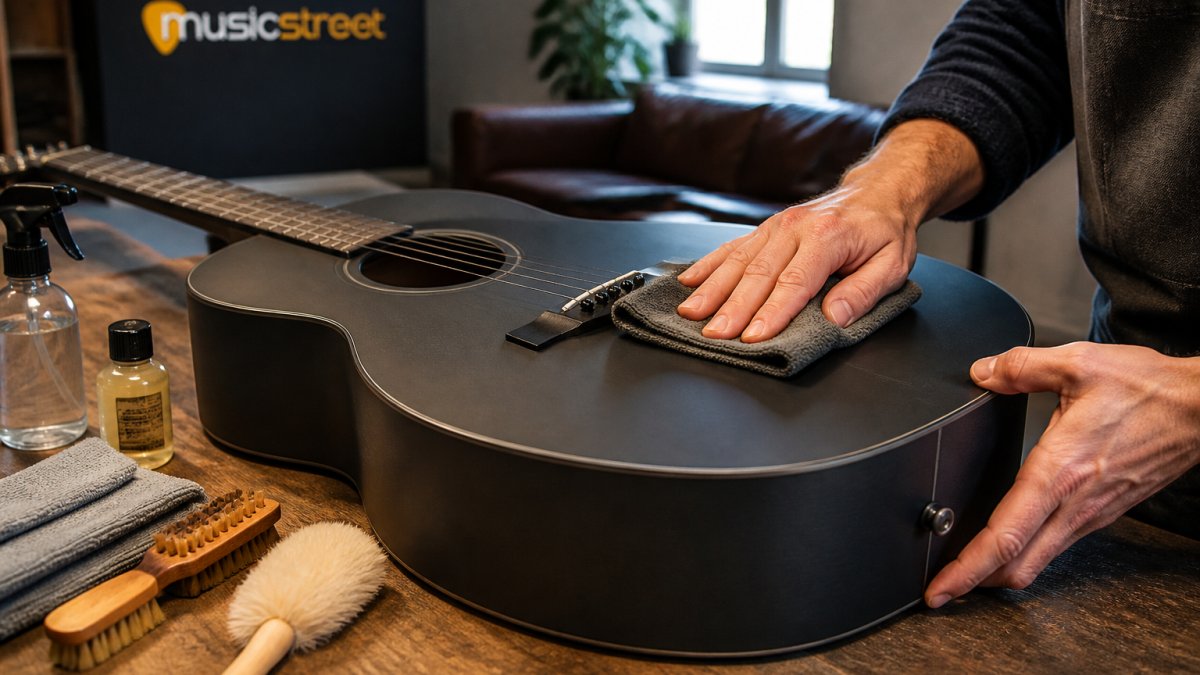
Regular maintenance preserves tone and playability by addressing wear points: cleaning the fretboard and body, changing strings at sensible intervals, and checking setup elements like action and intonation keep the instrument responsive. A simple routine—wipe down strings after each session, clean the body weekly, and replace strings according to playing frequency—prevents grime build-up and prolongs string life. Basic setup checks should include neck relief, saddle height and intonation; minor adjustments are manageable at home but a professional setup is wise if you notice buzzing, high action or persistent tuning problems. These practices maintain value and ensure the guitar continues to sound as intended across years of playing.
What Are the Best Practices for Cleaning and String Replacement?
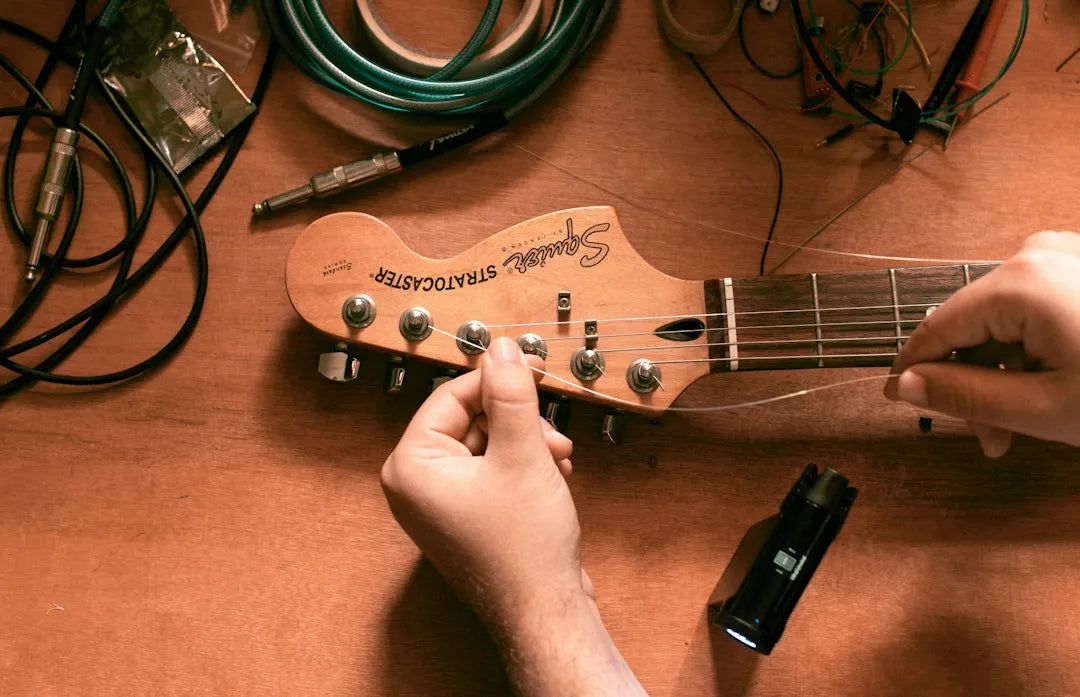
Cleaning and string replacement follow a straightforward sequence that protects wood finishes and hardware while keeping tone consistent. First, gather tools: soft lint-free cloth, mild guitar cleaner, string winder, new string set and tuner. Remove old strings one at a time to maintain neck tension, clean the fretboard and bodies of grime, install fresh strings to correct gauge and tune incrementally to pitch to seat them properly. Wiping strings after play and storing the guitar in a case when not in use extends string life and prevents corrosion. Regular string changes and gentle cleaning are simple steps that yield immediate tone improvement and reduce long-term maintenance costs.
Cleaning and string-change frequency summary:
- Wipe strings after each session.
- Change strings every 1–3 months depending on playtime and corrosion.
- Deep-clean and setup check at least twice a year.
These maintenance habits lead directly into basic setup tasks like truss rod adjustment and intonation tuning.
How Do You Adjust the Truss Rod and Setup Your Guitar?
Truss rod adjustment and basic setup tune neck relief, action and intonation to ensure the guitar plays comfortably and stays in tune across the fretboard; small, measured adjustments are the safe mechanism to shape neck curvature without over-stressing the neck. Identify symptoms that warrant adjustment—excessive fret buzz, high action or sharp/flat intonation—and use small quarter-turns on the truss rod, checking relief with capo and feeler gauge between adjustments. Adjust saddle height and intonation at the bridge to correct string action and pitch accuracy; the goal is balanced playability across open and fretted notes. If you encounter resistance or are unsure, consult a professional luthier to avoid damaging the neck. Conservative, incremental adjustments combined with regular checks preserve playability and protect the instrument’s structural integrity.
Setup troubleshooting checklist:
- Check neck relief before adjusting truss rod.
- Make small adjustments and re-tune between turns.
- Seek professional setup when problems persist or when unsure.
This stepwise approach ensures safe, effective setup and keeps your electric guitar performing at its best.






Share:
Acoustic Guitar vs Electric Guitar – Choosing for Beginners
Why String Gauge Matters for Every Guitarist