


Eddie Van Halen — Guitar innovations that reshaped rock
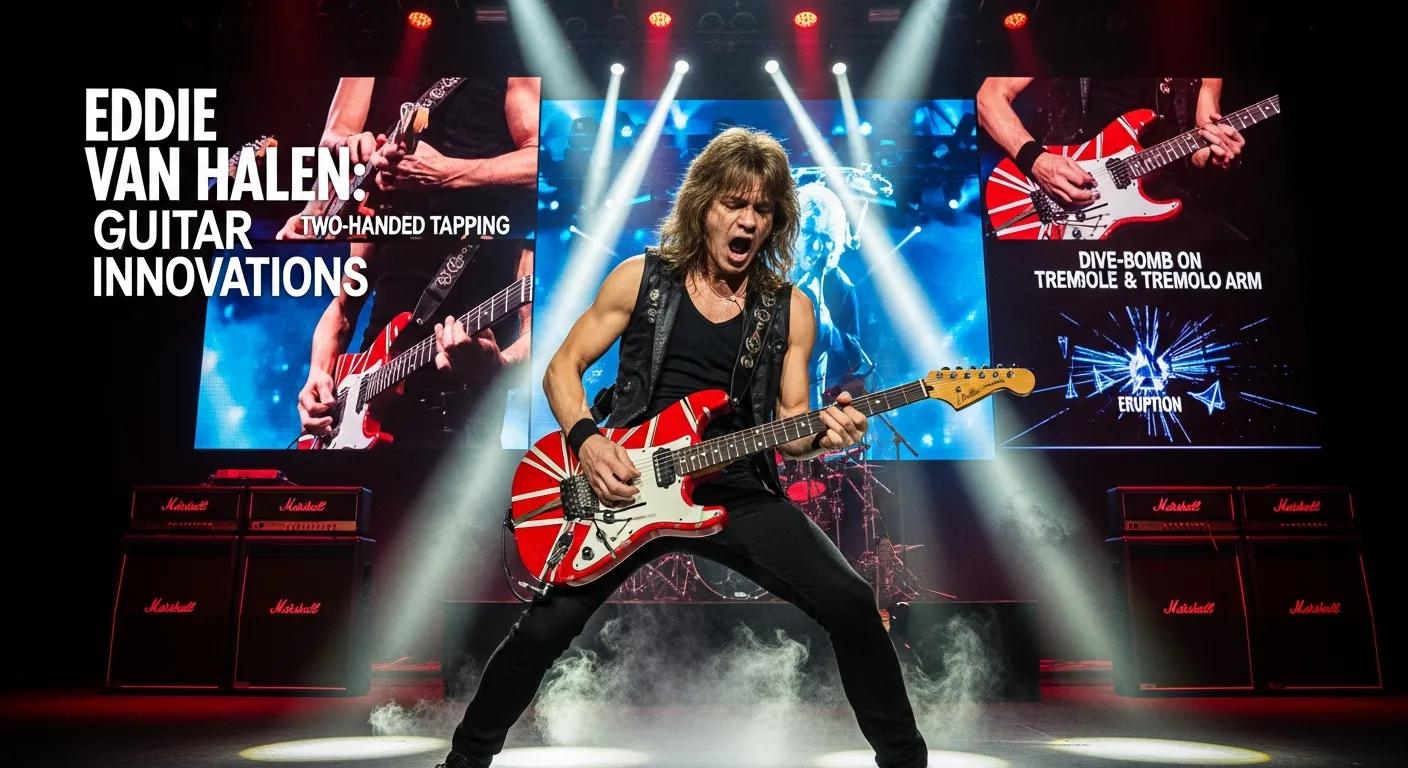
Eddie Van Halen is widely regarded as one of rock’s most inventive guitarists, celebrated for a set of techniques and instrument tweaks that changed how the electric guitar is played and built. This piece looks at his signature tapping, the story behind the Frankenstrat, and the gear choices that helped define a generation of tone. Musicians aiming to capture that sound will find practical insights into both technique and equipment as we cover tapping, the Frankenstrat’s role, EVH-era gear innovations, and the influence of the Floyd Rose tremolo.
What is Eddie Van Halen's signature tapping technique and how did it revolutionize guitar playing?
Van Halen’s tapping puts both hands on the fretboard to create fast, fluid, and often very melodic passages. By using the picking hand to tap notes, he unlocked speeds and textures that were difficult to reach with standard picking alone. The technique expanded the instrument’s expressive range — allowing seamless runs, harmonics and legato phrases — and inspired many players to rethink what a single guitarist could do in a solo.
How does the tapping technique enhance guitar solos and speed?
Tapping increases both speed and technical options by freeing the picking hand to articulate notes directly on the fretboard. That makes rapid scalar runs and intricate melodic lines more accessible, while also producing distinct tones and harmonic effects. Van Halen’s use of tapping on pieces like “Eruption” shows how the technique can deliver blistering, memorable runs and be blended with legato, bends and harmonics for richer solos.
Which famous songs showcase Eddie Van Halen's tapping style?
“Eruption” is the defining showcase of Van Halen’s tapping: it puts the technique front and center with fast taps and harmonics. He also uses tapping and related handboard techniques across tracks such as “Ain’t Talkin’ ’Bout Love” and “Panama,” where the approach enhances riffs and solos without feeling like a mere stunt. Those performances helped spread the technique through rock and metal scenes worldwide.
How did the Frankenstrat guitar design reflect Eddie Van Halen's innovation in guitar aesthetics and function?
The Frankenstrat was Eddie’s hands-on answer to the sound and feel he wanted. Built from parts and modified by Van Halen himself, it combines visual flair with practical alterations—custom paint, a tailored pickup layout and a body chosen for resonance. The Frankenstrat is as much a statement about tone and playability as it is about looks, and it became an icon precisely because it balanced form and function to serve the player’s needs.
What unique features distinguish the Frankenstrat from traditional guitars?
The Frankenstrat stood out for its hybrid construction and stripped-back philosophy. Made from ash or alder to maximise resonance, it typically used a single humbucker in the bridge for a powerful, cutting sound. Paired with a Floyd Rose-style tremolo for stable, dramatic pitch shifts, the setup prioritized sustain, bite and the ability to pull off extreme whammy-bar moves without losing tuning.
How did the Frankenstrat influence custom guitar building trends?
The Frankenstrat showed players and luthiers that practical, purpose-driven customisation could produce distinct tonal results. Its success encouraged a wave of builders to experiment with unconventional mods, bespoke pickup arrangements and personalized aesthetics. In short, it helped normalise the idea that instruments should be tailored to a player’s technique and sonic goals, fueling today’s custom-guitar market.
What are the key EVH guitar gear innovations introduced by Eddie Van Halen?
Van Halen’s influence extended into amps, pedals and signature guitars that translated his onstage sound into reliable tools for everyday players. From high-gain amp voicings to artist-specific effects and construction choices, those developments made his tonal approach more accessible and set new expectations for performance gear.
How did EVH amplifiers and pedals shape guitar tone and performance?
EVH-branded amplifiers focused on delivering the dynamic, harmonically rich high-gain character associated with Eddie’s sound: tight low end, pronounced mids and sustained overdrive. Signature pedals like the EVH Phase 90 added classic modulation colours that fit naturally into his sonic palette. Together, these products let players more easily reproduce the textures and responsiveness that defined Van Halen’s playing.
What role did signature EVH guitars play in gear evolution?
Signature EVH guitars brought modern player-focused features—locking tuners, custom-wound pickups, ergonomics tuned for speed—into wider circulation. By packaging these innovations in artist models, manufacturers made advanced features mainstream and encouraged other brands to collaborate with players on purpose-built instruments, expanding choices for guitarists at every level.
How did Eddie Van Halen's guitar style combine technique and equipment for a unique sound?
Van Halen’s sound came from the marriage of technique and carefully chosen gear: innovative picking and fretboard methods paired with instruments and amps tuned to respond to those techniques. That synergy produced a wide dynamic range, from crystalline harmonics to aggressive, singing distortion, and is a core reason his tone remains instantly recognisable.
What elements define Eddie Van Halen's playing style beyond tapping?
Beyond tapping, his style featured harmonics, controlled whammy-bar use, crisp legato lines and rhythmic precision. He blended melodic sensibilities with raw power, drawing from hard rock and early metal while keeping phrasing that was often surprising and musical—never purely technical for technique’s sake.
How did his choice of gear complement his technique?
Van Halen’s Frankenstrat and later signature models provided the tonal clarity, pickup output and playability his techniques demanded. Lightweight bodies, hot pickups and responsive amplifiers created the sustain and bite needed for tapping, harmonics and whammy work—so the instrument and the player worked as one to create his signature voice.
What is the history and impact of the Floyd Rose tremolo system in Eddie Van Halen's music?
The Floyd Rose tremolo system, introduced around 1977, changed pitch modulation by locking the strings at both the nut and bridge, allowing extreme dive bombs and pitch shifts while keeping the guitar in tune. Van Halen’s adoption of the system showcased its musical potential and helped make it a staple in rock and metal rigs.
How did the Floyd Rose system enable new playing techniques?
The locking tremolo let players push the whammy bar further and with more confidence, opening up dramatic sonic moves—dive bombs, wide pitch rises and subtle pitch-sculpting—without wrecking tuning. Van Halen used those capabilities to add expressive punctuation to solos and riffs, as heard in performances like “Panama.”
Why did Eddie Van Halen popularize the Floyd Rose tremolo?
Eddie popularised the Floyd Rose because it extended his expressive toolkit: it handled extreme pitch manipulation and returned reliably to tune, which was vital for live playing. His high-profile use made the system visible to other guitarists, accelerating its adoption and cementing its place in modern electric-guitar design.


Share:
Discover Eric Clapton's Iconic Guitars and Blues Style
Find Your Perfect Match: How to Choose Your First Guitar