


A single faulty output jack can leave even the most passionate British guitar player silently strumming in frustration. For many, output jack trouble is the hidden cause behind sudden volume drops or crackling during practice and gigs. Understanding how this small component works is vital, yet often overlooked by beginners and intermediate players who want stable, great-sounding performances. Discover how mastering this essential part of your setup can keep your guitar consistently reliable and sounding its best.
Table of Contents
- What Is A Guitar Output Jack?
- Types Of Guitar Output Jacks Explained
- How Guitar Output Jacks Function
- Troubleshooting Output Jack Problems
- Upgrading And Maintaining Your Output Jack
Key Takeaways
| Point | Details |
|---|---|
| Guitar Output Jack Importance | The output jack is essential for transmitting audio signals from the guitar to amplifiers and effects. Its design affects sound quality significantly. |
| Types of Jacks | Common jack types include TS for mono connections and TRS for stereo or balanced audio, each influencing performance differently. |
| Troubleshooting Issues | Regular inspection and maintenance of the output jack can prevent issues like crackling sounds or complete signal loss, ensuring reliable performance. |
| Upgrading for Reliability | Upgrading to higher-quality jacks can enhance durability and sound quality, while routine maintenance is crucial for optimal functioning. |
What Is A Guitar Output Jack?
A guitar output jack is the critical electrical interface on an electric guitar responsible for transmitting the instrument’s audio signal to external equipment like amplifiers and effect pedals. Audio connector technology) allows musicians to transform the electrical signals generated by guitar pickups into audible sound.
Typically configured as a quarter-inch analog socket, the guitar output jack serves as the primary connection point between the instrument and sound system. The jack consists of two primary components: a female socket mounted on the guitar body and a corresponding male plug attached to the instrument cable. When a guitar cable is inserted, it completes an electrical circuit that enables sound transmission from the guitar’s internal electronics to amplification systems.
The output jack plays a pivotal role in signal transfer, acting as the gateway through which electrical impulses travel. Its design and condition directly impact sound quality, making it a crucial element for guitarists seeking consistent and reliable performance. Signal transmission pathway determines the clarity, tone, and overall sound characteristics that musicians experience during performances or recording sessions.
Pro tip: Regularly inspect your guitar’s output jack for signs of wear, loose connections, or corrosion to maintain optimal sound quality and prevent unexpected signal interruptions during crucial musical moments.
Types Of Guitar Output Jacks Explained
Guitar output jacks come in various configurations, each with unique characteristics that significantly impact an instrument’s sound and functionality. Electrical contact variations) determine the jack’s performance, with the most common types being TS (tip-sleeve) and TRS (tip-ring-sleeve) configurations.
The TS jack, standard in most electric guitars, provides a mono unbalanced connection typically measuring 6.35 mm (1/4 inch) in diameter. This design carries a single audio signal and is ideal for instruments with passive pickups. In contrast, the TRS jack offers more versatility, supporting both stereo signals and balanced audio transmission. Jack design variations enable musicians to choose configurations that best suit their specific electronic setup and sound requirements.
Beyond the standard mono and stereo configurations, guitarists might encounter specialised jack types. Some active electronic systems use stereo jacks with additional functionality, such as battery switching mechanisms for onboard preamps and equalisation circuits. Panel-mount and surface-mount variations also exist, allowing for different installation methods depending on the guitar’s design and electronic architecture.
Here is a comparison of common guitar output jack types and their practical impact:
| Jack Type | Audio Signal Type | Typical Applications | Advantages |
|---|---|---|---|
| TS (Tip-Sleeve) | Mono, unbalanced | Standard electric guitars | Simple, reliable connection |
| TRS (Tip-Ring-Sleeve) | Stereo or balanced | Active electronics, stereo setups | Enhanced signal options |
| Locking Jack | Mono or stereo | Professional stage use | Secure cable retention |
| Panel-Mount | Varies | Custom/integrated instruments | Flexible installation |
Pro tip: When replacing a guitar output jack, always match the new jack’s specifications precisely to your instrument’s original configuration to maintain optimal signal integrity and prevent potential electrical complications.
How Guitar Output Jacks Function
The guitar output jack serves as a critical electrical interface that transforms the instrument’s internal electrical signals into an external audio connection. Guitar wiring mechanisms reveal the intricate process of signal transmission, where the jack acts as the final conduit between the guitar’s internal electronics and external sound systems.
Internally, the output jack connects directly to the guitar’s pickup system and electronic controls, including volume and tone potentiometers. When a guitar cable is inserted, it creates an electrical contact that completes the circuit, allowing the raw electrical signal generated by the pickups to flow out of the instrument. Signal transmission pathways demonstrate how the jack’s precise electrical contacts determine the quality and clarity of the sound being transmitted.
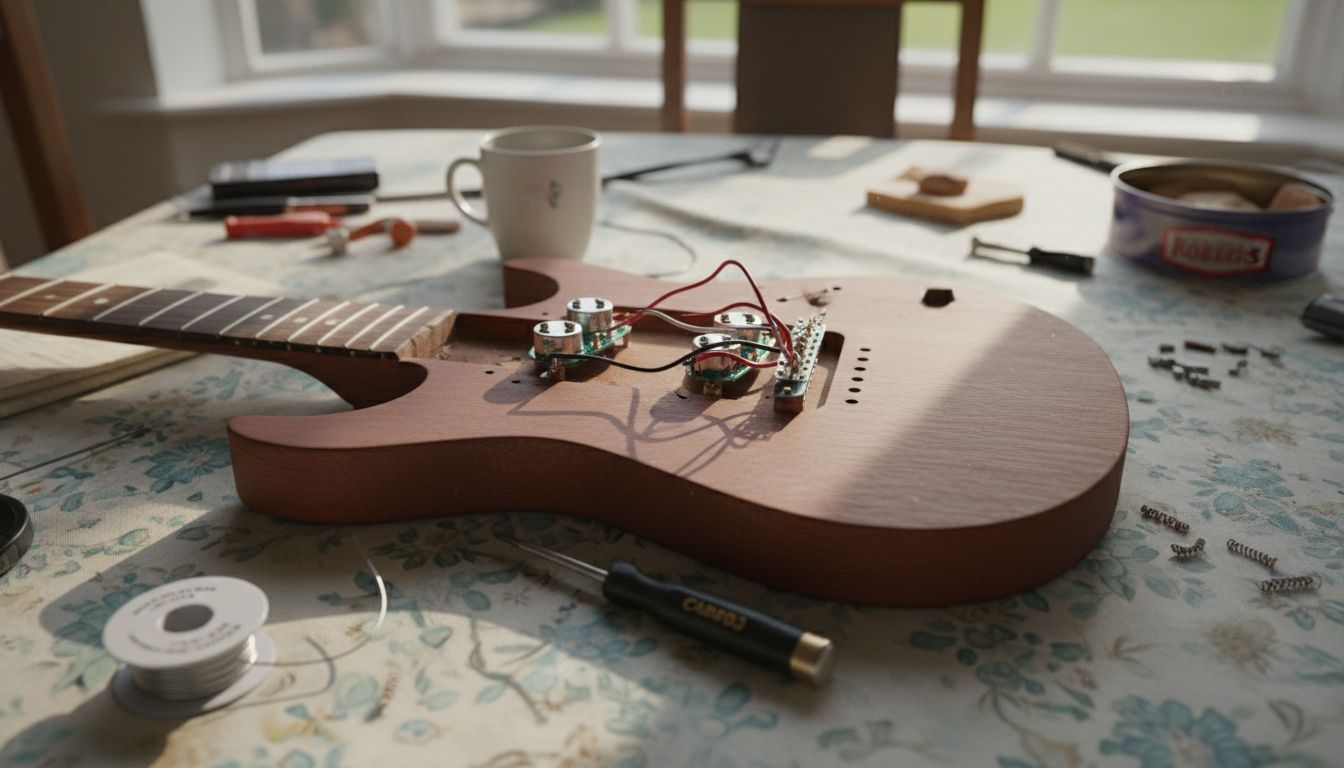
The functionality of a guitar output jack depends on several critical factors, including the quality of the electrical contacts, the integrity of the internal wiring, and the precision of the connection points. Different jack configurations can impact signal strength, noise reduction, and overall tonal characteristics. Some jacks incorporate additional features like noise cancellation or signal buffering to enhance the audio transmission process.
Pro tip: Periodically clean your guitar’s output jack contacts with contact cleaner to maintain optimal electrical connectivity and prevent signal degradation during performances.
Troubleshooting Output Jack Problems
Guitarists frequently encounter output jack issues that can significantly disrupt performance and sound quality. Guitar jack diagnostics reveal several common problems, including intermittent signal transmission, crackling sounds, and complete signal loss.
The most prevalent issues typically stem from mechanical and electrical complications. Loose mounting nuts, corroded contacts, and poor solder joints can cause unreliable connections. Guitarists should first check for physical signs of wear, such as wiggling jacks or visible damage to the socket. Symptoms like sudden volume drops, inconsistent sound, or persistent background noise often indicate underlying output jack problems that require immediate attention.
Effective troubleshooting involves a systematic approach to diagnosing and resolving output jack malfunctions. This includes visual inspection, testing electrical continuity, cleaning contacts, and potentially resoldering or replacing the entire jack assembly. Professional musicians and guitar technicians recommend using contact cleaner to remove oxidation, checking the tightness of mounting hardware, and examining the internal wiring connections to ensure robust signal transmission.
Here is a quick summary of troubleshooting steps for guitar output jack problems:
| Step | Purpose | Result |
|---|---|---|
| Visual inspection | Identify wear or loose hardware | Pinpoint obvious issues |
| Test continuity | Check signal flow integrity | Detect broken connections |
| Clean contacts | Remove corrosion or oxidisation | Restore clear audio signal |
| Tighten hardware | Ensure jack stays firmly mounted | Prevent signal interruptions |
Pro tip: Keep a small multimeter in your gig bag to quickly diagnose output jack issues before they become critical during live performances.
Upgrading And Maintaining Your Output Jack
Upgrading and maintaining your guitar’s output jack is essential for ensuring consistent sound quality and reliable performance. Guitar jack maintenance requires a systematic approach to preserving the electrical integrity of your instrument’s critical signal transmission point.
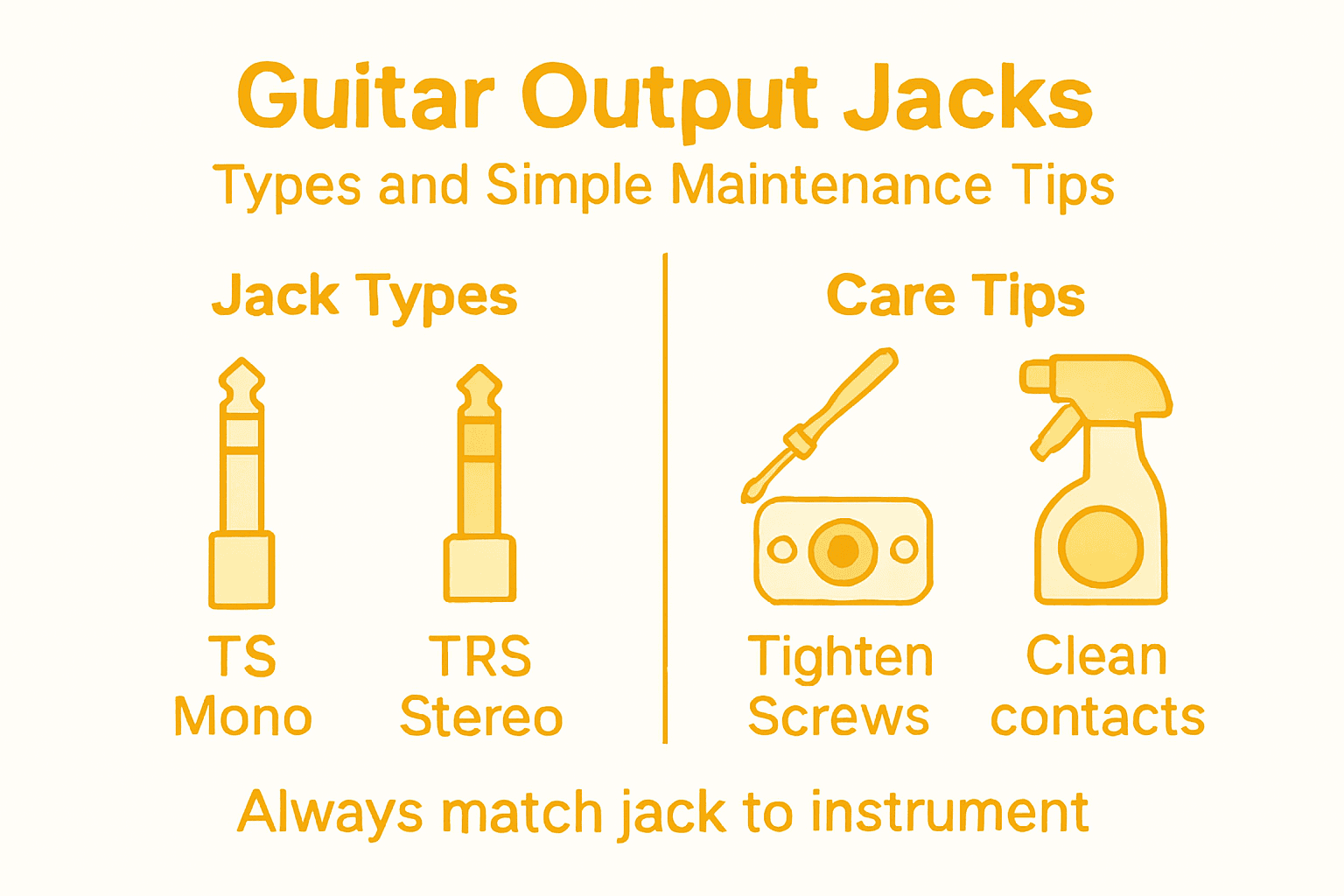
Professional guitarists recommend several strategic upgrades to enhance output jack reliability. These include replacing standard jacks with higher-quality switched or locking models that provide more secure cable connections and improved durability. Electronic modification techniques suggest considering jacks with additional features like automatic battery disconnection or enhanced contact design that minimise signal interference and reduce unwanted noise.
Regular maintenance is crucial for preventing deterioration of your output jack’s performance. This involves routine inspections for physical wear, cleaning contacts with electronics-safe contact cleaners, and ensuring mounting nuts remain tight. Guitarists should pay special attention to signs of corrosion, loose connections, or mechanical stress that could compromise the jack’s functionality. Proactive care can significantly extend the lifespan of your guitar’s electrical components and maintain optimal sound transmission.
Pro tip: Invest in a precision contact cleaner and soft-bristled brush to regularly clean your output jack, removing dust and oxidation without causing damage to the delicate electrical components.
Ensure Your Guitar’s Output Jack Delivers Outstanding Reliability and Tone
Struggling with intermittent signal loss or crackling from your guitar’s output jack can be frustrating and disruptive during any performance. This vital connection demands high-quality components and expert maintenance to preserve your instrument’s tone and prevent unexpected interruptions. Whether you need a durable replacement jack, a professional setup, or expert advice on upgrading to locking or active output jacks, the right solutions are essential to achieving consistent, pristine sound.

Explore premium electric and bass guitars along with essential accessories at MusicStreet. Benefit from our personalised setup, professional inspections, and ongoing support to ensure your guitar’s electronic components deliver flawless signal transmission. Visit MusicStreet now to invest in reliability and tone with expert care that keeps you performing at your best.
Frequently Asked Questions
What is a guitar output jack?
A guitar output jack is the electrical interface on an electric guitar that transmits the audio signal from the guitar to external equipment like amplifiers and effect pedals.
What are the different types of guitar output jacks?
The most common types of guitar output jacks are the TS (tip-sleeve) jack, which provides a mono unbalanced connection, and the TRS (tip-ring-sleeve) jack, which supports stereo signals and balanced audio transmission.
How do I troubleshoot output jack problems?
To troubleshoot output jack problems, inspect for loose hardware or visible damage, test electrical continuity, clean the contacts, and ensure that all connections are secure. If issues persist, consider resoldering or replacing the jack.
How can I maintain my guitar output jack?
Maintain your guitar output jack by conducting routine inspections for wear, cleaning the contacts with a safe contact cleaner, and ensuring that mounting hardware is tight to prevent signal interruptions.








Share:
Role of Guitar Electronics – Shaping Your Sound
What Is a Guitar Preamp? Enhancing Your Tone