


Most british guitar players underestimate the impact high quality patch cables can have on their setup. Studies show that nearly 40 percent of signal problems are caused by faulty or poorly designed connectors. For musicians in Huntingdon looking to refine their tone and reduce unwanted noise, understanding patch cable basics dispels popular myths and prevents common mistakes. Getting smart about your cables leads to stronger sound and smoother performances without surprise technical headaches.
Table of Contents
- Patch Cable Basics And Common Myths
- Key Types Of Patch Cables For Guitars
- How Patch Cables Affect Your Signal Chain
- Selecting Features For The Best Performance
- Risks, Pitfalls, And Troubleshooting Tips
Key Takeaways
| Point | Details |
|---|---|
| Importance of Cable Quality | High-quality patch cables with good shielding and conductor integrity are essential for maintaining signal strength and sound quality. |
| Understanding Cable Types | Different patch cable types serve specific purposes; musicians should select based on their setup requirements and space considerations. |
| Regular Maintenance | Routine inspection and testing of patch cables can prevent performance issues and ensure optimal sound transmission. |
| Myth-Busting | Many musicians hold misconceptions about patch cables; understanding their true characteristics can significantly enhance audio performance. |
Patch cable basics and common myths
Patch cables are foundational components in guitar and audio equipment connectivity, serving as essential links between various devices and sound systems. Despite their seemingly simple appearance, these cables carry significant complexity and are often misunderstood by musicians. Patch cords play a crucial role in interconnecting devices and supporting different audio applications, ranging from stage performances to home recording setups.
Many guitarists harbour misconceptions about patch cables that can significantly impact their sound quality and equipment performance. Common myths include beliefs about cable length affecting signal integrity and assumptions that all patch cables perform identically. In reality, patch cables have specific design characteristics that influence their performance. British Standards 6701 and 50173 provide rigorous guidelines for cable quality, ensuring reliable signal transmission and minimising potential interference.
Understanding patch cable fundamentals requires recognising their primary functions and limitations. Key considerations include:
- Signal integrity maintenance
- Minimal signal loss over short distances
- Proper connector compatibility
- Shielding against electrical interference
- Appropriate impedance matching
Expert tip: Always inspect your patch cables for visible wear and test them periodically to ensure optimal sound transmission and prevent unexpected performance issues.
Key types of patch cables for guitars
Guitar patch cables are precision-engineered connectors designed to bridge the critical connections between effects pedals, amplifiers, and other audio equipment. Patch cables play a crucial role in minimising signal travel distance, which directly impacts tone quality and signal integrity. These specialised cables come in various configurations, each tailored to specific musical setups and performance requirements.
The most common types of patch cables for guitarists include:
- Flat Ribbon Cables: Extremely compact design that allows for tight pedal board layouts
- Right-Angle Cables: Provide efficient space management and reduce cable clutter
- Standard Straight Patch Cables: Traditional design offering reliable signal transmission
- Low-Profile Cables: Minimise visual and physical interference between pedals
When selecting patch cables, musicians must consider critical factors beyond mere connectivity. Cable length is particularly significant, with professional guitarists typically preferring cables between 6 to 12 inches to maintain optimal signal strength. Shielding quality becomes paramount in preventing unwanted noise and electrical interference, ensuring clean, uncoloured sound transmission across different musical environments.
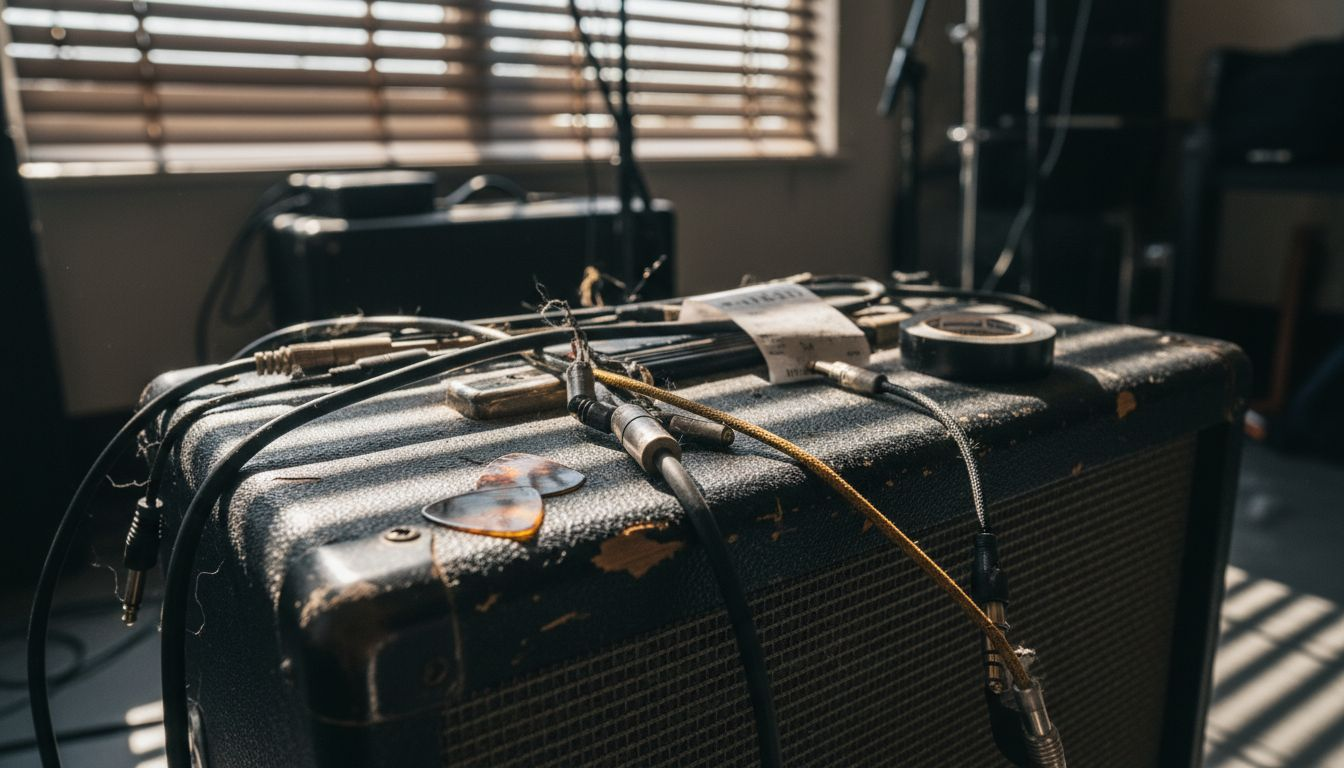
Here is a comparison of the most common patch cable types and their ideal applications:
| Cable Type | Best Use Case | Main Advantage |
|---|---|---|
| Flat Ribbon | Compact pedalboards | Saves space and avoids tangling |
| Right-Angle | Tight pedal configurations | Reduces strain, avoids clutter |
| Straight Patch | General signal pathways | Versatile and widely compatible |
| Low-Profile | Minimalist pedal setups | Discreet, reduces interference |
Expert tip: Invest in patch cables with high-quality copper cores and comprehensive shielding to preserve your guitar’s natural tone and minimise signal degradation.
How patch cables affect your signal chain
The signal chain represents a critical pathway for musical expression, where every connection potentially influences the ultimate sound quality. Patch cable integrity is paramount in maintaining signal transmission reliability, with each cable acting as a potential point of sonic transformation or degradation. Understanding how these seemingly simple connectors impact your musical signal requires careful consideration of their physical and electrical characteristics.
Within a typical guitar signal chain, patch cables serve multiple crucial functions:
- Signal Preservation: Maintaining the original tone without introducing unwanted noise
- Electrical Isolation: Preventing interference between different pedals and equipment
- Impedance Matching: Ensuring consistent signal flow across different effects units
- Noise Reduction: Minimising electromagnetic and radio frequency interference
Professional musicians recognise that cable quality directly correlates with sound transparency. Inferior patch cables can introduce subtle yet significant tonal alterations, reducing dynamic range and introducing unwanted harmonic distortions. Strategic cable management becomes essential in preventing signal vulnerabilities, particularly in complex effect pedal configurations where multiple connections increase potential points of signal degradation.
Expert tip: Regularly inspect and replace patch cables with signs of wear, as even minor cable damage can introduce significant noise and signal loss into your musical performance.
Selecting features for the best performance
Choosing the right patch cable requires a nuanced understanding of performance characteristics that directly impact sound quality and signal transmission. Certification and testing standards play a crucial role in identifying high-quality patch cables, with professional musicians seeking cables that meet rigorous British performance benchmarks. Understanding these technical specifications transforms cable selection from a mundane task into a strategic decision for maintaining sonic excellence.
Key performance features to consider when selecting patch cables include:
- Conductor Quality: Pure copper cores with minimal impurities
- Shielding Effectiveness: Multiple layers protecting against electromagnetic interference
- Connector Integrity: Gold-plated or high-conductivity metal connections
- Capacitance Rating: Low capacitance for minimal signal loss
- Flexibility: Robust design allowing easy routing without signal degradation
Different cable types offer unique performance characteristics depending on specific usage environments, much like selecting the right guitar pickup for a particular musical style. Unshielded patch cables work well in low-interference settings, while shielded variants become essential in complex pedalboard configurations with multiple electronic components. Professional musicians understand that seemingly minor cable specifications can dramatically influence overall tone and signal purity.
Expert tip: Invest in patch cables from reputable manufacturers that provide detailed technical specifications, and always test cables in your specific setup before committing to a full pedalboard configuration.
Risks, pitfalls, and troubleshooting tips
Patch cable failures represent a significant yet often overlooked challenge for musicians seeking pristine sound quality. Faulty cables can introduce devastating connectivity problems, ranging from subtle tone degradation to complete signal loss. Understanding the potential risks allows guitarists to proactively protect their sonic ecosystem and maintain exceptional performance standards.
Common risks and failure points in patch cables include:
- Physical Damage: Fraying, bending, or connector stress
- Environmental Degradation: Moisture, heat, and oxidation exposure
- Connector Corrosion: Reduced signal transmission efficiency
- Manufacturing Defects: Internal wiring inconsistencies
- Electromagnetic Interference: Signal noise and unpredictable tone changes
Professional troubleshooting involves systematic cable inspection and diagnostic techniques, ensuring reliable signal transmission. Visual inspection remains the first critical step, with musicians checking for visible wear, connector integrity, and potential structural compromises. Advanced diagnostics might include using specialised signal testers to identify subtle transmission issues that could compromise overall sound quality.
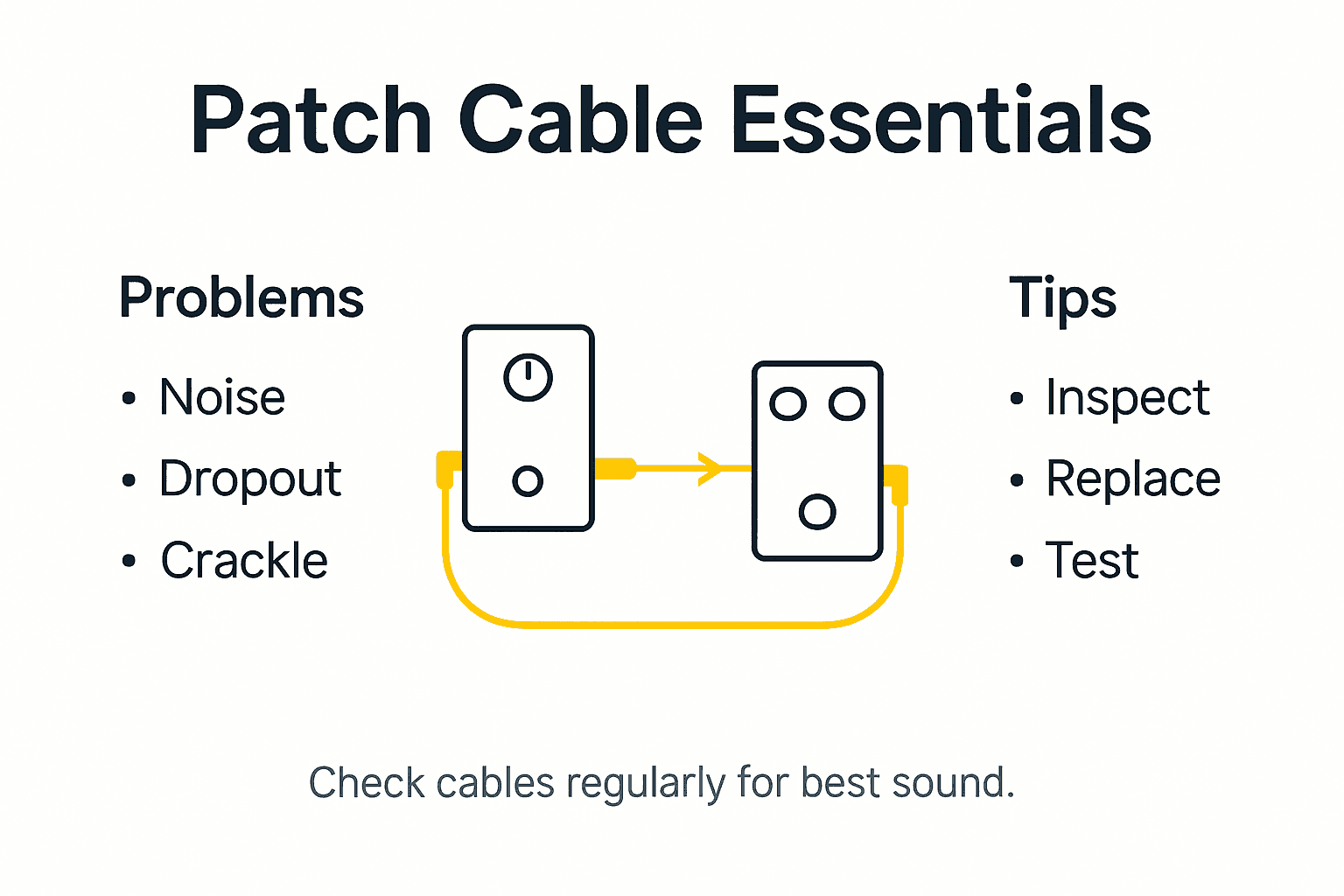
This reference table summarises main patch cable problems and recommended troubleshooting steps:
| Problem Detected | Likely Cause | Recommended Action |
|---|---|---|
| Sudden signal loss | Internal wire break | Replace cable immediately |
| Intermittent crackling | Connector corrosion | Clean or replace connectors |
| Noticeable hum or buzz | Inadequate shielding | Upgrade to better-shielded cable |
| Dull or muffled tone | High capacitance or wear | Use cables with lower capacitance |
Expert tip: Develop a routine cable maintenance schedule, periodically testing and replacing patch cables before they exhibit noticeable performance degradation to prevent unexpected live performance failures.
Elevate Your Sound with the Right Patch Cables and Expert Gear from MusicStreet
Understanding how patch cables impact your signal chain is vital for any guitarist seeking to preserve tone integrity and minimise signal loss. If you want to avoid common pitfalls like noise, crackling, or muffled sounds caused by inferior cables, choosing high-quality patch cables designed for flexibility, shielding, and low capacitance is essential. At MusicStreet, we specialise in providing carefully selected electric, acoustic, and bass guitars alongside premium accessories that support your sound excellence.

Explore our extensive range of top-brand guitars and accessories at MusicStreet and discover how expert setup and personalised advice can help you maintain a pristine signal chain. Don’t let substandard cables compromise your performance. Visit us now to find premium patch cables and guitar gear with trusted warranties, competitive pricing, and free UK delivery on qualifying orders. Perfect your tone today with products and support tailored to musicians who demand the best.
Frequently Asked Questions
What is a patch cable?
Patch cables are essential connectors in audio setups, used to link various devices such as effects pedals and amplifiers. They play a crucial role in maintaining sound quality and signal integrity across musical systems.
How do patch cables affect sound quality?
Patch cables can significantly influence sound by preserving the original tone and reducing unwanted noise. High-quality cables with effective shielding and low capacitance ensure clear, uncoloured sound transmission.
What types of patch cables are available for guitars?
Common types of patch cables for guitarists include flat ribbon cables for compact setups, right-angle cables for space management, standard straight patch cables for versatility, and low-profile cables that minimise physical interference between pedals.
How can I maintain my patch cables to ensure optimal performance?
Regularly inspect your patch cables for visible wear and tear, and test them periodically for sound transmission quality. Replace any cables that show signs of damage or degradation to maintain optimal sound performance.




Share:
How to Select Guitar Straps for Ultimate Comfort and Fit
Fingerpicking Techniques