


Musicians consistently choose tube amplifiers for their rich, warm sound, yet few understand the technical reasons behind this preference. The distinctive sonic character of valve amps isn’t mystical or subjective, it’s rooted in measurable physical phenomena. From harmonic generation to dynamic response, tube technology creates a fundamentally different listening experience compared to solid-state alternatives. This article explores the specific mechanisms that make tube amplifiers the gold standard for guitarists seeking expressive, musical tone. You’ll discover how tubes shape your sound through distortion characteristics, compression behaviour, and circuit design elements that transform electrical signals into sonic magic.
Table of Contents
- How Tube Amps Create Musically Pleasing Distortion
- Tube Saturation, Clipping And Dynamic Response: The Magic Behind The Warmth
- Frequency Response, Transformers, And Rectifier Sag: Shaping The Tube Amp’s Character
- How Tube Types And Amp Design Influence Guitar Tone
- Discover Premium Tubes And Amplifiers At MusicStreet
- Frequently Asked Questions About Tube Amps
Key takeaways
| Point | Details |
|---|---|
| Even-order harmonics | Tube amps generate musically pleasing even-order harmonics that add warmth and richness to guitar tone. |
| Natural compression | Tube saturation and soft clipping create dynamic compression that responds expressively to playing intensity. |
| Rectifier sag | Tube rectifiers introduce voltage sag under load, producing a desirable spongy feel and bloom effect. |
| Transformer character | Output transformers add harmonic compression and tonal colour unique to valve amplification. |
| Tube selection matters | Different power and preamp tube types dramatically influence gain structure, frequency response, and overall character. |
How tube amps create musically pleasing distortion
The fundamental difference between tube and solid-state amplification lies in how each technology handles signal overload. When you push a tube amp beyond its clean headroom, it generates harmonic distortion that musicians describe as warm, rich, and three-dimensional. This isn’t accidental, it’s a direct result of how vacuum tubes process electrical signals.
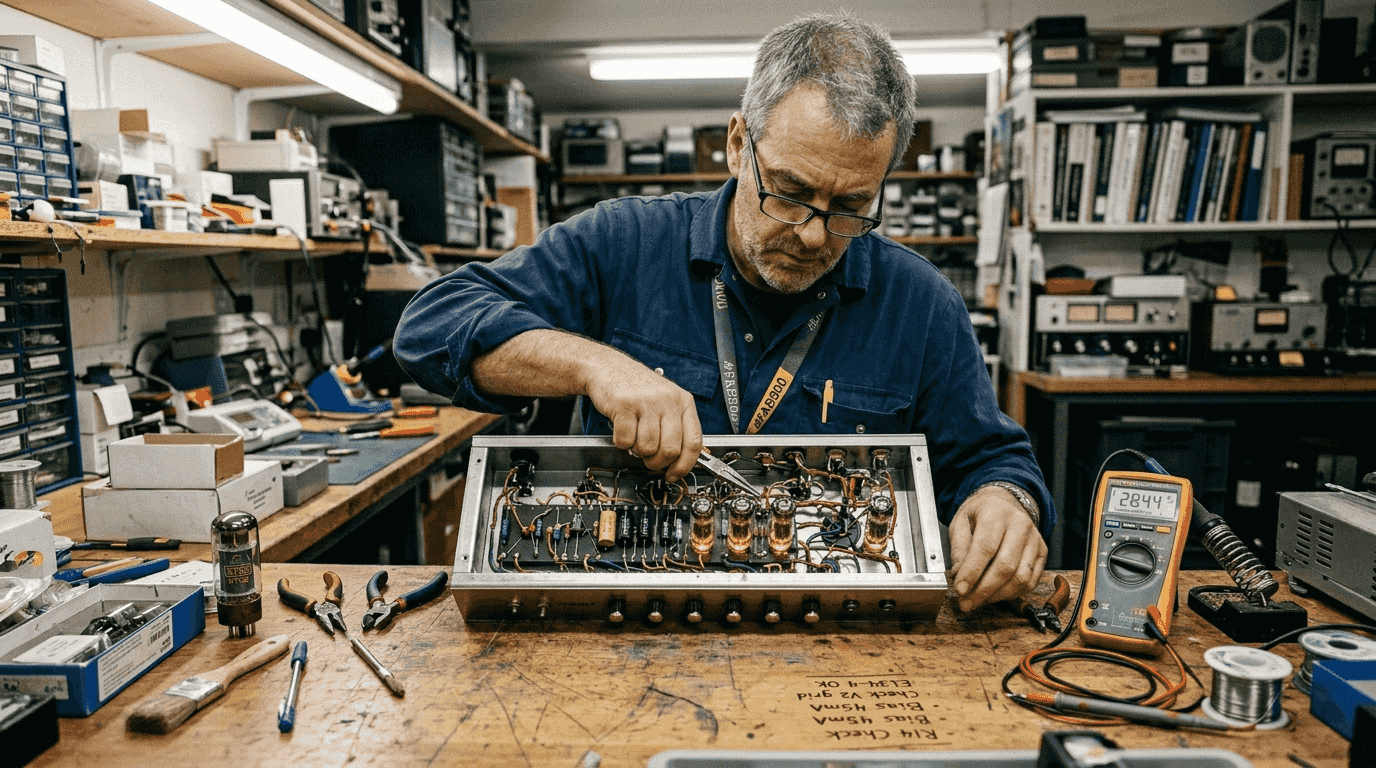
Harmonic distortion occurs when an amplifier adds frequencies that weren’t present in the original signal. These additional frequencies are mathematical multiples of the fundamental note you play. The crucial distinction is between even-order harmonics, which occur at 2x, 4x, and 6x the fundamental frequency, and odd-order harmonics at 3x, 5x, and 7x. Tube amplifiers primarily generate even-order harmonics, which blend naturally with the original note because they’re musically related intervals. A second harmonic is an octave above, a fourth harmonic is two octaves up, creating a sense of fullness rather than harshness.
Solid-state amplifiers, by contrast, produce predominantly odd-order harmonics when they distort. These frequencies create dissonance with the fundamental note, resulting in the brittle, harsh character that many guitarists find unpleasant. The third harmonic is a musical fifth plus an octave, but higher odd-order harmonics introduce increasingly dissonant intervals that clash with the original tone.
Why even-order harmonics sound better:
- They reinforce the fundamental frequency rather than competing with it
- They create perceived loudness and presence without actual volume increase
- They add complexity whilst maintaining musical coherence
- They enhance sustain and perceived thickness of individual notes
Classic amplifiers like the Marshall Plexi exemplify this harmonic richness. When driven hard, these amps generate a cascade of even-order harmonics that stack upon each other, creating the legendary thick, singing lead tones that defined rock music. The harmonic content doesn’t just make the amp louder, it fundamentally transforms the tonal character into something more complex and satisfying than the clean signal alone.
The harmonic structure of tube distortion creates a sound that feels alive and responsive, reacting to every nuance of your playing technique whilst maintaining musical integrity even at high gain levels.
Tube saturation, clipping and dynamic response: the magic behind the warmth
Beyond harmonic generation, tube amplifiers exhibit unique behaviour as they approach and exceed their maximum output capacity. This process, called tube saturation, progressively compresses the signal whilst adding harmonic complexity. Unlike digital clipping or solid-state distortion, tube saturation happens gradually across a range of input levels, creating a smooth transition from clean to distorted tones.
As you increase your playing intensity, a tube amp responds with proportional changes in harmonic content and compression. Light playing produces clean tones with subtle harmonic enhancement. Moderate attack introduces noticeable saturation and warmth. Aggressive picking drives the tubes into full distortion with rich overtones and natural compression. This dynamic response means the amplifier becomes an extension of your playing technique, rewarding nuanced touch with tonal variation.
The clipping behaviour of tubes differs fundamentally from transistors. When a tube reaches its maximum output, it clips the signal waveform in a gradual, rounded manner. This soft clipping maintains the musical character of the note whilst adding pleasing distortion. Solid-state devices, conversely, clip signals abruptly with sharp edges that generate harsh odd-order harmonics. The visual difference is striking: tube clipping shows smooth, rounded peaks whilst transistor clipping creates flat-topped square waves.
The sequential effects of tube saturation:
- Initial compression reduces peak dynamics whilst preserving note articulation
- Harmonic generation adds warmth and perceived thickness to the tone
- Soft clipping introduces musical distortion without harshness
- Natural compression creates sustain and cohesion across frequency ranges
- Touch sensitivity allows expressive control over distortion amount
This combination of saturation, soft clipping, and dynamic compression explains why tube amps feel responsive under your fingers. The amplifier doesn’t just reproduce your playing, it actively shapes and enhances it based on your attack and technique. A gentle touch yields clean, articulate tones. Digging in produces thick, saturated distortion. This responsiveness creates an interactive relationship between player and amplifier that solid-state technology struggles to replicate.
Pro Tip: Experiment with your guitar’s volume control to explore your tube amp’s dynamic range. Rolling back to 7 or 8 often reveals cleaner tones whilst maintaining the amp’s characteristic warmth, giving you multiple sounds without touching the amp controls.
The natural compression inherent in tube saturation also contributes to the perceived warmth and fullness of valve amplification. As the tubes compress the signal, they even out volume differences between notes whilst maintaining the attack transients that define note clarity. This creates a cohesive, polished sound that sits well in a mix without requiring additional processing.
Frequency response, transformers, and rectifier sag: shaping the tube amp’s character
The sonic signature of tube amplifiers extends beyond the valves themselves to encompass the entire signal chain. Output transformers, power supplies, and frequency response curves all contribute to the distinctive character that makes tube amps sound different from solid-state alternatives. These design elements work together to create the feel and tonal balance that guitarists prize.
Tube amplifiers typically exhibit a frequency response that emphasises midrange frequencies whilst gently rolling off extreme highs and lows. This voicing naturally complements guitar frequencies, placing your sound forward in a mix without harshness. The midrange emphasis also enhances perceived warmth and body, making single notes sound fuller and chords more cohesive. Solid-state amps often have flatter frequency responses that can sound sterile or overly clinical by comparison.
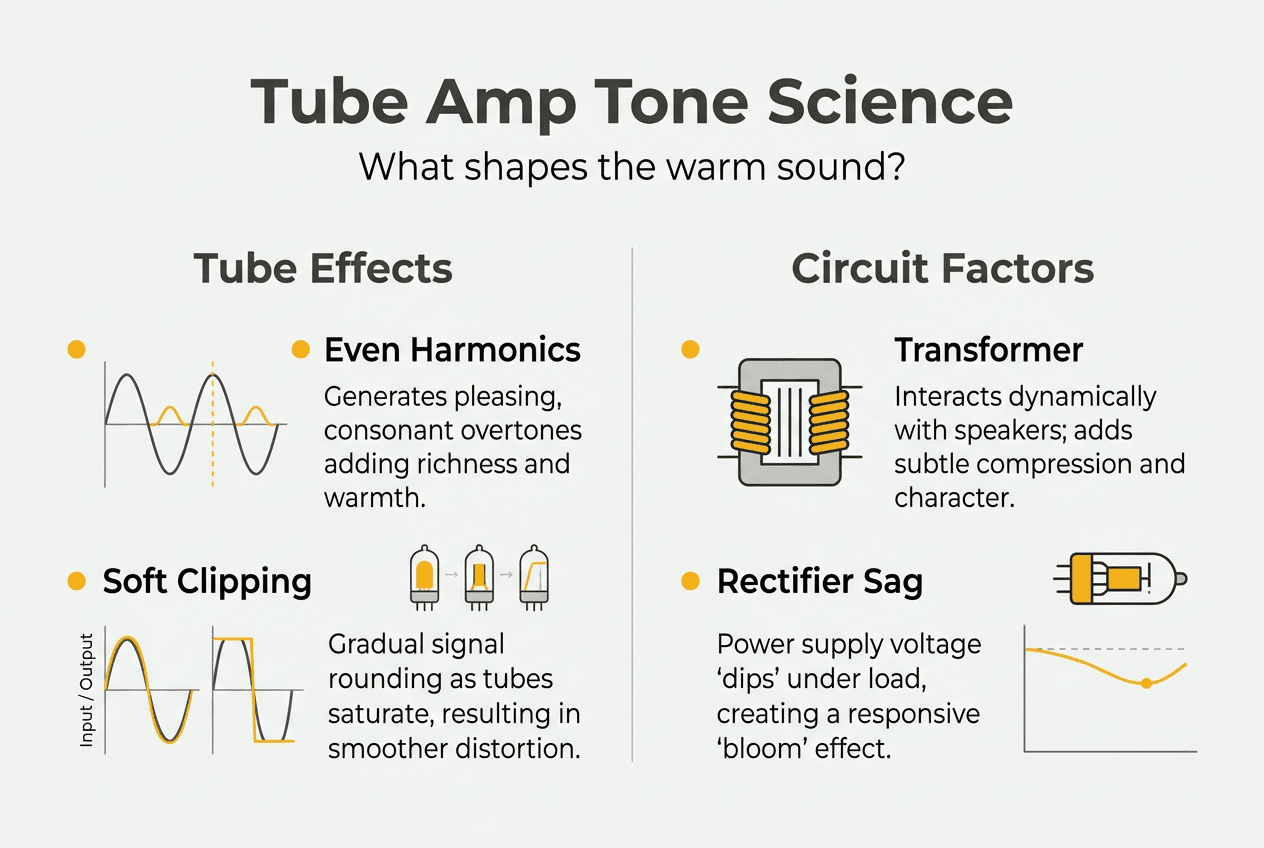
Output transformers in tube amplifiers serve a critical function, converting the high-voltage, low-current signal from the power tubes into the low-voltage, high-current signal required by speaker drivers. However, transformers aren’t perfect components. They introduce their own colouration through frequency-dependent behaviour and saturation characteristics. The legendary Marshall Plexi sound partly resulted from transformers that couldn’t perfectly reproduce the full frequency range, adding harmonic compression and tonal colour that became defining characteristics.
Tube rectifiers introduce another sonic element: voltage sag. When you strike a chord hard, the power supply momentarily struggles to deliver sufficient current, causing the voltage to drop briefly. This sag creates a compression effect and a slight delay in the attack, producing a spongy, blooming quality that many players find addictive. The amp feels alive and responsive, giving slightly under hard attack before bouncing back. This behaviour is entirely absent in solid-state rectifiers, which maintain consistent voltage regardless of demand.
| Characteristic | Tube Rectifier | Solid-State Rectifier |
|---|---|---|
| Voltage stability | Sags under load | Maintains consistent voltage |
| Attack feel | Slightly compressed, spongy | Immediate, tight |
| Headroom | Reduced, earlier breakup | More available, later breakup |
| Tonal character | Warm, blooming | Punchy, defined |
| Response to dynamics | Compresses on hard attack | Consistent across dynamics |
The interaction between transformer saturation and rectifier sag creates complex compression characteristics that vary with playing dynamics. When you dig into the strings, the rectifier sags whilst the transformer begins to saturate, producing a rich, compressed tone with enhanced harmonics. Lighter playing allows the voltage to recover and the transformer to operate more linearly, yielding cleaner tones with more headroom. This behaviour contributes significantly to the expressive character that makes tube amps feel musical and responsive.
Pro Tip: If you prefer tight, immediate response for modern high-gain styles, look for amps with solid-state rectifiers. For vintage, bluesy feel with natural compression, choose tube rectification. Some amps offer switchable rectifiers, giving you both options.
The frequency-dependent behaviour of transformers also affects how different frequencies saturate and compress. Bass frequencies typically cause more transformer saturation than treble, which is why tube amps often feel tighter and more controlled in the low end compared to solid-state designs. This natural bass management prevents muddiness whilst maintaining warmth and body.
How tube types and amp design influence guitar tone
Not all tubes sound identical. The specific valves used in power and preamp stages dramatically affect an amplifier’s tonal character, gain structure, and dynamic response. Understanding these differences helps you choose amplifiers that match your sonic preferences and playing style. Power tubes handle the high-voltage amplification that drives your speakers, whilst preamp tubes shape the initial signal and determine gain characteristics.
Common power tube types each bring distinct sonic signatures. The 6L6 family produces bright, aggressive tones with tight bass response and scooped midrange, making them popular for clean playing and American-voiced amplifiers. EL34 tubes offer mid-focused crunch with earlier breakup and a British character that excels at rock and blues. KT77 valves split the difference, providing EL34-style voicing with increased headroom and clarity. EL84 tubes deliver compressed, harmonically rich tones at lower volumes, perfect for smaller combo amplifiers.
Preamp tubes shape your signal before it reaches the power stage. The 12AX7, also known as ECC83, offers high gain and is the standard choice for most guitar amplifiers. Lower-gain alternatives like 12AT7 or 12AU7 provide cleaner tones with more headroom, useful in specific circuit positions to control overall gain structure. Some amplifiers use different preamp tube types in various stages to sculpt the tonal response and gain progression.
| Tube Type | Category | Gain Level | Tonal Character | Common Applications |
|---|---|---|---|---|
| 12AX7/ECC83 | Preamp | High | Warm, detailed | Most preamp stages |
| 12AT7 | Preamp | Medium | Clean, open | Phase inverters, reverb drivers |
| 12AU7 | Preamp | Low | Transparent | Effects loops, clean channels |
| 6L6 | Power | N/A | Bright, tight | Fender-style amps |
| EL34 | Power | N/A | Mid-focused, crunchy | Marshall-style amps |
| EL84 | Power | N/A | Compressed, warm | Vox-style amps |
Beyond tube selection, amplifier design factors significantly influence tone:
- Circuit topology determines gain structure and frequency response
- Transformer quality affects headroom, bass response, and harmonic content
- Speaker efficiency and voicing shape the final sound you hear
- Negative feedback amount controls damping factor and tonal tightness
- Component quality impacts reliability and tonal consistency
Proper biasing becomes critical when changing power tubes. Bias sets the idle current flowing through the tubes, affecting their operating point and lifespan. Incorrect bias can cause tubes to run too hot, leading to premature failure, or too cold, resulting in weak tone and crossover distortion. Most modern amplifiers require professional bias adjustment when installing new power tubes, though some designs offer user-adjustable bias controls.
Pro Tip: When upgrading tubes, research your specific amplifier model to ensure compatibility. Some circuits work only with particular tube types, and substituting without proper knowledge can damage your amp. Always check whether bias adjustment is required after tube replacement.
The interaction between preamp and power tubes creates the overall amplifier voice. A high-gain preamp section feeding clean power tubes produces tight, focused distortion with clear note definition. Conversely, a moderate-gain preamp driving saturated power tubes yields loose, harmonically complex tones with natural compression. Understanding this relationship helps you diagnose tonal issues and make informed decisions about tube replacement and amplifier selection.
Discover premium tubes and amplifiers at MusicStreet
Experiencing the sonic advantages of tube amplification requires quality equipment from trusted manufacturers. MusicStreet specialises in authentic valve amplifiers and replacement tubes, offering expert guidance to help you find the perfect match for your tonal preferences. Whether you’re seeking vintage warmth, modern high-gain aggression, or versatile clean tones, our curated selection includes amplifiers designed to deliver the responsive, musical character that only tubes provide.

Our experienced team understands the technical nuances that differentiate amplifier designs and can recommend specific models based on your playing style, musical genre, and tonal goals. We stock replacement tubes from premium manufacturers, ensuring you maintain optimal performance from your existing amplification. Beyond product sales, we provide setup services and ongoing support to help you maximise your investment in tube technology.
Featured amplifier brands available:
- Marshall: iconic British tone with EL34-powered crunch and legendary rock voicing
- Fender: classic American clean sounds with 6L6 power and sparkling headroom
- Mesa/Boogie: high-gain versatility with meticulous build quality and tonal flexibility
- Boutique manufacturers: hand-wired craftsmanship delivering unique sonic signatures
With over 95% customer satisfaction ratings, MusicStreet has built a reputation for quality products and knowledgeable service. Our Huntingdon showroom allows you to experience amplifiers in person, comparing tonal characteristics and feel before making your decision. We also offer nationwide delivery, bringing premium tube amplification directly to your door with comprehensive insurance and warranty coverage.
Frequently asked questions about tube amps
What maintenance do tube amps require compared to solid-state?
Tube amplifiers need periodic valve replacement, typically every 1-2 years for power tubes depending on usage intensity. Preamp tubes last considerably longer, often 5-10 years. You should also check bias settings when installing new power tubes and occasionally clean tube sockets to maintain proper electrical contact. Solid-state amplifiers require virtually no maintenance beyond keeping ventilation clear.
Can tube amps be used effectively at low volumes without losing tone?
Smaller wattage tube amps achieve power tube saturation at reasonable volumes, making them ideal for home use. A 5-watt or 15-watt amplifier can deliver rich, saturated tones without excessive volume. Many modern tube amps also feature master volume controls or power scaling that allows you to achieve distortion characteristics at lower output levels. However, some tonal magic, particularly speaker breakup and room interaction, requires sufficient volume.
How does tube amp biasing affect sound and tube life?
Bias determines how much current flows through power tubes at idle. Proper bias ensures tubes operate in their optimal range, maximising lifespan whilst delivering best tone. Running too hot creates more distortion but shortens tube life and risks damage. Cold bias sounds weak and produces crossover distortion. Most amplifiers require professional bias adjustment, though some offer user-accessible controls with clear instructions.
Are tube amps suitable for all guitar music styles?
Tube amplifiers excel across virtually all genres, from jazz and blues to metal and punk. Different amp designs voice themselves for specific styles: clean Fender-style amps suit country and funk, whilst high-gain Mesa/Boogie designs handle modern metal. The key is matching amplifier characteristics to your musical needs. Even electronic and experimental musicians value tube amps for their harmonic complexity and dynamic response.
What are the main differences between power and preamp tubes?
Power tubes amplify the signal to speaker-driving levels and significantly influence overall tone, feel, and headroom. They operate at high voltages and require periodic replacement. Preamp tubes shape the initial signal, determining gain structure and tonal voicing. They run at lower voltages, last longer, and primarily affect distortion character rather than overall volume. Both contribute to the amplifier’s sonic signature but serve distinct functions in the signal chain.
Recommended
- Guitar Amplifier Types Explained: Find Your Sound – MusicStreet
- How to shop boutique amplifiers UK: 50% better tone matching – MusicStreet
- Understanding Why Boutique Amps Matter for Musicians – MusicStreet
- Hybrid Guitar Amps Explained: Versatility for Modern Players – MusicStreet
- Theme, examined: resonance (and why some endings linger) | Stonington Media LLC








Share:
Step by step guitar setup guide for optimal playability
What is a practice amp? A guide for guitarists in 2026