

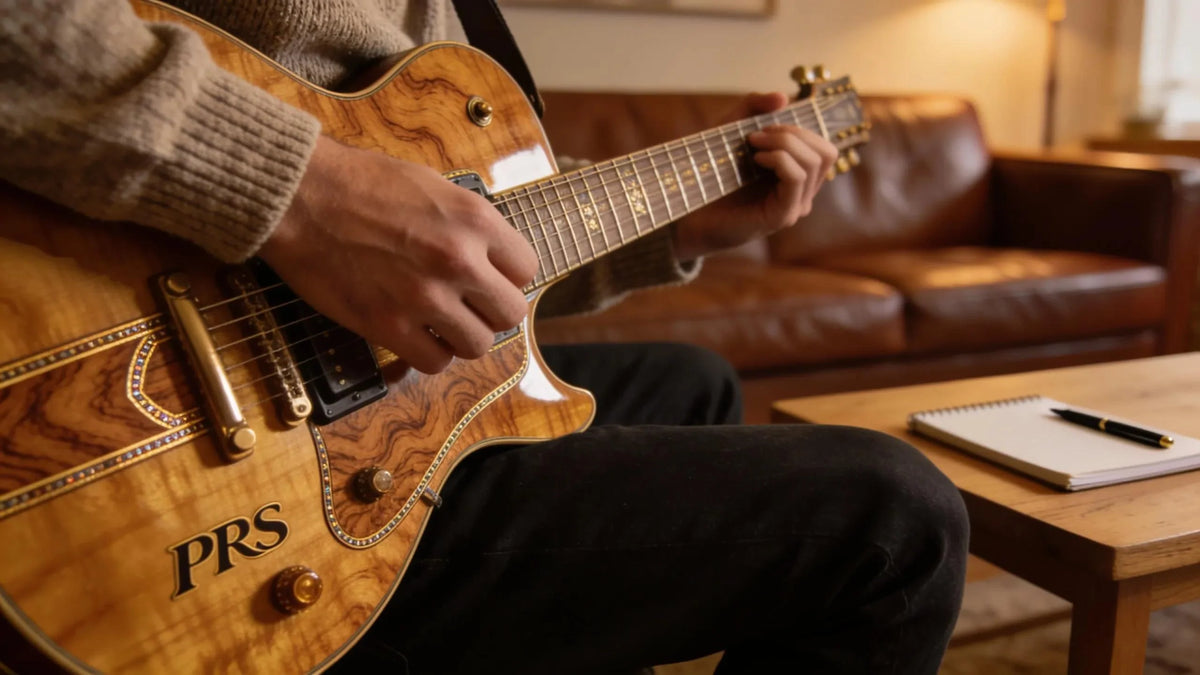
The Ultimate PRS Guitars Buyer's Guide: Models, Tones, and Playability Explained
By Tony Rawson, MusicStreet
PRS guitars bring together fine craftsmanship, tonal versatility and genuine playability, and that combination can transform how an instrument feels in your hands. This buyer's guide walks you through the PRS range, the features that suit different skill levels, and the tonal character that sets each model apart. Whether you're picking up your first guitar or you're a working professional after a versatile tool for the stage, knowing what PRS has to offer will help you choose with confidence.
With choices ranging from beginner-friendly models to high-end professional instruments, it's easy to feel a little lost. This guide breaks things down, weighing up the strengths of each model and answering the questions that matter most: which PRS suits your skill level. What actually shapes the sound and feel of these instruments. Along the way, we'll cover the PRS model range, what makes the SE series tick, and how the pickup configurations differ.
Key Takeaways
- PRS splits its lineup into Core, S2, and SE series, each targeting different budgets and craftsmanship levels.
- The PRS Custom 24 delivers versatile tones through coil-splitting humbuckers for rock, jazz, and blues styles.
- PRS necks come in Pattern, Pattern Thin, and Pattern Regular shapes, suiting varied hand sizes and playing techniques.
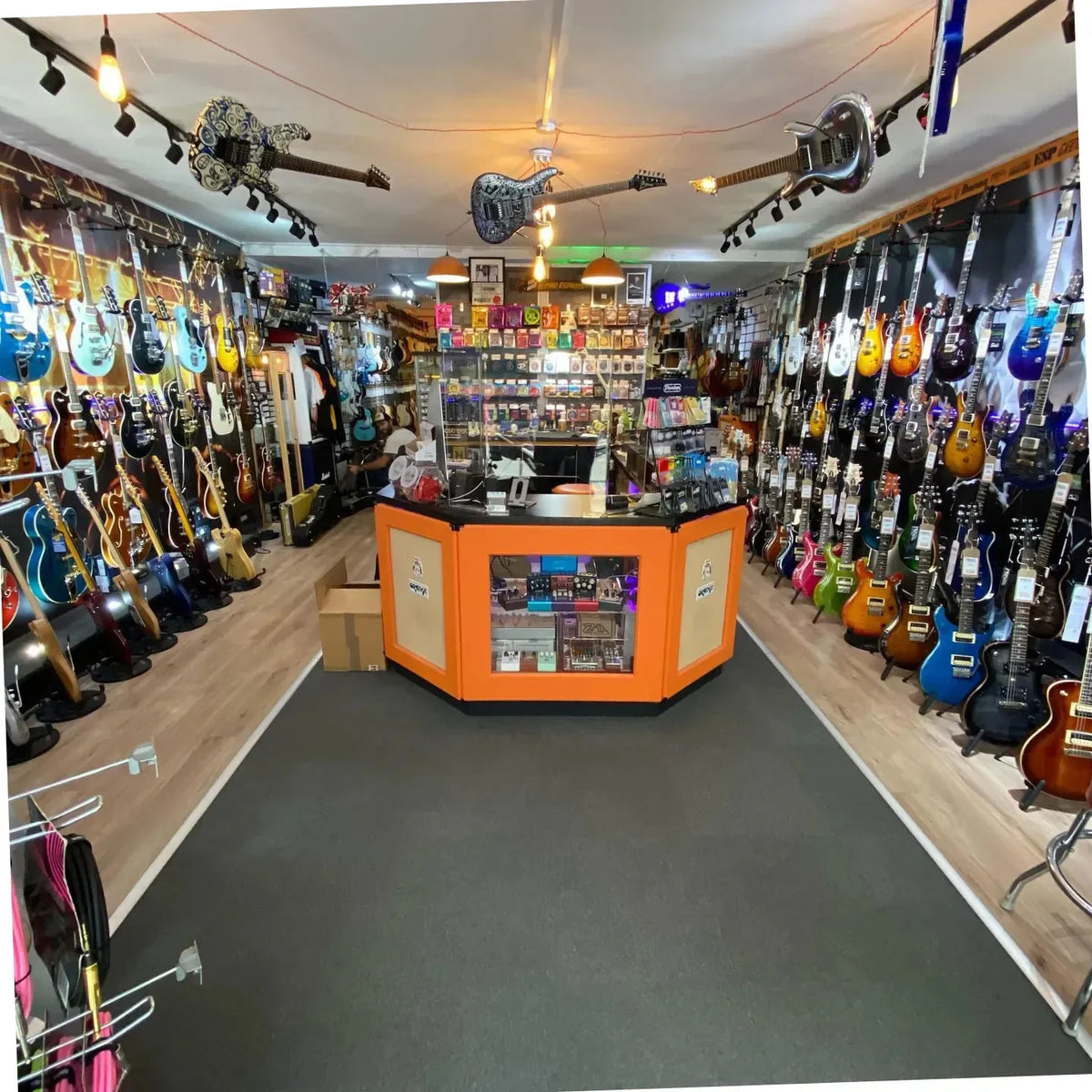
- At Music Street in Huntingdon, our 8-strong team offers hands-on PRS demos to match players with their ideal model.
Which PRS Guitar Models Are Best for Different Skill Levels?
The right PRS model for you comes down to your skill level and playing style.
- Beginners: For those just starting, PRS SE models provide an accessible entry point. Their affordable pricing and player-friendly features make them ideal for new musicians. You can explore more about these beginner-friendly options by checking out our collection of PRS SE guitars.
- Intermediate Players: As you advance, the PRS S2 Series offers upgraded materials and craftsmanship, delivering enhanced tonal quality without breaking the bank.
- Professional Guitarists: For experienced players, the PRS Core models, especially the Custom 24, are renowned for their exceptional build quality and versatility, catering to a wide array of musical genres.
Moving up to a better instrument can make a real difference to your playing. At MusicStreet, our part exchange programme lets you trade in your old guitar and step up to a higher-quality PRS model without the hassle.
What Features Distinguish the PRS SE Series for Beginners?
The PRS SE Series stands out from other beginner guitars for a few good reasons.
- Design and Comfort: These guitars feature a slightly contoured body that enhances playability, allowing beginner players to hold the instrument comfortably without straining.
- Playability and Tonal Versatility: The SE Series offers versatile pickup configurations, like the 85/15 S pickups, generating a range of tones suitable for any musical style—from rock to jazz.
- Affordability: Compared to other brands, the SE Series provides exceptional value, allowing beginners to experience high-quality craftsmanship at a more accessible price point.
It's this thoughtful design that makes the SE series such a strong starting point, and one that leaves plenty of room to grow into more advanced models later on.
How Does the PRS Custom 24 Cater to Professional Guitarists?
The PRS Custom 24 is a firm favourite among professional musicians thanks to features that genuinely lift performance.
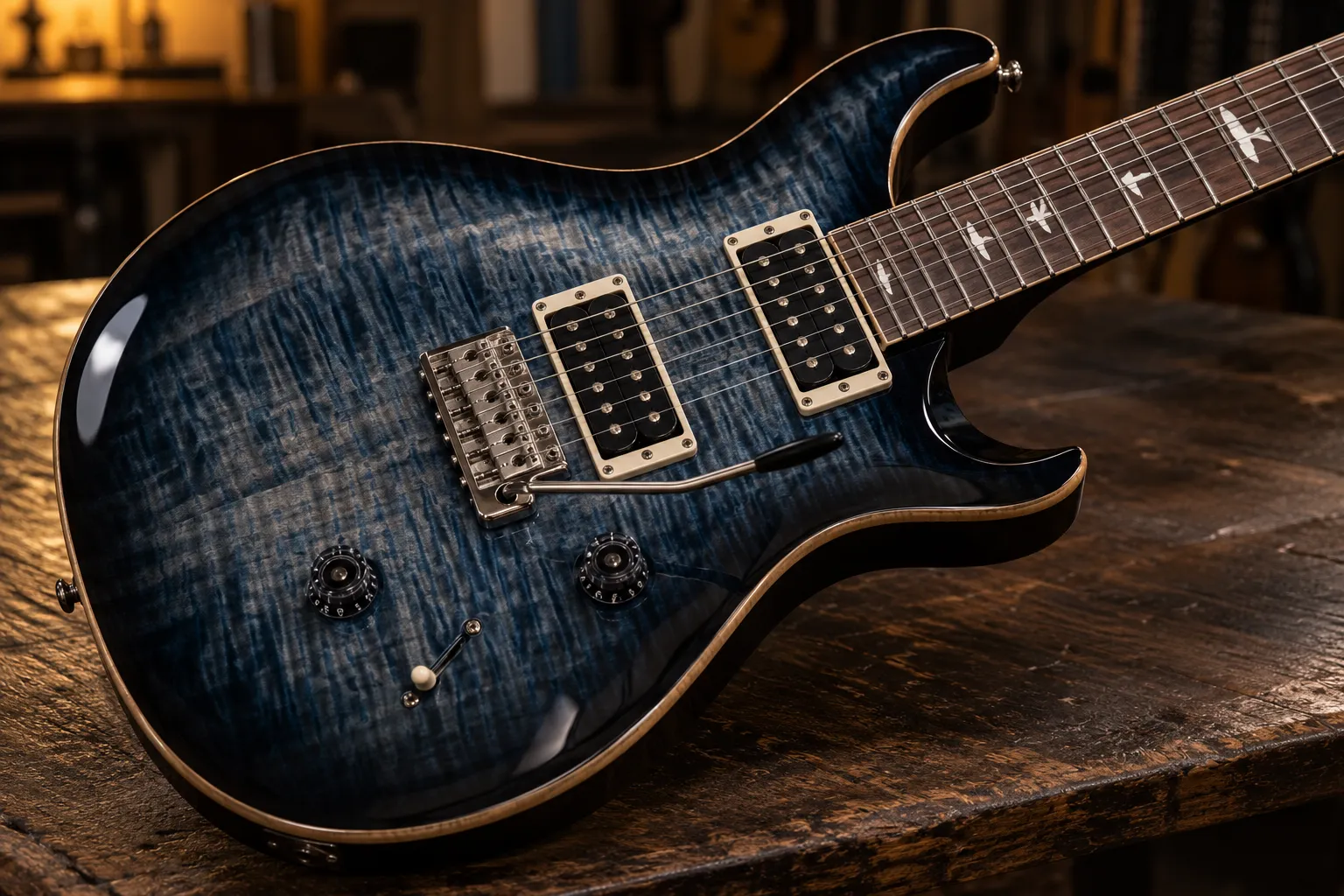
Built with a solid mahogany body and a maple cap, the Custom 24 has plenty of resonance and sustain to offer. It's a genuinely versatile guitar too, with its 85/15 pickups delivering both clarity and warmth across a wide tonal range. Players also rate the stability and precision of the PRS patented tremolo system, which makes pitch manipulation feel effortless. If you're drawn to that same level of craftsmanship and vintage character, the PRS McCarty 594 range is well worth a look.
It's this blend of versatility, playability and good looks that has made the Custom 24 a favourite among touring and session musicians alike.
What Are the Tone Characteristics and Pickup Types of PRS Guitars?
PRS guitars are known for their rich, distinctive tone, shaped largely by the pickups and materials that go into building them.
Pickup Types:
Most PRS guitars come fitted with humbucker pickups, prized for a warm, full-bodied sound that suits rock and blues particularly well. Some models also offer single-coil capability, giving you a brighter, crisper tone when you want it.
Tone Characteristics:
Body wood plays its part too: mahogany brings a warm foundation, while maple adds brightness and clarity on top. Together, they give PRS guitars the range to cover everything from aggressive rock riffs to mellow jazz chords. If you're after a tone that bridges classic and modern sounds, the PRS Silver Sky models strike a lovely balance between vintage character and modern playability.
| Model | Pickup Type | Tone Characteristics |
|---|---|---|
| PRS SE | Humbucker | Warm, full-bodied sound |
| PRS S2 | 85/15 S Pickup | Enhanced clarity with versatility |
| PRS Core | Custom 85/15 | Rich, complex with sustain |
The table below shows how pickup choice shapes tone across some of the most popular PRS models.
How Does PRS Pickup Configurations Affect Sound?
Knowing how pickup configuration shapes your sound is something every guitarist benefits from understanding.
- Humbuckers: These pickups provide a fuller, noise-resistant sound with greater output, making them ideal for stage performances.
- Single-Coils: These pickups offer a brighter tone, with enhanced clarity ideal for fingerpicking or more intricate solos. Players often find themselves switching between these configurations for the versatility they bring to their sound.
Many PRS models also offer coil-splitting, so you can switch between humbucker and single-coil tones and get considerably more variety out of one guitar.
Which Woods and Body Types Influence PRS Guitar Tones?
What a PRS guitar is built from has a real bearing on both its tone and its playability.
- Mahogany: This wood offers warmth and depth, typically used for the body and neck, forming the core of PRS's sound.
- Maple: Often used for tops, maple enhances brightness and clarity, contributing to the overall tonal spectrum of the guitar.
- Body Construction: Solid bodies provide sustain and resonance, while semi-hollow designs, like some S2 models, offer a lighter feel with added warmth.
It's the interplay between these materials that gives PRS guitars their signature tone, one that's then fine-tuned further by the pickup configuration chosen.
How Does PRS Guitar Playability Vary Across Neck Profiles and Scale Lengths?
Neck profile and scale length can make a noticeable difference to how a guitar plays.
- Neck Profiles: PRS offers a variety of neck shapes, including wide-thin and pattern thin, to accommodate different playing styles, allowing for comfortable access to higher frets.
- Scale Length: The standard scale length for PRS guitars is 25 inches, balancing string tension and overall feel—longer scales increase tension, making strings feel tauter, while shorter scales create a slinkier response.
Together, these details shape the overall feel of the instrument, so it's worth trying a few options to find the one that suits you best.
What Neck Profiles Does PRS Offer and How Do They Affect Comfort?
PRS offers several neck profiles designed around comfort and playability.
- Wide-Fat: This profile allows for better grip and stability for players who prefer a robust neck feel.
- Pattern Thin: A slimmer profile suits faster playing styles, often favoured by lead guitarists.
These profiles suit a range of hand sizes too, so there's a good chance you'll find one that offers both comfort and speed on stage.
How Does Scale Length Influence String Tension and Feel on PRS Guitars?
Scale length has a real effect on string tension and how a guitar feels under your fingers.
- Longer Scale Lengths: Generally create tighter string tension, benefiting soloists who want precise control over bending.
- Shorter Scale Lengths: Offer reduced tension, making it easier for rhythm players to strum chords with comfort.
Understanding how these factors work together makes it much easier to pick a model that matches your playing style and comfort.
What Should You Consider When Buying a New or Used PRS Guitar?
Whether you're buying new or used, a few key things are worth checking before you commit to a PRS guitar:
- Condition: Inspect for scratches, dents, and functionality, especially on used models.
- Authenticity: Verify the model against PRS identification features to avoid counterfeit instruments.
- Setup: Ensure the setup aligns with your playing style, which includes adjusting the action and pickup height.
Getting these right makes a real difference to both your investment and how much you'll enjoy playing the guitar.
How Can Part Exchange and Workshop Services at MusicStreet Support Your Purchase?
At MusicStreet, we aim to support you at every stage of buying your next guitar.
- Part Exchange Program: This service allows you to trade in your previous instrument when upgrading to a new PRS model, making the transition smooth and cost-effective.
- In-House Workshop Services: Our workshops provide top-notch maintenance for your guitars, ensuring they are always in peak condition, which is vital for performance reliability.
- Expert Guidance: Our team offers personalized recommendations tailored to your musical preferences and playing style.
Together, these services are there to make owning your chosen instrument a genuinely better experience.
What Are Price Ranges and Value Considerations for PRS Models?
Knowing what to expect across PRS's price ranges makes it much easier to buy with confidence.
- PRS SE Models: Typically range from £350 to £800, providing an exceptional value for beginner players seeking quality.
- PRS S2: Prices start around £1,200 and can go up to £1,700, offering mid-tier benefits ideal for advancing musicians.
- PRS Core Series: Prices range from £2,500 to over £4,500, reflecting the craftsmanship and premium materials involved.
Weighing up the value each model delivers for its price is key to choosing the right PRS for your budget.
FAQ
Which PRS series suits a beginner guitarist?
The PRS SE Series suits beginners best, offering a contoured body for comfortable playability, versatile 85/15 S pickups, and an accessible price point without sacrificing craftsmanship.
What makes the PRS Custom 24 a good choice for professionals?
The Custom 24 features a solid mahogany body with a maple cap for resonance and sustain, plus coil-splitting humbuckers that handle rock, jazz, and blues styles.
Where can I get hands-on advice about choosing a PRS guitar?
Visit MusicStreet in Huntingdon, Cambridgeshire, where our 8-strong team offers hands-on PRS demos to match players with their ideal model, plus a part exchange programme for upgrading.
Conclusion
In closing, choosing the right PRS guitar comes down to matching its tonal character and playability to your own musical voice, whether you favor a bolt-on's snap or a set-neck's sustain. Our team at MusicStreet has handled every model on this list, each set up in-house by working musicians before it reaches you. Visit our Huntingdon showroom or browse online, and let our expertise guide you toward the PRS that feels, sounds, and plays like it was built for you.

Share:
Tactile In-Store Shopping vs Premium Trade-In Value
Fender Stratocaster Buyer's Guide: Which Model Is Right for You?