


Dial in Iconic Guitar Tones: A Technical and Historical Masterclass
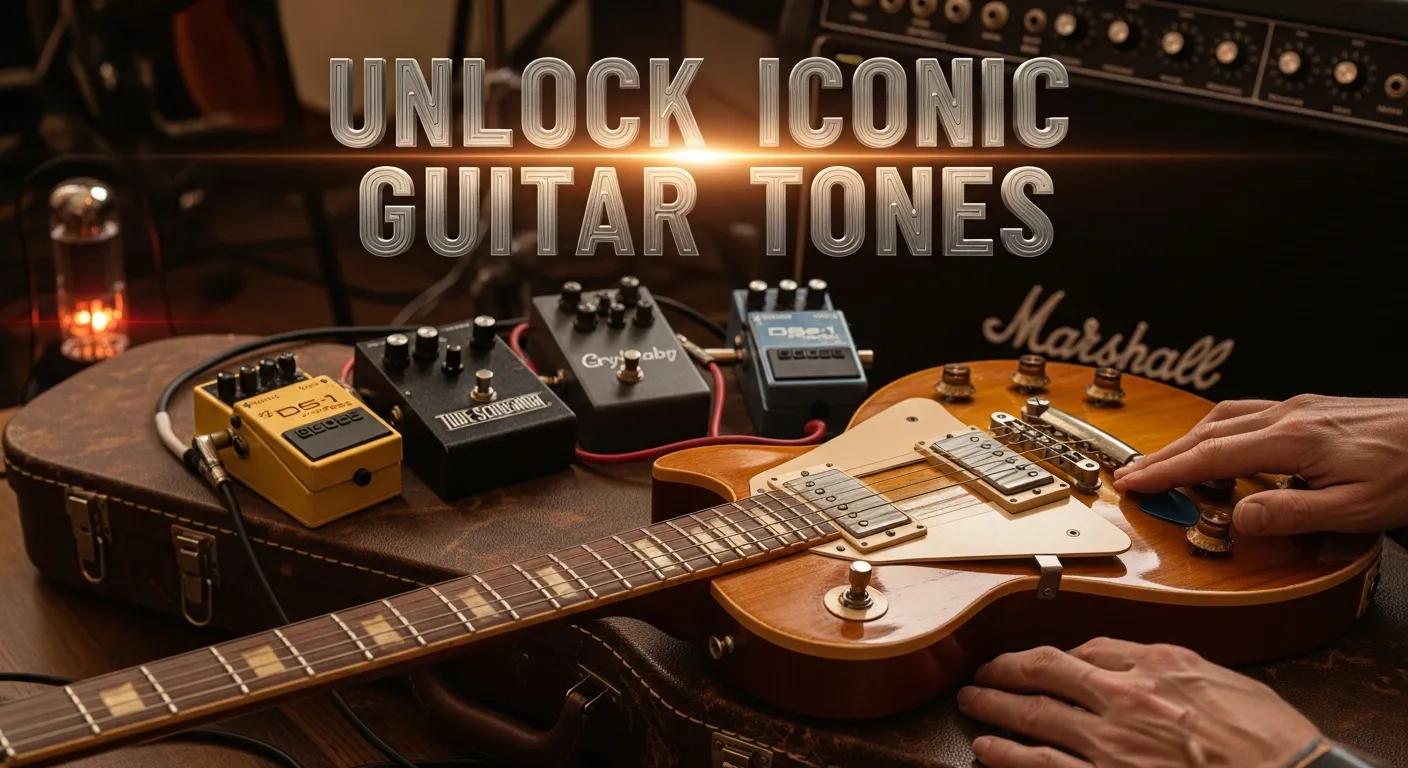
Achieving iconic guitar tones is a sophisticated endeavor that transcends mere gear replication. It demands a comprehensive understanding of the intricate interplay between instrument construction, amplifier electronics, signal processing, and advanced playing techniques. This authoritative guide delves deeply into the technical specifications, historical innovations, and professional methodologies that define legendary guitar sounds. We provide precise gear models, amplifier settings, pickup configurations, and signal chain architectures, alongside expert insights into the physics and electronics shaping tone. Whether analyzing Jimi Hendrix’s psychedelic textures or Eddie Van Halen’s “Brown Sound,” this resource equips you with the knowledge to engineer your own signature tone with confidence and precision.
Which Legendary Guitarists Set the Benchmark for Iconic Tones?
Throughout the evolution of electric guitar music, a select group of virtuosos have not only defined genres but also revolutionized tone production through innovative gear choices and pioneering techniques. Understanding the technical foundations of their sounds is essential for any serious player or engineer aiming to replicate or innovate upon these classic timbres.
What Gear and Settings Gave Jimi Hendrix His Psychedelic Voice?
Jimi Hendrix’s signature tone was the product of a meticulously crafted signal chain and nuanced playing dynamics. Central to his sound was the Fender Stratocaster, specifically a 1968 model with single-coil pickups known for their bright, bell-like clarity and pronounced midrange scoop. Hendrix’s Strat was typically set with the tone controls rolled back slightly (around 6-7 on a 10-point scale) to reduce harshness and emphasize warmth.
His amplifier of choice was the Marshall Super Lead 100-watt head, model 1959, renowned for its EL34 power tubes delivering a harmonically rich, mid-focused overdrive when cranked to 7-8 on the volume dial. The amp’s presence control was often set between 5 and 6 to add clarity without excessive brightness, while the bass and treble were balanced around 5 to maintain tonal equilibrium.
Hendrix’s use of effects pedals was equally critical. The Dallas Arbiter Fuzz Face, equipped with germanium transistors, provided a smooth, saturated distortion with a characteristic mid-hump around 800 Hz, enhancing sustain and harmonic complexity. The Uni-Vibe pedal simulated rotary speaker effects by modulating phase and amplitude at approximately 4-7 Hz, creating a swirling, psychedelic texture. Hendrix’s dynamic control over his pick attack, combined with controlled feedback and amp volume manipulation, allowed him to sculpt a rich, expressive tone that remains a benchmark in electric guitar history.
How Did Eddie Van Halen Craft the Famous “Brown Sound”?
Eddie Van Halen’s “Brown Sound” is a masterclass in custom gear modification and advanced playing technique. His iconic Frankenstrat guitar featured a single Seymour Duncan SH-1 '59 humbucker in the bridge position, wired in series to maximize output and midrange punch. The guitar’s alder body and maple neck contributed to a bright attack with a tight low end, essential for his articulate tone.
Van Halen’s amplifier setup centered on the Marshall Plexi 1959 Super Lead, modified with a variac to reduce voltage and achieve a saturated, compressed distortion at lower volumes. The amp’s gain was pushed to 8-9, with the bass dialed back to 4 to prevent muddiness, mids boosted to 7 for presence, and treble set around 6 to maintain clarity. His use of a custom-made MXR Phase 90 pedal added subtle modulation at approximately 0.5-1 Hz, enriching harmonic content without overwhelming the core tone.
Technically, Van Halen’s two-hand tapping technique expanded the harmonic possibilities of the guitar, while his precise palm muting and controlled use of harmonics created a percussive yet fluid sound. Delay effects, such as the Boss DD-2 Digital Delay set to a short 300 ms delay with low feedback, added depth without cluttering the mix. This combination of gear and technique produced a warm, saturated presence that remains a gold standard for rock guitarists.
Examining performance techniques like tapping and wah-wah pedal manipulation reveals the nuanced control over frequency modulation and dynamic envelope shaping that these artists mastered.
Electric Guitar Performance Techniques & Technologies Analysis
This thesis presents an in-depth discourse analysis of electric guitar techniques and technologies, including power chords, wah-wah effects, and finger tapping. It identifies recurring themes in the evolution of electric guitar practice and technology, emphasizing the interplay between player identity and technological innovation.
Electric Guitar Performance Techniques: Meaning and Identity in Written Discourse, 2015
What Essential Gear Actually Shapes a Signature Sound?
The tonal character of an electric guitar rig is fundamentally determined by the precise specifications and interactions of its components: guitar construction, pickup design, amplifier circuitry, and effects processing. A technical understanding of each element’s contribution enables targeted tone crafting.
How Do Different Guitars and Pickups Change the Tone?
Pickup type and guitar construction are primary determinants of tonal response. Single-coil pickups, such as the Fender Custom Shop ’69 Stratocaster pickups, feature a coil resistance typically around 6.5 kΩ and produce a frequency response with a pronounced peak between 2-5 kHz, delivering clarity and articulation ideal for clean and mildly overdriven tones. Conversely, humbuckers like the Gibson Burstbucker 3 have higher output (around 13 kΩ) and a frequency response that emphasizes midrange warmth and reduced 60 Hz hum, resulting in a thicker, more saturated sound.
Wood species and body construction also influence resonance and sustain. Mahogany bodies, with their higher density and damping characteristics, emphasize midrange warmth and sustain, while alder and ash bodies provide a brighter, more resonant tone with enhanced upper midrange and treble frequencies. Neck profiles and scale length (e.g., Fender’s 25.5" vs. Gibson’s 24.75") affect string tension and harmonic content, further shaping the instrument’s voice.
Combining these factors with pickup wiring options—such as coil-splitting, series/parallel switching, and phase reversal—allows for a versatile tonal palette. For example, coil-splitting a humbucker to single-coil mode reduces output and midrange, yielding a brighter, cleaner tone suitable for funk or country styles.
Which Amplifiers and Pedals Are Fundamental for Classic Rock Tones?
Classic rock tone is predominantly associated with vacuum tube amplifiers, prized for their nonlinear amplification characteristics, harmonic distortion, and dynamic response. Iconic models include the Marshall JCM800 2203, Fender ’65 Deluxe Reverb, and Vox AC30, each with distinct voicing and gain structures.
For instance, the Marshall JCM800’s EL34 tubes produce a midrange-forward distortion with a characteristic “crunch” when the gain is set between 6-8, bass around 5, mids at 7, and treble at 6. The amp’s presence control, typically set at 5, adds high-frequency sparkle without harshness. The Fender Deluxe Reverb, with 6V6 power tubes, offers a cleaner, glassier tone with smooth breakup at higher volumes, ideal for blues and country.
Pedals extend tonal possibilities by shaping gain stages and spatial effects. Overdrive pedals like the Ibanez Tube Screamer TS808 use a midrange boost centered around 720 Hz to push tube amps into natural overdrive without excessive distortion. Distortion pedals such as the Pro Co Rat provide a more aggressive clipping circuit with a broader frequency response, suitable for heavier styles.
Time-based effects—delay and reverb—are typically placed at the end of the signal chain to preserve clarity. Analog delays like the Electro-Harmonix Memory Man offer warm repeats with modulation, while digital delays provide precise, clean echoes. Modulation effects such as chorus and phaser introduce movement and depth, often set with low rate (0.5-1 Hz) and moderate depth to avoid overwhelming the core tone.
How Do Playing Techniques Affect Iconic Guitar Sounds?
Playing technique is as critical as gear in defining tone. The physics of string vibration, pick attack, and dynamic control directly influence harmonic content, sustain, and articulation.
What Vibrato and Bending Approaches Do Famous Players Use?
Expressive vibrato involves controlled oscillation of pitch, typically achieved by subtle lateral or vertical string movement. B.B. King’s signature vibrato is characterized by a wide, slow oscillation (~5 Hz) with consistent amplitude, imparting a vocal-like quality. Eric Clapton’s approach often features a faster, narrower vibrato (~7-8 Hz), adding tension and emotional nuance.
Bending techniques require precise finger strength and timing to raise pitch smoothly, often targeting microtonal intervals (quarter tones) for expressive effect. Mastery of these techniques enhances note sustain and harmonic richness by increasing string tension and altering the effective vibrating length.
How Do Picking Dynamics and Volume Control Shape the Sound?
Pick attack velocity directly affects the amplitude and harmonic spectrum of the string’s vibration. A soft attack emphasizes fundamental frequencies and produces a cleaner tone, while a hard attack excites higher harmonics and drives the amplifier’s input stage into saturation, increasing distortion and sustain.
Volume knob manipulation on the guitar allows dynamic control over the signal level entering the amplifier. Rolling back the volume pot reduces gain, cleaning up the tone without changing the amp’s settings, enabling seamless transitions between clean and overdriven sounds mid-performance. This technique exploits the logarithmic taper of volume pots, typically 250kΩ or 500kΩ, to achieve smooth tonal variation.
How Do You Build and Customise an Effective Guitar Rig?
Constructing a professional-grade guitar rig requires strategic component selection and signal chain optimization to maximize tonal flexibility and reliability.
What’s an Effective Signal Chain for Classic Tones?
The conventional signal chain for classic rock tones follows a gain-before-modulation paradigm:
- Guitar output (with volume and tone controls)
- Gain-based pedals (overdrive, distortion, fuzz)
- Modulation effects (chorus, phaser, flanger)
- Time-based effects (delay, reverb)
- Amplifier input
This order ensures that distortion pedals shape the core harmonic content before modulation and spatial effects add depth and movement. For example, placing an Ibanez Tube Screamer TS808 before a Boss DD-7 Digital Delay preserves the clarity of repeats while maintaining a saturated core tone.
How Can Modding Guitars and Pedals Improve Tone?
Targeted modifications can significantly enhance tonal clarity, response, and reliability. Common guitar mods include:
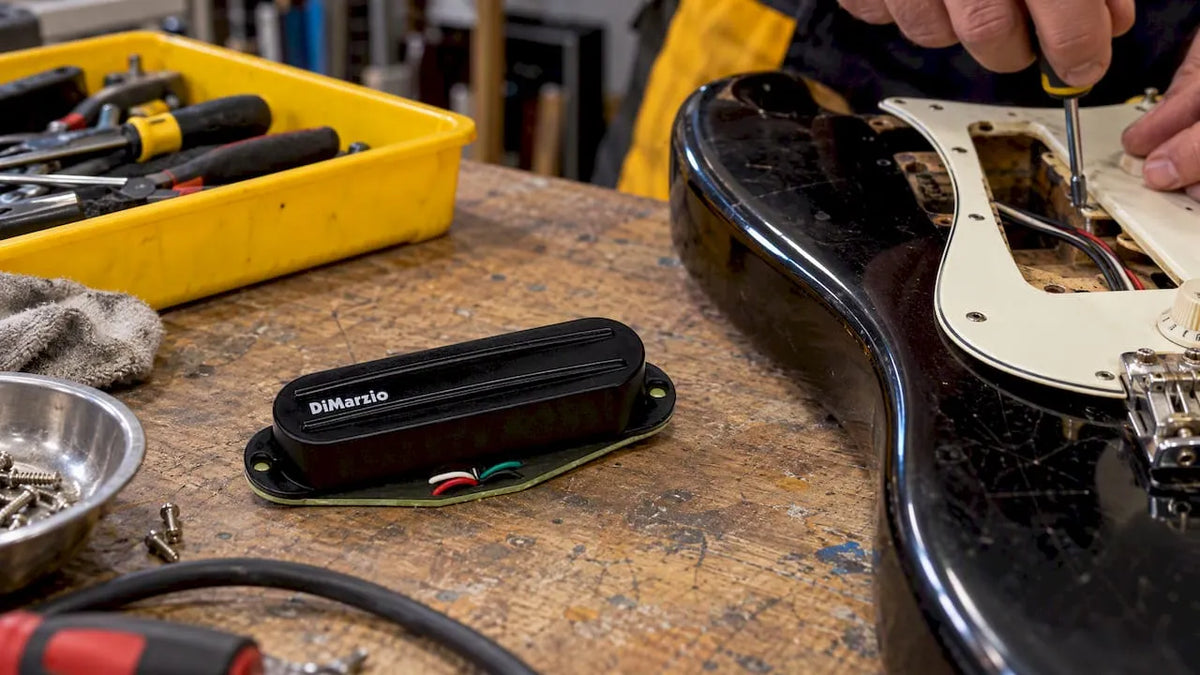
- Pickup upgrades: Installing high-output pickups like Seymour Duncan JB or DiMarzio Super Distortion increases output voltage and harmonic complexity.
- Wiring refinements: Using high-quality shielded cables and upgrading potentiometers to audio-taper 500kΩ pots reduces noise and improves control smoothness.
- Capacitor swaps: Replacing tone capacitors with premium polypropylene types (e.g., 0.022 µF) refines high-frequency roll-off characteristics.
Pedal modifications might involve replacing op-amps with low-noise, high-bandwidth variants (e.g., TL072 to OPA2134) or upgrading power supply filtering to reduce hum and interference. These tweaks often yield more musical results than wholesale replacements and allow customization tailored to playing style and tonal goals.
What Are the Best Practices for Maintaining and Setting Up a Guitar?
Consistent maintenance and professional setup are foundational to preserving optimal tone and playability.
Why Is a Professional Setup Important for Tone and Playability?
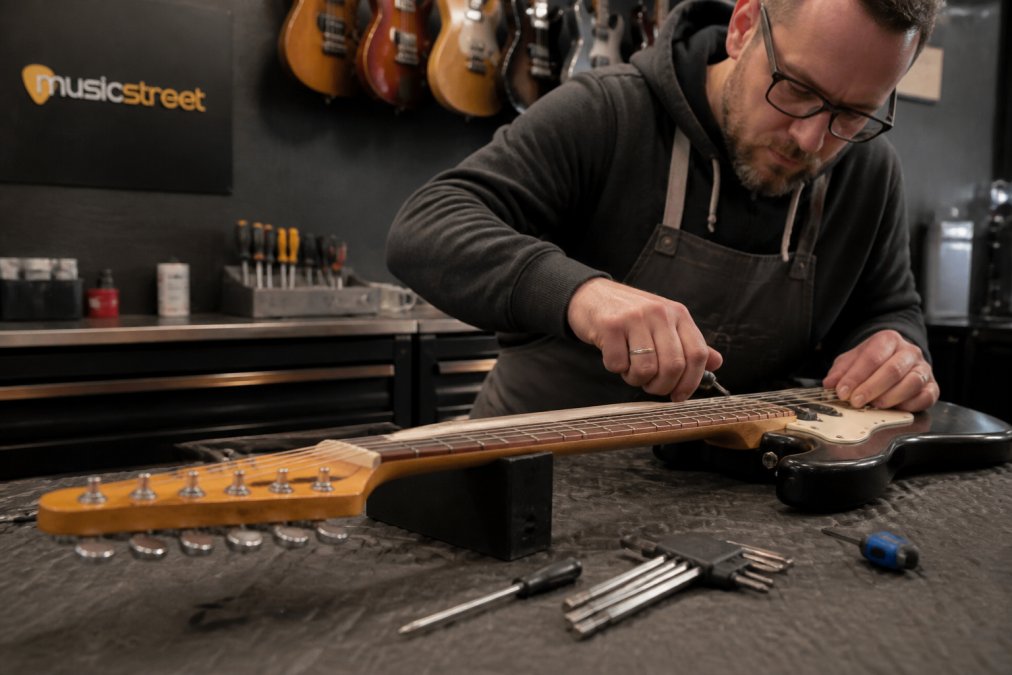
A professional setup involves precise adjustments of neck relief via truss rod tension, string action height, and intonation. Proper neck relief (typically 0.25-0.5 mm at the 7th fret) balances string buzz and playability. Action height is set according to player preference and style, often between 1.5-2.5 mm at the 12th fret for electric guitars. Intonation adjustments ensure accurate pitch across the fretboard by fine-tuning saddle positions.
These adjustments optimize string vibration efficiency, sustain, and harmonic balance, directly impacting tone quality and technical execution.
How Do String Choice and Tuning Influence Signature Sounds?
String gauge and material composition affect tension, brightness, and sustain. For example, nickel-plated steel strings (e.g., Ernie Ball Regular Slinky .010-.046) offer a balanced tone with moderate brightness and flexibility, while pure nickel strings provide a warmer, vintage character. Heavier gauges increase tension and sustain but require greater finger strength, influencing playability and tonal output.
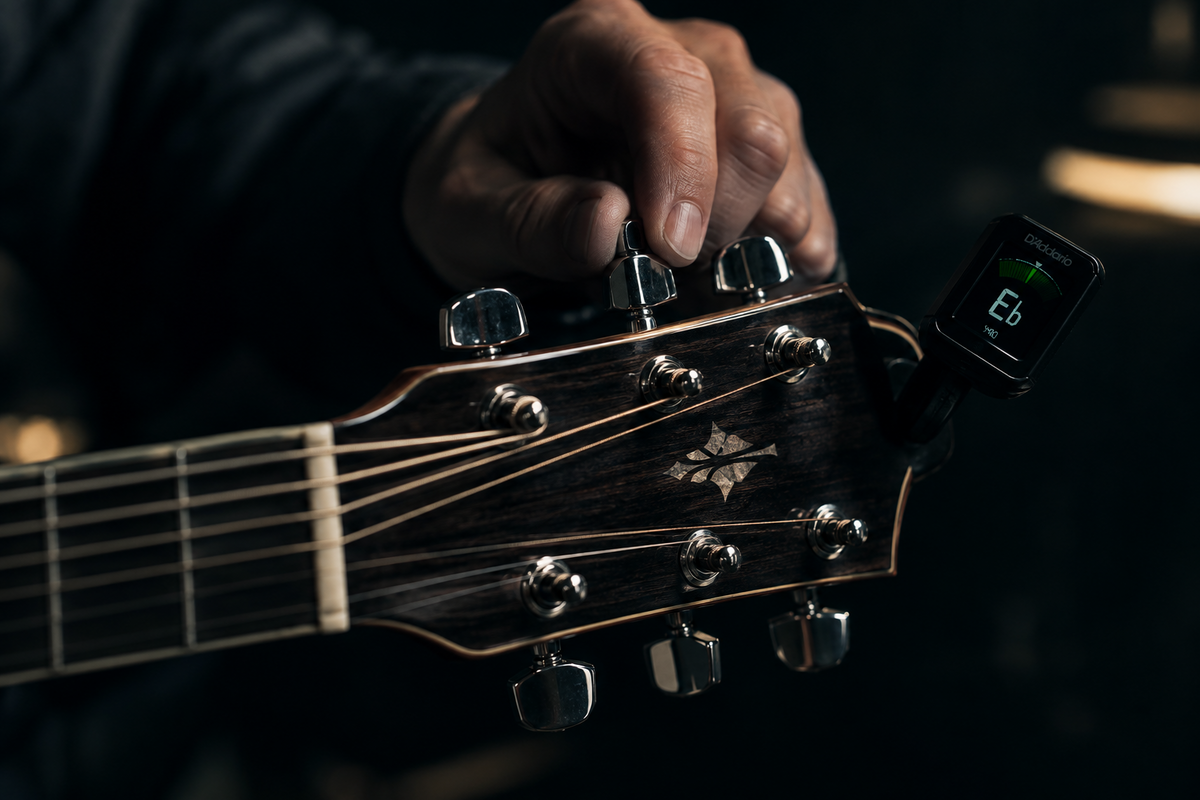
Alternate tunings, such as Drop D (D-A-D-G-B-E) or Open G (D-G-D-G-B-D), alter string tension and harmonic resonance, enabling unique chord voicings and timbral textures. Experimenting with these variables can inspire new creative directions and tonal identities.
How Can You Find Your Own Voice Beyond Copying the Greats?
While studying legendary tones provides invaluable technical insight, true artistic identity emerges through deliberate experimentation and synthesis of gear, technique, and personal expression.
What Role Does Experimentation Play in Developing a Personal Tone?
Experimentation involves systematic variation of gear configurations, playing techniques, and genre influences. This iterative process, guided by critical listening and recording analysis, reveals unique tonal combinations that resonate authentically. Embracing failure as part of this exploration fosters innovation and deepens technical mastery.
How Do You Balance Gear and Technique to Create Original Sounds?
Gear selection expands the tonal palette, but technique defines expressive nuance. Prioritize developing precise touch, dynamic control, and phrasing while choosing equipment that complements these strengths. For example, a player with advanced fingerstyle technique might favor a guitar with a fast neck profile and low action, paired with a clean, responsive amplifier like the Fender ’65 Deluxe Reverb. This synergy enables creation of a sound that is both distinctive and musically versatile.
| Gear Type | Example | Impact on Tone |
|---|---|---|
| Guitars | Fender Stratocaster ’68, single-coil pickups (6.5 kΩ) | Bright, clear tone with pronounced midrange scoop |
| Amplifiers | Marshall 1959 Super Lead, EL34 tubes, gain 7-8 | Warm, saturated distortion with harmonic richness |
| Effects | Dallas Arbiter Fuzz Face (germanium transistors) | Smooth, saturated fuzz with mid-hump around 800 Hz |
This table encapsulates how core components, specified by model and technical parameters, contribute to overall tone. It underscores that informed, precise choices—not merely expensive gear—are paramount in shaping a professional sound.
By mastering the technical interplay of gear, technique, and personal taste, you can engineer timeless tones while preserving your unique musical voice. Study the classics with analytical rigor, experiment systematically with your setup, and refine both equipment and playing to develop a tone that is technically sound and artistically authentic.
Frequently Asked Questions
What Are Common Mistakes to Avoid When Trying to Replicate Iconic Guitar Tones?
Common errors include overemphasizing gear acquisition at the expense of technique, neglecting professional setup leading to intonation and action issues, and overloading the signal chain with effects causing tonal muddiness. Prioritize foundational elements: ensure your instrument is properly set up, understand your amplifier’s gain structure, and use effects judiciously to enhance rather than obscure your core tone.
How Can I Use Effects Pedals Effectively to Shape My Tone?
Implement a deliberate signal chain with gain-based pedals (overdrive, distortion) preceding modulation (chorus, phaser) and time-based effects (delay, reverb). Calibrate each pedal’s level, tone, and gain controls to complement your amplifier’s voicing. Employ a pedalboard with buffered true-bypass switching to maintain signal integrity and consistent settings. Subtle parameter adjustments often yield more musical results than extreme settings.
What Should I Consider When Choosing a Guitar for My Style?
Evaluate pickup type (single-coil vs. humbucker), body wood, neck profile, and scale length, as each affects tonal character and playability. Single-coils excel in clarity and articulation, ideal for genres like blues and funk, while humbuckers provide higher output and warmth suited for rock and metal. Test multiple neck shapes (C, V, U profiles) and scale lengths to find ergonomic comfort and tonal compatibility with your technique.
How Can I Maintain My Guitar to Ensure the Best Sound?
Regularly change strings to prevent tonal degradation, clean the fretboard with appropriate conditioners, and inspect hardware for tightness. Schedule professional setups periodically to adjust truss rod, action, and intonation. Store guitars in controlled environments to prevent humidity-induced warping or finish damage, preserving structural integrity and tonal consistency.
What Are Effective Ways to Develop My Unique Guitar Sound?
Combine critical listening to diverse styles, systematic experimentation with gear and techniques, and recording analysis to identify what resonates. Incorporate elements from multiple genres and refine your approach through iterative practice. This process cultivates a distinctive sound that reflects your musical identity.
How Does String Choice Affect My Guitar Tone?
String gauge and material composition influence tension, brightness, warmth, and sustain. Heavier gauges (e.g., .011-.049) increase sustain and fullness but require greater finger strength, while lighter gauges (.009-.042) facilitate bending and speed. Nickel-plated steel strings offer balanced brightness and warmth; stainless steel strings provide increased brightness and durability. Experiment to find the optimal balance for your instrument and style.
Conclusion
Attaining iconic guitar tones is a rigorous synthesis of technical knowledge, precise gear selection, expert playing technique, and disciplined experimentation. Understanding the physics of string vibration, amplifier tube saturation, and signal processing empowers you to sculpt your sound with authority. Maintain your instrument meticulously and approach tone crafting as an evolving art form. Use this guide as a foundational resource to explore deeper technical literature and professional tutorials, advancing toward a tone that is both timeless and uniquely yours.







Share:
How to Personalise Guitars for Optimal Playability
How to Get a Great Guitar Tone: Complete Guide for Beginners and Pros