

Table of Contents
- Sign 1: Your Strings Are Harder to Press Down Than They Used to Be
- Sign 2: Your Guitar Won't Stay in Tune Across the Fretboard
- Sign 3: You Hear Buzzing or Rattling When You Play
- Sign 4: The Neck Looks or Feels Different
- Sign 5: Your Guitar Hasn't Been Set Up in Over a Year
- How to Adjust Guitar Action (and When to Leave It to a Professional)
- Essential Guitar Maintenance Tools for Keeping Your Setup in Shape
- How Long Does a Guitar Setup Take?
- Frequently Asked Questions
Last Updated: September 17, 2026
Sign 1: Your Strings Are Harder to Press Down Than They Used to Be
If your fingers ache after twenty minutes of playing, and barre chords have become a battle, that's one of the 5 signs your guitar needs a professional setup, because your action has almost certainly crept up. Action is the distance between the strings and the fretboard. When that gap widens, every note demands more pressure than it should.
A common mistake is blaming your own technique. In practice, most players who suddenly struggle are fighting the instrument, not their hands. Humidity and temperature swings are the primary drivers behind this drift, which is why regular adjustments become necessary over time (MusicStreet on instrument stability).
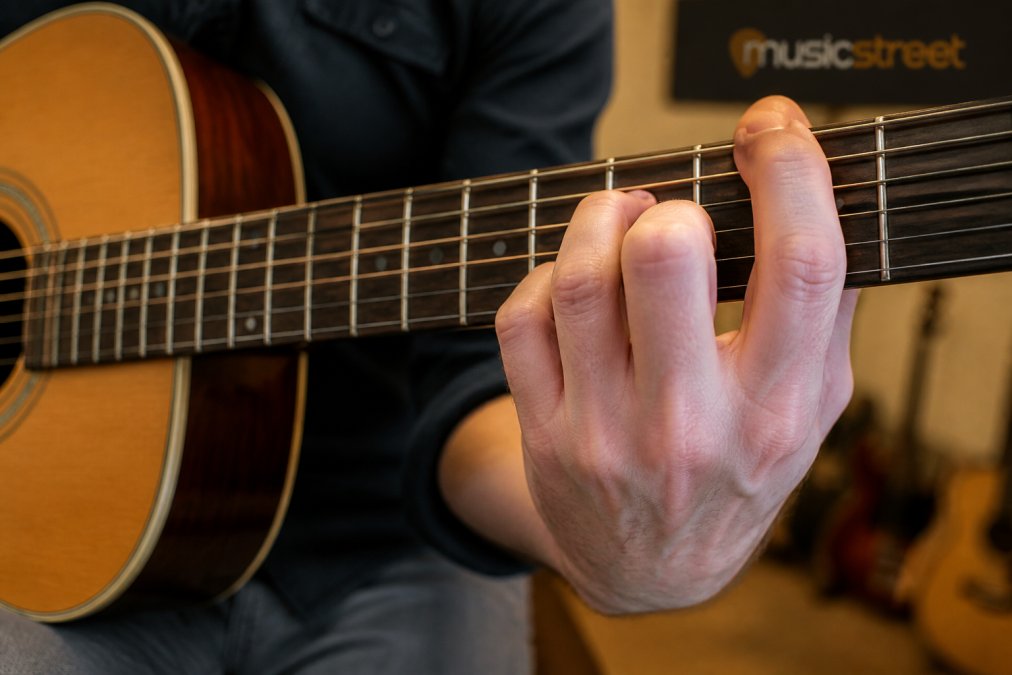
A professional setup corrects this by adjusting the truss rod and lowering the bridge saddles or nut slots. The result is a guitar that plays the way it did when it left the shop.
Sign 2: Your Guitar Won't Stay in Tune Across the Fretboard
A guitar that sounds fine at the open strings but sour by the twelfth fret has an intonation problem. Intonation is the accuracy of pitch across the entire neck, and it drifts as saddles shift, strings age, and the neck settles.
Test it now: play a harmonic at the twelfth fret, then fret the same note. If the fretted note is sharper or flatter, the saddle needs moving. This is one of the clearest signs your guitar needs a professional setup, because correcting it properly requires precise measurement rather than guesswork.
Sign 3: You Hear Buzzing or Rattling When You Play
Buzzing usually means one of three things: the action has dropped too low, a fret has lifted, or the neck has developed a back-bow. Each has a different fix, and diagnosing which one you have matters more than the repair itself.
Fret buzz on a single string points to a high fret or a worn nut slot. Buzz across the whole neck suggests the truss rod needs relief. A rattle that appears only when you strum hard often traces back to a loose saddle or a bridge pin that isn't seated.
Sign 4: The Neck Looks or Feels Different
Hold your guitar at eye level and sight down the neck from the headstock. You should see a slight, even curve. If the neck looks like a bow, a back-bow, or a twist, stop playing and get it looked at.
Neck relief changes with the seasons. Dry winter air pulls the neck back; summer humidity bows it forward. Regular setups are recognised as essential for keeping action and intonation stable, regardless of what the instrument cost in the first place (MusicStreet on proactive maintenance).
Some players argue their guitar stays playable for years without intervention. That's true for some instruments kept in stable conditions, but it's the exception, not the rule.
Sign 5: Your Guitar Hasn't Been Set Up in Over a Year
Twelve months is the practical threshold, and it's one of the 5 signs your guitar needs a professional setup. If you play regularly, your guitar has absorbed a year of string tension, humidity shifts, and fret wear. Even if nothing feels obviously wrong, small problems compound quietly.
A useful rule of thumb:
| Playing Frequency | Recommended Setup Interval | Why It Matters |
|---|---|---|
| Daily, gigging | Every 3-6 months | Tension and sweat wear frets fast |
| A few times a week | Every 6-12 months | Seasonal drift accumulates |
| Occasional | Every 12-18 months | Storage conditions dominate |
| Stored long-term | On removal from storage | Check before playing |
If your guitar sits in the "over a year" row and you're noticing any of the earlier signs, book it in.
How to Adjust Guitar Action (and When to Leave It to a Professional)
Adjusting guitar action means changing the string height at the nut, bridge, or both, then checking neck relief first. The order matters: relief, then action, then intonation. Skip a step and you'll undo your own work.
Here's the sequence a technician follows:
- Tune to pitch and check neck relief with a feeler gauge
- Adjust the truss rod a quarter turn at a time if relief is out
- Measure string height at the twelfth fret
- Lower or raise saddles to hit your target action
- Check intonation at the twelfth fret and move saddles as needed
- Re-tune and repeat until stable
If your guitar has a floating tremolo, a set neck, or a nut that needs filing, hand it over. Filing a nut too deep is irreversible without a replacement.
Essential Guitar Maintenance Tools for Keeping Your Setup in Shape
Essential guitar maintenance tools fall into three groups: measuring tools, adjustment tools, and cleaning supplies. You don't need all of them, but a few basics pay for themselves quickly.
- Feeler gauges and an action gauge for measuring relief and string height accurately
- Truss rod spanners sized to your guitar's nut
- A high-precision tuner for intonation work, where standard tuners aren't accurate enough
- A string winder and cutter to make string changes quick and safe
- Polish and fretboard conditioner to protect the wood between setups
A kit like the Music Nomad Premium Guitar Tech Tool Set covers the measuring and adjustment essentials, while the D'Addario Pro-Winder handles string changes. For intonation, the Peterson StroboStomp HD offers the accuracy the job demands.
How Long Does a Guitar Setup Take?
A standard setup takes around 45 to 90 minutes for an experienced technician, assuming no structural repairs are needed. A full setup with a string change, fret polish, and deep clean can run to two hours.
Turnaround depends on the workshop's queue, not the work itself. A straightforward action and intonation job is often same-week. If frets need levelling or a nut needs replacing, expect longer, and ask for a time estimate before you leave the instrument.
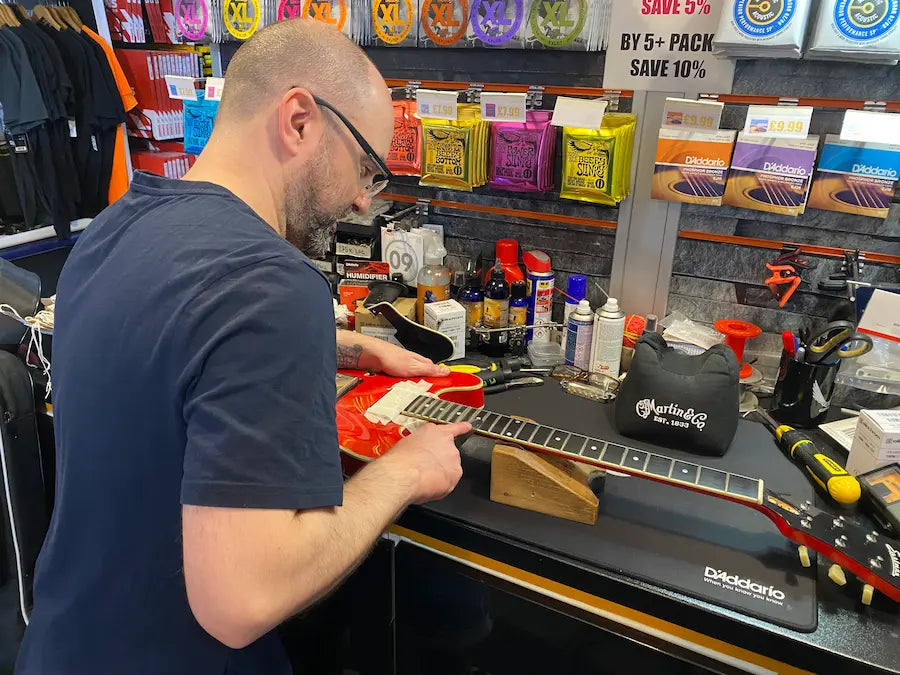
Your guitar should feel effortless to play, and when it doesn't, the instrument is telling you something. At MusicStreet, every guitar we sell is expertly set up by players, for players, and our in-house repair workshop handles everything from a routine action adjustment to a full fret level. We're a family-run specialist, established in 2014, with free delivery on orders over £99 and a team that will advise you honestly on whether you need a setup or a new instrument. Browse our hand-selected range of electric, acoustic, and bass guitars and find one that plays properly from the first chord.
Frequently Asked Questions
How often should you get a professional guitar setup?
Most players benefit from a professional guitar setup once a year, though this depends on how much you play and the conditions your instrument experiences. Humidity and temperature changes are primary drivers for needing regular adjustments. If you gig frequently, play outdoors, or notice any of the five signs covered here, book a setup sooner. Guitars that sit unplayed for months may also need attention when you return to them.
What is included in a professional guitar setup?
A full setup typically covers truss rod adjustment to correct neck relief, action height optimisation, intonation calibration across the fretboard, and nut slot or bridge saddle adjustment. Your technician will also check fret wear, tighten hardware, and clean the instrument. At MusicStreet, every setup is handled by players who understand what working musicians need from their instruments.
Can I perform a guitar setup myself or should I see a professional?
Basic tasks like changing strings and cleaning are fine to do yourself. Adjusting action, intonation, and truss rod relief requires specific tools and knowledge. If you are unsure how to adjust guitar action without causing fret buzz or damaging the neck, a professional setup is the safer choice. Many players learn basic maintenance over time but still book annual professional check-ups.
Does a new guitar need a professional setup out of the box?
Not always, but many do. Guitars shipped from factories often arrive with action set for transport rather than playability. Environmental changes during shipping can also affect the neck. If you buy from a specialist who sets up every instrument before it leaves the shop, you will receive a guitar that plays well immediately. Otherwise, budget for a setup soon after purchase.
What are the symptoms of high action on an electric guitar?
High action makes strings harder to press down, especially near the higher frets. You may find bends difficult, experience hand fatigue quickly, and struggle with barre chords. Intonation can also suffer because the strings stretch further when fretted. If your guitar feels like hard work to play compared to others, high action is likely the cause. A setup can bring the strings closer to the fretboard without causing buzz.









Share:
Is Buying a Used Guitar Worth It? A 2026 Comparison