

Table of Contents
- Guitar Servicing and Repair Options Compared
- MusicStreet: Family-Run Servicing and Repair Support
- MusicStreet In-House Repair Service: What to Expect
- Taylor Guitars Service Packages: Manufacturer-Standard Care
- Vintage Guitar World Appraisal & Repair: For Collectors
- How to Prevent Guitar Hardware Corrosion in Humid Climates
- Signs Your Guitar Needs a Professional Setup
- Essential Guitar Maintenance Tools for Players
- Frequently Asked Questions
Last Updated: September 11, 2026
Guitar Servicing and Repair Options Compared
Finding the best comprehensive servicing and repair support for verified guitar condition comes down to matching the provider to your instrument. A documented repair history, certificate of authenticity and professional appraisal can lift a vintage guitar's price by 35% to 58%, according to Vintage Instruments Market Statistics 2026. That premium is built on paperwork as much as wood and wire.
This guide from MusicStreet compares three routes: in-house workshop care, manufacturer service packages, and specialist vintage appraisal. Below, we break down what each covers, what it costs you in time, and where each one falls short.
| Provider | Best For | Verification Included | Turnaround |
|---|---|---|---|
| MusicStreet in-house workshop | All levels, new and pre-owned | Diagnostic inspection | Varies by job |
| Taylor Guitars service packages | Taylor owners | Factory-standard check | Varies by package |
| Vintage Guitar World | Collectors, vintage instruments | Appraisal and condition report | Quote-based |
Guitar servicing is the routine adjustment and repair work that keeps an instrument playable: action, intonation, truss rod, fretwork, electronics and hardware. Skip it and you are not just fighting a bad setup, you are watching resale value leak away.
MusicStreet: Family-Run Servicing and Repair Support
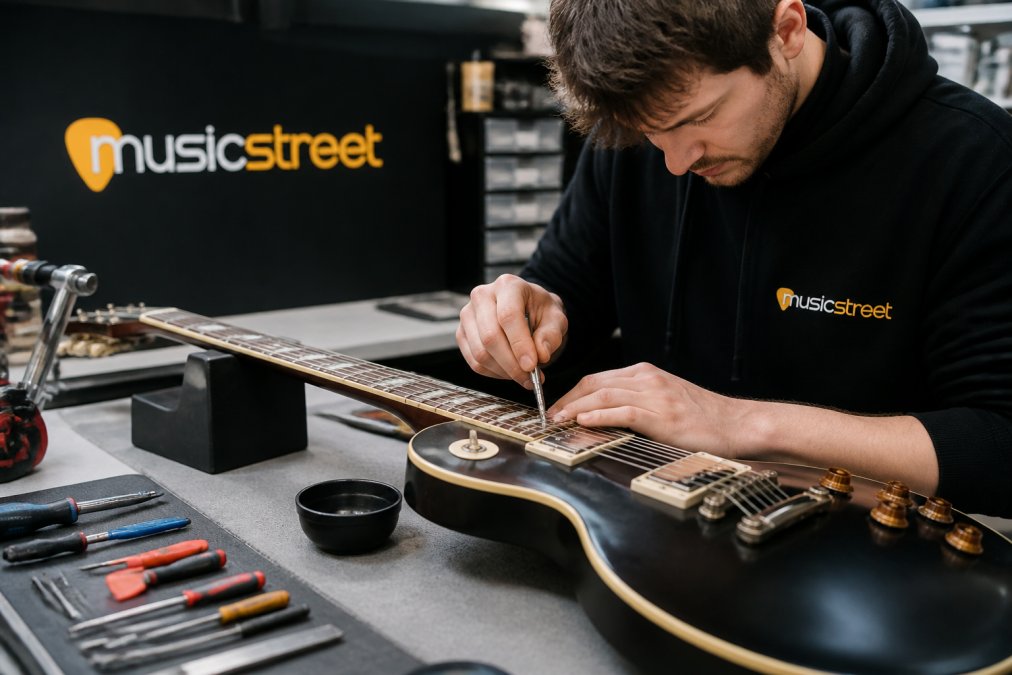
MusicStreet is a family-run guitar specialist, established in 2014, with an in-house repair and setup workshop handling electric, acoustic and bass guitars. Every instrument is set up by players, for players, which matters when you have bought online before and received something with terrible action.
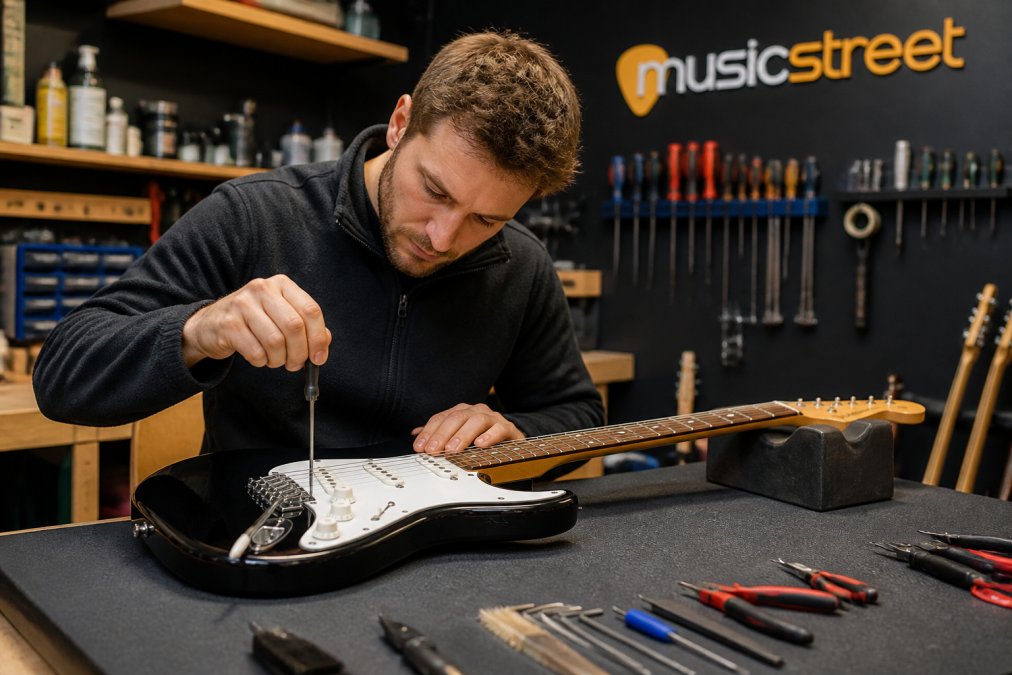
The shop is an authorised dealer for Duesenberg, Fender, Gibson, PRS, Yamaha, Epiphone and Blackstar, and offers free delivery on orders over £99. Stock is hand-selected rather than bulk-bought, so advice comes from people who have played the instrument in front of you.
Pricing is bespoke and needs a direct conversation, so you cannot budget from the website alone.
What the In-House Workshop Covers
- Professional setup for action, intonation and playability
- Diagnostic inspections on new and pre-owned instruments
- Personalised maintenance advice for long-term care
- Tailored service for beginners through to professionals
MusicStreet In-House Repair Service: What to Expect
Expect a diagnostic inspection first, then a written summary of what needs doing before any work begins. That order matters: it stops small jobs turning into open-ended invoices.
The workshop focuses on setup and maintenance rather than full restorations, so a snapped headstock or serious structural damage may need a specialist referral. For routine servicing, though, the turnaround is the point. If you have waited months elsewhere for a bass you need for gigs, ask upfront what the queue looks like.
Taylor Guitars Service Packages: Manufacturer-Standard Care
Taylor Guitars offers structured service packages delivered by factory-trained technicians, with tiered options covering different maintenance levels. If you own a Taylor, this is the closest thing to the instrument being checked against the standard it was built to.
The limitation is obvious. It only applies to Taylor instruments, and it does nothing for a vintage Japanese acoustic or a partscaster you built yourself. Pricing is package-based and requires direct contact with Taylor Guitars.
Vintage Guitar World Appraisal & Repair: For Collectors
Vintage Guitar World provides appraisal and repair support aimed at collectors, with condition verification and specialised work on high-value instruments. For a pre-war acoustic or a rare 1960s electric, that expertise is not optional.
Costs vary significantly with the rarity of the instrument, and quotes are handled case by case. It is the right call when provenance is the whole point.
How to Prevent Guitar Hardware Corrosion in Humid Climates
Hardware corrosion is preventable with three habits: control humidity, dry the instrument after every session, and keep acidic skin oils off plated parts. Chrome and nickel do not corrode on their own; they corrode because moisture and salt sit on them.
- Store between 45% and 55% relative humidity using a hygrometer
- Wipe strings, bridge and pickups with a dry microfibre cloth after playing
- Keep the instrument in its case when not in use
- Replace worn case seals, which let damp air in
- Avoid storing against external walls or in unheated rooms
MusicStreet's complete guitar maintenance guide covers cleaning, string care and humidity management in more detail. Small, boring routines beat expensive repairs every time.
Signs Your Guitar Needs a Professional Setup
The clearest signs are tuning instability, buzzing frets, action that fights you, and notes that go sharp as you move up the neck. Any one of these means the instrument is working against you rather than for you.
Watch for these:
- Strings buzz on specific frets even with light playing
- The instrument will not stay in tune through a single song
- Action feels high near the body or chokes out on bends
- Notes sound out of tune in higher positions
- Fret edges feel sharp or the neck has developed a visible bow
guidance on authenticating vintage instruments makes the same point for buyers: systematic inspection and expert verification are what separate a genuine instrument from an expensive mistake. The same discipline applies to deciding when your own guitar needs work.
Essential Guitar Maintenance Tools for Players
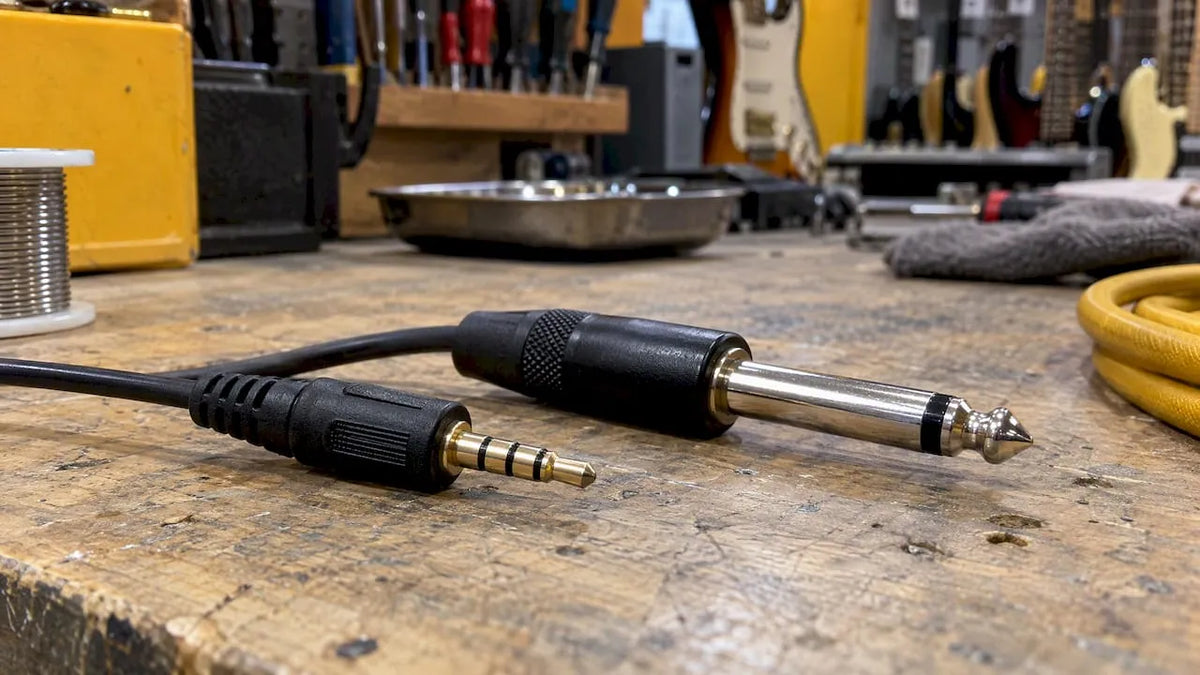
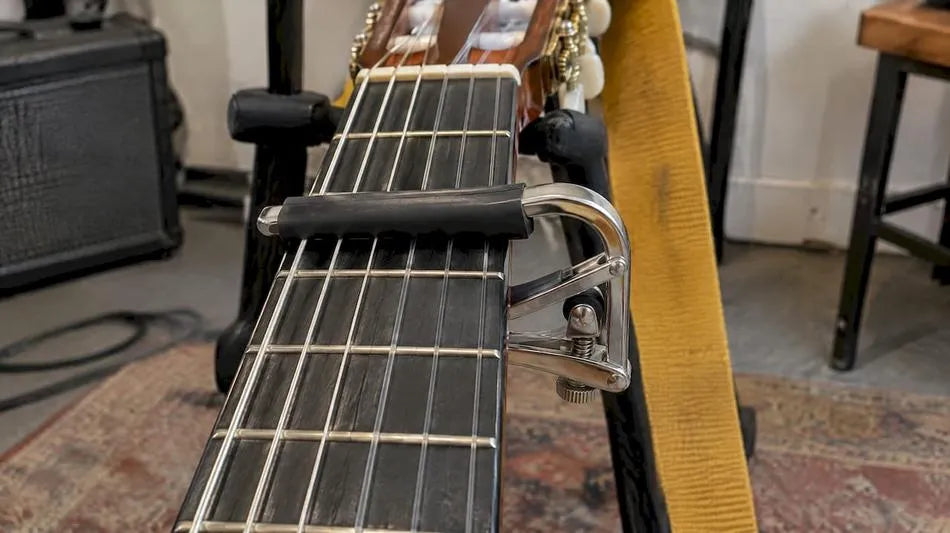
A basic kit covers 90% of home maintenance: a hygrometer, microfibre cloths, string winder, wire cutters, a set of hex keys matched to your truss rod, and a decent tuner. Add a capo and a notched straight edge if you plan to check neck relief yourself.
What most guides miss is that a cheap hygrometer is worse than none, because it gives you false confidence. Buy one you can calibrate.
The Zebra's guide to building a collection that grows in value notes that careful buying, regular condition checks and provenance tracking are what build lasting value. Tools are how you do the condition checks.
MusicStreet's guide to what makes a good guitar shop makes a related point: expert staff and comprehensive in-house repair services are what separate a shop that sells you a guitar from one that keeps it playing.
The real challenge is not finding someone to change your strings. It is finding servicing and repair support that documents your instrument's condition well enough to protect its value, whether that is a beginner's first electric or a collector's vintage piece.
At MusicStreet, every instrument is set up by players, for players, and backed by an in-house repair and setup workshop. We are an authorised dealer for Duesenberg, Fender, Gibson, PRS, Yamaha, Epiphone and Blackstar, and we offer free delivery on orders over £99.
Browse our hand-selected electric, acoustic and bass guitars, or get in touch about servicing and trade-in. SHOP NOW
Frequently Asked Questions
How often should I have my guitar professionally serviced?
Most players benefit from a professional setup once a year, or every six months if you gig regularly or notice changes in playability. Guitars with a complete repair history, certificate of authenticity, and professional appraisal can command price premiums of 35% to 58%, so regular servicing protects both playability and value. If you spot fret buzz, high action, or tuning instability, book a check sooner rather than waiting for the annual visit.
What is included in a comprehensive guitar setup?
A comprehensive setup covers truss rod adjustment, action height, intonation, nut and saddle checks, fret polishing, electronics inspection, and a restring. For pre-owned instruments, technicians also verify originality and condition. This thorough approach is why expert verification methods are essential to distinguish authentic vintage instruments and protect investment value. Ask your technician exactly what is checked before you book.
How can I tell if my guitar needs a professional repair?
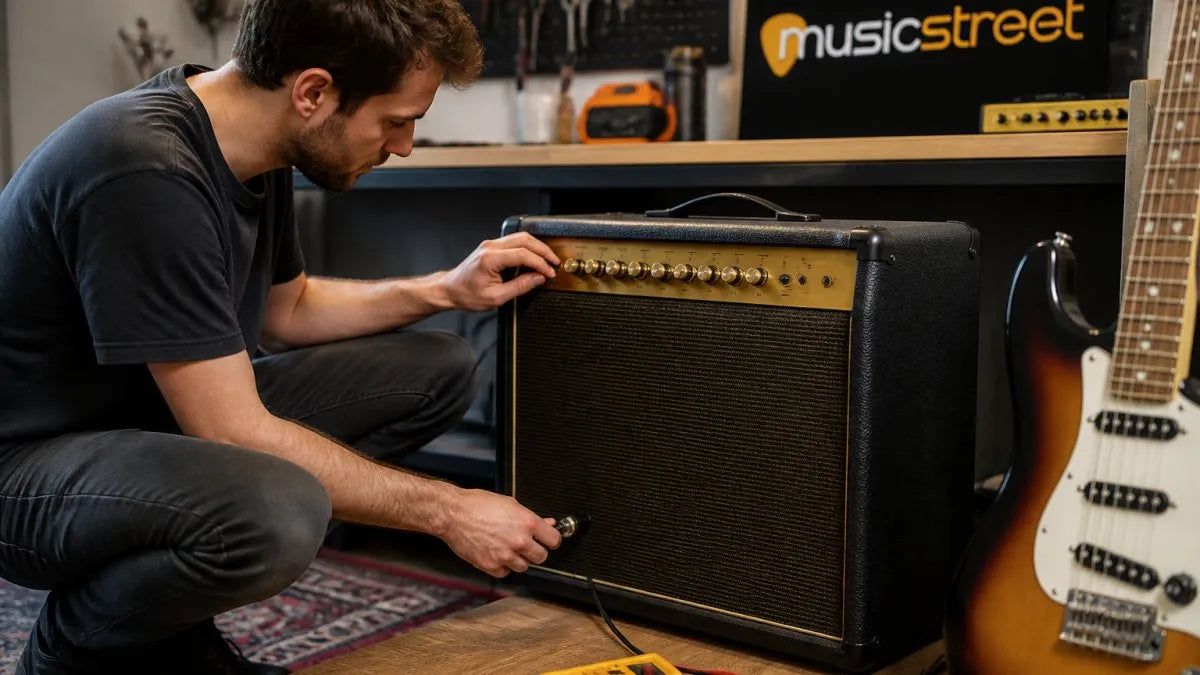
Warning signs include persistent fret buzz, dead notes, crackling output, a warped neck, or hardware that will not stay tight. If adjusting the truss rod does not fix the issue, stop and book a professional inspection. Professional restoration is vital, but significant repairs can temporarily affect the acoustic properties and market perception of a vintage guitar, so always use a specialist who documents the work carried out.
What are the signs of hardware corrosion on a guitar?
Look for dull or pitted plating on tuners, bridges, and pickups, a gritty feel when turning tuning pegs, and green or white residue around screws. Corrosion often starts in humid rooms where instruments are stored without ventilation. Wiping hardware after playing and controlling indoor humidity are the simplest prevention steps, and a technician can assess whether parts need cleaning or replacement.
Is it worth paying for professional guitar maintenance?
Yes, for most players. Building a collection with lasting value requires careful buying, regular condition checks, provenance tracking, and professional documentation. A properly maintained instrument plays better, holds its value, and avoids costly repairs later. For beginners, a professional setup also removes the frustration of a poorly playing first guitar, which is often the reason new players give up.



Share:
Best Beginner Electric Guitar for Rock (2026 Guide)
Alternatives to Big Box Guitar Stores: 2026 Guide