

Table of Contents
- The 6 Best Beginner Electric Guitars for Rock
- Humbucker vs Single Coil for Rock: Which Pickup Wins?
- Essential Guitar Accessories for Beginners
- Key Features to Look For in a Beginner Rock Guitar
- Common Mistakes to Avoid When Buying Your First Guitar
- Conclusion
- Frequently Asked Questions
Last Updated: September 6, 2026
Choosing the right first guitar can make or break your early progress, and finding the best beginner electric guitar for rock means balancing playability with a tone that actually suits the genre. While many entry-level instruments claim to do everything, the truth is that some are far better suited to rock than others. At MusicStreet, we have spent years setting up and selling guitars to players at every stage.
The key difference comes down to pickups. A guitar with humbuckers will give you that thick, saturated rock drive, whereas single coils offer a brighter, cleaner voice that can sound thin under heavy distortion. Below, we break down the top six models for 2026, covering everything from budget-friendly options to step-up instruments that will carry you into your intermediate years.
The 6 Best Beginner Electric Guitars for Rock
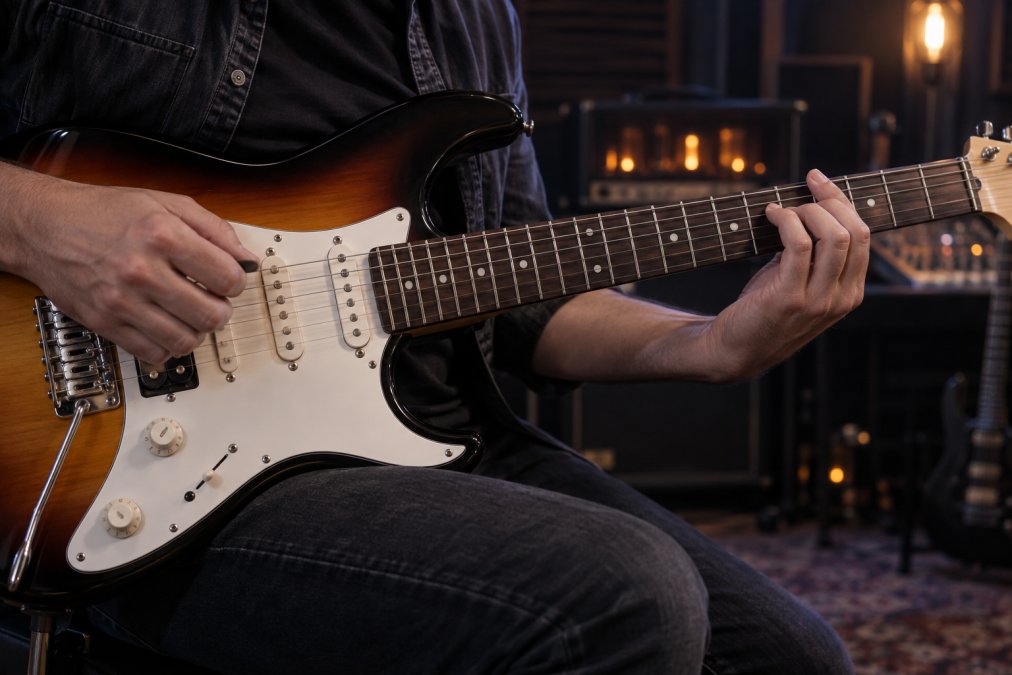
Close-up of a player's hands fretting a chord on a sunburst electric guitar with a visible humbucker pickup in a dimly lit music studio
Every guitar on this list has been chosen because it offers genuine value for the rock player, not just because it is cheap. The Yamaha Pacifica 112V is consistently cited as a top recommendation due to its versatile pickup configuration, which allows beginners to cover many rock tones. We have organised the list by price point so you can find the right balance of cost and quality.
Yamaha Pacifica 112V: The Versatile All-Rounder
The Pacifica 112V is the benchmark for beginner guitars, and for good reason. Its HSS configuration pairs a bridge humbucker with two single coils, giving you thick rock rhythm tones and clear, cutting lead sounds through a five-way selector. A coil-tap function on the bridge pickup adds even more versatility, letting you dial in single-coil style tones when you need them (fender.com).
- Pros: Excellent build quality for the price point; highly versatile sound palette
- Cons: Can be slightly heavier than entry-level alternatives
Epiphone Les Paul Special-I: Classic Rock Tone on a Budget
If your idea of rock involves thick, sustained power chords, the Special-I delivers. Dual open-coil humbuckers provide a noise-free, high-output signal that pushes an amp into natural overdrive, while the tune-o-matic bridge keeps intonation solid (gibson.com). The SlimTaper neck profile is comfortable for smaller hands, making it an ideal first guitar for younger players.
- Pros: Humbuckers provide a thick, noise-free rock tone; very affordable entry point into the Les Paul style
- Cons: Basic hardware compared to higher-end models
Squier Affinity Stratocaster: A Step Up in Quality
The Affinity series sits a cut above Squier's entry-level Sonic line, offering improved hardware and a better finish. Available with either SSS or HSS pickup configurations, the HSS version is the one to choose for rock, giving you a humbucker in the bridge position for drive tones. A two-point tremolo bridge and sealed die-cast tuning machines keep the guitar stable and in tune during practice sessions.
- Pros: Better tuning stability than base models; high-quality finish and aesthetics
- Cons: Slightly higher cost than the Sonic series
Ibanez GRG Series (GIO): Built for Speed and Metal
Engineered specifically for rock and metal players, the GRG series features a thin, fast neck profile that makes riffing and lead work feel effortless. High-output Infinity R pickups are voiced for high-gain distortion, and the double-cutaway body provides excellent access to the upper frets. The fixed bridge option offers rock-solid tuning stability, ideal for players who use heavy palm muting.
- Pros: Neck profile is ideal for fast playing; pickups are voiced for high-gain rock
- Cons: Thin necks may not suit all hand sizes
Humbucker vs Single Coil for Rock: Which Pickup Wins?
For rock music, humbuckers are the clear winner in most situations. A humbucker uses two coils wired together to cancel electrical interference, which means you get a thicker, quieter signal that drives an amplifier harder (fender.com). Single coils, by contrast, produce a brighter, glassier tone that works beautifully for cleans and funk but can sound thin and noisy when pushed into high-gain distortion.
That said, the debate over 'best' versus 'most appropriate' matters here. Some players argue that beginners interested specifically in punk or heavy metal should prioritise guitars with humbuckers over general-purpose instruments, and they have a point. If you know you will spend most of your time playing distorted rock, a dual-humbucker guitar like the Epiphone Les Paul Special-I is the more appropriate choice. If you want flexibility to explore other genres later, an HSS guitar gives you the best of both worlds.
Pickup Type |
Tone Character |
Best For |
Rock Suitability |
|---|---|---|---|
Humbucker |
Thick, warm, high-output |
Rock, metal, hard rock |
Excellent |
Single Coil |
Bright, clear, glassy |
Clean, blues, indie |
Moderate |
HSS Combo |
Versatile, switchable |
All-round playing |
Very Good |
Essential Guitar Accessories for Beginners
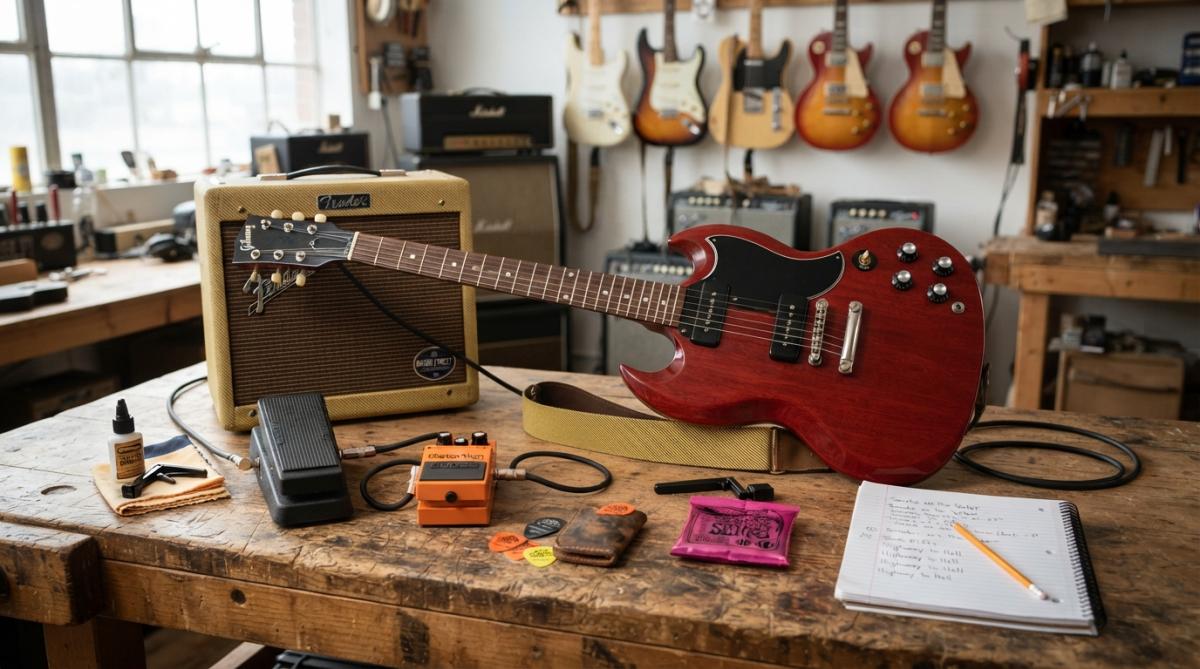
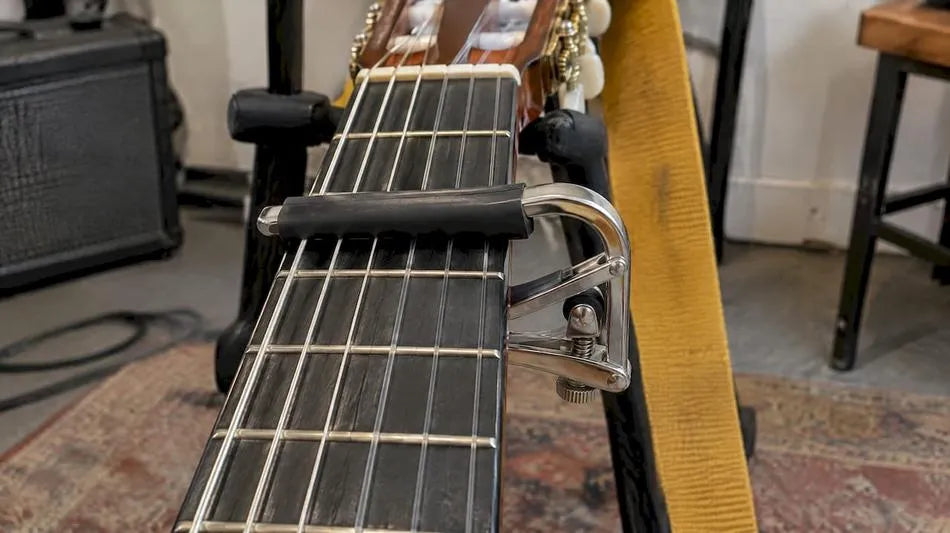
Buying the guitar is only half the battle. To get the most out of your new instrument, you will need a handful of essential accessories that many beginners overlook. A clip-on tuner saves you from the frustration of tuning by ear, while a sturdy strap and a set of spare strings are non-negotiable for regular practice. A small practice amp with a gain channel is also vital for rock, as it lets you hear the distortion tones that inspired you to pick up the guitar in the first place.
Key Features to Look For in a Beginner Rock Guitar
When you are comparing beginner electric guitars for rock, focus on four things: pickup configuration, neck profile, bridge type, and build quality. Pickups determine your core tone, so decide early whether you want humbuckers, single coils, or a mix. Neck profile affects how comfortably your hand moves across the fretboard, and thinner necks generally suit rock and metal playing styles. A fixed bridge offers better tuning stability than a tremolo system, which is worth considering if you do not plan to use the whammy bar.
Build quality is harder to assess from a spec sheet. This is where buying from a specialist matters. At MusicStreet, every guitar we sell is set up by players before it leaves our workshop, meaning the action, intonation, and pickup height are all adjusted to play correctly out of the box. That level of care directly affects how enjoyable your first few months of playing will be.
Common Mistakes to Avoid When Buying Your First Guitar
The most common mistake beginners make is choosing a guitar based on looks rather than playability. A flashy finish will not help you if the neck feels awkward in your hands or the action is so high that your fingers ache after ten minutes. Another frequent error is buying a guitar with a floating tremolo system when you mainly want to play rhythm rock, as these bridges can be finicky to keep in tune.
A third mistake is ignoring the importance of the amplifier. A decent guitar through a poor amp will sound worse than an average guitar through a good amp. Budget for a practice amp with at least ten watts and a gain channel, and you will hear the difference immediately.
Conclusion
Finding the right beginner electric guitar for rock comes down to matching the instrument to the style you want to play. Humbucker-equipped guitars like the Epiphone Les Paul Special-I and the Ibanez GRG series excel at high-gain rock tones, while versatile HSS models like the Yamaha Pacifica 112V offer more flexibility if you want to explore other genres. Whichever you choose, prioritise playability and a proper setup over aesthetics.
At MusicStreet, we specialise in helping new players find an electric guitar for rock that has been expertly set up and is ready to play straight out of the box. Our hand-selected inventory includes models from Fender, Gibson, PRS, Yamaha, and Epiphone, and our in-house workshop ensures every instrument plays its best before it reaches you. Explore our beginner electric guitar collection and get started with an instrument that will genuinely inspire your practice.
Frequently Asked Questions
What features should I look for in a beginner rock guitar?
For rock, prioritise a guitar with at least one humbucker pickup in the bridge position for a thick, high-gain tone. A comfortable neck profile is also vital, as a thin or slim 'C' shape makes it easier to form chords. A fixed bridge or a well-set-up tremolo will help keep tuning stable. Consider the scale length too; a standard 25.5-inch scale offers a snappier feel, while shorter scales are easier on the fingers.
Do I need a humbucker pickup for playing rock music?
It is a significant advantage. A humbucker vs single coil for rock comparison shows that humbuckers deliver a thicker, louder output and cancel background hum, which is crucial when using high-gain distortion pedals or amps. While a single-coil guitar can play rock, you will likely need extra pedals to achieve the same saturated sound. For an authentic rock tone from a beginner electric guitar for rock, a humbucker is the recommended choice.
Are fixed bridge guitars better for beginners than tremolo systems?
For most beginners, a fixed bridge is the more practical option. It is simpler to restring, holds tuning more reliably, and requires no setup knowledge to change strings. A tremolo system, like the one on a Stratocaster, can be fun for effects, but improper use can cause tuning instability and frustration. If you are new to the instrument, a hardtail or fixed bridge lets you focus on playing rather than maintenance.
How much should a beginner expect to spend on a quality electric guitar?
The best beginner electric guitar for rock typically falls in the £130 to £300 range. At this price point, you will find reliable instruments from brands like Yamaha, Squier, and Epiphone that feature decent hardware and playable setups. Spending this amount ensures you get a guitar that stays in tune and feels comfortable, which is a solid foundation for learning. Avoid the very cheapest models, as they can hinder progress.
What essential guitar accessories do I need to start playing rock?
Beyond the guitar itself, you will need a cable, a digital tuner, a pack of spare strings (0.010-0.046 gauge is a good rock starting point), and several medium-thickness plectrums. A practice amplifier is also essential, as is a sturdy stand and a gig bag for transport. These essential guitar accessories for beginners ensure you can tune, play, and protect your instrument from day one.




Share:
How to Check Guitar Action at Home (2026 Guide)
Best Servicing & Repair for Verified Guitar Condition