

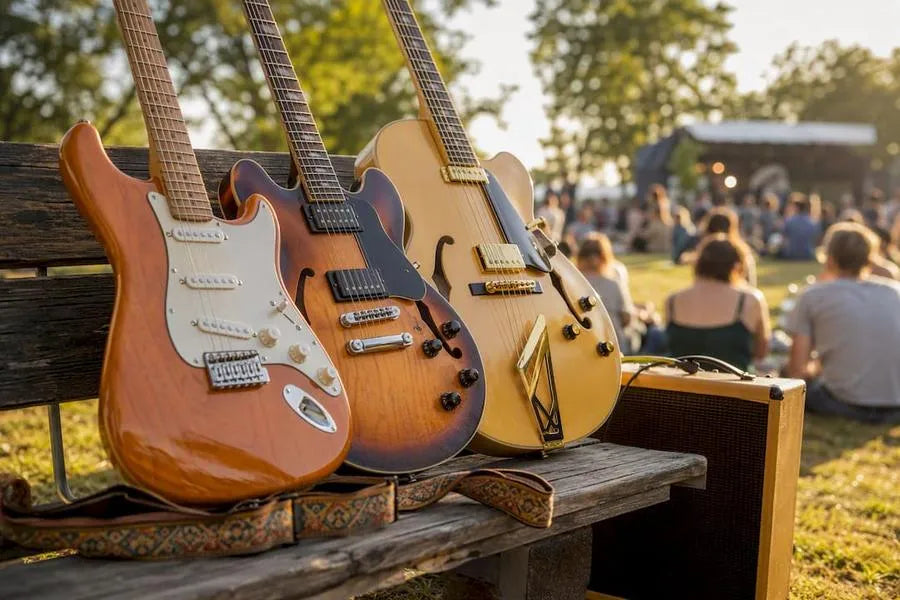
Electric guitar body styles fall into three core groups: solid, semi-hollow, and hollow, with thinline, chambered, and offset builds as common variants. If you want an all-rounder that handles rock, pop, and metal without fuss, start with a solid body. If you play jazz or blues and crave warmth with a bit of air in the sound, try a semi-hollow like a Gibson ES-335. If you’re chasing that big, airy jazz-box voice and don’t need to stand next to a cranked amp, a full hollow body is worth an afternoon of your time.
Here’s the fastest way to work out which camp you belong to:
- Versatility across genres: start with a solid-body Strat-style or superstrat.
- Warmth with some jazz/blues clean tone: try a semi-hollow, ES-335 territory.
- Big stage volume, high gain, feedback resistance: stick with solid or thinline.
- Acoustic-like resonance and unplugged practice tone: look at hollow or chambered builds.
Before you decide anything from a spec sheet, play the same riff on two different shapes through the same amp. Check the weight on a strap, rest the guitar unplugged against your body, and reach for the 20th fret. That fifteen-minute test tells you more than any forum thread ever will.
Key Takeaways
The right electric guitar body style depends on matching construction type, solid, semi-hollow, or hollow, to your genre, playing volume, and physical comfort rather than choosing on looks alone.
| Point | Details |
|---|---|
| Construction beats shape | Solid, semi-hollow, and hollow construction determines feedback risk and resonance more than the outline silhouette does. |
| Centre block is the key innovation | The 1958 Gibson ES-335’s centre block let semi-hollows keep warmth while resisting feedback at stage volume. |
| Pickups drive amplified tone | Body material shapes sustain and unplugged resonance; pickups and amp settings shape most of what you hear through a speaker. |
| Test before you buy | Play the same riff standing and sitting, check upper-fret access, and push the amp toward feedback before committing. |
| Try it at Musicstreet | Musicstreet’s Huntingdon store and online listings let you compare solid, semi-hollow, and hollow instruments with a full setup already done. |
Table of Contents
- Types of electric guitar bodies: what solid, semi-hollow and hollow actually mean
- Iconic electric guitar shapes and what each one is built for
- How body shape, materials and pickups actually shape your tone
- How to choose the right electric guitar body style for you
- What Musicstreet checks before a body style reaches your hands
- Musicstreet is where you try before you commit
- Sources
- FAQ
Types of electric guitar bodies: what solid, semi-hollow and hollow actually mean
The phrase “electric guitar body styles” covers two separate things that get muddled constantly: the construction (how the body is built inside) and the shape (what it looks like from the front). Get the construction types straight first, because that’s what actually governs tone, weight, and how the guitar behaves at volume.
Solid body. A single slab (or glued sections) of wood with no internal cavities beyond the electronics and pickup routes. No feedback problems at high gain, predictable behaviour on stage, and generally the heaviest of the bunch. Sustain tends to be long because there’s no air pocket eating up string energy. This is the Telecaster and Les Paul default, and it’s still the backbone of most working guitarists’ collections.
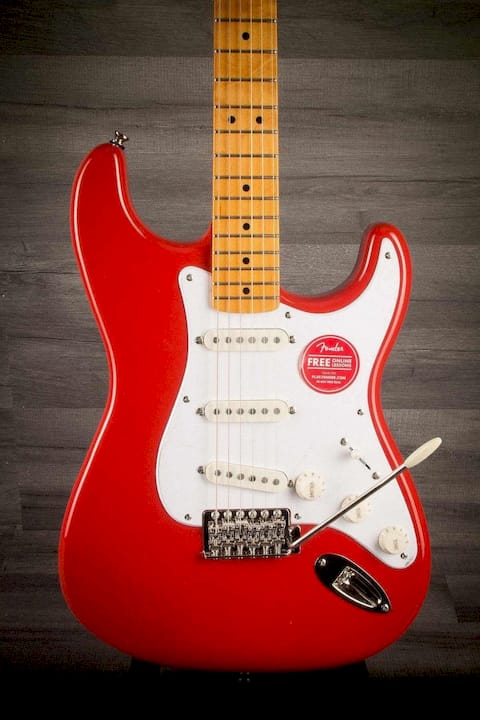
Chambered. Still technically a solid body, but the luthier has hollowed out sections underneath the top to shave weight and open up the resonance a touch. You get some of the acoustic liveliness of a hollow instrument with almost none of the feedback risk. It’s a compromise, and a genuinely good one for players who find a solid Les Paul back-breaking after a three-hour set.
Thinline. A specific style of semi-hollow, not its own category, whatever the marketing on a listing might suggest. Fender’s Telecaster Thinline is the reference point: a solid body with one or two f-hole cavities routed out and a thinner overall depth. Guitar Kit World’s construction guide makes this distinction clearly, because thinline gets sold as if it’s a fourth category when it’s really a semi-hollow variant with its own name.
Semi-hollow. A body with genuine hollow chambers either side of a solid centre block running through the middle. That block is the key detail. It gives you the resonance and air of a hollow instrument while controlling the squeal that plagues fully hollow guitars at stage volume. The 1958 Gibson ES-335 is the model that proved this could work, and its centre-block design is still the template every semi-hollow since has followed in some form.
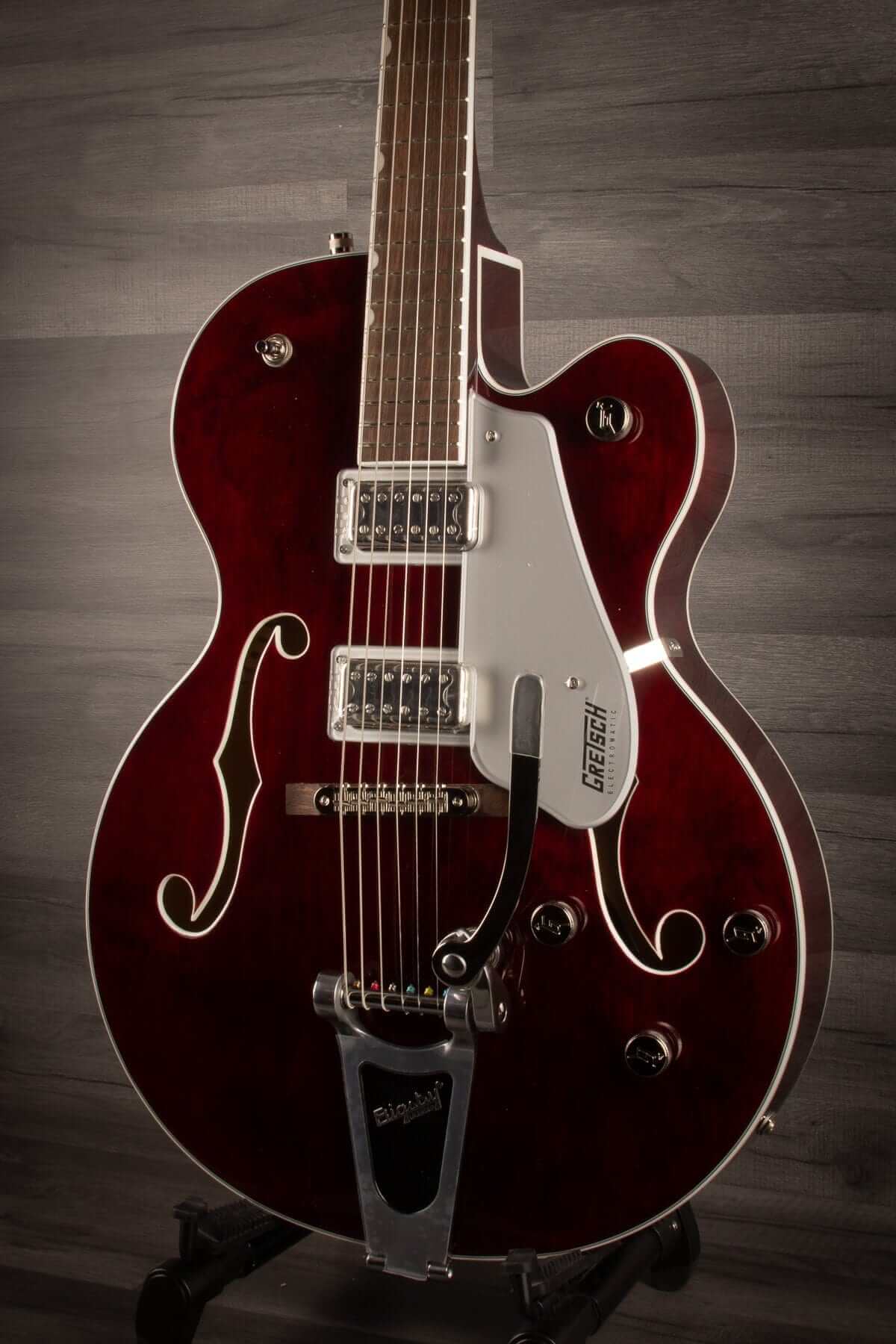
Fully hollow. No centre block, no chambering shortcuts. The entire body is a resonant cavity, much like an acoustic guitar with pickups bolted on. Gorgeous unplugged tone, real acoustic projection in a room, and the highest feedback risk of any construction type on this list. Jazz players who sit in low-volume settings love these. Anyone gigging in front of a 100-watt half-stack should think twice.
Here’s how those five types stack up on the things that actually matter day to day:
- Solid body: heaviest, longest sustain, zero feedback drama, travels and gigs without complaint.
- Chambered: noticeably lighter than solid, slightly airier tone, still gig-safe at reasonable volumes.
- Thinline: lighter than a standard solid body, a touch of acoustic snap, mild feedback risk only at extreme gain.
- Semi-hollow: warm and resonant, good stage manners thanks to the centre block, moderate weight.
- Fully hollow: the most acoustic-like voice of the group, beautiful unplugged, needs careful gain-staging live.
Pro Tip: Ask any seller what “thinline” or “semi-hollow” means on a listing before you buy sight unseen. A surprising number of used listings use the terms interchangeably, and the difference between a chambered solid body and a genuine semi-hollow with f-holes changes how the guitar behaves at volume.
We’ll walk through named shapes and model families next, because construction type is only half the picture. The other half is which iconic silhouette actually suits how you play.
Iconic electric guitar shapes and what each one is built for
Once you know your construction type, the shape tells you the rest of the story: how it sits against your body, where the pickups usually go, and which genres gravitate towards it.
Stratocaster-style
- Double-cutaway body with contoured edges that sit comfortably against your ribs and forearm.
- Usually three single-coil pickups, giving that glassy, quacky in-between tone Strats are famous for.
- Excellent upper-fret access thanks to the deep cutaway.
- Suits blues, funk, pop, and classic rock equally well, which is why it’s the most copied shape in guitar history.
- Lightweight compared with a Les Paul, so it’s forgiving on long gigs.
Telecaster-style
- Slab-style single-cutaway body, flat back, minimal contouring.
- Bridge pickup delivers that sharp, twangy bite that defines country and a huge chunk of indie and alt-rock.
- Simple, robust construction with fewer routing cavities, which tends to mean fewer structural weak points over decades of use.
- Neck access is decent but not as generous as a Strat’s double cutaway.
- A genuinely good first “serious” guitar because the tone is direct and forces you to rely on technique rather than effects.
Les Paul
- Single-cutaway, carved maple top glued to a mahogany body, noticeably heavier than a Strat or Tele.
- Humbucker pairs give a thick, warm, sustaining tone that suits rock, blues, and heavier genres.
- The carved top and denser wood combination is a big part of why Les Pauls are known for long, singing sustain.
- Upper-fret access is more restricted than double-cutaway designs, worth testing if you solo above the 15th fret often.
- The weight is a genuine consideration for anyone playing standing for more than an hour or two.
SG
- Same tonal DNA as a Les Paul (mahogany body, humbuckers) but far lighter and with much better upper-fret reach thanks to the deep double cutaway.
- A favourite for players who want Les Paul warmth without the shoulder strain.
- The thinner body can shift the balance point, so some players notice mild neck dive; a wider strap usually sorts it.
ES-335 and semi-hollow relatives
- The archetypal semi-hollow: laminated maple body, f-holes, and that all-important centre block.
- Warm, woody, and resonant, with enough feedback resistance to handle a real stage at sensible volumes.
- Humbuckers are the standard pairing, giving jazz, blues, and classic rock players a tone that’s rounder than a solid-body humbucker guitar but tighter than a full hollow archtop.
- If you’ve read about semi-hollow versus fully hollow trade-offs and want the deeper comparison, MusicStreet’s guide to semi-hollow vs hollow breaks down which suits which playing style.
Jazzmaster, Jaguar, and offset designs
- Offset waist bodies designed originally for comfortable seated playing, borrowed from surf and jazz players in the late 1950s and early 1960s.
- Distinctive floating tremolo and rhythm/lead circuit switching set these apart electronically as well as visually.
- Adopted heavily by indie, shoegaze, and alternative players for the slightly unpredictable, chimey character of their pickups.
- Balance can feel unusual to players used to a Strat, so a proper sit-down test matters more here than with most shapes.
Flying V, Explorer, and Firebird
- Angular, sharp-cornered designs built as much for stage presence as for tone, though the tonal character (usually mahogany body, humbuckers) still leans warm and aggressive.
- Popular in metal and hard rock, partly for looks and partly because the extended lower horn on some designs improves access to the highest frets.
- Balance while seated can be awkward given the asymmetric shape; these are stage guitars first and practice-room guitars second for a lot of players.
Superstrat and modern variants
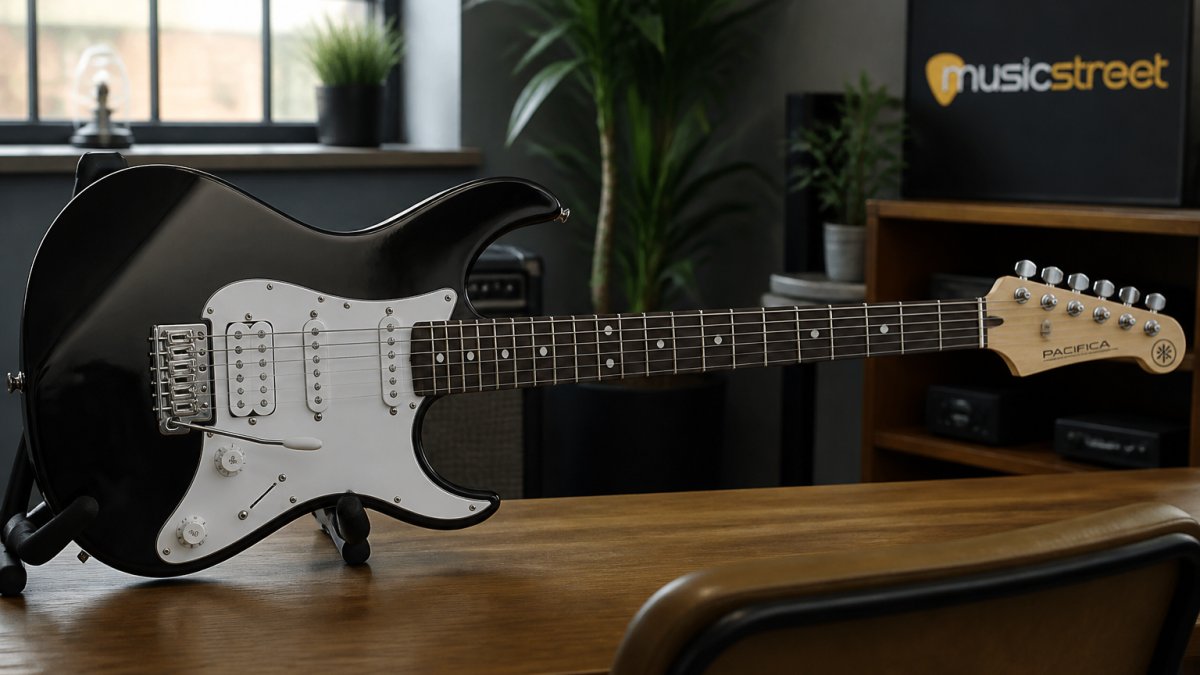
- Double-cutaway Strat-derived shape but built for speed: humbucker or HSS pickup configurations, often a flatter neck radius and extended upper-fret cutaways.
- The natural home for metal, shred, and high-gain rock players who need effortless access to the dusty end of the fretboard.
- Modern chambered versions of this shape are increasingly common, shaving weight without sacrificing the sustain and feedback resistance that high-gain playing demands.
- A used option like the Ibanez GSA60 in walnut is a solid example of this modern, gig-ready style if you want to try the format without paying new-guitar prices.
If you’re drawn to the visual drama of a twelve-string or want to hear how a semi-hollow handles extra strings, the used Gretsch G5422G-12 is worth a look in-store. Gretsch’s semi-hollow construction on a 12-string gives you a genuinely different chiming texture than anything in the solid-body world, and it’s the kind of guitar that’s far more convincing in your hands than in a product photo. For readers who want the fuller taxonomy of shapes beyond what fits here, MusicStreet’s rundown of seven essential electric guitar types goes wider on the catalogue.
How body shape, materials and pickups actually shape your tone
Pickups and amp settings do most of the heavy lifting in your amplified tone. Body construction matters most for resonance, sustain, and how the guitar feels and sounds unplugged. That’s the honest hierarchy, and it’s worth understanding before you spend money chasing the wrong variable.
Here’s why. A dense, stiff body returns more vibrational energy to the string rather than absorbing it, which is what produces longer sustain on a solid mahogany or maple guitar. Hollow and semi-hollow designs absorb more of that energy into the cavity, which shortens sustain slightly but adds warmth, air, and complexity to the sound. Yamaha’s guide to body types frames the whole instrument as a system: body, neck, and pickups working together, not one component dictating the sound alone.
The wood itself measurably matters too, though less than most forum debates suggest. Laboratory testing comparing ash and walnut bodies through mechanical stiffness and vibroacoustic analysis found real, measurable differences in damping and frequency response between species. Denser, stiffer woods like ash tend to sustain longer and sound brighter; softer, more porous woods like some mahoganies damp certain frequencies faster, producing a rounder low-mid character.
The practical takeaway: if you’re chasing a specific unplugged acoustic character, a resonant, woody quality, or particular sustain behaviour, changing the body (or buying a semi-hollow instead of a solid) is the right lever to pull. If you’re chasing a specific amplified sound, especially anything involving distortion or overdrive, swapping pickups or adjusting your amp will get you there faster and cheaper than a new guitar.
- Want more unplugged resonance and acoustic-style character? Look at chambering, a semi-hollow with a proper centre block, or a solid maple/laminate top.
- Want a brighter, snappier amplified tone? Change pickups before you change guitars.
- Want longer sustain without extra weight? Chambered construction or a stiffer top wood gets closer than adding mass.
- Want a genuinely different resonant material altogether? Carbon fibre bodies transmit vibration differently to wood, producing more consistent sustain across humidity and temperature changes, an interesting option if you gig in variable climates.
How to choose the right electric guitar body style for you
Define your priority before you touch a single guitar. Genre fit, comfort over long sessions, raw weight, or stage visual impact, decide which one matters most to you today, because it determines which questions are worth asking.
Work through this checklist in order, whether you’re standing in a shop or scrolling a listing:
- Sit and stand with it. Balance changes completely between the two positions; a guitar that feels fine on your knee can dive badly on a strap.
- Check the weight honestly. Solid mahogany bodies and dense tonewoods add up fast over a three-hour gig; if you’ve had back or shoulder issues before, this is not a minor detail.
- Test the neck profile. A chunky C-shape and a slim modern D can feel like different instruments even on the same body shape.
- Reach for the highest frets. Play something at the 20th fret and above on both a double-cutaway and single-cutaway shape to feel the real difference in access.
- Check the pickup configuration matches your genre. Humbuckers for warmth and gain, single coils for clarity and twang, HSS for a bit of both.
- Push the amp toward the edge of feedback. Especially with anything semi-hollow or hollow, this tells you far more than a clean, polite test at bedroom volume.
- Listen unplugged. A guitar with poor unplugged resonance rarely improves dramatically once amplified.
- Inspect finish and hardware. Look for corrosion on the bridge, loose tuners, or finish checking around the neck joint.
Ergonomics deserve more weight in this decision than most buying guides admit. Research into guitar ergonomics points out that neck dive and comfort are driven as much by strap-button placement and overall mass distribution as by the body shape itself, so two guitars with an identical silhouette can feel completely different depending on hardware and wood choice.
If you’re buying used, or evaluating a listing rather than the guitar itself, ask the seller directly:
- When was the guitar last set up or intonated?
- Has it had a refret, and if so, when?
- What’s the current neck relief like?
- Any known repairs to the bridge, tailpiece, or electronics?
Watch for red flags: a visibly twisted neck (sight down the fretboard from the headstock), uneven fret wear concentrated in the first five frets, buzzing or looseness on a semi-hollow’s centre block, and green corrosion around a Bigsby or roller bridge. When comparing similar shapes, like a standard Strat against a modern superstrat, focus on what genuinely changes performance: neck radius, fret size, and pickup output, not cosmetic differences like pickguard colour or headstock logo placement. Our full guide to choosing the right electric guitar for your playing style walks through genre-specific matching in more depth if you want to go further before you commit.
Why solid bodies won, and where semi-hollows fit back in
Solid bodies became the dominant electric guitar body style because they solved a real problem: feedback. Early hollow-body electrics squealed and howled the moment players pushed amplification past a certain volume, which made them unworkable for the louder music emerging through the 1940s and 1950s.
- 1930s: the first hollow-body electrics appear, essentially archtop acoustics fitted with magnetic pickups.
- 1940s: Les Paul’s “Log” experiments prove a solid centre section could tame feedback while keeping sustain.
- 1950s: Fender’s Telecaster and Stratocaster standardise the solid-body format, and Gibson and Fender’s early models set the template still followed today.
- 1958: Gibson’s ES-335 introduces the centre-block semi-hollow, splitting the difference between hollow warmth and solid-body control.
- Since then: thinline, chambered, and offset variants have refined that same trade-off between resonance and feedback resistance for modern players.
That history is why semi-hollows still matter today: they’re not a compromise for players who can’t decide, they’re a purpose-built answer to a specific, decades-old engineering problem.
What Musicstreet checks before a body style reaches your hands
Whether you’re trying a solid Tele or a semi-hollow ES-335 style guitar in-store, Musicstreet’s setup process checks the details that matter most on that particular construction type: neck relief, fret wear, pickup height, and bridge or tailpiece condition on every instrument, with extra attention to seam integrity and hollow-cavity buzzing on semi-hollow and hollow bodies specifically.
Ask about setup, intonation, fret dress, and the return window before you commit, new or used. Every new and pre-owned guitar Musicstreet sells goes through a proper inspection first, which matters most on used semi-hollows where a loose centre block or a hairline seam crack can hide from a casual glance.
- Try a hybrid-resonance instrument like the Yamaha FGC-TA TransAcoustic to feel how body construction shapes unplugged tone even on an acoustic-electric format.
- Pack a CruzTools Groovetech Guitar Player Tech Kit if you’re doing your own setup checks between shop visits.
- The compact Groovetech Mini Multi-Tool is genuinely handy for quick truss-rod or bridge checks on the spot.
Pro Tip: On a used semi-hollow, tap gently around the f-holes and along the top seam while the guitar is unplugged. A dull thud or rattle where you’d expect a clean resonant tap can mean a loose internal joint, worth flagging before you buy.
A note from the shop floor
We see the same pattern repeat constantly: players assume they need a specific famous shape because a hero plays one, then discover in a proper sit-down test that a completely different construction suits their hands, their genre, and their gig volume far better. Semi-hollows get underestimated by rock players who assume they’re strictly a jazz tool, and solid-body players often haven’t tried how much lighter a chambered instrument feels after two sets. Every guitar that leaves our workshop has been checked and set up properly first, because a body style only shows its real character once the instrument is playing correctly.
Musicstreet is where you try before you commit
Reading about solid, semi-hollow, and hollow construction only gets you so far. The real test happens with a guitar in your hands, on a strap, through an amp set close to how you actually play, and Musicstreet’s Huntingdon store and online catalogue are both built around letting you do exactly that.
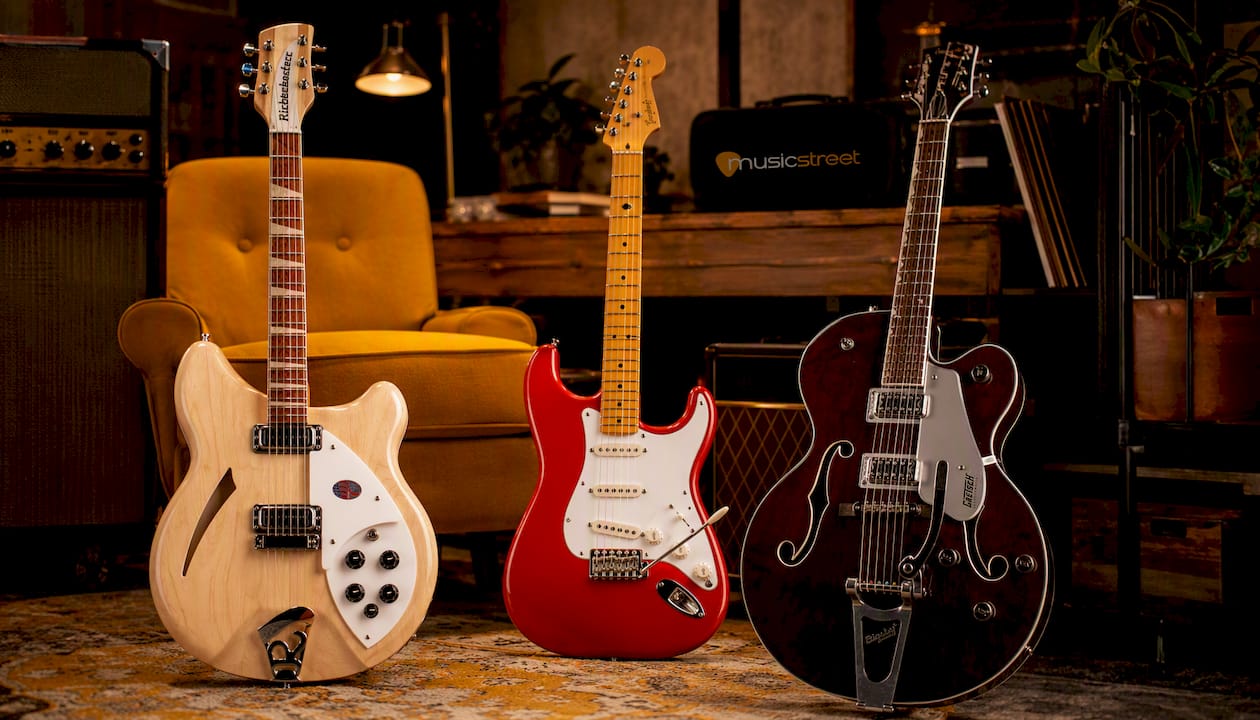
Every new and pre-owned instrument, from a working solid-body Tele to a used semi-hollow twelve-string, gets a proper setup and inspection before it reaches you, and that includes the checks this article has walked through: neck relief, fret condition, seam integrity on hollow and semi-hollow bodies, and pickup functionality. If a superstrat with a modern chambered build sounds like your answer, the Ibanez GSA60 in walnut is currently in stock and worth a look. If you’re weighing up a hybrid acoustic-electric for unplugged resonance, the Yamaha TransAcoustic FGC-TA in black demonstrates body-driven tone in a format most electric players haven’t tried. Browse the current stock, book an in-store tryout, or get in touch about a specific body style, and let a proper setup do the rest.
Sources
- Encyclopedia
- Which electric guitar body type is best for your music? — Yamaha Hub
- Mechanical and acoustic analysis of electric guitar bodies — DOI:10.53502/wood-194995
- Guitar body construction explained — Guitar Kit World
- How guitar anatomy affects tone — KLŌS Guitars
FAQ
What are the different types of electric guitar bodies?
The main construction types are solid, semi-hollow, and hollow, with thinline and chambered as common variants of solid and semi-hollow designs.
What are the different body styles of guitars?
Beyond construction type, common shapes include Stratocaster and Telecaster-style, Les Paul, SG, ES-335 semi-hollows, Jazzmaster and Jaguar offsets, Flying V, Explorer, Firebird, and modern superstrat designs.
What are the different styles of electric guitars?
Electric guitars vary by both body construction (solid, semi-hollow, hollow) and shape (single or double cutaway, offset, angular designs like the Flying V), each suited to different genres and playing positions.
Which guitar body shape is best?
There’s no single best shape; a solid double-cutaway suits versatile players chasing high volume and easy upper-fret access, while a semi-hollow like an ES-335 style guitar suits players wanting warmth with feedback resistance. Musicstreet’s in-store tryouts let you compare both against your own playing before deciding.







Share:
What a patch cord is used for on your pedalboard
Types of Les Paul guitars: which one should you buy?