


Change strings every 1–4 weeks if you play regularly; every 2–3 months if you’re a casual player. Change them immediately if you spot rust, persistent tuning drift, or visible kinks above the frets.
-
Check now: Run your finger along each string. Rough, sticky, or discoloured? That’s your answer.
-
One string breaks? Replace the full set. A single new string against old ones creates tonal imbalance that’s immediately obvious to any listener.
-
Coated or uncoated? Coated strings (Elixir, D’Addario XT) last noticeably longer but cost more upfront. Uncoated strings give you brighter tone straight away, for less money.
There is no single universal rule for string changes. Touring professionals often restring before every show, while hobbyists playing less frequently may wait several months between changes. The interval that matters is yours, based on how you play and how you care for the strings.
Key takeaways
| Point | Details |
|---|---|
| Match interval to playing habit | Professionals change per show; regular players every 2–4 weeks; casual players every 2–3 months. |
| Three signs to change now | Rust or discolouration, persistent tuning instability, and visible kinks all require immediate replacement. |
| Wipe after every session | A microfibre cloth after each session is the highest-impact habit for extending string life. |
| Coated strings suit infrequent players | Coated strings last longer and suit players who change less than once a month or live in humid conditions. |
| Musicstreet for strings and setup | Musicstreet stocks coated and uncoated strings and offers a professional restring and setup service in Huntingdon. |
Table of Contents
How do you know when your guitar strings need changing?
Your ears and fingers will usually tell you before your eyes do. A set of strings that has gone past its best sounds noticeably duller, loses sustain faster, and feels different under your hand. Knowing the specific signs means you never have to guess.
Visual signs
-
Rust or corrosion: Brown or orange discolouration on wound strings is a clear signal. Even light surface rust accelerates tone loss and can irritate your fingertips.
-
Discolouration: Dark, grimy buildup along the windings. If strings remain dull after cleaning, they need replacing, not another wipe-down.
-
Flaking windings: Tiny metal flakes on your fingers after playing mean the winding is breaking down.
-
Visible kinks: Bends or creases above fret contact points, especially on the first and second strings. A kinked string will break unpredictably and won’t intonate correctly.
Tactile signs
-
Rough or sticky texture when sliding up and down the neck.
-
Notchy dents at fret contact points on wound strings, felt as a slight bump when you slide.
-
Loss of the smooth, almost glassy feel that new strings have.
Sonic signs
-
Brightness drops noticeably. New strings ring with a clear, present top end; old ones sound flat and muffled.
-
Sustain shortens. Notes die faster than they used to.
-
High strings sound brittle or thin rather than clear.
-
Tone becomes inconsistent across the neck, with some frets sounding deader than others.
Tuning behaviour
Strings that won’t stay in tune despite correct setup are often simply worn out. The metal has fatigued and no longer holds tension reliably. Before blaming the tuners or nut, check the string age. If a string breaks repeatedly at the same point, the problem is usually a burr or sharp edge at the nut or bridge saddle, not the string itself. Inspect those contact points, or take the guitar to a tech.
Quick one-minute check: Play an open chord, then the same chord at the 12th fret harmonic. If the harmonic sounds noticeably duller or the pitch drifts, the strings are past their best.
Pro Tip: When you fit new strings, stretch each one by pulling it gently away from the fretboard along its length, then retune. Repeat three or four times per string. Skipping this step means the strings will keep going flat for hours, which can make perfectly good new strings seem faulty.
Replacement schedule by playing habit and instrument type
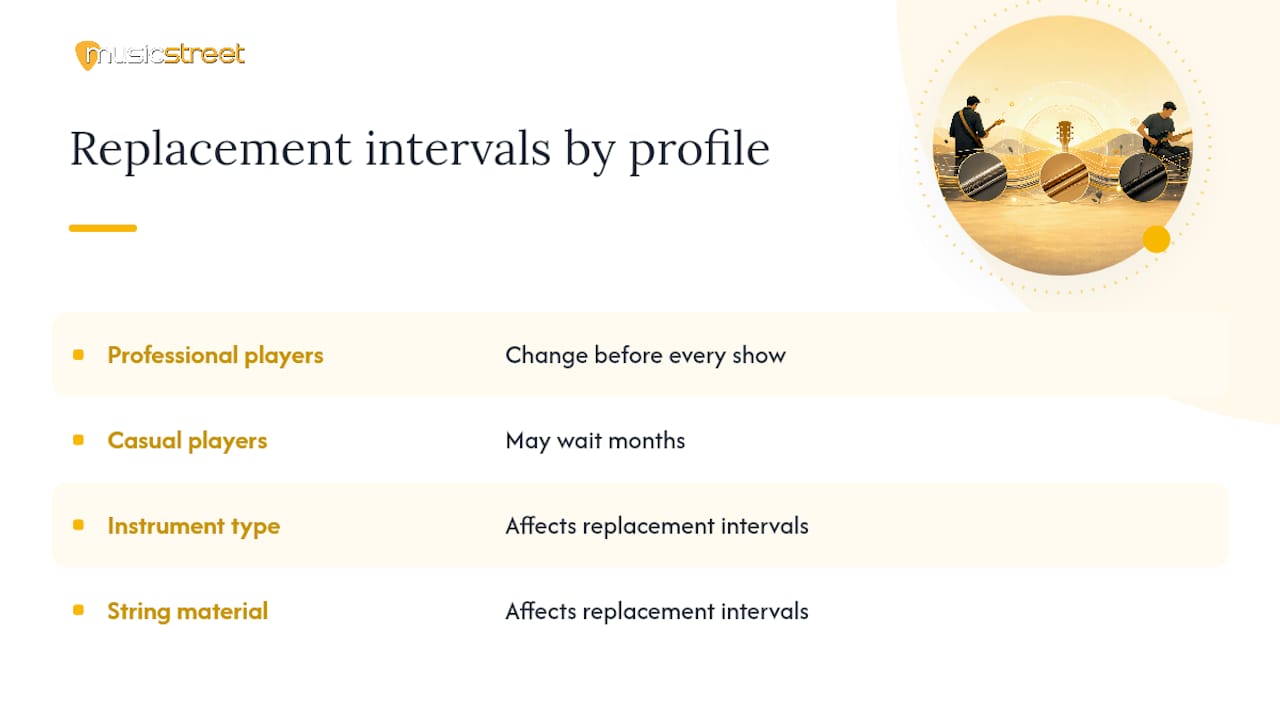
Replacement intervals vary by player type; some professionals change before every show while casual players may wait months. The table below maps common player profiles to practical intervals, with notes on how instrument type and string material affect the picture.
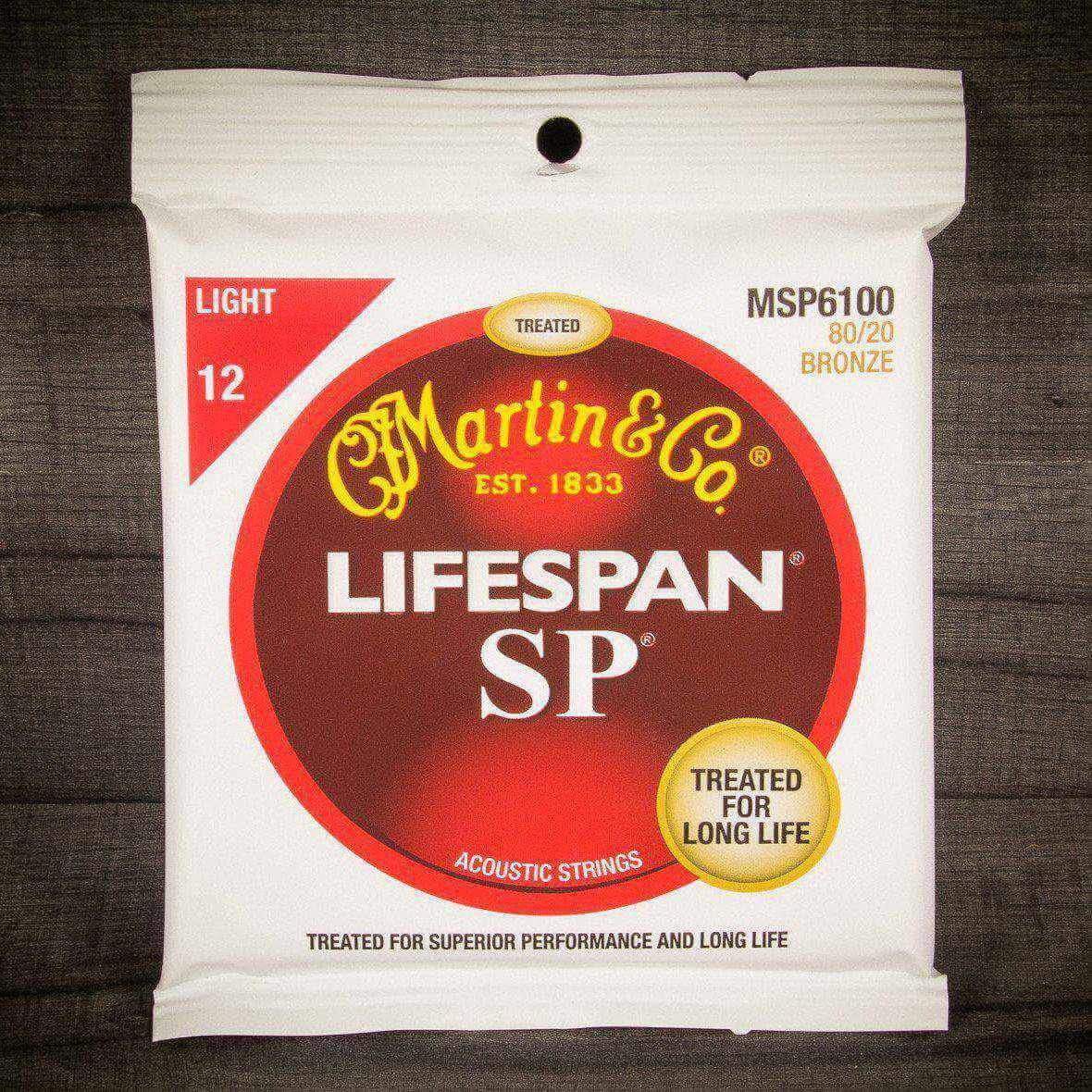
Acoustic strings (phosphor bronze / 80/20 bronze)
Bronze and phosphor bronze strings corrode faster than nickel-wound electric strings because the alloy reacts more readily with sweat and moisture. Acoustic players in the UK, where humidity fluctuates significantly, will often find strings going dull faster in winter when central heating dries the air, and in summer when humidity rises. Check our acoustic guitar string guide for a full breakdown of acoustic string options. A Yamaha FGX5 or similar quality acoustic deserves fresh strings; the tonal difference on a good instrument is stark.
Electric strings (nickel / steel)
Nickel-wound strings are more corrosion-resistant than bronze and typically last a week or two longer under equivalent playing conditions. That said, heavy-handed players and those with acidic sweat chemistry will still burn through a set in under a fortnight.
Classical strings (nylon)
Nylon strings don’t rust, but they do stretch, absorb oils, and lose their surface texture over time. Classical players typically change every 4–8 weeks, though the treble strings (plain nylon) tend to go before the wound bass strings.
Bass strings
Bass strings are thicker and under higher tension, which means they wear more slowly. Many bass players go 2–3 months between changes, though slap players and those who play with a heavy attack will notice tone loss sooner. The Ibanez GSR200B is a popular entry-level bass; even on a budget instrument, fresh strings make a substantial difference to clarity and punch.
One firm rule across all instruments: if tone matters for a recording or a gig, personal preference overrides any schedule. Change sooner if the sound isn’t right.
Coated versus uncoated strings: what actually changes?
Coated strings have a thin polymer layer applied to the wire before or after winding. That layer slows the penetration of sweat, oils, and environmental moisture, which are the primary causes of corrosion and tone loss.
Pros of coated strings
-
Significantly longer usable life, particularly for infrequent players or those with corrosive skin chemistry.
-
Less frequent changes mean lower cost per playing hour over time, despite the higher upfront price.
-
Consistent feel for longer; the coating reduces the rough, sticky texture that develops on uncoated strings.
-
Worth considering for UK players in coastal or high-humidity areas where salt air accelerates corrosion.
Cons of coated strings
-
Slightly different feel under the fingers, which some players find less responsive.
-
Tone is often described as slightly warmer or less immediately bright than fresh uncoated strings.
-
The coating can become gummy if not cleaned properly. Coated strings still require cleaning; use a string cleaner sparingly to avoid residue buildup.
-
Higher upfront cost, typically £10–£18 per set compared to £5–£10 for uncoated equivalents.
Simple rule of thumb
If you change strings less than once a month, coated strings will almost certainly cost you less over a year and sound better for longer. If you change every week or two and prioritise that fresh, bright snap, uncoated strings make more sense. For a deeper look at how materials and gauges affect tone and durability, the Musicstreet guide on guitar string materials covers the full picture. Try both types on your instrument; the difference is audible and tactile enough that most players form a clear preference quickly.
Daily and periodic maintenance habits that extend string life
The single highest-impact habit you can build costs nothing and takes thirty seconds. Wiping strings after every session with a lint-free microfibre cloth removes the sweat and skin oils that cause corrosion. Scott Marquart at Stringjoy notes this one step dramatically delays the grime buildup that kills tone. Everything else below builds on that foundation.
-
Wipe after every session. Use a clean, dry microfibre cloth. Run it under and over each string from nut to bridge. Takes 30 seconds and extends string life meaningfully.
-
Wash your hands before playing. Oils, lotions, and food residue transfer directly to strings. This is the easiest preventive step most players skip.
-
Every few sessions: deeper clean. Use a dedicated string cleaner (MusicNomad F-ONE, GHS Fast Fret) applied to a cloth, not sprayed directly onto the strings. Wipe along the full length of each string, including the underside.
-
Check frets and contact points monthly. Grime accumulates in the grooves where strings meet frets. A clean fret surface reduces the abrasion that causes kinks and premature breaks. Our fret cleaning guide walks through this step by step.
-
Store the guitar in its case when not in use. Exposure to air, dust, and humidity fluctuations accelerates corrosion. A case or gig bag is the simplest environmental control available.
-
Keep a small tech kit to hand. The CruzTools Groovetech Guitar Player Tech Kit includes the tools you need for string changes and minor adjustments without improvising with household tools that can damage hardware.
Pro Tip: Avoid guitar polishes that contain silicone or petroleum distillates near strings. They leave a residue that attracts grime and can degrade string windings over time. Stick to a dry microfibre cloth for the strings themselves, and use polish only on the body.
Frequent players should clean strings after every session; moderate players every few sessions. The principle is simple: the longer sweat and oil sit on metal, the faster corrosion sets in.
What to do before a gig or recording session
The timing of a string change before a performance matters as much as the change itself. New strings need stretching and a period to settle; manufacturers recommend allowing several hours or up to 24–48 hours before a critical performance or recording session. Fit strings the morning before an evening gig at the absolute minimum; 24–72 hours before is the comfortable window.
Pre-gig checklist
-
Inspect strings visually. Look for rust, kinks, and discolouration. If in doubt, change them.
-
Check tuning stability. Tune up, play for five minutes, retune. If strings drift significantly, they need stretching or replacing.
-
Inspect nut and bridge saddles. Look for wear grooves or sharp edges. A burr at the nut is the most common cause of string breaks mid-set.
-
Carry a spare set. Always. Fit them in the same gauge and brand you’re using so the feel is consistent if you need an emergency swap.
-
Bring a compact tool kit. The Groovetech Mini Multi-Tool fits in a gig bag pocket and covers the most common onstage needs.
-
Stretch new strings thoroughly. After fitting, pull each string gently away from the fretboard, retune, and repeat until pitch holds stable.
If a string breaks mid-set
Replace the single string to finish the show, but swap the full set as soon as possible afterwards. A single new string against a worn set creates an obvious tonal mismatch that will bother you in rehearsal. For a full walkthrough of the restringing process itself, the Musicstreet how to restring a guitar guide covers every instrument type.
Common myths about string age, debunked
Myth: strings get better with age
They don’t. Metal fatigues, corrosion accumulates, and the winding structure breaks down. What some players interpret as strings “settling in” is actually the initial brightness fading to a warmer, more compressed tone. That warmer sound can suit certain styles, but it is not an improvement in any objective sense. Once sustain drops and tuning stability goes, the string is simply worn out.
Myth: boiling strings restores them permanently
Boiling can temporarily restore brightness by dissolving the oils and grime trapped in the windings. The effect lasts days at most, and the process carries real risks: water can penetrate the core wire and cause internal corrosion that shortens the string’s remaining life. It is a last resort for a genuine emergency, not a maintenance strategy.
Myth: only expensive strings make a difference
String quality matters, but the difference between a mid-range set and a premium one is smaller than the difference between fresh strings and strings that are six weeks overdue for a change. A £6 set changed regularly will sound better than a £15 set left on for four months. Material and gauge affect tone and feel, but freshness is the dominant variable.
A note from the Musicstreet workshop
Working on guitars day to day, the pattern is consistent: the instruments that come in sounding their worst are rarely damaged. They just have old strings. UK climate plays a real role here. Damp winters and the salt air common in coastal areas accelerate corrosion on acoustic strings particularly, and players in those conditions often find their strings going dull a week or two faster than the standard intervals suggest.
A practical tip for UK storage: keep spare string sets in a cool, dry drawer rather than in the guitar case, where humidity from the instrument can affect the packaging over time. If you live near the coast or in a particularly damp property, a small silica gel packet in the case helps protect both the instrument and any strings stored inside it.
At Musicstreet’s Huntingdon workshop, every guitar that comes in for a setup gets a full string inspection as standard. If strings are more than a few weeks old or show any corrosion, the recommendation is always to restring as part of the setup. There is no point in setting intonation and action on strings that are about to be replaced. For players who are unsure whether their strings need changing, bringing the guitar in for a check costs nothing and takes minutes.
Fresh strings and expert setup at Musicstreet
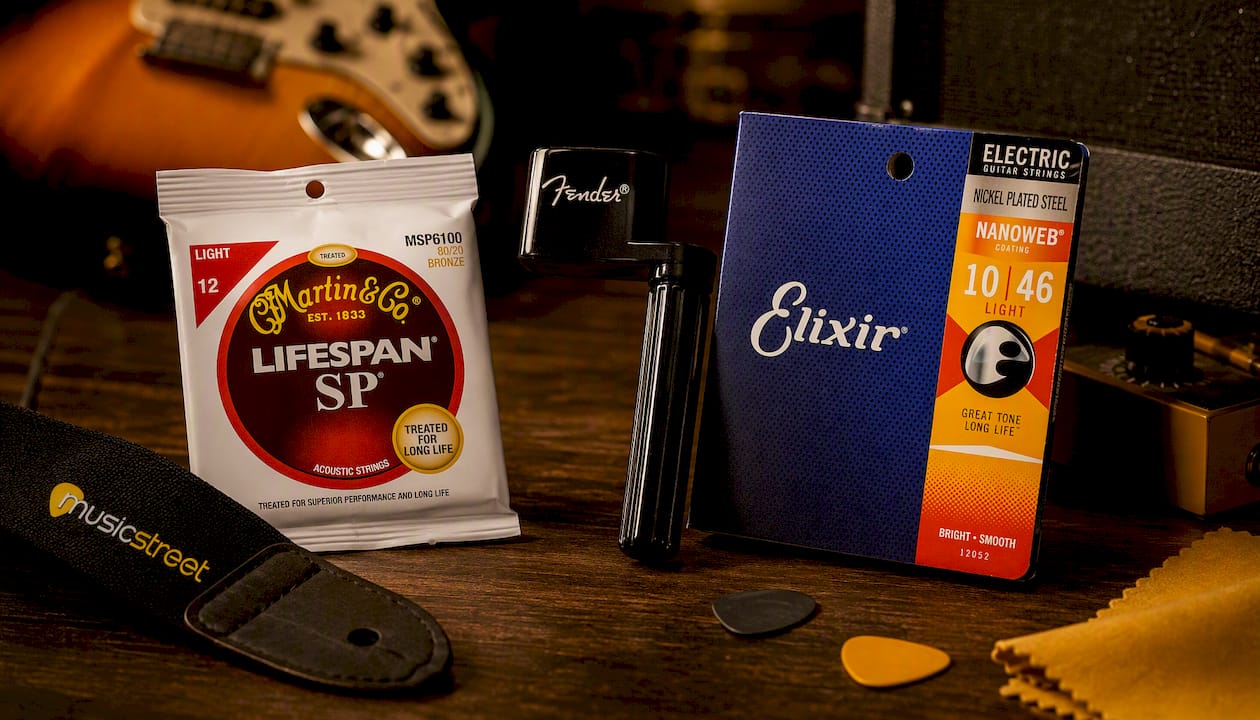
Musicstreet stocks strings for electric, acoustic, classical, and bass guitars, with both coated and uncoated options available online and in the Huntingdon store. If you’d rather leave the restringing to someone who does it every day, the workshop offers a professional restring and setup service, with a rapid turnaround for players who need their instrument back before a gig.
The CruzTools Groovetech Acoustic Guitar Player Tech Kit is stocked for players who prefer to handle their own string changes and maintenance, covering everything from string winding to saddle adjustment. For players looking at a new instrument, the Yamaha TransAcoustic FGC-TA in Black arrives set up and ready to play. Browse strings, tools, and guitars at Musicstreet, or visit the store in Huntingdon to try before you buy and get a same-day restring if needed.
Sources
-
When should you change your guitar strings? Expert advice | Guitar World
-
How often should you really change guitar strings? | JustinGuitar
-
5 signs it’s time to change your guitar strings | Ernie Ball Blog
-
The complete guide to guitar and bass string cleaning and care | MusicNomad Care
Follow manufacturer instructions for your specific string type, particularly for coated strings where cleaning product compatibility matters.
FAQ
How do I know when my guitar strings need changing?
The clearest signs are a dull or muffled tone, reduced sustain, visible rust or discolouration on the windings, and strings that won’t hold their tuning despite correct setup. If strings feel rough or sticky under your fingers, they are overdue.
How long do guitar strings normally last?
It depends on how often you play and how you care for them. Regular players typically get 2–4 weeks from a set; occasional players can go 2–3 months. Coated strings last noticeably longer than uncoated ones under equivalent conditions.
How often should I change strings if I play every day?
Daily players should expect to change strings every 1–2 weeks. Professionals who play for several hours a day often change before every performance to maintain consistent tone and tuning stability.
Do guitar strings get better with age?
No. String tone typically dulls as metal fatigues and corrosion accumulates in the windings. What some players perceive as strings “settling in” is the initial brightness fading, not an improvement. Once sustain drops and tuning becomes unreliable, the strings need replacing.








Share:
Electric guitar equipment list for beginners: essentials
Fender amp types explained: which one suits you?