


Finding the right guitar cable can feel confusing for musicians in Huntingdon who want their equipment to perform at its best. Every small detail, from connector materials to cable length, can influence your electric guitar’s tone and overall sound. With safety and sound quality depending on careful cable selection, making the right choice means more reliable playing, clearer tones, and fewer unwanted crackles during gigs or practice. Choosing high-quality guitar cables is key to optimising your musical performance.
Table of Contents
- Step 1: Assess Your Guitar And Amp Requirements
- Step 2: Identify Essential Cable Length And Type
- Step 3: Compare Material Quality And Connectors
- Step 4: Test Cable Reliability And Signal Clarity
- Step 5: Verify Compatibility Before Purchase
Quick Overview
| Main Insight | Explanation |
|---|---|
| 1. Assess Your Musical Setup | Consider your guitar, amplifier specifications, and performance needs for optimal sound. |
| 2. Select Appropriate Cable Type | Choose the cable length and shielding based on your performance context and noise reduction needs. |
| 3. Evaluate Material and Connectors | High-quality materials and connectors enhance durability and sound clarity significantly. |
| 4. Test Cable Performance Regularly | Conduct systematic tests to maintain sound quality and ensure reliable signal transmission. |
| 5. Verify Compatibility Before Buying | Ensure that the cable matches your instrument and amplifier specifications for optimal performance. |
Step 1: Assess your guitar and amp requirements
Selecting the right guitar cable requires understanding your specific musical setup and performance needs. Every guitarist’s requirements vary based on their instrument, amplifier, and playing style, making a thoughtful assessment crucial for optimal sound quality.
To begin, evaluate your guitar’s output and amplifier specifications. Different guitars produce varying signal strengths, which impacts cable selection. Consider these key factors:
- Instrument type: Electric, acoustic-electric, or bass guitars have different signal characteristics
- Pickup configuration: Passive or active pickups generate different voltage levels
- Amplifier input impedance: Matching cable specifications ensures clean signal transmission
- Performance environment: Studio recording, live stage, or home practice
Maintaining proper electrical connections is essential for safe and effective performance. Electrical equipment safety recommendations suggest regularly inspecting your cables and connections to prevent potential signal degradation or interference.
Understand your signal chain by examining the connection points between your guitar, cable, and amplifier. Pay attention to the cable length - shorter cables (10-15 feet) typically provide cleaner signal transmission compared to longer ones.
A high-quality cable acts like an invisible conduit, preserving your instrument’s unique tonal characteristics.
Professional suggestion: Always test your cable with your specific guitar and amp combination before major performances to ensure optimal sound quality and compatibility.
Step 2: Identify essential cable length and type
Choosing the right guitar cable involves more than just picking a random length - it’s about understanding how cable specifications impact your sound quality and performance flexibility. Your cable serves as a critical communication channel between your instrument and amplifier.
When selecting cable length and type, consider these essential parameters:
- Signal integrity: Shorter cables (10-15 feet) provide cleaner signal transmission
- Performance context: Stage performances versus home practice have different cable requirements
- Noise reduction: Cable shielding techniques help minimise unwanted electromagnetic interference
- Connector quality: Professional-grade connectors ensure reliable signal transfer
Professional musicians understand that cable length directly influences sound quality. Longer cables can introduce signal loss and noise, potentially degrading your guitar’s natural tone. Precise cable planning helps prevent potential performance issues and equipment damage.
A meticulously selected cable acts as an invisible bridge between your musical expression and audience experience.
Understand the trade-offs between cable flexibility and signal purity. Braided shielding, oxygen-free copper conductors, and low-capacitance designs can significantly enhance your overall sound transmission.
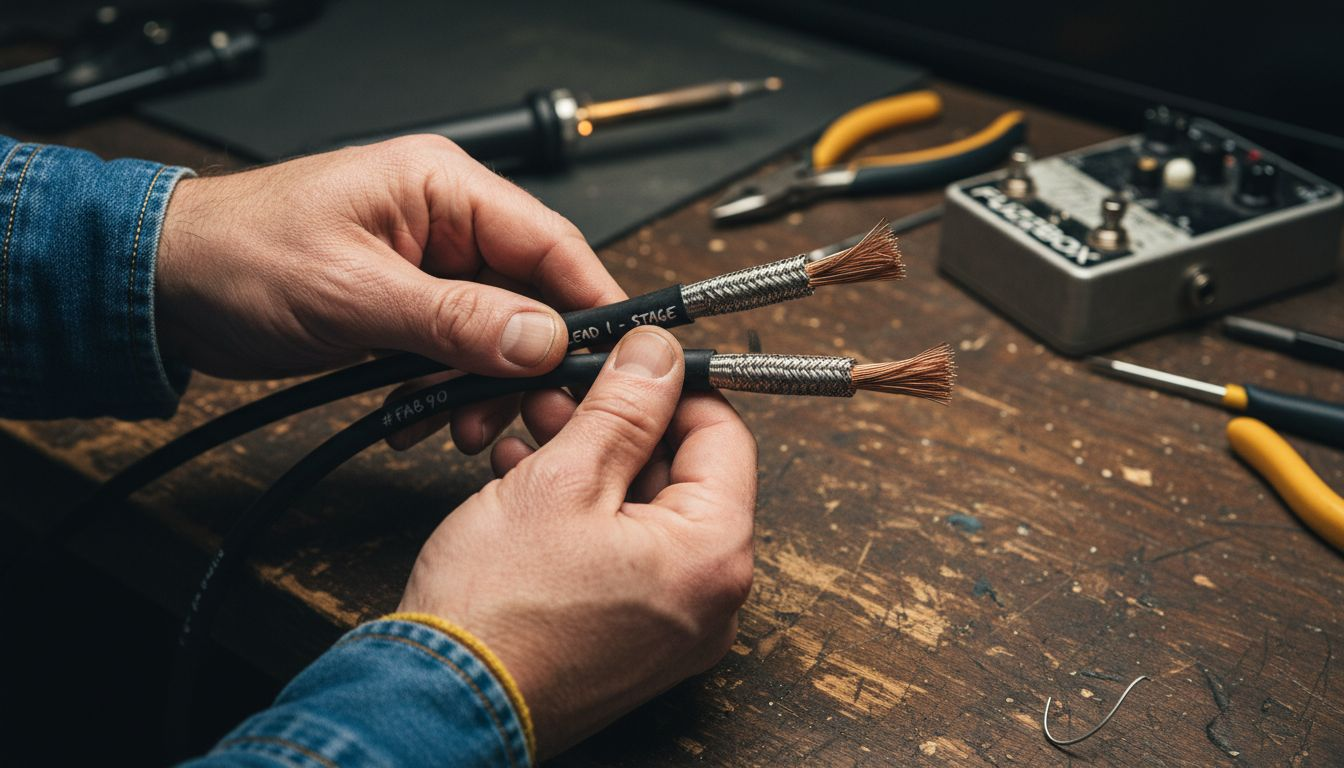
Professional suggestion: Invest in multiple cable lengths and types to accommodate different performance scenarios and maintain consistent sound quality.
Use this comparison to choose the ideal cable for each setting:
| Scenario | Preferred Cable Length | Recommended Shielding |
|---|---|---|
| Home Practice | Short (3-5 metres) | Basic braided or foil |
| Studio Recording | Short (up to 5 metres) | Advanced multi-layered |
| Live Performance | Medium (5-7 metres) | Heavy-duty braided |
Step 3: Compare material quality and connectors
Choosing the right guitar cable means diving deep into the world of material science and electrical engineering. The quality of your cable’s components directly influences your instrument’s sound clarity, durability, and overall performance.
Key considerations for evaluating cable materials and connectors include:
- Conductor material: Oxygen-free copper provides superior signal transmission
- Shielding effectiveness: Electrical connector design prevents unwanted electromagnetic interference
- Connector plating: Gold-plated connectors reduce corrosion and maintain conductivity
- Insulation quality: Prevents signal degradation and protects internal wiring
Connector manufacturing standards emphasise the importance of selecting components that meet professional audio requirements. Professional musicians know that microscopic differences in material composition can dramatically impact sound quality.
Premium guitar cables are precision instruments, not mere accessories.
Beyond basic functionality, high-end cables feature advanced engineering like low-capacitance designs, braided shielding, and precision-machined connectors. These technical details might seem complex, but they translate directly into a cleaner, more faithful sound reproduction.
Professional suggestion: Invest in cables from reputable manufacturers who provide transparent technical specifications about their materials and manufacturing processes.
Here’s a summary of how key guitar cable features impact your playing experience:
| Cable Feature | Impact on Sound | Impact on Durability |
|---|---|---|
| Conductor Material | Affects clarity and tone | Determines wire lifespan |
| Shielding Quality | Minimises hum and noise | Reduces wear from stress |
| Connector Plating | Preserves signal fidelity | Prevents corrosion |
| Cable Flexibility | Allows movement on stage | Resists internal damage |
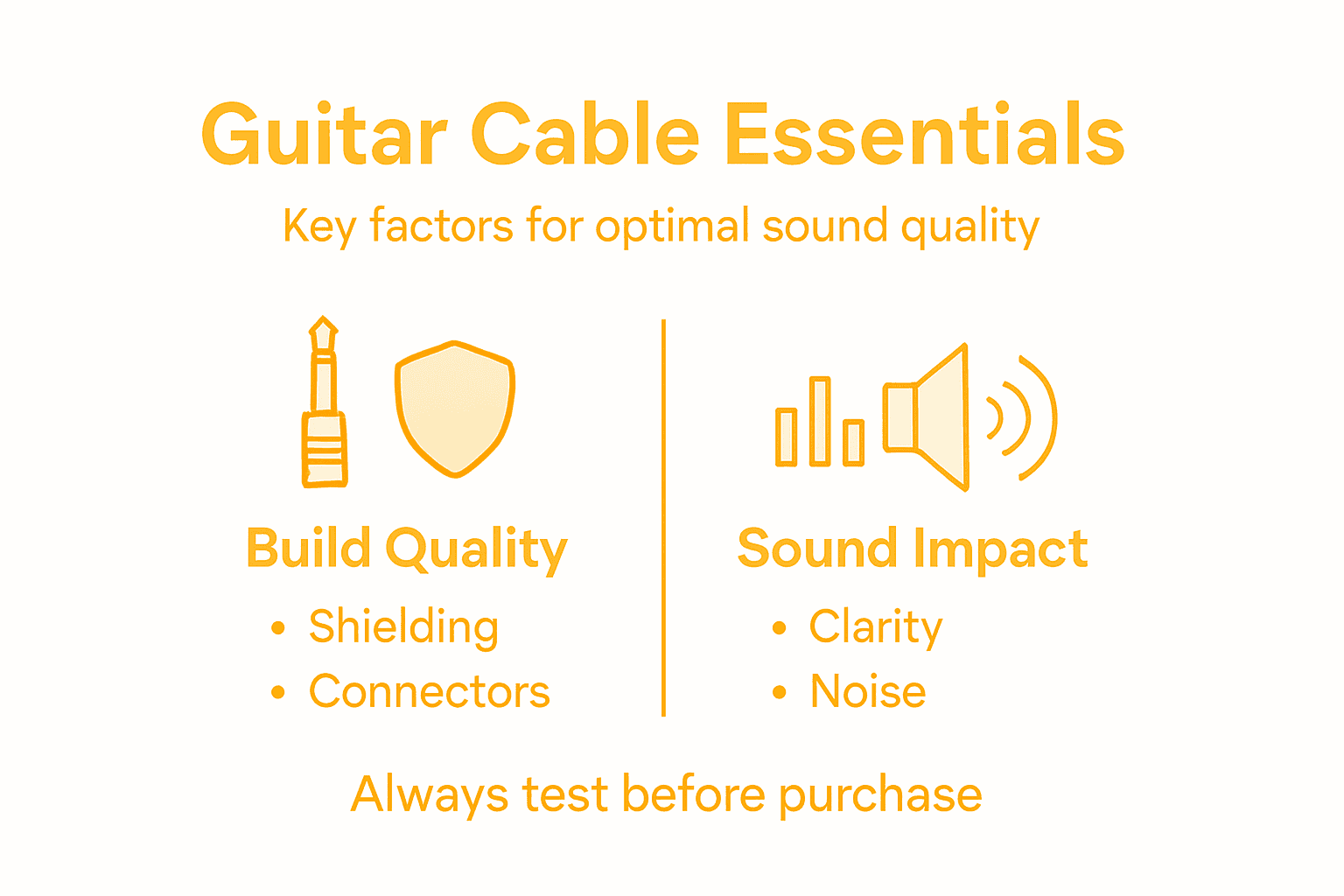
Step 4: Test cable reliability and signal clarity
Ensuring your guitar cable delivers consistent performance requires more than casual observation. Professional musicians understand that systematic testing is crucial for maintaining optimal sound quality and preventing unexpected equipment failures during performances.
Effective cable testing involves multiple comprehensive approaches:
- Visual inspection: Check for physical damage like fraying, kinks, or connector wear
- Signal continuity: Use a multimeter to verify uninterrupted electrical path
- Noise assessment: Electrical cable testing helps identify potential interference sources
- Bend and stress testing: Simulate real-world performance conditions
- Sound quality evaluation: Play through different amplifier settings to detect signal inconsistencies
Reliability engineering methodologies recommend periodic assessments to predict potential failure modes. This proactive approach helps musicians identify cable issues before they compromise a live performance.
A well-tested cable is your silent guardian of musical integrity.
Professional sound technicians often recommend rotating your cable collection and maintaining a backup. Small irregularities in signal transmission can dramatically impact your instrument’s tonal characteristics, making regular testing a critical maintenance practice.
Professional suggestion: Conduct a comprehensive cable test before every significant performance to guarantee uninterrupted musical expression.
Step 5: Verify compatibility before purchase
Selecting the perfect guitar cable requires more than aesthetic appeal - it demands a strategic approach to ensuring seamless electrical and mechanical compatibility between your instrument, cable, and amplification system.
Key compatibility factors to investigate include:
- Connector types: Match precise jack and plug specifications
- Signal requirements: Confirm cable supports your guitar’s electrical output
- Certification standards: Verify compliance with UK electrical equipment regulations
- Impedance matching: Ensure cable supports your specific guitar and amplifier configuration
- Performance environment: Consider cable specifications relative to your typical usage scenario
Cable connector compatibility principles emphasise the importance of selecting components that integrate seamlessly with your existing equipment. Professional musicians understand that mismatched cables can introduce unwanted noise, signal degradation, and potential equipment damage.
Compatibility isn’t just technical - it’s the foundation of your musical expression.
Before finalising your purchase, consult manufacturer specifications, compare technical details, and if possible, test the cable with your specific guitar and amplification setup. Each connection represents a critical link in your sound’s transmission chain.
Professional suggestion: Bring your guitar to the shop and test potential cables directly, ensuring perfect electrical harmony between your instrument and its signal pathway.
Elevate Your Sound with the Perfect Guitar Cable from MusicStreet
Selecting the best guitar cable is essential for capturing your instrument’s true tone and ensuring reliable performance. If the challenge of balancing cable length, shielding quality, and connector compatibility feels overwhelming, MusicStreet is here to guide you. As a trusted retailer specialising in electric, acoustic, and bass guitars, we understand how important it is to maintain signal clarity and durability in every connection. Whether you need advice on cable materials or want to test cable reliability before your next performance, our expert team provides personalised support designed to keep your setup flawless.

Discover a carefully curated selection of high-quality cables and accessories tailored for your guitar at MusicStreet. Benefit from our professional inspection services, competitive pricing, and free UK delivery on orders above a certain amount. Take the next step towards perfecting your sound by visiting MusicStreet today and experience how quality cables can transform your playing. Your optimal sound awaits.
Frequently Asked Questions
How do I determine the right guitar cable length for my performance?
To choose the right guitar cable length, consider your performance environment. For home practice, a shorter cable (3-5 metres) works well, while for stage performances, a medium length (5-7 metres) is often ideal to maintain sound quality.
What factors should I consider when selecting a guitar cable type?
When selecting a guitar cable type, examine signal integrity, noise reduction, and connector quality. Invest in cables with advanced shielding techniques and professional-grade connectors to ensure optimal performance and minimal interference during use.
How can I test the reliability of my guitar cable?
Testing the reliability of your guitar cable involves a visual inspection, signal continuity check, and noise assessment. Regularly perform these tests, especially before gigs, to ensure that the cable functions reliably and delivers clear sound quality.
What materials should my guitar cable be made of to ensure optimal sound?
Choose cables made from oxygen-free copper conductors and consider those with high-quality shielding. The combination of these materials will enhance sound clarity and reduce hum or noise interference effectively.
How do I ensure compatibility between my guitar and cable?
To ensure compatibility, match the connector types and verify that the cable supports your guitar’s electrical output and impedance requirements. Always consult technical specifications and, if possible, test the cable with your guitar before purchasing.






Share:
Why Guitar Maintenance Matters for UK Players
Role of Guitar Woods – How Tonewoods Shape Sound