


Maton guitars are handmade acoustic instruments built in Box Hill, Melbourne, and they are genuinely worth serious consideration for UK players. Founded in 1946 by brothers Bill and Reg May, the company remains 100% family-owned, has a workforce of more than fifty people, and production remains in Australia. That matters because every guitar that leaves the factory carries the kind of consistency you only get when a small, invested team builds each instrument by hand. For gigging musicians, the proprietary AP5 Pro pickup system is the clincher: a piezo and internal cardioid microphone blended on board, designed and manufactured in-house, delivering a natural amplified tone that touring professionals trust night after night.
UK buyers can source Maton guitars through authorised dealers, the pre-owned market, and specialist retailers such as Musicstreet, which stocks and orders Maton instruments with professional setup included.
- Handmade in Box Hill, Melbourne, since 1946
- 100% family owned, over eight decades of continuous production
- AP5 Pro pickup: piezo plus internal mic, built in-house
- Artists including Tommy Emmanuel, Keith Urban and Neil Finn play Maton on stage and in studio
- Available in the UK through authorised dealers and Musicstreet
Table of Contents
- What are the main Maton guitar models and how do they compare?
- Why does a Maton sound and play differently from other acoustics?
- Which artists use Maton, and what does that tell you?
- How do you buy a Maton guitar in the UK?
- How do you pick the right Maton model for your playing style?
- What should Maton owners in the UK expect for care and warranty?
- The science behind Maton’s tone: tonewoods and construction
- Key takeaways
- A UK specialist’s perspective on Maton for British players
- Musicstreet’s Maton buying and setup service
- Where to find official Maton specs and trusted reviews
- FAQ
What are the main Maton guitar models and how do they compare?
The range spans compact recording bodies to full-sized stage dreadnoughts. Here is a quick-reference comparison for the models UK buyers most commonly ask about.
| Model | Best for | Body shape | Top / back & sides | Electronics | Typical UK price (new / used) |
|---|---|---|---|---|---|
| EBG808 | Recording, singer-songwriter | 808 (auditorium) | Sitka spruce / Queensland maple | AP5 Pro | — |
| EBG808TE | Stage, fingerstyle | 808 cutaway | Sitka spruce / Queensland maple | AP5 Pro | — |
| SRS70 | Versatile stage/studio | Dreadnought cutaway | Sitka spruce / Tasmanian blackwood | AP5 Pro | — |
| TE Personal Jumbo | Fingerstyle virtuosity | Jumbo | Sitka spruce / Queensland maple | AP5 Pro | — |
| CW80 | Strumming, country | Dreadnought | Sitka spruce / Queensland maple | AP5 Pro | — |
| Mini Maton | Travel, practice | Compact travel | Spruce / Queensland maple | AP5 Mini | — |
Price note: all figures are approximate GBP ranges based on current UK market availability. Used prices reflect typical private-sale and pre-owned dealer stock. Import duties and shipping from Australia are factored into authorised UK dealer pricing, so buying through a UK-based authorised dealer is usually the most straightforward route.
Model callouts worth knowing
The EBG808 is Maton’s workhorse for studio and songwriter use. The 808 body is slightly smaller than a full dreadnought, which tightens the low end and brings the midrange forward. Plug it in and the AP5 Pro does the rest.
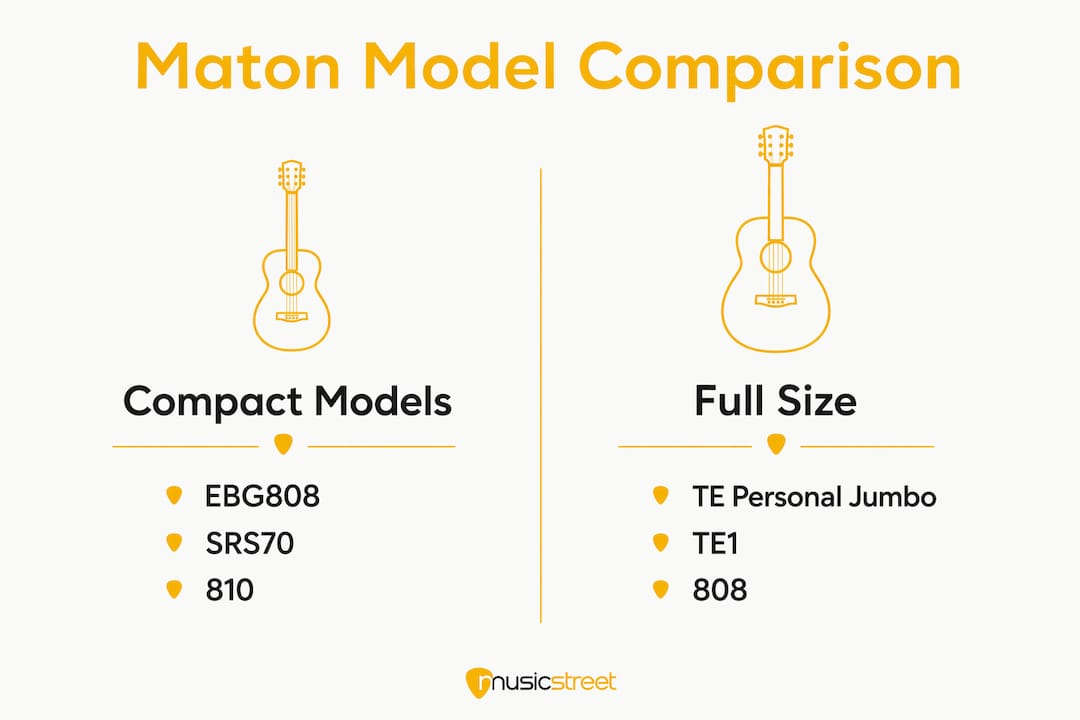
The TE Personal Jumbo is Tommy Emmanuel’s signature model and the most requested Maton in the UK. It is a large-bodied instrument with exceptional dynamic range, built specifically for complex fingerstyle playing. Expect to pay a premium, but the build quality justifies it.

The SRS70 is the model that often converts sceptics. All-solid construction, a balanced unplugged voice and Maton’s AP5 Pro make it a compelling stage guitar at a price point below the signature series.
Why does a Maton sound and play differently from other acoustics?
Australian tonewoods and what they actually do
Most premium acoustics lean on Indian rosewood or mahogany for the back and sides. Maton uses native Australian timbers instead: Tasmanian blackwood, Queensland maple, Victorian blackwood, and Bunya. These woods share a tonal character that sits between rosewood and maple — brighter than rosewood, warmer than hard maple, with a midrange clarity that cuts through a live mix without adding low-end mud.
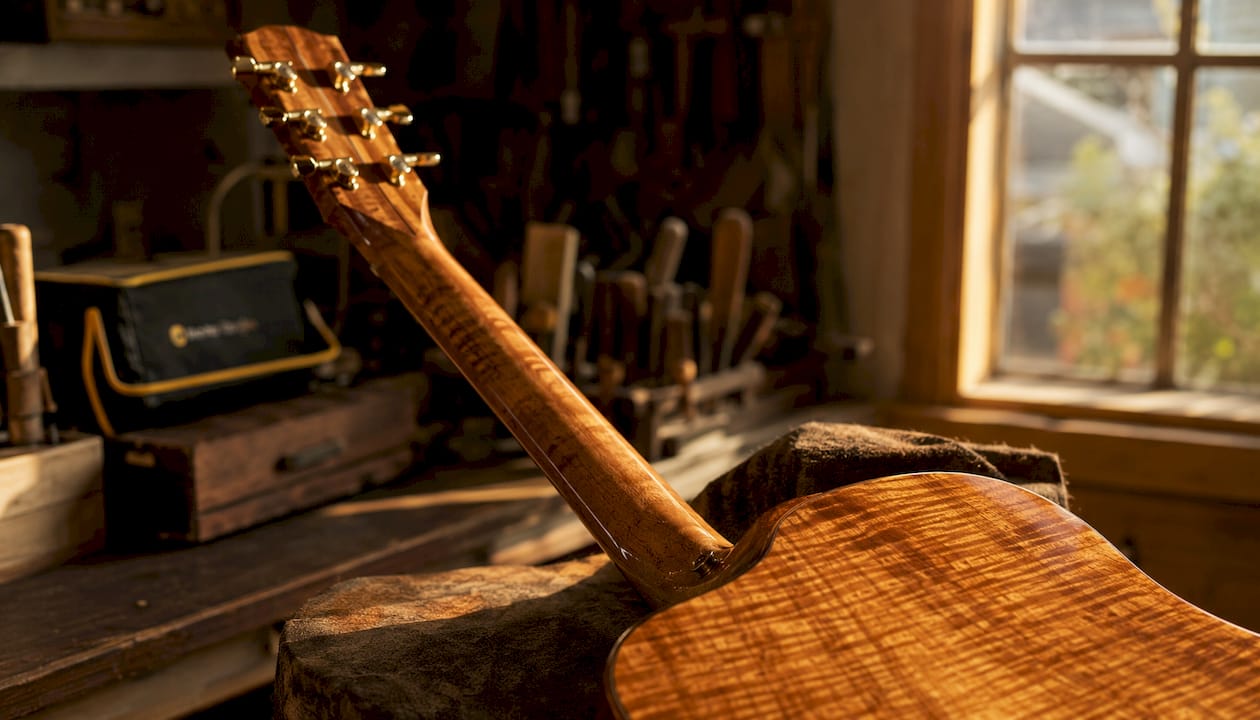
Queensland maple in particular produces a focused, articulate response. Tasmanian blackwood adds warmth and sustain without the heaviness of rosewood. The result is a guitar that sounds full in a room but sits cleanly in a band context, which is why so many touring players choose Maton when they need one guitar to handle everything.
The boutique build philosophy
Maton’s family-run approach means timber suppliers cut specifically for the factory, and the team selects tonewood sets by hand. That is not marketing copy — it directly affects consistency. Two EBG808s from the same production run will sound more alike than two mass-produced equivalents, because the selection process is tighter. For a boutique acoustic guitar at this price point, that matters.
The AP5 Pro pickup system
The AP5 Pro pairs a piezo bridge element with an internal microphone mounted on an adjustable arm. An in-house preamp handles the blend, giving the player and the sound engineer control over how much body resonance comes through. The practical result is a plugged-in tone that actually sounds like the guitar, rather than a thin piezo approximation. Feedback resistance is strong, which is why the system works on loud stages where a mic-only solution would collapse.
The AP5 Pro’s internal microphone captures the body’s natural resonance from inside the guitar, preserving the acoustic character that a bridge piezo alone would flatten out. That blend is what makes Maton instruments sound like themselves when amplified.
Pro Tip: When auditioning a Maton, listen for note separation rather than overall volume. Play a chord with a bass note and a high melody note simultaneously — a Maton should keep them distinct. If the notes blur, the guitar may need a setup adjustment.
For more on how onboard electronics shape your live sound, the role of guitar electronics guide from Musicstreet covers the technical detail.
Which artists use Maton, and what does that tell you?
The artist roster covers a wide range of genres, which is the most useful signal here. Maton is not a niche fingerstyle brand.
- Tommy Emmanuel — the most prominent Maton ambassador; uses the TE Personal Jumbo for complex fingerstyle and live performance worldwide
- Keith Urban — country and pop stage use; demonstrates Maton’s ability to handle strummed, high-energy performance
- Neil Finn (Crowded House) — songwriter and studio use; values the balanced, recorded tone
- Josh Homme (Queens of the Stone Age) — rock and studio contexts; shows the guitars handle heavier playing styles
- John Butler — percussive fingerstyle and open tunings; relies on Maton’s note separation and dynamic range
- Tash Sultana — loop-based live performance; the AP5 Pro’s feedback resistance is critical in that context
The breadth of that list matters. A guitar that works for Tommy Emmanuel’s intricate fingerstyle and Josh Homme’s rock studio sessions is genuinely versatile. The common thread is the AP5 Pro’s ability to translate each player’s individual touch accurately when amplified.
Maton’s 80-year history and family ownership mean the artists who endorse the brand tend to stay with it. Tommy Emmanuel has played Maton for decades — that kind of long-term relationship is a different signal from a short-term sponsorship deal.
How do you buy a Maton guitar in the UK?
Where to find them
Maton guitars reach the UK through authorised dealers who import stock directly from the Melbourne factory. Lead times vary — popular models such as the EBG808TE are usually available, while signature and limited models may require an order. The pre-owned market is active, particularly for the EBG808 and SRS series, and prices reflect the instruments’ durability.
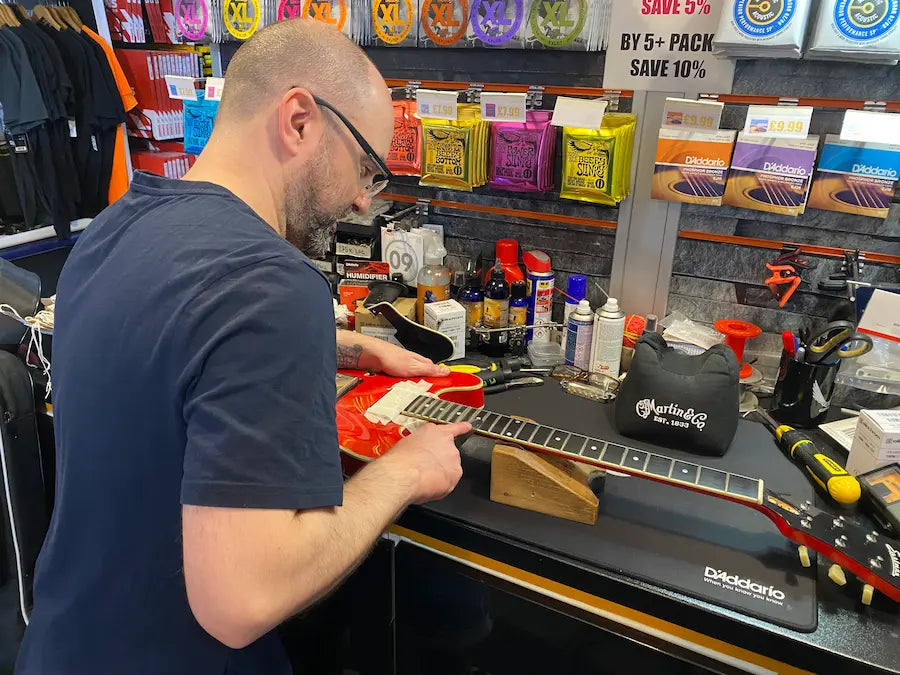
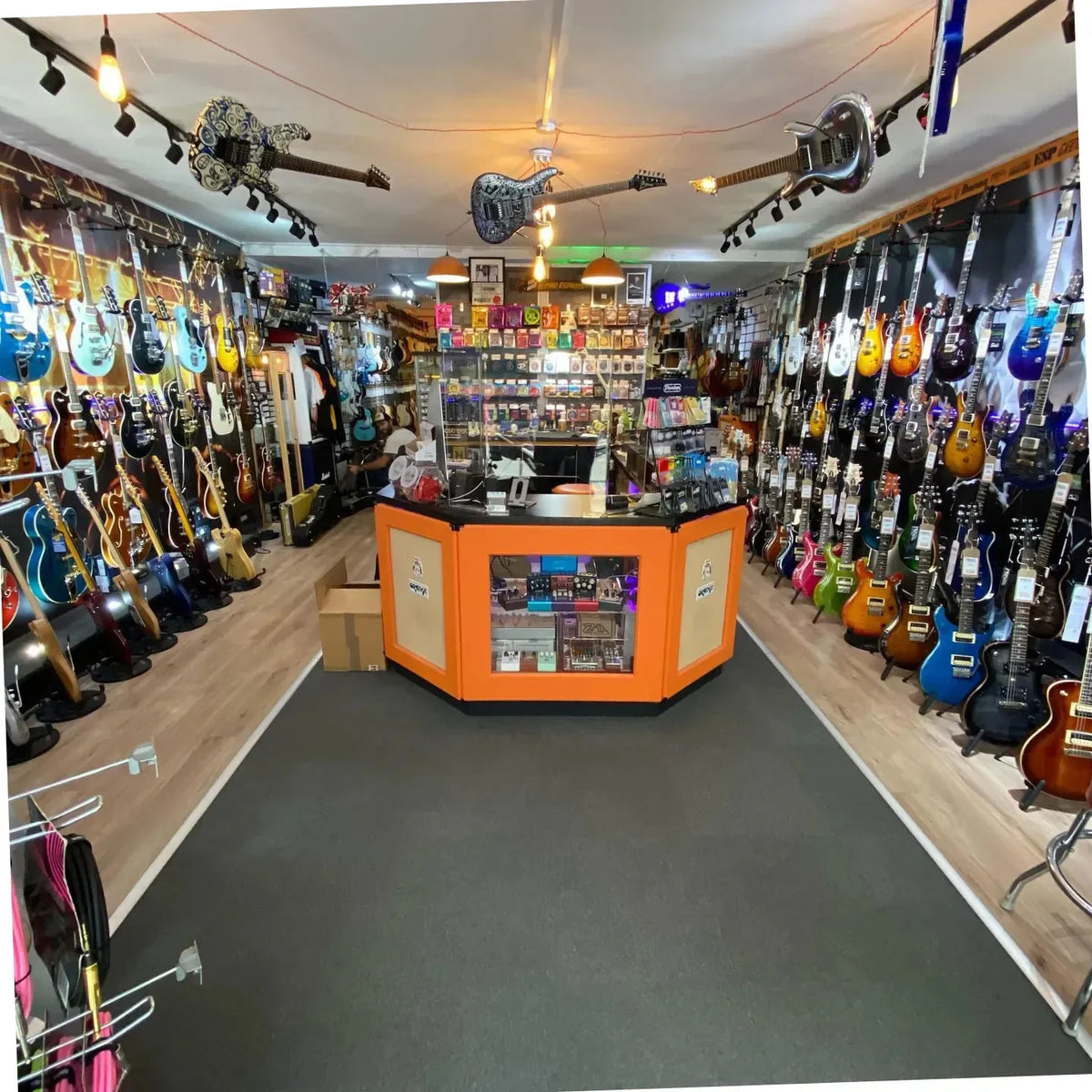
Musicstreet, based in Huntingdon, Cambridgeshire, stocks and orders Maton instruments with professional setup included before delivery. That setup step is worth more than it sounds — Australian factory setups are calibrated for Australian humidity and string gauges, and a UK-specific setup adjusts action, intonation and truss rod for the cooler, more variable British climate.
Buying checklist
- Verify authorised dealer status — only authorised dealers provide the full Maton warranty; check the Maton website’s dealer locator
- Check the serial number — Maton serials are stamped inside the body; verify against the manufacturer’s records if buying used
- Test the AP5 Pro — plug in and blend the mic and piezo separately; both channels should be clean with no crackling
- Inspect the finish and binding — Maton’s factory finishing is precise; gaps in binding or uneven lacquer are signs of damage or a non-genuine instrument
- Confirm the setup — action at the 12th fret should be comfortable for your playing style; a UK dealer should offer to adjust before dispatch
Step-by-step buying path through Musicstreet
- Browse current Maton stock on the Musicstreet website or contact the team directly to check availability and lead times
- Request a demo if you can visit the Huntingdon store, or ask for a detailed condition report and video for online orders
- Confirm the setup specification — string gauge, action height, nut slots — before the guitar is dispatched
- Check the warranty documentation: Maton’s manufacturer warranty plus any additional coverage from Musicstreet
- On receipt, test the AP5 Pro through an amplifier before the inspection window closes
Pro Tip: If you are ordering a Maton without an in-person demo, ask Musicstreet for a short video of the guitar plugged in through a clean amplifier. The AP5 Pro’s mic channel in particular varies with body resonance — hearing it before purchase removes the main uncertainty.
How do you pick the right Maton model for your playing style?
-
Identify your primary use case. Fingerstyle and recording work best with the EBG808 or TE Personal Jumbo — the 808 body keeps the low end controlled and the midrange present. Strumming and stage projection suit the CW80 or SRS70 dreadnought shapes.
-
Consider body size and portability. The Mini Maton is a genuine travel instrument with the AP5 Mini pickup, not a toy. The 808 body is the sweet spot for players who want a full-voiced guitar that is not physically demanding. Jumbo bodies (TE series) reward players with a strong, consistent right-hand technique.
-
Decide on cutaway vs non-cutaway. The EBG808TE adds a cutaway for upper-fret access; the standard EBG808 does not. For fingerstyle players who rarely venture above the 12th fret, the non-cutaway version typically offers marginally better resonance.
-
Assess your amplification needs. Every Maton above the Mini comes with the AP5 Pro as standard. If you never play live, the electronics are a bonus rather than a necessity. If you gig regularly, the AP5 Pro is the reason to choose Maton over a passive alternative.
-
Try the neck profile. Maton necks tend toward a medium C profile with a standard 43mm nut width. Players with smaller hands or those coming from a classical background may find the TE series neck slightly wide; the SRS70 and EBG808 are more accommodating.
Example scenario: a singer-songwriter who plays three-hour pub gigs and records at home should look at the EBG808TE. The cutaway helps with capo work high on the neck, the 808 body records cleanly, and the AP5 Pro handles the live set without a separate DI box.
What should Maton owners in the UK expect for care and warranty?
Warranty coverage
Maton provides a manufacturer’s warranty covering defects in materials and workmanship. UK authorised dealers typically add their own post-sale support, covering setup adjustments and inspections within an agreed period after purchase. Musicstreet includes professional setup and pre-delivery inspection as standard, which means the guitar arrives ready to play rather than requiring immediate attention.
Care for Australian timbers in the UK climate
Australian blackwood and Queensland maple are acclimatised to a warmer, drier environment than the average British home. The UK’s variable humidity, particularly in winter when central heating drops indoor humidity sharply, can cause checking or neck movement if the guitar is not managed properly.
- Keep the guitar in its case when not in use, especially during winter months
- Use a soundhole humidifier (such as a D’Addario Two-Way Humidipak) to maintain 45–55% relative humidity inside the case
- Avoid leaving the guitar near radiators, in car boots, or in direct sunlight
- Change strings every 6–8 weeks if you play regularly; Australian timbers respond well to fresh strings and the AP5 Pro’s mic channel picks up string age quickly
- Book a setup check every 12 months with a UK luthier or through Musicstreet to monitor neck relief and action as the wood settles
Pro Tip: A CruzTools Groovetech Acoustic Guitar Player Tech Kit covers the basic maintenance tasks — string winding, saddle adjustments, and nut slot checks — that keep a Maton playing well between professional setups. It is a sensible purchase alongside any acoustic guitar at this price point.
The science behind Maton’s tone: tonewoods and construction
How Australian timbers compare with standard tonewoods
Sitka spruce tops are standard across most of the Maton range, which keeps the high-end response familiar to players used to American or European acoustics. The difference comes from the back and sides. Tasmanian blackwood and Queensland maple produce a harmonic profile that sits between rosewood’s warmth and maple’s brightness. The midrange is present and clear without the upper-mid hardness that some maple-sided guitars exhibit.
Sustain is moderate rather than long, which suits fingerstyle playing and recording — notes decay cleanly rather than blurring into one another. For live mixing, that characteristic is an advantage: a sound engineer can place a Maton in a mix without fighting a boomy low end or a harsh top end.
Bracing and construction choices
Maton uses scalloped X-bracing on most models, tuned to favour balance over maximum volume. The result is a guitar that responds to light picking as readily as to hard strumming, with a dynamic range that rewards expressive playing. The boutique manufacturing approach means bracing is fitted and voiced by hand, which contributes to the consistency noted across the range.
Maton’s bracing philosophy prioritises tonal balance over raw projection. That choice makes the guitars mix-friendly in a live context and detailed in a recording environment — two qualities that rarely coexist in mass-produced instruments at any price.
Listening checklist for an audition
- Attack: notes should speak immediately with no muddiness at the onset
- Overtones: listen for harmonic complexity above the fundamental, particularly on open chords
- Midrange presence: strum a G chord and listen for the midrange frequencies — they should be clear and present, not recessed
- Amplified realism: plug in and compare the plugged and unplugged tone; the AP5 Pro should close that gap more than most pickup systems
Key takeaways
Maton guitars are the strongest case for Australian acoustic craftsmanship available to UK buyers: handmade in Melbourne, built with native tonewoods, and equipped with the AP5 Pro pickup system that touring professionals rely on.
| Point | Details |
|---|---|
| Handmade provenance | Built in Box Hill, Melbourne, since 1946 by a family-owned team of more than seventy people. |
| AP5 Pro electronics | Piezo plus internal cardioid mic, blended in-house, delivers a natural amplified tone with strong feedback resistance. |
| Tonewood character | Australian blackwood and Queensland maple produce a balanced, midrange-forward voice that sits cleanly in live mixes. |
| UK buying path | Buy through an authorised UK dealer or Musicstreet for professional setup, warranty support, and post-sale assistance. |
| Model shortlist | EBG808TE for stage/recording versatility; TE Personal Jumbo for fingerstyle; SRS70 for an all-solid stage workhorse. |
A UK specialist’s perspective on Maton for British players
The most common question Musicstreet hears about Maton is whether the guitars are worth the price premium over more familiar brands. The honest answer is: yes, but only if you play live or record regularly. The AP5 Pro is the differentiator. Players who only play at home will appreciate the tonal quality, but they will not fully use what makes Maton instruments special.
The models UK customers ask about most are the EBG808TE and the TE Personal Jumbo. The EBG808TE suits the widest range of players — it records well, gigs well, and the 808 body is comfortable for long sessions. The TE Personal Jumbo is for players who know exactly what they want: a large, responsive fingerstyle instrument with no compromises.
One practical note on demoing versus ordering: if you can visit the Musicstreet store in Huntingdon, do it. Maton guitars have a tonal character that photographs and spec sheets do not capture. The midrange clarity and note separation are things you feel through the body of the guitar, not things you read about. For players ordering remotely, Musicstreet’s pre-delivery inspection and setup service reduces the risk considerably.
Musicstreet’s Maton buying and setup service
If you have decided that a Maton belongs in your collection, Musicstreet makes the UK purchase straightforward. The store in Huntingdon, Cambridgeshire, handles new and pre-owned acoustic guitars with professional setup included before every dispatch, so the guitar arrives ready to play rather than requiring immediate luthier work.

Musicstreet’s services for Maton buyers include new and pre-owned sales, pre-delivery inspection, AP5 Pro electronics testing, professional setup to your specification, and ongoing post-sale support. For players who want to explore electro-acoustic options alongside Maton, the Yamaha FGX5 and Yamaha FGC-TA TransAcoustic are also available with the same setup and inspection service. The pre-owned stock turns over regularly, so checking back for used Maton availability is worthwhile if budget is a consideration.
To check current Maton stock, request a demo, or discuss a specific model, visit Musicstreet or contact the team directly. Free UK delivery applies to orders over the qualifying threshold.
Where to find official Maton specs and trusted reviews
Official and review sources
- Maton official website (maton.com.au) — full model specifications, scale lengths, nut widths, pickup specs and bracing details for every current model; also lists authorised dealers by country
- Maton artist pages (maton.com.au/artists) — shows which models each artist uses and in what context
- Premier Guitar SRS70 review (premierguitar.com) — independent assessment of construction, voice and electronics; useful for objective comparison
- Wikipedia Maton entry (en.wikipedia.org) — historical background, founding timeline and notable users including George Harrison
What to check on spec pages
| Specification | Why it matters |
|---|---|
| Scale length | Affects string tension and playability; most Matons are 650mm (25.6") |
| Nut width | 43mm is standard; check if you have smaller hands or play classical style |
| Pickup type | Confirm AP5 Pro vs AP5 Mini vs passive — affects live rig requirements |
| Bracing pattern | Scalloped X-bracing is standard; some models use alternative voicings |
| Tonewood species | Verify back/sides timber — affects tonal character as described above |
Action items before you buy
- Cross-reference the model page on maton.com.au with the dealer’s listing to confirm the specification matches
- Verify the dealer appears on Maton’s official authorised dealer list — this is the only way to guarantee the manufacturer warranty applies
- For used purchases, check the serial number format against Maton’s records; the company can confirm authenticity
The Musicstreet guide on where Maton guitars are made covers the factory background and UK buying process in further detail, and the boutique guitar buying guide explains what to expect from instruments at this level of craftsmanship.
FAQ
Is Maton a good guitar brand?
Maton is widely regarded as one of the respected acoustic guitar manufacturers, with decades of family-owned production in Melbourne and a client list that includes Tommy Emmanuel, Keith Urban and Neil Finn.
How much does a Maton guitar cost in the UK?
New Maton guitars typically range widely in price depending on the model; used examples of popular models such as the EBG808 are commonly available at lower prices.
Who makes Maton guitars?
Maton guitars are made in Box Hill, Melbourne, by a family-owned company founded in 1946 by Bill and Reg May; the company remains 100% family owned and has a workforce of more than seventy people at the Australian factory.
What famous musicians play Maton?
Tommy Emmanuel, Keith Urban, Neil Finn, Josh Homme, John Butler and Tash Sultana all play Maton guitars on stage and in studio, across fingerstyle, country, rock and songwriter genres.
Where can I buy a Maton guitar in the UK?
Maton guitars are available through authorised UK dealers and specialist retailers such as Musicstreet, which offers new and pre-owned stock with professional setup and post-sale support from its store in Huntingdon, Cambridgeshire.







Share:
How to play a 12-string guitar: practical steps
Top PRS guitars in the UK: expert picks for every style