

Table of Contents
- 1. Dunlop DGT102 System 65 Guitar Tech Kit: Best All-in-One Cleaning Kit
- 2. Ernie Ball Musician's Tool Kit: Best for Beginners
- 3. MusicNomad Premium Guitar Tech Tool Set: Best for Precision Setups
- 4. Planet Waves Pro-Winder: Best for Quick String Changes
- 5. StewMac Guitar Tech Screwdriver Set: Best for Hardware Adjustments
- 6. HOSCO Nut Files: Best for Advanced Nut Work
- 7. Generic 72-Piece Guitar Repair Kit: Best Budget Option
- Essential Guitar Maintenance Checklist
- Frequently Asked Questions
Last Updated: September 15, 2026
1. Dunlop DGT102 System 65 Guitar Tech Kit: Best All-in-One Cleaning Kit
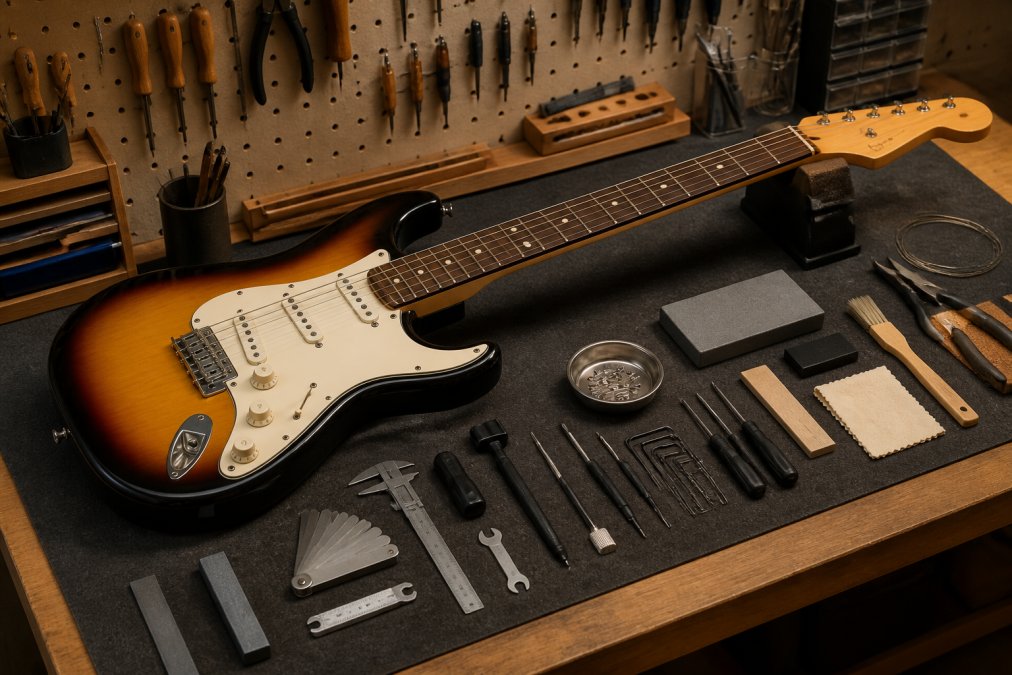
A well-maintained guitar plays better and holds its value longer, which is why the right guitar setup tools matter more than most players realise. This guide covers the seven best options for home maintenance in 2026, from all-in-one kits to precision files.
The Dunlop DGT102 System 65 Guitar Tech Kit is the best all-in-one cleaning and basic maintenance kit for most home players. It bundles Formula 65 polish and cleaner, a string winder, a multi-tool, a microfibre cloth and fretboard conditioner in a compact carry case. According to Guitar World's 2026 roundup of the best guitar cleaning and maintenance tools, the DGT102 is a top-rated comprehensive kit for guitarists handling their own setups at home.
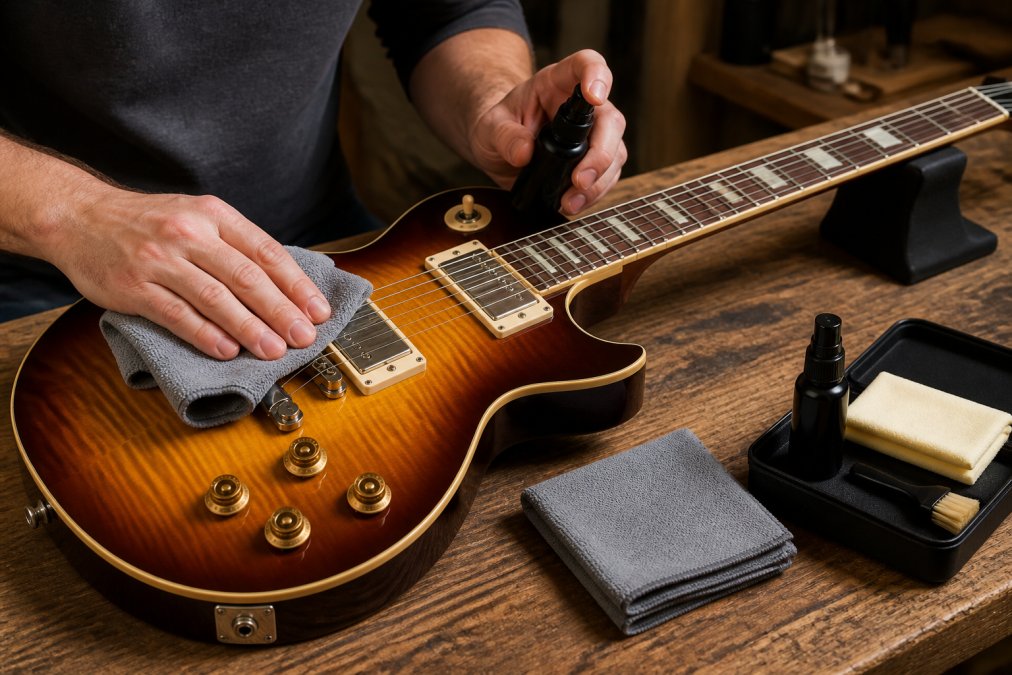
A guitarist's hands using a microfibre cloth and polish from a Dunlop maintenance kit to clean the body of an electric guitar on a wooden workbench
Pros: High-quality cleaning agents included; compact and portable carry case. Cons: No precision measuring tools for advanced setups.
2. Ernie Ball Musician's Tool Kit: Best for Beginners
If you are new to looking after your own instrument, the Ernie Ball Musician's Tool Kit is the simplest place to start. It covers the jobs beginners actually face: string changes, minor hardware tweaks and a quick polish. The kit includes a microfibre polishing cloth, a heavy-duty string cutter, a peg winder and a hex key set, all held in a dedicated organiser pouch.
The trade-off is specialisation. There are no luthier files here, so any nut work is out of reach. For routine maintenance, though, it is durable and easy to live with.
3. MusicNomad Premium Guitar Tech Tool Set: Best for Precision Setups
Precision is where home setups are won or lost. The MusicNomad Premium Guitar Tech Tool Set is built around measurement, with a string action gauge, radius gauges for bridge adjustment and a precision screwdriver set. It also ships with instructional guides, which matters if you are learning as you go.
Many players on the r/Guitar community now favour dedicated string action gauges over generic rulers to hit factory-standard specifications. The one drawback is cost: this set sits above basic kits, and it is worth it only if you plan to adjust action and intonation yourself.
4. Planet Waves Pro-Winder: Best for Quick String Changes
String changes eat time, and the Planet Waves Pro-Winder exists to cut that down. This multi-function tool combines a string winder, an integrated hardened steel wire cutter and a bridge pin puller for acoustic guitars in one ergonomic handle.
It is the cheapest way to speed up a routine job, and it fits in any gig bag. The plastic construction will wear under heavy use, so gigging players may want a second one as backup.
5. StewMac Guitar Tech Screwdriver Set: Best for Hardware Adjustments
Stripped screws are the most common self-inflicted damage on a home setup. The StewMac Guitar Tech Screwdriver Set avoids that with non-marring tips and ergonomic handles, sized for the Phillips and flat-head screws used on bridges and pickups.
It is professional quality and it protects delicate hardware. The limitation is scope: this set only covers screwdriver tasks, so you still need other tools for action, relief and intonation.
6. HOSCO Nut Files: Best for Advanced Nut Work
Nut slot depth is one job worth getting right or leaving alone. HOSCO Nut Files are precision-engineered for shaping and maintaining nut slots, available in various gauges for different string sets and made from high-carbon steel with ergonomic handles.
They are the industry standard for accuracy and hold a long-lasting cutting edge. Handle them carefully: over-filing a slot is difficult to reverse.
7. Generic 72-Piece Guitar Repair Kit: Best Budget Option
For beginners who want maximum coverage for minimum outlay, a generic 72-piece kit is hard to argue with. It typically includes a string action ruler, a hex key set for truss rod adjustments, plus cleaning brushes and files.
It covers almost every basic maintenance task and offers excellent value. Tool quality is lower than professional brands, so treat it as a starting point rather than a long-term set.
Essential Guitar Maintenance Checklist
An essential guitar maintenance checklist keeps a setup consistent between string changes. Work through these steps in order:
- Wipe strings and body after every session
- Check tuning stability and spot early fret wear
- Clean and condition the fretboard at each string change
- Check neck relief and adjust the truss rod if needed
- Measure string action at the 12th fret
- Set intonation at the bridge saddles
- Inspect nut slots for binding or wear
- Tighten hardware and check the output jack
Humidity is the quiet killer in a home setup. To prevent hardware corrosion in humid climates, store your guitar in its case with a silica pack, keep the room stable and wipe metal parts dry after playing (Regulations: restriction of hazardous substances (RoHS)).
How often should you do this? A quick check every string change, and a full setup once or twice a year, is a sensible rhythm for most players.
Tool |
Best For |
Key Strength |
Watch Out For |
|---|---|---|---|
Dunlop DGT102 |
All-in-one cleaning |
Complete kit in a case |
No measuring tools |
Ernie Ball Kit |
Beginners |
Durable, organised pouch |
No nut files |
MusicNomad Set |
Precision setups |
Accurate gauges |
Higher cost |
Planet Waves Pro-Winder |
String changes |
Winder, cutter, pin puller |
Plastic wears |
StewMac Screwdrivers |
Hardware work |
Non-marring tips |
Screwdrivers only |
HOSCO Nut Files |
Advanced nut work |
Industry-standard accuracy |
Easy to over-file |
Generic 72-Piece |
Budget coverage |
Excellent value |
Lower tool quality |
Buying the tools is the easy part. Getting a guitar to play its best takes patience, the right gauges and a little practice, and plenty of players would rather hand that job to someone who does it every day. At MusicStreet, every instrument is expertly set up by players, for players, backed by our in-house repair and setup workshop and a hand-selected range of electric, acoustic and bass guitars. Browse our guitars and book a setup to get your instrument playing exactly as it should.
Frequently Asked Questions
What tools are essential for a basic guitar setup?
For a basic setup, you need a few core items. A string winder and cutter speed up restringing, while a set of hex keys is vital for truss rod and bridge adjustments. A precision screwdriver set helps with pickup height, and a string action gauge ensures you can measure your progress accurately. Many all-in-one kits, like the Dunlop DGT102 or Ernie Ball Musician's Tool Kit, bundle these essentials together, making them a great starting point for any home guitarist.
How often should I perform a guitar setup at home?
How often you need a setup depends on how much you play and the conditions your guitar lives in. As a rule of thumb, a full setup is worth doing every six to twelve months, or whenever you change string gauge. You should also check your guitar's action and intonation if you notice buzzing, tuning instability, or if the seasons change significantly. Regular checks with an essential guitar maintenance checklist can help you spot issues before they affect playability.
Can I damage my guitar by doing my own setup?
Yes, it is possible to damage your guitar if you use the wrong tools or apply too much force. Over-tightening a truss rod can strip the threads, and using an ill-fitting screwdriver can strip screw heads. Always use the correct size tools, like the StewMac Guitar Tech Screwdriver Set, and make small adjustments a quarter-turn at a time. If you are unsure, it is always safer to consult a professional. A good set of guitar setup tools minimises this risk.
What is the difference between a guitar maintenance kit and professional tools?
A guitar maintenance kit typically bundles everyday items for cleaning, string changes, and basic adjustments. Professional tools, such as HOSCO Nut Files or a MusicNomad Precision Set, are specialised for tasks like cutting nut slots or measuring action to factory tolerances. While a kit is perfect for routine care, professional-grade tools offer the accuracy and durability needed for advanced setups. Many players start with a kit and add specialist tools as their skills grow.
Do I need specific tools for acoustic versus electric guitar maintenance?
While many tools overlap, there are a few key differences. Acoustic guitars often require a bridge pin puller, which is included on tools like the Planet Waves Pro-Winder. Electric guitars frequently need hex keys for saddle height and intonation screws, and a precision screwdriver set for pickup adjustments. For cleaning, a microfibre cloth and fretboard conditioner are safe for both. A versatile kit like the Ernie Ball Musician's Tool Kit covers the essentials for either type.









Share:
Tactile In-Store Shopping vs Premium Trade-In Value
The Ultimate PRS Guitars Buyer's Guide: Models, Tones, and Playability Explained