


Choosing the Right Guitar Capo
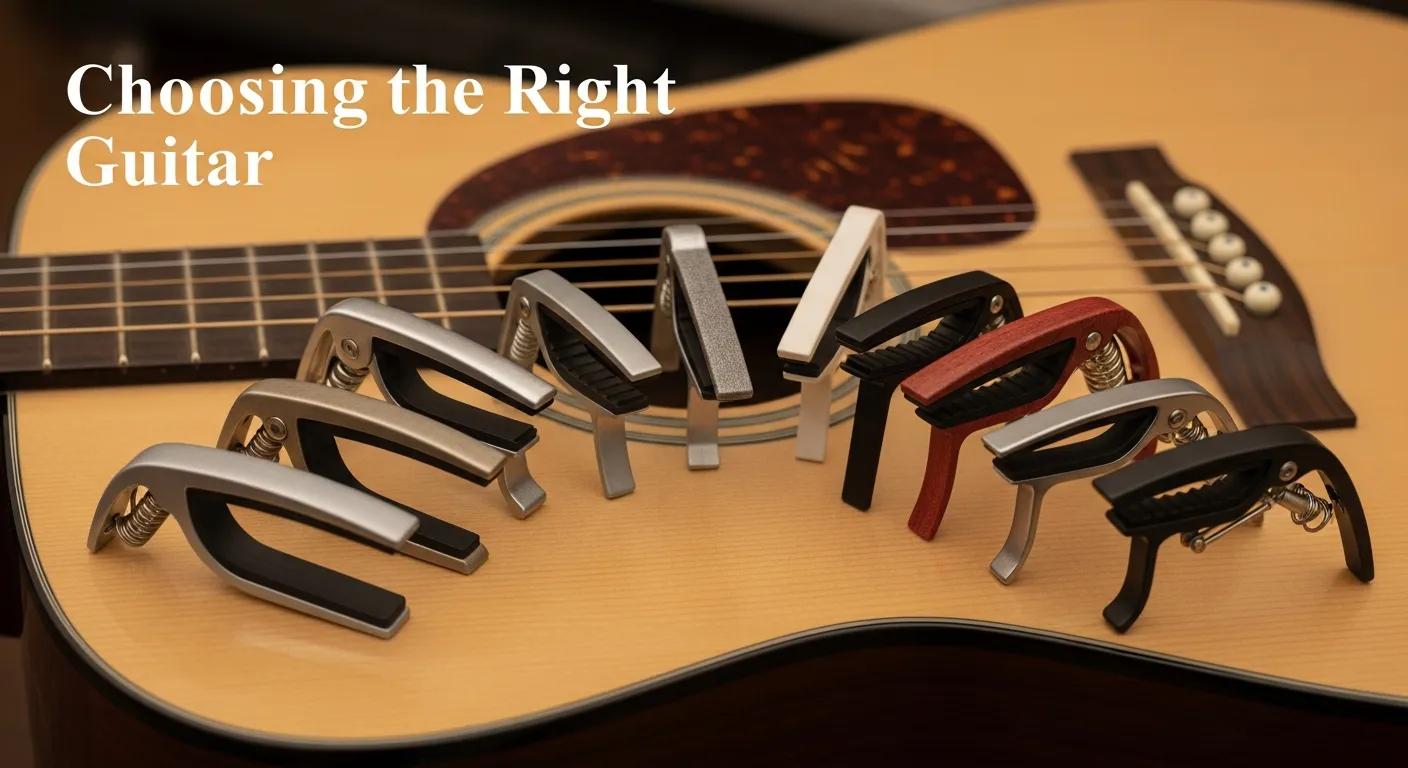
A capo is a small, essential tool that lets guitarists change their instrument’s pitch without retuning. By clamping the strings at a chosen fret, a capo shortens the vibrating string length so you can play in different keys while keeping familiar chord shapes. It’s great for matching a song to a singer’s range, simplifying tricky fingerings, or exploring fresh voicings — a handy addition for beginners and seasoned players alike. In this guide we’ll explain what a capo does, outline the main types, help you pick the right one, and share practical tips for using and caring for it.
Why use a capo?
The main job of a capo is to transpose keys quickly so you can play the same chord shapes in a higher pitch. That’s especially useful for vocalists who need the song moved up or down to sit comfortably in their range. A capo also makes it easy to reuse open-chord voicings and harmonics across different keys, unlocking new textures and sparking creative ideas. In short: a capo expands what your guitar can do without forcing you to learn a new set of fingerings.
Used well, a capo becomes a fundamental technique for broadening the acoustic guitar’s tonal palette and expressive possibilities.
Acoustic guitar capos: tonal expansion & techniques
Techniques such as alternate tunings, capos, harmonics and tapping can greatly expand both the tonal and percussive range of the acoustic guitar. This work examines those techniques’ origins, recent developments and modern applications.
Composing with Alternative Acoustic Guitar Techniques, 2019
Types of capos
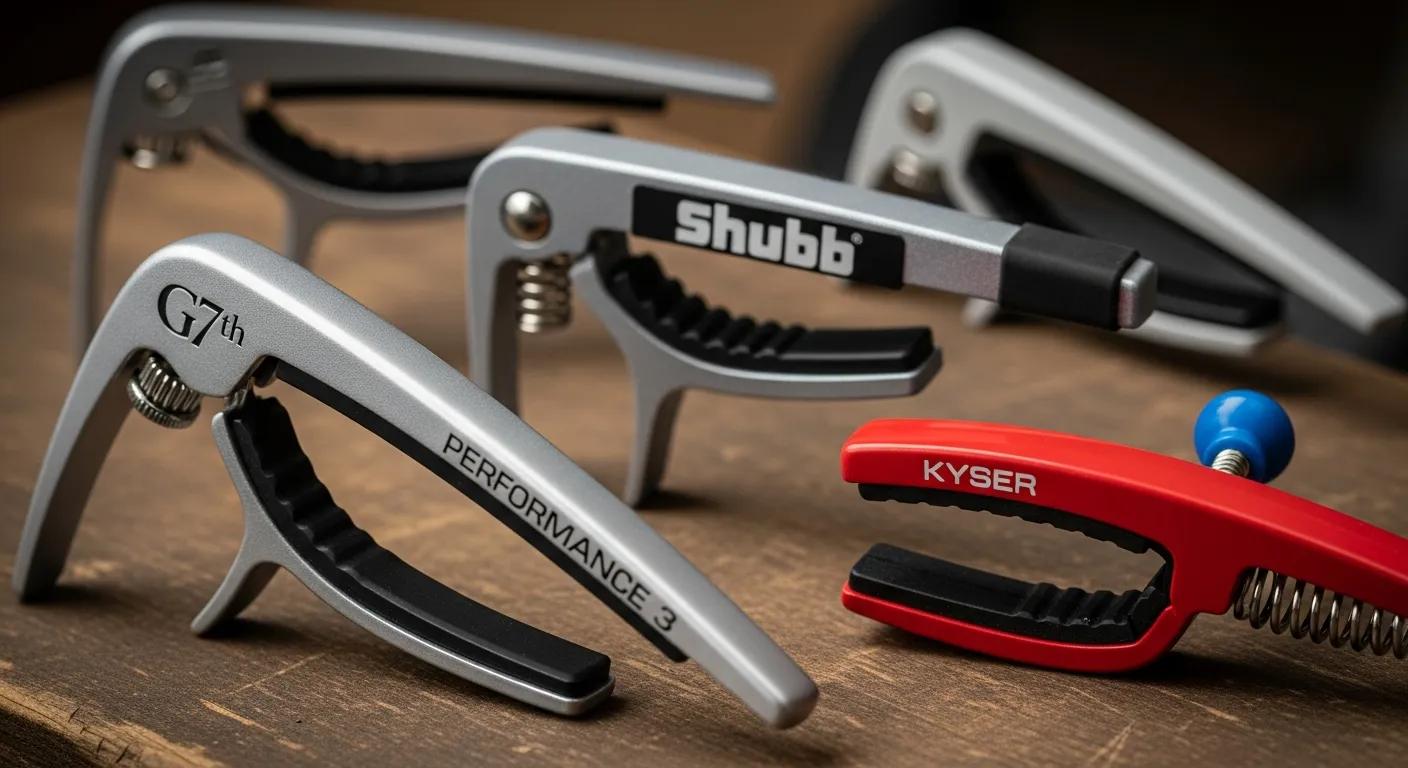
Capos come in several designs, each suiting different players and situations. Below is a quick breakdown to help you identify which style fits your needs.
| Type | Features | Suitability |
|---|---|---|
| Spring-loaded capo | Clips on quickly with a strong spring; simple one- or two-handed action | Perfect for fast changes during live sets and casual playing |
| Screw-tightened capo | Tension dial lets you fine-tune pressure for better intonation | Ideal for studio work or players who demand precise tuning control |
| Trigger capo | Lightweight, easy one-handed operation with a quick-release trigger | Great for beginners and gigging players who need speed and simplicity |
| Partial capo | Clamps only some strings to create alternate voicings and open-string drones | Best for advanced players exploring unique tunings and textures |
Each design has trade-offs—weight, speed, and how cleanly it holds intonation—so match the capo to your playing context and tonal goals.
Choosing the right capo
When picking a capo, think about these key factors:
- Guitar type: Different neck shapes and string types can affect fit. Classical guitars and nylons often benefit from softer padding to protect the fretboard and strings.
- Playing style: If you change keys often on stage, choose a quick-clamping model. If you need studio-perfect tuning, a screw-tightened capo gives finer control.
- Material and padding: Look for durable materials and good rubber or silicone pads to avoid buzzing and protect your neck and strings.
If you want to try options in person, MusicStreet stocks a wide range of capos suited to different guitars and playing styles so you can find the best fit for your setup.
Use and care
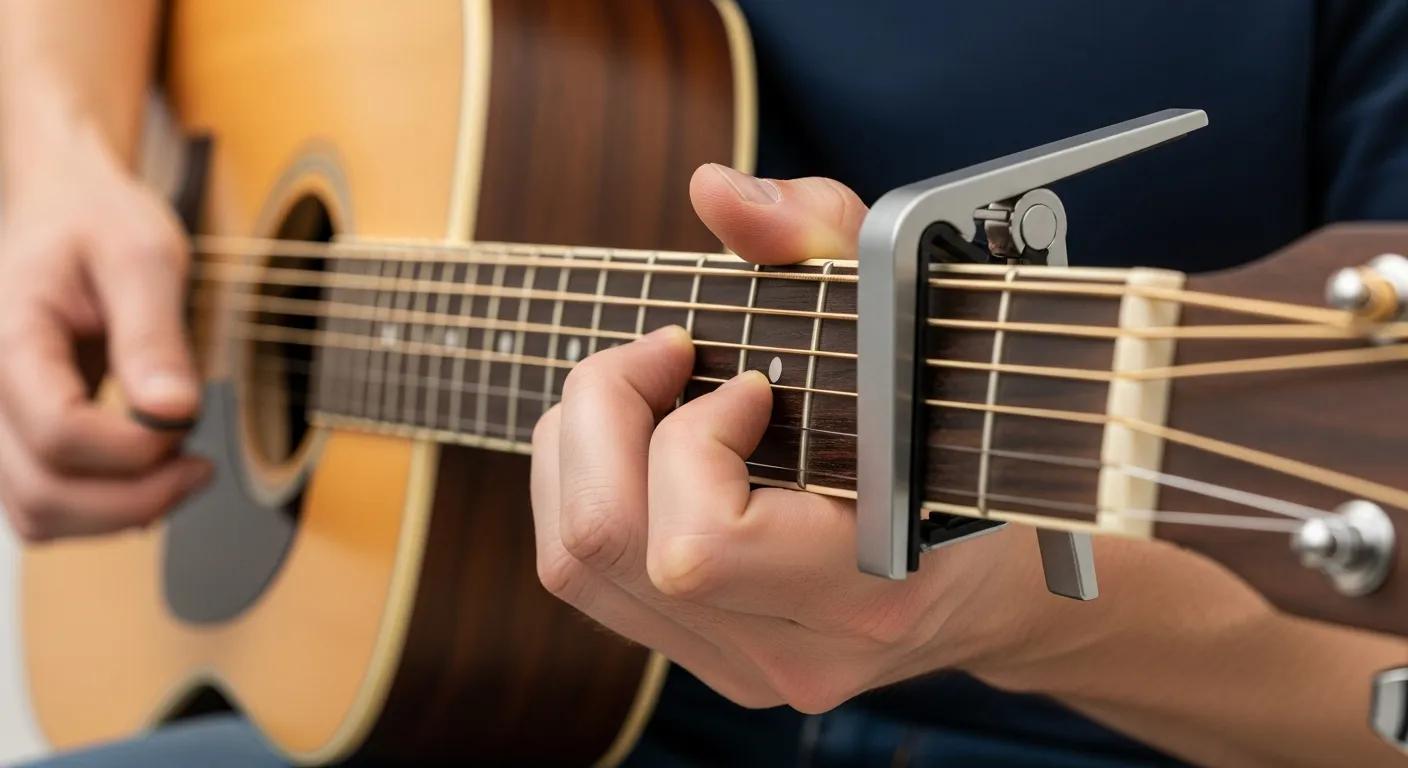
Keep your capo working well and your guitar sounding great with these simple habits:
- Placement: Set the capo just behind the fret (not on top) to avoid buzzing and get a clear note.
- Tune after fitting: Always recheck tuning after you clamp on the capo — even small pressure changes can shift pitch.
- Inspect regularly: Check the rubber pads and any screws or springs for wear; replace the pad if it hardens or shows grooves.
Need help with setup or repairs? MusicStreet offers professional setups and workshop services to keep your instrument in top condition.





Share:
Types of guitar woods and how they shape your tone
How to use guitar tuners for perfect sound: Practical guide